

Constipation In Children: Routines And Toilet Posture That Help
By Mobile Occupational Therapist • 23 September 2026 • 13 min read
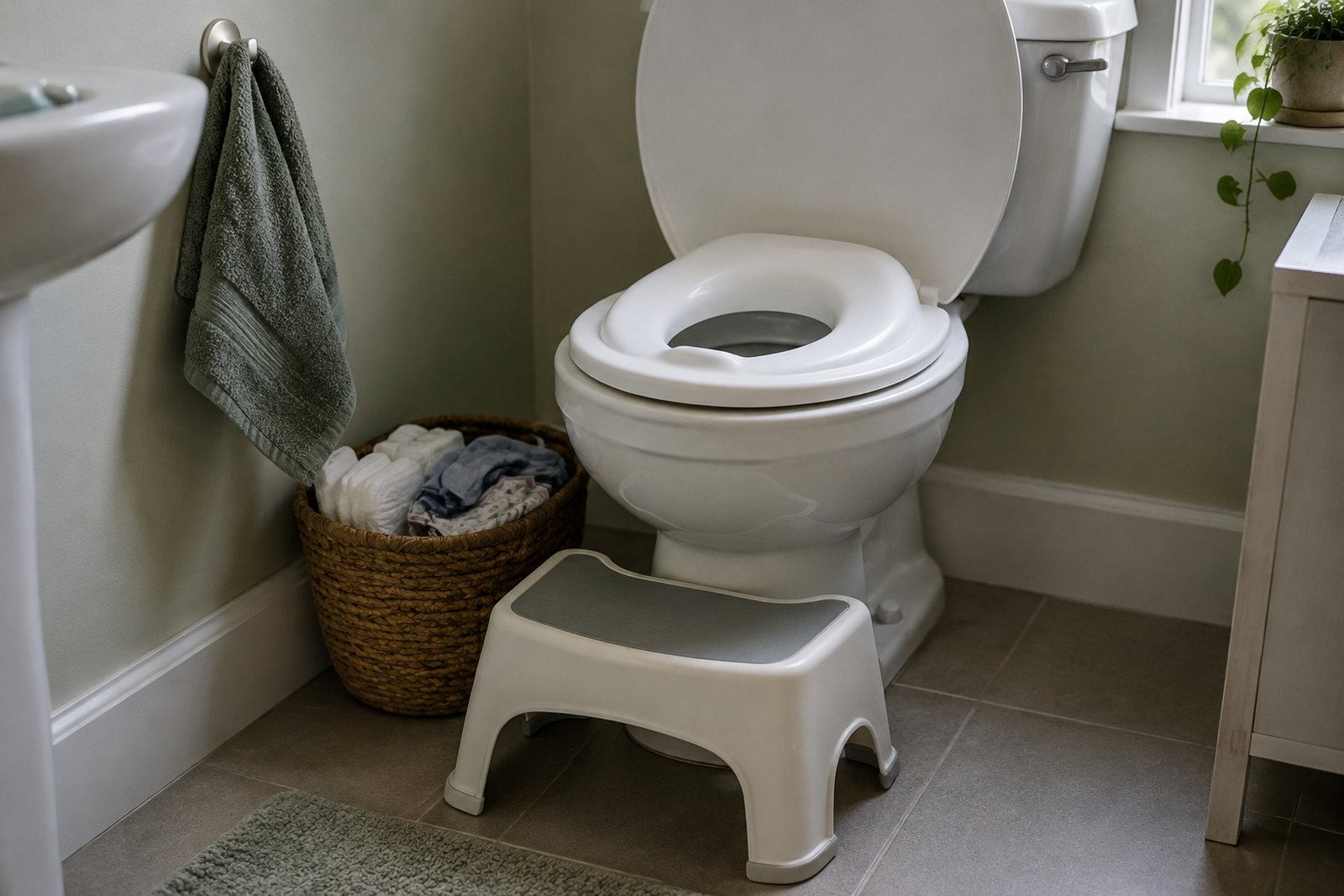
Constipation in children is usually not about being lazy or "naughty". It is often a mix of pain, fear of pain, and poo withholding that quickly turns into a stubborn cycle. The medical treatment side (including laxatives, often for months) should be guided by a healthcare professional such as your GP, health visitor, pharmacist, or paediatric team. But there is a lot you can do at home today to make pooing easier: predictable sitting times, the right toilet posture (feet supported, knees higher than hips), and a calmer, less pressurised routine.
If your child is very unwell, has severe tummy pain, vomiting, a swollen belly, blood in their poo, weight loss, new leg weakness, or you think constipation started from birth or the first weeks of life, get medical advice urgently (GP urgently, NHS 111, or 999 in an emergency). Constipation is common, but some red flags need prompt assessment.
How to tell if it is constipation or poo withholding
Some children are constipated without going days and days without a poo. The clue is often what the poo looks like and what toileting feels like for them.
Everyday signs parents describe
- Large, hard, dry poo that is painful to pass.
- Very large poos that block the toilet.
- Going less often than usual, or "rabbit droppings" (small hard pellets).
- Tummy ache, bloating, feeling full quickly, poor appetite.
- Foul wind or more smelly wind than usual.
- Soiling in pants (skid marks or larger accidents), especially when you are sure they are potty trained.
- Wee accidents or needing to wee very often. A full bowel can press on the bladder.
- Toilet avoidance: refusing to sit, panicking, screaming, hiding, or insisting they do not need to go.
Signs of withholding (especially toddlers)
Withholding can look like straining, but it is often the opposite. Your child is trying not to poo.
- Going stiff and straight, standing on tiptoes, crossing legs, rocking, hiding behind furniture.
- Suddenly stopping play and "freezing".
- Clenching bottoms, holding onto you, or running away when you suggest the toilet.
- Asking for a nappy even though they are otherwise toilet trained.
- Only pooing in one very specific place or position.
None of this means your child is being difficult on purpose. Most are protecting themselves from what they remember as pain.
Why constipation becomes a cycle
The pattern is horribly predictable:
- A hard poo hurts.
- Your child starts to hold it in to avoid pain.
- Poo sits in the bowel longer and becomes bigger, drier and harder.
- The next poo hurts even more.
Over time, the bowel can stretch and your child may feel the urge less clearly. Softer poo can leak around the hard stool and cause soiling, which is upsetting for everyone and can be misunderstood as a behavioural problem. This is one reason GPs often prescribe laxatives for a long time, not just a few days. The bowel needs time to empty and recover its normal size and sensitivity.
If your child is withholding, pressure and bribes for a "result" often backfire. What helps most is taking the heat out of the situation, making the toilet physically easier, and building a routine where sitting is normal and low stakes.
What you can do today at home
These steps are usually safe for most children, but supervise your child on the toilet and make sure any step or seat insert is stable to prevent slips and falls. They work well alongside GP treatment. Pick two or three to start with. Consistency beats intensity.
1) Set regular, boring sitting times after meals
The bowel is naturally more active after eating (the gastrocolic reflex). Use that to your advantage.
- Aim for 5 to 10 minutes of sitting on the toilet or potty 10 to 20 minutes after meals, especially after breakfast and the evening meal.
- Keep it predictable: same times, same order. "Breakfast, teeth, toilet sit".
- If they will not sit at all, start smaller: 30 seconds with feet supported, then build up over days.
Try to treat it like handwashing, not a performance. Calm, matter of fact, then move on.
2) Get the toilet posture right (this is often the biggest win)
Children often try to poo with dangling feet, tense legs, and a hollowed back. That makes it harder to relax the pelvic floor and harder to push effectively.
Better posture looks like this:
- Feet supported on a stable step or box (not tiptoes, not dangling).
- Knees higher than hips (a squat-like position). Use a step to raise the feet, and if needed add a seat insert so they feel secure.
- Bottom well back on the seat, leaning slightly forward with elbows on knees.
- Relaxed tummy and relaxed shoulders.
If your child is small, a child toilet seat insert can help them feel safe. Feeling like they might fall in makes many children tense up and hold on, which is the opposite of what you want.
3) Teach "let it out" breathing, not straining
Hard straining can make children clamp down more, and it can make them feel panicky.
Try simple cues:
- "Blow out slowly like you are cooling hot porridge."
- "Smell the flower, blow the candle."
You can turn this into a game while they sit (no screens needed):
- Blowing gently to make bubbles in the bath at another time, then using the same slow blow on the toilet.
- Blowing a tissue in the air with slow puffs.
- Making a long "ssss" sound to keep the breath steady.
The aim is a relaxed, longer out-breath. That helps the pelvic floor soften.
4) Reward the sitting, not the poo
If you reward only the poo, you create a high pressure moment. That is exactly when many children clamp up.
Instead:
- Praise and reward showing up: walking to the toilet, sitting down, keeping feet on the step, trying the breathing.
- Keep rewards small and immediate. Think "well done" and a sticker or token, not big promises.
- Do not remove rewards because they did not poo. The goal is to rebuild trust in the process.
For some children, a simple visual chart for sits (not results) reduces arguments because it makes the routine feel finite and predictable.
5) Make it private and unrushed
Some children cannot poo with an audience. Others fear being left alone. Experiment.
- Ask: "Do you want me to stay, or wait outside the door?"
- Avoid hovering, repeated questions, or long negotiations.
- If siblings are barging in, protect privacy. A latch on the door can help, but never lock a child in, make sure an adult can open it from the outside, and keep fire safety in mind.
6) Keep poo talk simple and factual
When everyone is stressed, it is easy for toileting to become loaded with emotion and shame.
- Use neutral language: "Your body does poos. We help it happen in the toilet."
- Avoid threats, disgust, or punishment for accidents. Soiling is often a symptom, not a choice.
- If they are anxious, try: "We are practising sitting. Your body will learn."
7) Food, drink and movement: helpful, but not the whole answer
General healthy habits matter, but they are rarely enough on their own once a child is in a withholding cycle.
- Offer regular drinks through the day. Some children drink very little at school.
- Include fibre-containing foods gradually, alongside fluids.
- Build in everyday movement: walking, playground time, climbing, dancing. Movement helps bowel activity.
If you are worried about your child's diet, weight, growth, or very restricted eating, discuss it with your GP or health visitor. Some children need dietetic input, especially if there are sensory or feeding issues.
Sensory and body-awareness reasons children avoid the toilet
Some children avoid the toilet because it is an unpleasant sensory experience, not because they are being stubborn. This is common in autistic children, children with sensory processing differences, and children with anxiety. It can also happen after one painful poo even in a child with no other difficulties.
Common sensory "icks"
- Cold seat or feeling "exposed" sitting there.
- Loud flushing or echoey bathrooms.
- Smells, cleaning products, air fresheners.
- Hand dryers and busy public toilets.
- Toilet paper texture or fear of wiping.
- Lighting: bright lights, shadows, flicker.
Small adjustments can reduce avoidance: warm the room, keep lighting softer if possible, flush after they leave if noise is the issue, and let them have control where you can.
Interoception: not noticing the urge until it is urgent
Some children do not get clear early warning signals from their body. They only notice they need a poo when it is already uncomfortable and urgent, which can lead to panic and withholding. This body awareness system is called interoception. You can read more in our plain English guide: interoception and helping a child notice body signals.
What helps at home is not waiting for them to say they need to go. Use routine sits after meals, and gentle reminders at predictable times, so the toilet is something that happens before the crisis point.
Extra support for autism and additional needs
If your child has additional needs, it is often worth adapting the whole approach: more structure, more predictability, and more sensory comfort. Our guide to toilet training with autism or additional needs may help, and so might our overview of sensory processing differences in children.
Nursery and school toilets: practical ways to reduce withholding
Many children can poo at home but not at nursery or school. That can be enough to trigger constipation.
What to ask school for (reasonable, practical things)
- Permission to use a quieter toilet (for example, a single cubicle or an accessible toilet, if available and without blocking access for people who need it) if noise, smell or privacy is a problem.
- A toilet pass so your child does not have to ask in front of the class.
- Time after lunch to sit for a few minutes, rather than rushing back to the playground.
- A reminder system if your child forgets to go when busy.
- Spare clothes and a clear plan for accidents, handled calmly and discreetly.
If wiping is part of the problem, look at clothing first. Waistbands, tights, belts and fiddly fastenings can make toileting slower and more stressful. Easy-on, easy-off clothing reduces urgency panic.
If your child is embarrassed or being teased
Accidents and smell worries can become a social problem quickly. If you suspect bullying, talk to school early. Keeping toileting calm at home matters, but so does protecting your child from shame outside it.
When to get medical help quickly
Constipation is usually manageable, but some symptoms need prompt medical assessment. Seek urgent advice from your GP or NHS 111 if you notice any of the following, and call 999 if your child seems seriously unwell.
- Constipation from birth or starting in the first weeks of life.
- Vomiting, especially with a swollen tummy or severe pain.
- A swollen or very distended tummy, or your child looks very unwell.
- Blood in the poo (a small streak with a visible fissure can happen with hard poo, but it still needs checking if it persists, is heavy, or you are unsure).
- Weight loss, poor growth, or ongoing loss of appetite.
- New weakness in the legs, unusual walking, back pain, or changes in bladder control.
- Severe pain or pain that is not settling.
If your child has ongoing constipation or soiling, or you have needed laxatives before, it is also worth booking a routine GP appointment even if there are no red flags. It is much easier to treat earlier than later.
Where occupational therapy fits (and where it does not)
Occupational therapy does not replace medical assessment for constipation, and an occupational therapist does not prescribe laxatives. If your child needs medicine, dosing advice, or tests, that is for your GP or paediatric team, following NHS and NICE guidance.
Where occupational therapy can help is the day to day practical side that makes treatment work:
- Toilet set-up and posture: getting feet supported, knees higher than hips, and helping your child feel secure on the seat.
- Routines: building a realistic plan around school, clubs, and family life, so sitting happens even on busy days.
- Reducing sensory distress: problem-solving noise, smell, touch, privacy, and bathroom anxiety, especially for children with sensory differences.
- Independence skills: clothing management, wiping routines, handwashing, and confidence.
- School liaison: suggesting practical adjustments so your child can use the toilet at school without panic or embarrassment.
If your child has broader coordination, sensory, or daily living difficulties, a paediatric occupational therapist may already be involved. If not, you might find it useful to read how paediatric occupational therapy helps children thrive. You can also see the types of support a private OT may offer on our paediatrics and sensory needs pages.
Frequently asked questions
My child is still doing small poos every day. Can it still be constipation?
Yes. Some constipated children pass small hard bits frequently, or have soiling, because a larger hard stool is stuck and only small amounts are getting past it. If it is painful, very hard, or your child is withholding, speak to your GP.
Is it normal to need laxatives for months?
It can be. When constipation has been going on for a while, the bowel can stretch and become less sensitive, and it takes time to get back to normal. If your GP prescribes laxatives, follow their plan and do not stop suddenly without advice. If you are worried about side effects or dosing, go back to the prescriber.
My child is withholding poo. Should I force them to sit on the toilet?
Physically forcing usually increases fear and makes withholding worse. Aim for calm, predictable sits after meals with feet supported, and reward the sitting rather than the poo. If your child is extremely distressed, speak to your GP and consider specialist help to reduce fear and pain.
What if my child refuses to poo at school?
Start with a practical conversation with the school about privacy, access to a quieter toilet, and a toilet pass. Many children also benefit from a planned sit after lunch. If sensory issues are a big part of it, occupational therapy can help identify what is driving the avoidance and what changes are realistic in a school setting.
Could constipation be caused by sensory issues or autism?
Sensory issues and autism do not automatically cause constipation, but they can contribute to withholding, avoidance of toilets, rigid routines, and difficulty noticing body signals. That can be enough to keep constipation going unless you address the environment and routine as well as the medical side.
When should I worry and seek urgent help?
Seek urgent medical advice for constipation starting from birth or early infancy, vomiting, a swollen tummy, blood in the poo, weight loss, severe pain, or any new leg weakness or walking changes. If your child seems seriously unwell or you are very concerned, call NHS 111 or 999.
Next steps
See our paediatrics page or sensory needs page, check current guide prices, and choose your area below.

Talk to an occupational therapist near you
This guide is general information. For advice about your own situation - or someone you look after - a local occupational therapist can visit you at home and see it for themselves.
Choose your area: