

Special Needs Car Seats: A Parent's Guide for Disabled Children
By Mobile Occupational Therapist • 15 October 2026 • 12 min read
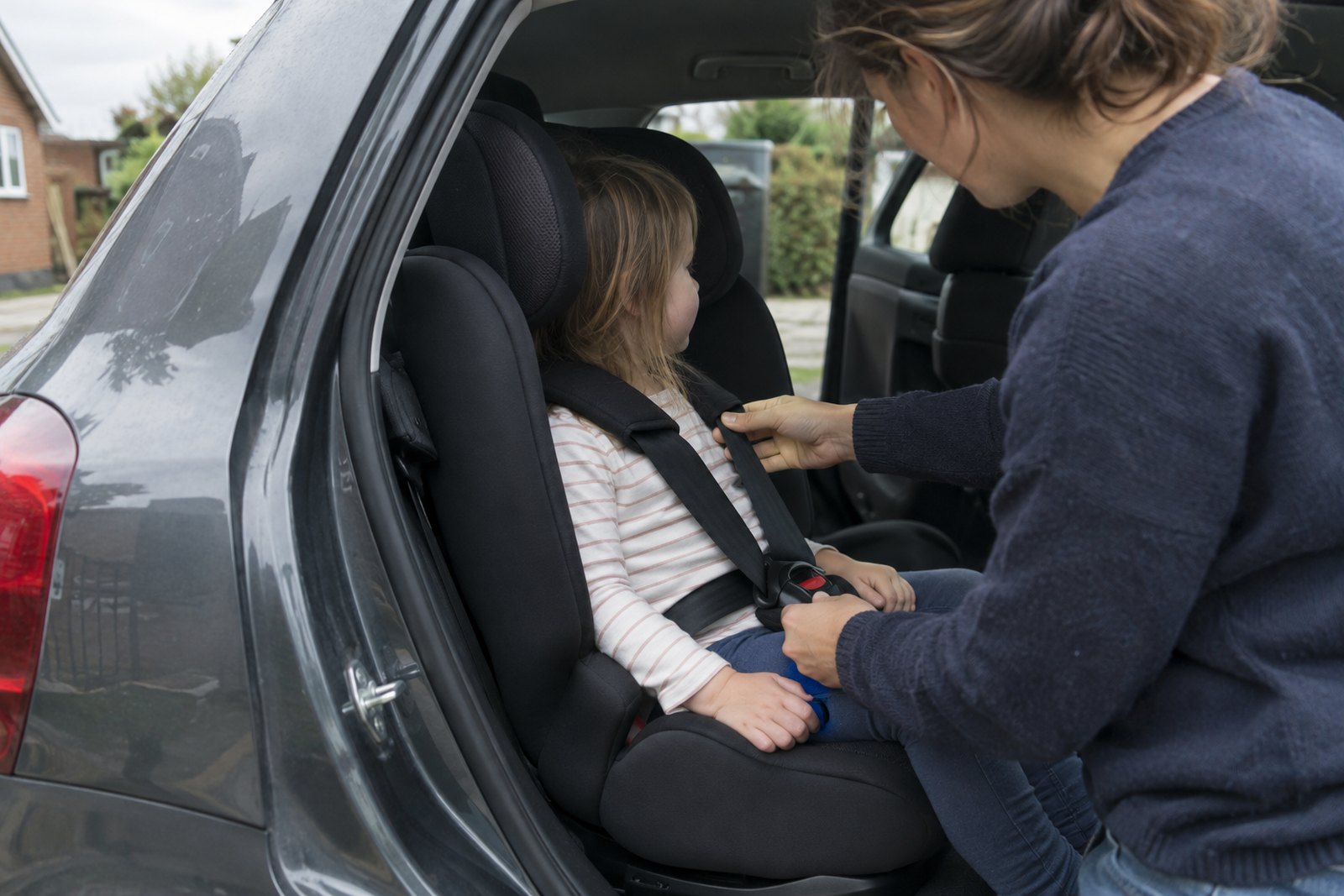
If your child no longer sits safely in an ordinary car seat, the answer is usually a specialist seat chosen after a proper assessment. Bigger versions of what you already have rarely fix it. Your child may have outgrown their seat, slump or slide down in it, or keep wriggling out of the harness. Specialist seats are often called special needs car seats or postural car seats. They give more support to the head, trunk and hips, and some have swivel bases or extra harness options that make getting in and out easier.
The quickest route is to ask the professionals already involved with your child, usually their physiotherapist or occupational therapist, for a car seat assessment. Then arrange a trial in your own car with a specialist supplier. Whatever you end up with must still meet UK child restraint law. Funding is patchy. The NHS rarely pays for car seats, but charities, the higher rate mobility part of Disability Living Allowance and some grants can help. The rest of this guide takes it step by step.
Signs a standard car seat has stopped working
Most parents know something is wrong long before anyone names it. You find yourself pulling over to straighten your child up, or dreading every journey. Common signs include:
- Size. Your child is near the height or weight limit of their seat, but you do not think they could sit safely on a booster with an adult seat belt.
- Slumping and leaning. They fall sideways, fold forward at the waist or end up crooked within a few minutes of setting off.
- Head control. Their head drops forward or rolls to the side, especially when they fall asleep.
- Sliding down. They slip forward under the harness or lap belt, so the straps end up across the tummy or neck instead of the hips and chest.
- Escaping. They get their arms out of the shoulder straps, undo the buckle, or climb out while you are driving.
- Pain or spasms. Journeys cause discomfort, muscle spasms or distress, or hips and spine need positioning their current seat cannot give.
- Medical kit or casts. A feeding tube, a hip spica cast, a brace or other equipment makes an ordinary seat awkward or unsafe.
- Lifting. Getting them into the seat has become a two-person job, or is hurting your back.
If your child's head regularly drops forward and you are worried about their breathing, stop somewhere safe and speak to their medical team or GP promptly. If they are struggling to breathe, call 999.
Types of special needs car seat
There is no single "special needs seat". There is a range of options, and the right one depends on your child's body, behaviour, size and your car.
Larger high-back harness seats
Some children simply need a five-point harness for longer than a standard seat allows, for example because they cannot yet sit steadily with an adult belt or will not stay in position. Larger harnessed seats are made for bigger and heavier children. They look fairly ordinary, which some families prefer, but they offer limited extra postural support.
Postural support seats
These are the seats most people mean by a postural car seat. Depending on the model, they can include deeper side wings at the head and trunk, adjustable side supports, a recline or tilt, a supportive headrest, a pommel between the legs to stop sliding forward, and adjustable footrests. They are aimed at children with low or high muscle tone, poor trunk or head control, or conditions such as cerebral palsy. They are bigger and heavier than standard seats, so checking they fit your car is essential.
Swivel bases and swivel seats
Some specialist seats sit on a base that rotates towards the open door. You position your child while facing them, then turn the seat to face forward and lock it. This can make a huge difference to your back, and to how calmly your child gets in.
Specialist harnesses and vests
Harnesses and vests are sometimes suggested for older or larger children who use the vehicle's own seat belt, or who need extra help staying upright. Be careful here. Some products are designed and tested as part of a restraint system. Others are positioning aids worn alongside the seat belt. Ask the supplier exactly what the product is, how it has been tested, and whether it is legal for your child's height and weight in the UK. Do not buy restraints from sellers who cannot answer that clearly.
Travelling in a wheelchair
Some children travel seated in their wheelchair in a wheelchair accessible vehicle. This is only safe if the wheelchair is crash-tested for use in a vehicle, secured with proper tie-downs, and your child wears a suitable occupant restraint, so check with your wheelchair service before relying on it.
What the law says, in general terms
In the UK, children normally have to use the correct child car seat until they are 12 years old or 135cm tall, whichever comes first. GOV.UK explains that the same rules apply to disabled children, but they can use a car seat designed for their needs. Exemptions on medical grounds do exist, but they are narrow and come from a doctor, not from deciding a seat is too difficult. Check the current rules on the GOV.UK child car seats page before making any decisions.
A few other points worth knowing:
- Car seats used in the UK must be approved. Look for the approval label showing a capital E in a circle and the regulation number. GOV.UK explains which labels to look for.
- You must not put a child in a rear-facing seat in a front passenger seat with an active front airbag.
- Fit the seat exactly as the manufacturer says, in a vehicle seat it is approved for.
- Adding straps, padding, buckle covers or clips that the manufacturer has not supplied or approved can change how the seat behaves in a crash. Ask before you add anything.
When your child escapes the harness
Escaping is one of the most frightening things a parent deals with on the road. It is common in autistic children, children with learning disabilities and some children with ADHD, as well as children who simply hate being restrained. A few practical steps help:
- Check the fit first. Loose straps are easier to slip out of. The harness should be snug, with shoulder straps at the height the manual specifies. Bulky coats make straps loose, so take them off and put a blanket over the top of the harness instead.
- Ask about approved options. Some seat manufacturers offer or approve harness guards or buckle covers for their seats. Others do not. Use only what is approved for your seat, and make sure an adult can still release your child quickly in an emergency.
- Look at why. Is the seat uncomfortable, too hot, too tight across a sore spot? Is the noise, the vibration or the feel of the straps the problem? A child who finds the experience easier is less likely to fight it.
- Make journeys predictable. A simple picture sequence of the trip, a favourite song that always plays, or a now-and-then card can help children who struggle with transitions.
- Keep loose objects to a minimum. Heavy toys or items on the lap can become dangerous in a sudden stop.
- Plan for escape. If your child gets out while you are driving, pull over as soon as it is safe. Do not reach back while moving.
If escaping continues despite a well-fitted seat, that in itself is a good reason to ask for a specialist assessment.
Getting assessed
Who does it
For most children, the starting point is the team you already have. Children's physiotherapists often lead on posture, muscle tone and hips. Occupational therapists look at the whole task of travelling, including getting in, sensory reactions and how it fits family life. In some areas either can carry out or advise on a car seat assessment. Specialist car seat suppliers also offer home or driveway demonstrations, often with a professional present.
If you do not have anyone involved, ask your GP or health visitor about referral to children's community therapy. You can also ask a private occupational therapist to visit. They can look at your child's needs in your car and write recommendations you can take to a supplier or funder.
What to bring and ask
- Your child's current height, weight and expected growth, so you do not buy a seat they outgrow within months.
- Your car, and any other car the seat will travel in. Check rear door opening width, seat shape and whether the seat fits with fixing points or a seat belt.
- A list of who drives your child: grandparents, a partner, a childminder. Can they all fit it and use it?
- Any medical equipment or casts.
- Ask for a trial in your own car before committing, and ask who will fit it and show you how.
School transport arranged by the council has its own arrangements. If your child needs a specialist seat or harness for that journey, raise it with the council's transport team and your child's school.
Paying for it
Specialist seats can be expensive, and families are often surprised to find the NHS does not routinely fund them. Some local teams can help in particular circumstances, so it is always worth asking, but plan for other routes:
- Charities. Newlife Foundation for Disabled Children provides equipment, including specialist car seats, for some families, and has an equipment loan service for urgent needs. Cerebra offers information and support for families of children with brain conditions. Smaller condition-specific charities and local grant-giving trusts may also help.
- Disability Living Allowance. Children who get the higher rate of the mobility component can, from age three, use it towards a vehicle through the Motability Scheme, which includes wheelchair accessible vehicles. Our guide to DLA for children explains how to claim.
- VAT relief. Equipment designed for disabled people may qualify for VAT relief. Ask the supplier, and see our guide to VAT relief on disability equipment.
- Second-hand seats. These can be tempting, but only consider one if you know its full history, it has never been in a crash, and it is assessed and fitted for your child.
Charities usually ask for supporting evidence from a professional, so a clear assessment report helps.
Getting your child in and out as they grow
Lifting a growing child into a car is one of the most common ways parents hurt their backs. The car is awkward: you are bending, twisting and reaching through a narrow door. Swivel bases, seats at a better height, and simply planning the transfer can reduce the strain a lot.
Our guide to safe moving and handling for family carers covers the principles, and getting in and out of a car describes the equipment that can help. If you are now lifting your child's full weight several times a day, that is the time to ask for help, not when your back has already gone.
Where an occupational therapist fits
An occupational therapist looks at the whole journey, not just the seat. That means getting from the front door to the car, the transfer itself, how your child sits once in, how they react to the straps, noise and movement, and whether the plan works for everyone who drives them. An occupational therapist can suggest strategies for children who escape or become distressed, advise on equipment for transfers, and write a report to support charity or grant applications. See our paediatric occupational therapy page for more on what that involves.
Be clear about the limits too. Physiotherapists usually lead on posture, tone and hip management, and may be the right person for complex seating. Wheelchair services lead on whether a wheelchair is safe for travel. Fitting and adjusting a seat is the supplier's job, following the manufacturer's instructions. Medical exemptions come from a doctor. And if your child has new or worsening problems with breathing, swallowing or head control, see your GP or their consultant rather than looking for a seat to solve it.
Frequently asked questions
Can my disabled child travel without a car seat if they will not tolerate one?
Generally no. The law still applies to disabled children, though they can use a seat designed for their needs. Medical exemptions are narrow and come from a doctor. Check GOV.UK, and ask for a specialist assessment, because a different seat often makes the journey much easier.
Will the NHS pay for a special needs car seat?
Not usually, though arrangements vary and it is worth asking your child's therapist. Most families fund seats through charities, grants or their own money, sometimes with VAT relief.
How long will a postural car seat last?
It depends on the seat's limits and how fast your child grows. Many specialist seats are adjustable, which is why sharing your child's current measurements and expected growth at the assessment matters.
Can my child sit in the front passenger seat?
Only if the seat is approved for that position and fitted correctly. Never put a rear-facing seat in front of an active front airbag. Most families find the back seat safer and easier.
Is a harness or vest a legal alternative to a car seat?
Some can be used legally for the right child, but they vary a lot. Ask the supplier how the product is tested and approved, and get professional advice on whether it suits your child.
Can my child stay in their wheelchair in the car?
Only in a suitable vehicle, with a wheelchair that is crash-tested for transport, proper tie-downs and an occupant restraint. Ask your wheelchair service whether your child's chair is suitable.
Next steps
If car journeys have become a daily battle or a risk, an assessment is the place to start. See our paediatric occupational therapy and equipment and aids pages, or current guide prices, and choose your area below.
Talk to an occupational therapist near you
This guide is general information. For advice about your own situation - or someone you look after - a local occupational therapist can visit you at home and see it for themselves.
Choose your area: