

DLA for Children: How to Claim and What Evidence Helps
By Mobile Occupational Therapist • 27 October 2026 • 14 min read
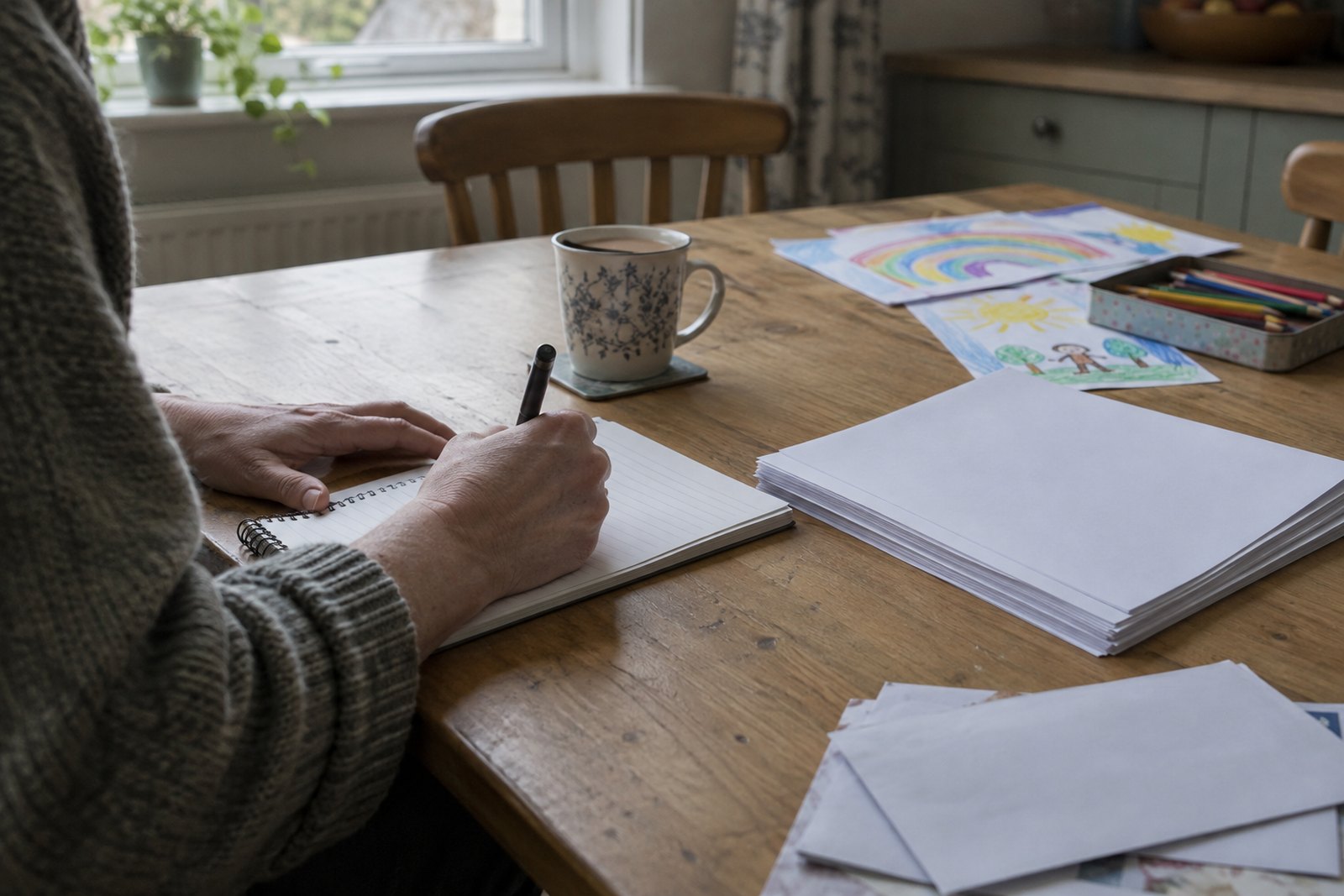
Disability Living Allowance (DLA) for children is a benefit for children under 16 who need a lot more care, supervision or help getting around than other children of the same age. It is not means-tested, so your income and savings do not matter. Your child does not need a formal diagnosis to get it. What counts is the extra help they need, day and night. DLA for children is available in England, Wales and Northern Ireland. In Scotland it has been replaced for children by Child Disability Payment, which is run by Social Security Scotland and works in a broadly similar way.
The form is long, and many parents find it miserable to fill in, because it asks you to write down everything your child struggles with. That is rather the point. Decisions are made mostly on what you write and the evidence you send, so the most useful thing you can do is describe real days in plain, specific detail. This guide covers how the test works, how to fill in the form well, which evidence helps, and what to do if the decision is wrong. Rules change, so check the current details on GOV.UK (or nidirect in Northern Ireland, or mygov.scot in Scotland) before you apply.
What DLA for children actually is
DLA has two parts, called components. Your child can get one, both or neither, and each is paid at different rates depending on how much help they need. We have not listed amounts here because they change each year. GOV.UK has the current figures.
The care component
This is for children who need extra help with personal care or extra supervision to stay safe. It has three rates:
- Lowest rate - extra help for some of the day.
- Middle rate - frequent help or constant supervision during the day, or help or supervision at night.
- Highest rate - help or supervision throughout both the day and the night, or if your child is terminally ill.
The mobility component
This is for children who have difficulty getting around. It has two rates:
- Lower rate - your child can walk but needs much more guidance or supervision outdoors than other children their age, for example on unfamiliar routes. This can usually be paid from age 5.
- Higher rate - your child cannot walk, can only walk a very short distance without severe discomfort, or meets one of several other strict conditions, such as certain severe sight impairments or a severe learning disability with severe behavioural difficulties. This can usually be paid from age 3.
In general, your child must have needed the extra help for at least three months and be expected to need it for at least another six months. There are special rules if a child is terminally ill, which speed things up and remove the waiting period. The care component is not usually paid before a baby is three months old. There are also residence rules. Check all of these on GOV.UK, because the detail matters.
The extra-care test, in plain terms
Every young child needs looking after. A two-year-old needs help to get dressed, a four-year-old needs watching near a road, and most seven-year-olds need nagging to brush their teeth. DLA is not paid for that. It is paid for the help your child needs over and above what a child of the same age without a disability would need.
So the question is never simply whether your child needs help. It is whether they need substantially more help, more often, for longer, or a different kind of help, than other children their age. For example:
- A nine-year-old who still needs to be fully dressed every morning, when most nine-year-olds dress themselves.
- A five-year-old who has no sense of danger, bolts without warning and must be held or watched every second outdoors.
- A child who wakes several times a night and needs an adult to settle them, change them, turn them or give treatment.
- A child who needs daily physiotherapy, tube feeding, medication management or checks of blood sugar or breathing.
- A teenager who can physically wash but needs step-by-step prompting and checking, or will not wash at all without support.
The younger your child, the harder this comparison can be, because all small children need a lot. That is exactly why specific detail matters. Spell out what your child needs that other children their age simply do not.
DLA for autism
There is no automatic award for autism or any other condition. Many autistic children do get DLA, but it is because of the help they need, not the label. Needs that often count include:
- Meltdowns or shutdowns that need an adult to keep the child safe or help them recover.
- No sense of danger, running off, climbing, or putting things in their mouth beyond the age where that is usual.
- Sensory distress around washing, hair, teeth, nails, clothing or toileting, which turns ordinary care into a long, difficult process.
- Very restricted eating that needs careful planning and supervision.
- Poor sleep, with an adult up in the night.
- Needing constant prompting, reassurance or help to communicate and get through the day.
- Needing an adult outdoors because of anxiety, unpredictability or not understanding traffic and strangers.
If you want to understand more about how practical support works for autistic children, our guide to occupational therapy for autistic children may help.
Before you start the form
In England and Wales you can download the child DLA claim form from GOV.UK or ring the DLA helpline to have one posted. In Northern Ireland, see nidirect. If you ask for a form by phone, it is usually dated, and if you return it within the time given, your claim can count from the date you asked. The deadline is printed on the form, so check it.
Then, before you write a word:
- Keep a diary for a week or two. Note what help you give, when, and how long it takes, including nights. It will be more accurate than memory, and you can send a copy as evidence.
- Gather what you already have. Clinic letters, reports, school plans, therapy notes.
- Get help if you want it. Contact, the national charity for families with disabled children, has a helpline and detailed guides to claiming DLA. Cerebra, a charity for children with brain conditions, publishes a well-regarded guide to filling in the form. Citizens Advice and some council welfare rights teams also help with forms.
- Photocopy the finished form before you post it. You will want it if you need to challenge the decision.
How to fill in the form well
Describe the bad days and the typical days
If your child's needs vary, say so, and explain how often bad days happen. Do not describe only the best day because it feels more hopeful. The decision maker needs the full picture: what a typical day looks like, what a bad day looks like, and how many bad days there are in a typical week or month.
Be specific: how often, how long, and what happens if you do not help
Vague answers get vague decisions. Compare these two:
- Weaker: He needs help getting dressed.
- Stronger: Every morning I dress him completely. He cannot manage buttons, zips or socks, and if clothes feel wrong he screams and pulls them off, so we often start again. It takes 30 to 40 minutes. His eight-year-old cousin dresses himself in five.
Use the extra space on the form, or add sheets with your child's name and the question number. Length is not a problem if it is relevant.
Do not forget nights
Night needs are easy to underplay because you are used to them. Write down how many times you get up, why, how long you are up, and whether someone needs to stay awake. Turning, changing, settling after night terrors, giving treatment and stopping a child wandering all count.
Explain supervision and safety
Supervision means watching to prevent harm, even if nothing happens most of the time. If you cannot leave your child alone in a room, near the kitchen, in the bath or by a door, say so and give real examples of what has happened or nearly happened.
Use real examples
A short, true story often explains a need better than a general statement. The time your daughter ran into a car park. The afternoon a change of route meant an hour-long meltdown on the pavement. The weekend you counted how many times you were up in the night. Keep them factual and calm.
Do not play it down
Many parents write 'he manages' or 'she's fine really' out of habit or pride. On this form, be honest about the help you actually give, including the help you have stopped noticing because it has become normal. If you have adapted family life around your child, explain what you do and why.
Evidence that helps
You do not have to send evidence, but good evidence makes a real difference. The most useful evidence comes from people who know your child well and describes what they need, not just their diagnosis. A letter that says 'this child has autism' tells the decision maker very little. A letter that says 'this child needs one-to-one support at lunch and cannot move between classrooms safely without an adult' tells them a great deal.
- School or nursery. A letter from the SENCO or class teacher about support in the day, safety, toileting, eating and how your child copes. An SEN support plan or Education, Health and Care Plan (EHCP) is often strong evidence. Our guide to EHCPs and what an occupational therapy report adds explains these.
- Health professionals. Paediatrician, GP, health visitor, specialist nurse, speech and language therapist, physiotherapist, occupational therapist, CAMHS or a hospital consultant. Recent reports you already hold are fine to send.
- Your diary. A copy of a week or two of notes, especially nights.
- Someone else who helps. A short statement from a grandparent, childminder or respite carer can confirm what you have described.
Send copies, never originals. If a professional is likely to be slow, do not hold back the form waiting for them. You can usually send further evidence later, and missing the deadline matters more.
Where an occupational therapist fits
Let us be honest first: you do not need an occupational therapy report to claim DLA, and many families get an award without one. A report does not guarantee anything, and the decision is made by the Department for Work and Pensions (DWP), not by any therapist.
Where an occupational therapist can genuinely help is in describing daily living. Occupational therapists look at how a child manages ordinary tasks such as dressing, washing, toileting, eating, sleep routines, moving about, play and staying safe, and why those tasks are hard. A report can set out what your child can and cannot do, how much help they need, and how that compares with what is expected at their age. That is very close to what the DLA test is asking.
If your child already sees an NHS or school occupational therapist, ask for a copy of their latest report or a short letter. That is often enough. A private occupational therapist visiting at home can observe real routines, such as the morning rush or bedtime, and write a functional assessment report. This tends to be most useful when there is little current professional evidence, when your child's needs have changed, or when you are preparing for a reconsideration or appeal. It costs money, so weigh that up.
Other professionals lead on other questions. A diagnosis comes from a paediatrician or specialist team, usually via your GP. Speech, language and communication needs are best described by a speech and language therapist. Walking and physical mobility are often assessed by a physiotherapist. And for help with the form itself, a welfare rights adviser is usually the right person.
After you send it: decisions, reconsideration and appeal
The DWP may contact the professionals you name or ask you for more information. You will then get a decision letter explaining what has been awarded, at what rates and for how long. Awards are often for a fixed period, after which you will be asked to renew.
If you think the decision is wrong, you can challenge it.
- Ask for a mandatory reconsideration. This means asking the DWP to look again. You normally need to do this within one month of the date on the decision letter. Explain which parts you disagree with and why, and send any new evidence. Late requests may be accepted in some circumstances, so check GOV.UK if you have missed the deadline.
- Appeal to an independent tribunal. If the reconsideration does not change things, you can appeal. In England and Wales this goes to the Social Security and Child Support tribunal, and you will need the mandatory reconsideration notice to do it. Northern Ireland has its own appeals service. A tribunal panel looks at the evidence afresh and you can attend to explain things in person.
One caution: a reconsideration or appeal looks at the whole award, so in principle it can go down as well as up. If your child already has some DLA, get advice from Contact or Citizens Advice before you challenge. Many parents find the appeal stage worth pursuing when the award clearly does not reflect their child's needs.
What DLA can open up
DLA matters beyond the money itself. Depending on the award and your circumstances, it may help you qualify for Carer's Allowance, extra amounts in Universal Credit or other benefits, a Blue Badge, or the Motability scheme. Each has its own rules, so check with an adviser and tell any other benefit office about the award. You can also ask your council for a carer's assessment, which our guide to carer's assessments explains.
Frequently asked questions
Does my child need a diagnosis to claim DLA?
No. DLA is based on the extra care, supervision or mobility help your child needs, not on a diagnosis. Many families claim while waiting for assessment. A diagnosis can help explain needs, but it is not required.
Can you get DLA for autism?
Yes, many autistic children get DLA, but not automatically. The award depends on the help your child needs compared with other children their age, such as supervision for safety, help with meltdowns, sensory difficulties with personal care, or disturbed nights.
Does our household income affect DLA?
No. DLA is not means-tested, so earnings and savings do not matter. It is generally not counted as income for other benefits and may increase what you get, but check your own situation with an adviser.
Do we have to spend DLA on anything particular?
No. It is meant to help with the extra costs of disability, but you decide how to use it. Families spend it on everything from extra laundry and heating to transport, equipment or activities.
How long does a decision take?
It varies and can take some weeks. Keep a copy of your form and a note of when you posted it. If you have heard nothing for a long time, ring the DLA helpline to check it has been received.
What happens when my child turns 16?
In England, Wales and Northern Ireland, DLA for children ends around 16 and young people are invited to claim Personal Independence Payment (PIP) instead. The DWP should write to you beforehand. In Scotland, Child Disability Payment has its own rules for older children, so check mygov.scot.
Next steps
If your child's daily needs are hard to put into words, or you need clear evidence for a claim or appeal, see our children's occupational therapy page, or current guide prices, and choose your area below.
Talk to an occupational therapist near you
This guide is general information. For advice about your own situation - or someone you look after - a local occupational therapist can visit you at home and see it for themselves.
Choose your area: