

Broken Ankle Recovery: Getting Around While Non-weight Bearing
By Mobile Occupational Therapist • 27 September 2026 • 14 min read
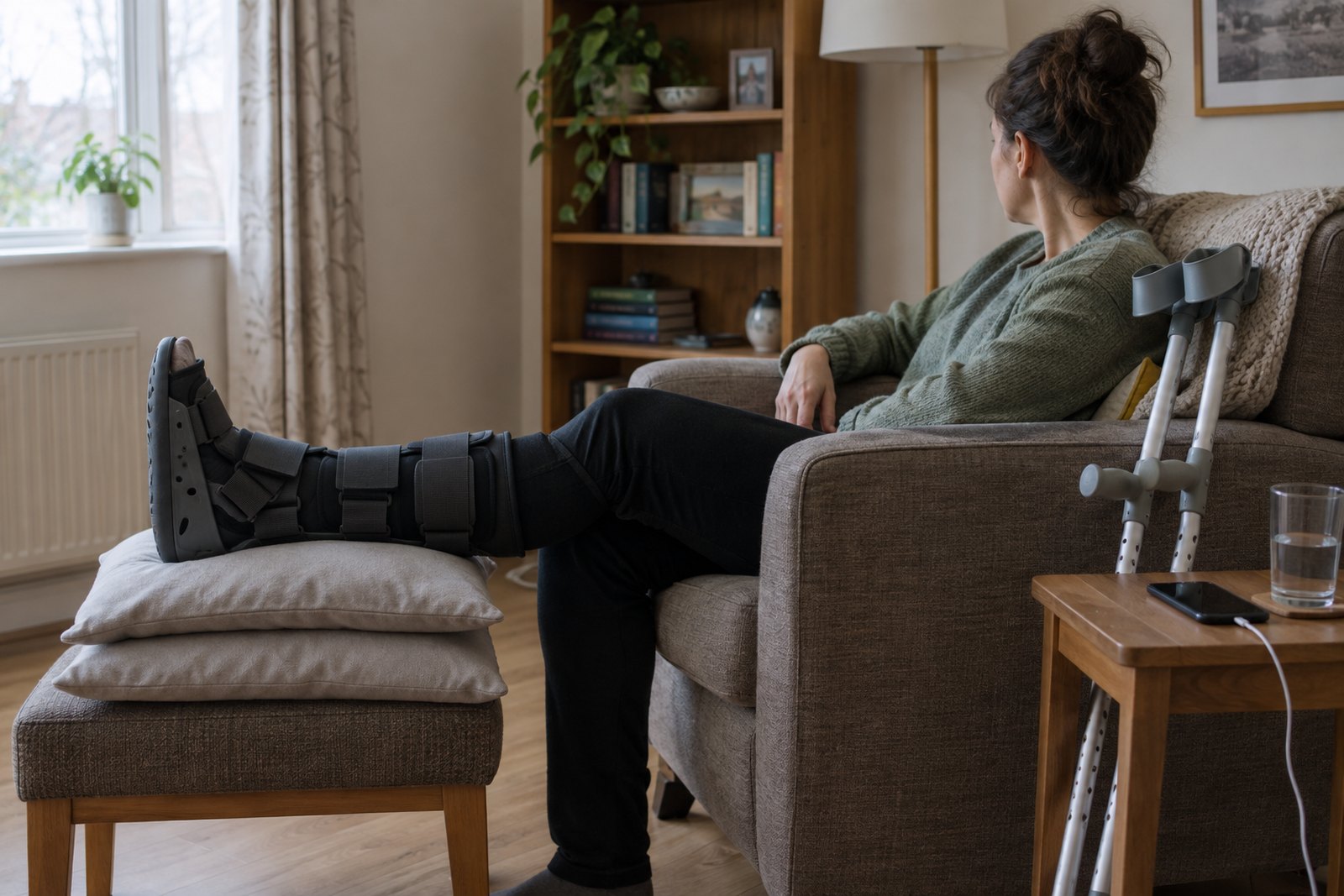
If you have a broken ankle and you have been told to be non-weight bearing, the priority is simple: protect the fracture while you keep yourself safe, clean, fed and able to rest. The fracture clinic decides when (and how) you can start putting weight through the leg. Until they change the plan, follow the instructions exactly, even if you feel you could do a bit more.
The hardest part of broken ankle recovery is often not the ankle itself. It is getting around your own home without falling, not getting the cast wet, managing stairs, and coping with swelling and tiredness. This guide covers practical ways to set things up for the first few weeks, plus the warning signs that need urgent help.
Start with the instructions from the fracture clinic
Most people leave A&E or the minor injuries unit with a temporary backslab, splint or boot, then get reviewed by orthopaedics or a fracture clinic. Your plan might include things like "non-weight bearing", "touch weight bearing" or "weight bearing as tolerated". These phrases matter. They are not just suggestions.
Before you change anything (including taking the boot off, sleeping without it, or trying a few steps), check what you were told and what is written in your discharge paperwork. If it is unclear, phone the fracture clinic and ask. It is worth doing, because doing the wrong thing can delay healing or cause a new injury from a fall.
What to keep an eye on in the first few days
- Pain that is getting worse rather than slowly settling.
- Swelling that is increasing a lot, especially if you cannot get comfortable even with elevation.
- Toes that feel numb, look blue or very pale, or are getting colder compared to the other foot.
- Wet or damaged cast, or a boot that no longer feels secure.
If any of these happen, seek urgent medical help. Contact the fracture clinic straight away if it is open, otherwise call NHS 111 or go to A&E. If your toes are numb, blue, very pale or very cold, or the pain is severe and rapidly worsening, call 999. If you have sudden breathlessness or chest pain, call 999.
Setting up your home for the first few weeks
Think of this as creating a safe "base camp". For a short period, you are living a smaller life in a smaller area. That is not failure. It is sensible risk management.
Make one main living area work
- Choose one room where you can sit with your leg up and reach what you need.
- Keep essentials within arm's reach: phone and charger, water bottle, tissues, medication (as prescribed), a notebook for questions for clinic, TV remote, and a small bin.
- Pick a chair that is easy to stand from using one leg and your arms. Too low and you will struggle. Too soft and you will sink.
- Clear the "runway" between that chair, the toilet and the kitchen. Remove loose rugs, footstools and clutter.
Plan for nights
If your bedroom is upstairs and stairs are difficult, consider a temporary sleeping setup downstairs. You do not need a perfect guest room. You need a safe place to sleep, access to a toilet, and a way to keep the ankle protected as advised. If you live alone, tell someone you trust what your plan is and arrange regular check-ins, especially in the first week.
Getting around when you are non-weight bearing
Non-weight bearing means your injured foot does not touch the floor to take your weight. The safest option depends on your balance, upper body strength, pain, confidence, your home layout, and any other health issues.
If you were issued crutches, ask for them to be checked for height and teach-back. Small changes to height and hand position make a big difference to safety. This guide to using crutches at home covers the common pitfalls.
Crutches, a walking frame, or something else?
- Crutches can work well if you have reasonable balance and strength, and you can concentrate. They are harder if you have dizziness, poor vision, painful wrists, or you are simply exhausted.
- A frame can feel steadier for some people, but it is bulkier and awkward on tight turns. It still requires upper body effort.
- A wheelchair may be suggested for longer distances or if you cannot manage safely with crutches or a frame. You still need to be able to transfer safely and keep the leg supported.
- Knee scooters can be useful for some people, but they are not right for every ankle injury and can be risky on uneven flooring and thresholds. Only use one if you have been advised it is suitable for your injury and you have been shown how to use it safely.
How to carry things when your hands are busy
Crutches and frames take your hands. That makes everyday tasks surprisingly awkward. A few simple workarounds help:
- Use a small bag (for example worn across the body) for phone, glasses and medication.
- Move items in stages. Put things on a surface halfway, then move yourself, then move the item again.
- Sit for tasks where you can. It reduces falls risk and fatigue.
A common trap is trying to do too much while hopping. Hopping is tiring and it raises your risk of falling. If you catch yourself doing it, treat that as useful information: you need a different plan.
Stairs: safest ways to manage
Stairs are where many people lose confidence. If you can avoid stairs for a while, do. It is often the safest option, especially in the first week when pain, swelling and fatigue are at their worst.
If you have to use stairs
- Only use a method you have been taught by a physiotherapist or healthcare professional. Do not rely on online demonstrations.
- Take your time. One step at a time. No carrying items.
- Keep a phone on you in case you need help.
- Consider having someone with you the first few times, positioned to help if you wobble.
If you were taught to use crutches on stairs, the detail matters. See the section on stairs in using crutches at home and still follow the technique you were shown locally.
Sitting up and down stairs
Some people are shown a "sitting" method for stairs (moving up or down on your bottom, then standing at the top or bottom). This can reduce the risk of falling for certain injuries and homes, but it is not suitable for everyone. Only do this if you have been taught it and you can get up safely at the end without twisting the injured ankle.
The bathroom: washing without soaking the cast or boot
Wet casts and damp padding cause skin problems quickly. Even if the outside feels dry, the inside can stay damp for hours. Unless you have been specifically told your cast is waterproof (many are not), treat it as "keep it dry at all costs".
The lowest risk option: strip washing
For the first week or two, a strip wash at the sink can be the simplest and safest option. Sit down if you can. Lay out what you need first. Keep your injured leg supported and away from splashes.
Showering and bathing more safely
If your shower is step-free and you can sit, a shower stool or shower chair may help. The key points are stability, enough room, and a safe way to get on and off without putting weight through the injured foot. This guide to shower stools and shower chairs explains what to look for and the common safety mistakes.
If you have a shower over the bath, a bath board can be helpful for some people, but it must be fitted correctly and it is not appropriate for every bath. See bath boards for a plain English overview. Whatever method you use, keep the injured leg out of the water and protect the cast from splashes.
Toileting when you cannot move quickly
Make the toilet trip easier by clearing clutter, improving lighting, and keeping the route dry. If you are rushing because you cannot manage in time, tell your GP. New urinary urgency can have several causes including infection, constipation or medication effects, and it is often treatable. Seek urgent medical advice if you have fever, blood in your urine, severe pain, new incontinence, or you cannot pass urine. If you are worried about getting to the toilet at night, consider a commode only if you have been advised it is appropriate and safe for you.
Kitchen and meals when you cannot carry things
Cooking on one leg is not a good idea. The goal is to eat and drink well enough to heal, not to win a baking competition.
Make the kitchen workable
- Rearrange so mugs, plates and food are between waist and shoulder height. Avoid low cupboards while you are on crutches.
- Sit to prepare food. A perching stool can help if you can safely get on and off it and your kitchen has enough space. Read perching stools before you choose or use one.
- Use the microwave or cold meals more than usual if it reduces risk.
Carrying drinks and plates
In hospital you might see people pushing a trolley. At home, pushing a trolley while using crutches does not work. You cannot safely do both. Instead:
- Plan ahead. Bring a drink, snack, phone and charger in one trip.
- Use a lidded cup or bottle to reduce spills.
- Move food in smaller containers that fit in a bag.
If you live alone, consider asking someone to help with a food shop and some simple meal prep for the first week. It is practical support, not a big emotional conversation.
Elevation, swelling and comfort
Swelling is normal after an ankle fracture. It often gets worse later in the day, and it can make pain feel sharper and the cast or boot feel tighter. Elevation helps, but it needs to be done properly to make a difference.
How to elevate effectively
- Think "toes above nose" where possible. The foot needs to be raised, not just resting on a low stool.
- Support the whole leg, not just the heel. Pressure on the heel for long periods can cause skin problems.
- Change position regularly. Staying in one position for hours makes you stiff and sore.
Some people find shaped supports useful for keeping the leg comfortable and well positioned. See leg elevation pillows for what matters and what to avoid.
Movement and exercises
You may be given exercises for your toes, knee or hip, or advice to keep other joints moving. Do what you have been prescribed. Do not invent ankle exercises if you have been told to keep the ankle still. If you were given no guidance and you are unsure, ask the fracture clinic at your next review.
Problems that need urgent help
Most broken ankle recovery is uncomfortable rather than dangerous. But there are a few situations where you should get help quickly.
Possible blood clot symptoms
After injury and reduced mobility, blood clots can happen. Get urgent medical advice if you have new calf pain, unusual swelling in the calf, or the leg becomes warm and tender, especially if it is more on one side.
Call 999 if you have sudden breathlessness, chest pain, or you cough up blood. Do not drive yourself to hospital.
Cast or circulation warning signs
Seek urgent medical help if:
- Your cast or boot feels suddenly much tighter.
- Your toes are numb, tingling, very cold, blue or very pale.
- You cannot move your toes as normal (compared to earlier).
- Pain is severe and not settling with rest and elevation.
- The cast is cracked, soft, rubbing, or has got wet inside.
Falls
If you fall, treat it seriously. If you hit your head, feel faint, cannot get up, have severe new pain, or the ankle looks different, seek medical advice straight away. If you are in doubt, call NHS 111. If you think you have a serious injury or you are struggling to breathe, call 999.
Getting out, working, and driving again
Your world can shrink quickly when you cannot put a foot down. Try to think in "safe access" rather than "toughing it out". If you have a follow-up appointment, plan transport in advance. Taxis, lifts from friends, or hospital transport may be options depending on your situation locally.
Returning to work
It depends on your job and your weight-bearing status. A desk-based role might be possible sooner if you can keep the ankle elevated and take regular breaks. A job that involves standing, climbing, carrying or driving may need longer. Speak to your employer early about temporary changes, and ask your GP or hospital team if you need a fit note.
Driving
Do not drive until you have been told you can safely control the car, including an emergency stop, and you are not restricted by a cast or boot in a way that makes driving unsafe. Your insurance may also have requirements. If in doubt, ask the fracture clinic for written guidance and check your insurer's position before you drive.
Where occupational therapy fits
An occupational therapist focuses on the practical problem in front of you: how you manage daily life safely at home while your ankle heals. A private occupational therapist visiting at home can look at your layout, your stairs, your bathroom, and how you are actually moving, then suggest realistic changes that reduce falls risk and conserve energy.
That might include recommending the right type of bathing setup, sorting out a safe way to carry items, positioning your chair and foot support so elevation is achievable, and helping you plan routines so you are not doing repeated risky trips. Occupational therapy does not replace your fracture clinic or physiotherapy. If your main issue is pain control, wound concerns, or new symptoms, your GP, fracture clinic or urgent care is the right place.
Frequently asked questions
How long will I be non-weight bearing after a broken ankle?
It varies a lot depending on the type of fracture, whether you had surgery, and what your scans show at follow-up. The safest answer is the one from your fracture clinic. If you are unsure what you were told, phone and ask, as "a bit of weight" can mean very different things in different injuries.
Can I put my foot down for balance if I am non-weight bearing?
Not unless you have been told you can. Some plans allow "touch weight bearing" where the foot can rest lightly for balance but not take body weight. If you are non-weight bearing, assume the foot should not touch down, and ask your clinician to clarify if you are struggling.
How do I wash if I cannot get the cast wet?
Strip washing at the sink is often the safest early option. If you shower, keep the cast completely dry and use a stable seat if needed. If your cast gets wet inside or starts rubbing, contact the fracture clinic. Do not try to "dry it out" with heat.
Do I need a wheelchair or knee scooter at home?
Some people manage well with crutches, others do not. A wheelchair or knee scooter can help in the right situation, but it depends on your balance, space at home, and the injury itself. If you are repeatedly hopping, falling, or avoiding the toilet or kitchen because it feels unsafe, ask the fracture clinic, physiotherapy team or an occupational therapist to review your setup.
What are the signs of a blood clot after an ankle fracture?
Seek urgent advice for new calf pain, calf swelling or tenderness, especially if it is on one side. Call 999 for sudden breathlessness or chest pain. If you are worried, it is better to be checked.
When can I drive again after a broken ankle?
When you can safely control the vehicle, including an emergency stop, and you are no longer restricted by your injury, cast or boot. Your fracture clinic can advise based on your treatment plan, and you should also check your insurance policy before returning to driving.
Next steps
See our home assessments page or current guide prices, and choose your area below.

Talk to an occupational therapist near you
This guide is general information. For advice about your own situation - or someone you look after - a local occupational therapist can visit you at home and see it for themselves.
Choose your area: