

Bariatric Equipment at Home: What Exists and How to Get It
By Mobile Occupational Therapist • 10 October 2026 • 14 min read
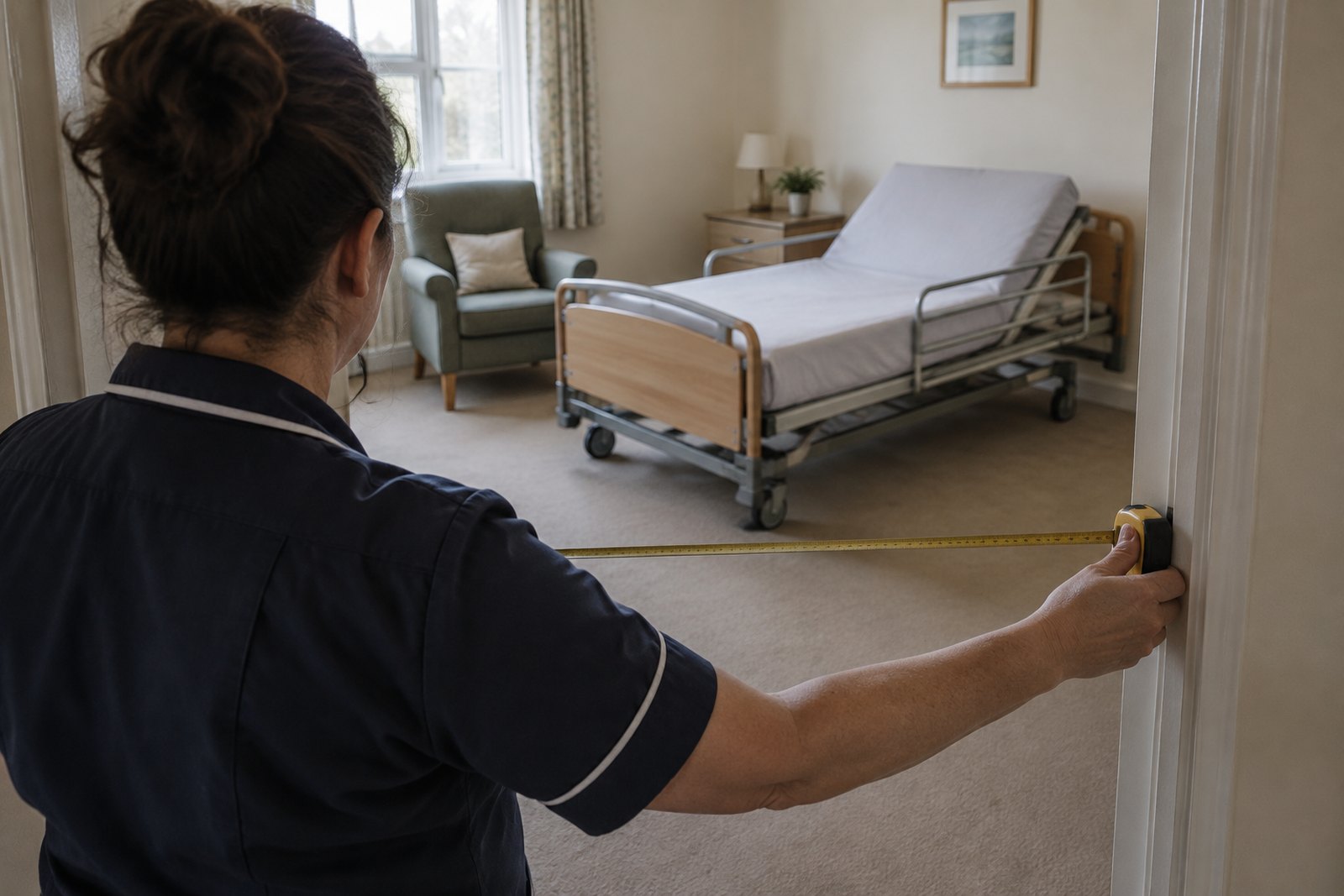
Bariatric equipment is equipment built to take more weight, and to fit a wider or larger body, than standard equipment. Beds, mattresses, chairs, commodes, shower chairs, toilet frames, walking aids, wheelchairs, hoists and slings all come in heavier duty versions. In the UK, most people get it on loan from their council's community equipment service or through the NHS, after an assessment by an occupational therapist, district nurse or physiotherapist. You can also buy it privately. Either way, measure first and check the safe working load on everything.
You may be reading this because a standard commode creaked, a bed is too narrow to turn over in, or the hospital has said it needs "bariatric kit" before discharge. None of that is unusual, and you have not done anything wrong. This guide explains what exists and how to measure your home for it in plain terms. It also covers how to keep carers safe and how to get equipment without paying more than you need to.
Why standard equipment has weight limits
Every piece of equipment is designed and tested to carry a certain load. That figure is called the safe working load (SWL), sometimes written as maximum user weight. It is usually on a label on the frame and in the instructions. Above it, the maker no longer says the item will hold. Frames can bend, welds can crack, legs can splay and wheels can fail. This often happens without warning, and usually at the worst moment: halfway through a transfer.
Weight is not the only thing. A standard seat may hold your weight on paper and still be too narrow. Then the arms dig into your hips, or you perch on the front edge, which is less stable. How weight is spread matters too. Two people of the same weight can need quite different seat widths and depths. Good equipment fits the body, not just the number.
A few things people often miss:
- Everything the item carries counts. For a bed, that is the person plus anything else on it. If you push down hard on commode arms to stand, that force counts too.
- The lowest rating wins. A hoist rated higher than its sling, or a bed rated higher than its mattress, is only as safe as the weakest part.
- Old or second-hand equipment may be worn, have missing labels or carry a lower rating than you think. If you cannot find the SWL, do not guess.
You also need an accurate, current weight. Many bathroom scales do not go high enough. A GP surgery, district nurse or hospital team can weigh someone on higher capacity scales, including seated or bed scales. It can feel awkward to ask. It is still the single most useful number for getting equipment right.
What bariatric equipment exists
Beds
Bariatric beds are usually electric profiling beds. The height, backrest and knee section adjust with a handset. They are wider than a standard single bed, with a stronger frame and motors, and some can be widened. Height matters as much as width. A carer can raise the bed to work at waist height, then lower it so the person can sit on the edge with their feet flat on the floor. Many come in sections so they can be carried through a house and built in the room.
Mattresses and pressure care
Mattresses have their own weight rating. Pressure relieving mattresses range from higher specification foam to air mattresses that inflate and deflate in sections. If someone spends a lot of time in bed or a chair, their skin is at risk, particularly in skin folds and on the buttocks, heels and back of the head. District nurses usually lead on pressure care and can arrange a mattress. Our guide to pressure relief cushions and mattresses explains the types.
Chairs and riser recliners
Heavy duty armchairs and riser recliners have wider seats, reinforced frames and stronger motors. Seat height, width and depth should be measured to the person. A seat that is too deep pushes you back until your feet barely touch the floor. A seat that is too low makes standing a struggle. A riser recliner helps with standing, but it does not replace the strength to stand. If someone cannot take their own weight at all, they need a different plan.
Commodes, toilet frames and raised seats
Bariatric commodes are wider, with stronger legs and often adjustable height. On some, the arms drop or swing away so the person can transfer sideways. Toilet surround frames and raised toilet seats also come in heavy duty versions. Check the toilet itself as well. Floor-standing toilets are generally robust, but wall-hung toilets have their own load limits, so ask the installer or manufacturer. A rail fixed into a solid wall is sometimes a better option than a frame.
Shower chairs, stools and bath equipment
Wider shower chairs and stools with higher ratings exist. They usually have splayed legs for stability and rubber feet. Bath boards and bath lifts have limits that rule them out for some people. Climbing over the side of a bath is often the riskiest part of washing anyway. A level access shower may be the safer long term answer. That counts as an adaptation rather than equipment, and adaptations are covered below.
Walking aids and wheelchairs
Heavy duty sticks, frames and wheeled walkers have stronger tubes. Wider frames let you walk inside the frame rather than holding it at arm's length. The height still needs setting correctly. Wheelchairs with wider seats and higher ratings are available through NHS wheelchair services, usually after a referral from a GP or therapist.
Hoists, slings and moving equipment
Mobile hoists, ceiling track hoists and stand aids all come in higher capacity versions. A sling must match both the hoist and the person: the right size, the right type and the right rating. Larger slide sheets make it easier for carers to reposition someone in bed. Bariatric mobile hoists are bigger and heavier themselves, so the room needs space to move and turn one. Our guide to hoists at home goes into more detail.
Measuring your home: space, doorways and floors
The commonest problem is not finding the right bed. It is getting the bed into the room. Measure before anything is ordered.
- Doorways. Open the door fully and measure the clear width at the narrowest point, usually from the face of the open door to the opposite frame. Handles and door stops take up space. Measure every door on the route, not just the bedroom door.
- Corridors and turns. Long items need room to swing round corners. Note where a hallway narrows, and any radiators, banisters or furniture that cannot move.
- Stairs and lifts. If the room is upstairs, measure the stair width and landings. In a flat, measure the lift door and the inside of the lift, and check its rated capacity.
- Space around the bed or chair. Carers need room on at least one side, and often both. A mobile hoist needs space to come in and turn. Clear floor without rugs helps wheels move.
- Bathroom and toilet. Measure the space beside and in front of the toilet, and the shower area, for a frame, commode or shower chair.
- Power. Electric beds, air mattresses and hoist chargers need sockets nearby. Keep cables away from walking routes.
Floors worry people, and it is better to raise the question than ignore it. Most ground floors cope well. Upstairs floors are usually timber joists, which vary with the age and condition of the house. A heavy bed, mattress, person and carers standing close together put a lot of weight in one area. If a floor bounces, sags or has been altered, mention it during the assessment. The equipment service, the council, a surveyor or a structural engineer can advise. Ceiling track hoists need a structural check before fitting, and the installer should arrange this.
Moving and handling: keeping carers safe
Family carers often manage on strength and goodwill. That works until it does not, and a carer's back injury can take a long time to recover from. The principle is simple: equipment and technique do the work, not your back.
- Do not lift a person by hand, including under the arms. It hurts their shoulders and your back.
- Have a written plan for each transfer, such as bed to chair, onto the toilet and moving up the bed. It should say who does what, with which equipment, and how many people are needed.
- Some tasks need two people. If the plan says two, do not try it alone because the other person is running late.
- Paid carers should follow their employer's moving and handling assessment. Ask to see it. When paid carers use lifting equipment at work, health and safety law requires it to be examined regularly. The HSE has guidance on these rules, known as LOLER.
- If someone is on the floor and hurt, call 999. If they are not hurt but cannot get up using their own strength, do not lift them. Call NHS 111, or your local falls response service if there is one. Call 999 if they become unwell, are struggling to breathe, are confused, or are likely to be on the floor for a long time. Meanwhile keep them warm and comfortable, and help them into a position where they can breathe easily, such as sitting or on their side, if they can move themselves.
Our guide to safe moving and handling for family carers covers technique. If caring is wearing you down, you are entitled to a carer's assessment from the council in your own right.
How to get bariatric equipment through the council or NHS
In the UK, most bariatric equipment is lent free after an assessment rather than bought. The main routes are:
- Council adult social care. In England, ask for a needs assessment under the Care Act. Scotland, Wales and Northern Ireland have their own systems. You can refer yourself. An occupational therapist or trained assessor will look at how daily tasks are going and can order equipment from the community equipment service. Our guide to the Care Act needs assessment explains how to prepare.
- NHS community teams. District nurses, community physiotherapists and community occupational therapists can order equipment, particularly beds and pressure mattresses.
- Hospital discharge. If someone needs bariatric equipment to get home, the ward team should arrange it before discharge. Some bariatric items have to be specially ordered, so raise it early and make sure someone has measured the home.
- NHS wheelchair services. This is a separate referral, usually from a GP or therapist.
- Adaptations. Widened doors, a level access shower and a ceiling track hoist are adaptations rather than loan items. In England, a Disabled Facilities Grant from the council may help pay for them, and adults are usually means tested. GOV.UK explains how to apply. Rules differ in Wales and Northern Ireland, and Scotland has its own scheme, so ask your council or housing provider.
Waiting times vary a great deal between areas. If things change while you wait, tell the team. A fall, a new pressure sore or a carer who can no longer cope can all change how urgently you are seen.
Buying privately
If you buy, choose a safe working load comfortably above the person's current weight, not just level with it. Get every dimension, including the delivery size and the assembled size, and check them against your measurements. Ask about servicing and repairs, because heavy duty items get heavy use. Equipment for a disabled person may qualify for VAT relief, so ask the seller. Avoid second-hand lifting equipment unless it has been serviced and examined and has a clear rating.
Dignity, language and being treated with respect
"Bariatric" is a clinical word. Some people do not mind it, and some find it a label. It is reasonable to ask professionals to say "equipment with a higher weight capacity" or "wider seating" instead, and to talk to you as a person rather than about your weight. Weight, hip width and body shape are measurements, the same as height. They should be taken privately, recorded accurately and used for one purpose: getting equipment that is safe and comfortable.
Good practice also means not making assumptions. Being larger does not mean someone cannot do things for themselves, and the aim is to keep as much independence as possible. If you feel judged by a professional, you can say so, ask for a different person or use the organisation's complaints process.
Some problems need a doctor rather than equipment. See your GP if breathlessness, swollen legs, broken or weeping skin, or tiredness is getting worse. Call NHS 111 if you are worried and not sure what to do. Call 999 for chest pain, severe breathlessness or a serious fall. A GP can also talk about weight management support, but only if the person wants that conversation.
Where an occupational therapist fits
An occupational therapist looks at what someone needs to do each day, how they manage it now and what would make it safer and easier. For bariatric equipment, that usually means:
- watching transfers and daily tasks, not just writing down a weight
- measuring the person and the home, including doorways, turning space and the bathroom
- recommending equipment by type, size and rating, and checking that every part matches
- writing or contributing to a moving and handling plan for family and paid carers
- advising on adaptations and supporting a Disabled Facilities Grant application
Other professionals lead on other things. District nurses lead on skin and pressure care. Physiotherapists lead on strength, walking and rehabilitation. GPs deal with health concerns and referrals, and dietitians help with eating and weight where the person wants that help. Council and NHS occupational therapists can order loan equipment directly. A private occupational therapist visiting at home can assess, measure and recommend equipment. Their report can support a request to the council or help you buy the right thing. They usually cannot issue council loan equipment themselves. Our home assessment page explains what a visit covers.
Frequently asked questions
What weight counts as bariatric?
There is no single cut-off that everyone uses. Equipment is chosen by comparing the person's weight and size with each item's safe working load and dimensions. If someone is close to or over the limit of standard equipment, or does not fit it comfortably, heavier duty equipment is considered.
Can I get a bariatric bed free on the NHS?
Often, yes, on loan, if an assessment shows it is needed. Ask the district nurse, GP or council adult social care. If the person is in hospital, ask the ward team. The bed is usually lent rather than given, and collected when it is no longer needed.
Is a bariatric commode the same as a heavy duty commode?
Broadly, yes. The two names are used loosely. What matters is the stated safe working load, the seat width and the height range, so check those figures rather than going by the name.
Will a bariatric bed fit through my door?
Many are delivered in sections and built in the room, so they often fit through ordinary doors. Measure the narrowest point on the route and give the figures to whoever is ordering the bed. In some homes the bedroom does not work, and a downstairs room is more practical.
Do bariatric hoists need servicing?
Yes. When paid carers use them, hoists and slings must be thoroughly examined under LOLER. HSE guidance says equipment for lifting people should be examined at least every six months. The equipment service usually services loan hoists. Check slings before every use for fraying, tears or faded labels.
What if the equipment we have now feels unsafe?
Stop using it for anything it seems to struggle with and contact whoever supplied it. For loan equipment, ring the community equipment service or the team that ordered it, and ask for a review. Do not improvise with furniture in the meantime.
Next steps
If you are not sure what will fit or what is safe, an assessment is the quickest way to find out. See our equipment and aids page, or current guide prices, and choose your area below.
Talk to an occupational therapist near you
This guide is general information. For advice about your own situation - or someone you look after - a local occupational therapist can visit you at home and see it for themselves.
Choose your area: