

Autism and Puberty: Hygiene, Periods and Body Changes
By Mobile Occupational Therapist • 20 October 2026 • 12 min read
Puberty arrives for autistic children on roughly the same timetable as for anyone else. What is often different is how it lands. Changes that other children pick up from playground chat may need explaining directly, literally and well in advance. New hygiene routines can collide head-on with sensory sensitivities. A first period or a sudden smell under the arms can be frightening if nobody said it was coming.
The short answer for parents is this: start early, explain plainly, use pictures, break each new task into small steps and practise before you need to. Most battles over showers, deodorant and periods are not defiance. They are usually about sensory discomfort, not knowing the steps, or not seeing the point. Each of those has workarounds, and this guide goes through them.
When to start talking about puberty
The NHS says puberty usually begins between 8 and 13 in girls and between 9 and 14 in boys. For a child who copes badly with surprises, assume it could be the earlier end. Start talking a year or two before anything is likely to happen, so the information is familiar, even boring, by the time it is needed. A seven or eight year old usually takes body facts at face value. A twelve year old who is already embarrassed is much harder to reach.
If changes seem to start very early or there are no signs at all by the early teens, mention it to your GP. The NHS website has the current guidance on what counts as early or late.
Explain it literally, and use pictures
Euphemisms cause real confusion. "Your body is blossoming" can mean nothing at all, or something alarming. Use the correct names for body parts and say exactly what will happen.
- Be specific. "Hair will grow under your arms and around your penis. It is normal and it does not hurt" beats "you'll get a bit hairier".
- Give the practical consequence. "Sweat will start to smell. Other people can smell it even if you cannot. Deodorant stops the smell."
- Say what stays the same. "You will still be you. Periods do not mean you are ill or hurt."
- Show, then repeat. Simple line drawings of bodies at different ages help many children more than talk alone. Short, calm, repeated conversations work better than one big talk.
A social story is one of the most useful tools here. A short, personalised story with pictures might say: "Sometimes I will find blood in my pants. This is called a period. It happens to lots of girls. It means my body is growing. I will tell Mum and put on clean period pants." Write it in the first person, keep it calm and factual, and read it together many times before it is needed.
Hygiene routines, broken into steps
Most adults shower without thinking. For an autistic teenager it can be a long chain of decisions with no obvious start and no obvious end. Writing or drawing the steps takes the guesswork out.
Showering
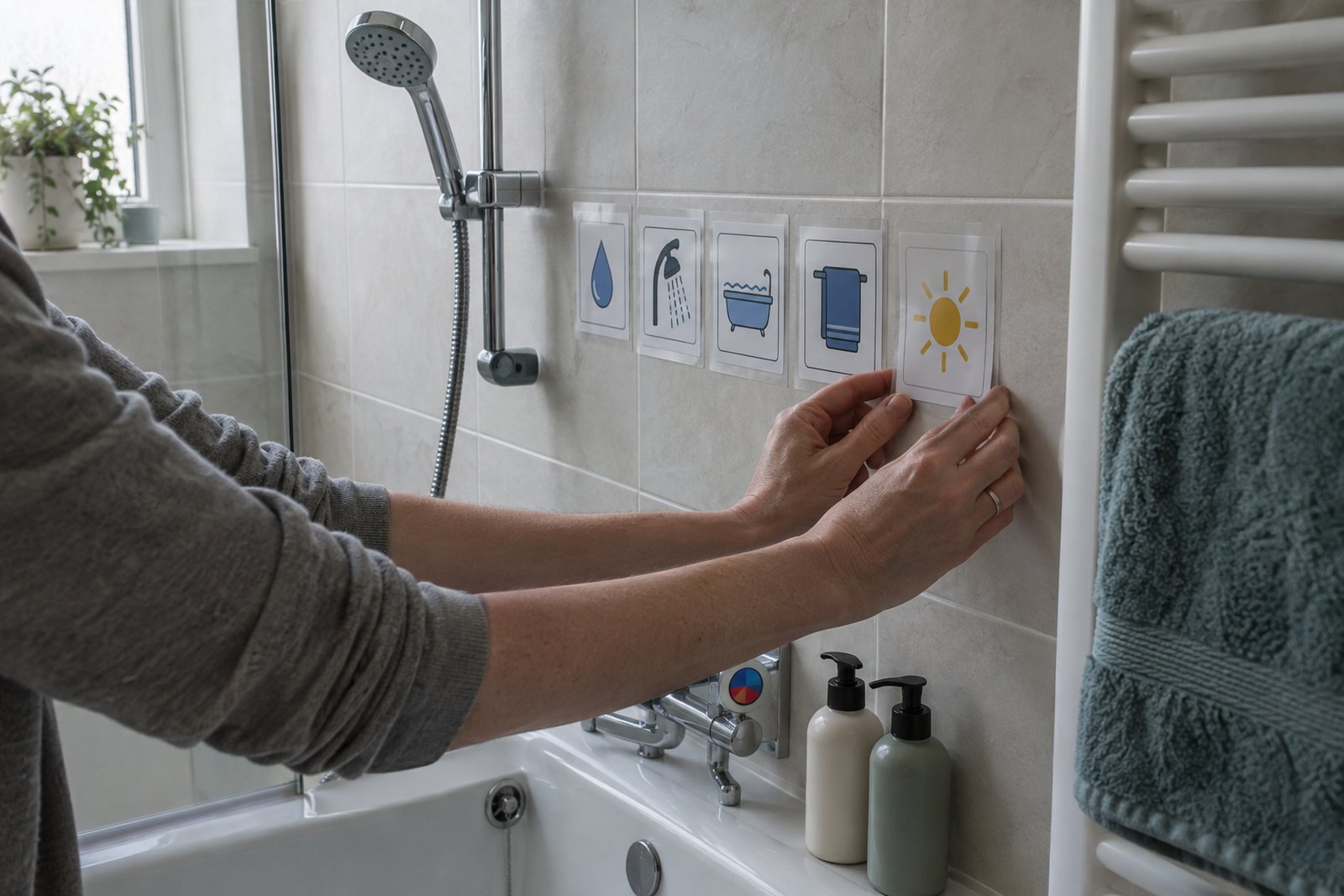
A picture sequence on the bathroom wall, laminated or in a waterproof wallet, might look like this:
- Get towel and clean clothes ready.
- Turn water on. Check it is warm, not hot.
- Wet hair. Shampoo. Rinse until there are no bubbles.
- Soap on flannel. Wash face, armpits, chest, private parts, bottom, legs, feet.
- Rinse. Turn water off. Dry.
- Deodorant. Clean clothes on. Dirty clothes in the basket.
"Wash yourself" means nothing to some children. Tell them which parts, in what order, and what "done" looks like: count to ten on each part, or rinse until you cannot see bubbles. A waterproof timer or a short playlist can mark how long the whole shower lasts.
Put showering on a visual timetable so it happens at the same point on set days, rather than being a fresh negotiation each time. "After tea, shower, then screen time" usually goes better than "you need a shower, you smell".
Deodorant
Explain why plainly, then attach it to a fixed moment, such as straight after getting dressed. Keep it next to the clothes, not in a cupboard elsewhere. Many children prefer a roll-on or stick to a spray, because sprays are cold, loud and strong-smelling.
Shaving
Whether to shave is a choice, and some teenagers are happy not to. If your child wants to, an electric razor is usually the easier start: no foam, less risk of cuts. Practise with it switched off, then switched on but not touching skin, then on a small area, in front of a mirror with good light.
Puberty often brings greasier hair and skin too. Our guide to sensory-friendly haircuts, teeth brushing and nail cutting covers those tasks.
Sensory barriers and workarounds
When hygiene keeps going wrong, ask which part of it feels bad. Many autistic young people experience sensory input more intensely, and puberty rarely makes that easier. Our guide to sensory processing in teenagers covers the bigger picture. Common sticking points:
- Water on the face or head. A handheld shower head your child controls, a cup for rinsing or a flannel over the eyes. On some days a strip wash at the sink is a perfectly good substitute.
- Water temperature. Small changes can feel extreme. Agree a setting, mark it on the dial with a sticker and leave it there. Check the temperature yourself if your child does not feel heat accurately.
- Smells. Unscented shampoo, soap and deodorant are widely available. Let your child choose by smelling them first.
- Textures. Gel, foam and bar soap feel very different. Towels can feel scratchy; a soft one or a towelling robe may help.
- Noise. Extractor fans and echoey bathrooms can overwhelm. Run the fan after they have finished.
- Getting cold. Warm the room and the towel first and put clothes within reach.
- Stopping something enjoyable. Often the hardest part. A warning ("ten minutes, then shower") and something good afterwards can help more than any product change.
Periods
For some autistic young people, periods are a non-event once understood. For others, the blood, the feel of a pad, the unpredictability and the pain are genuinely distressing. Preparation makes a big difference.
Practise before they start
- Handle the products. Open pads and period pants together. Stick a pad in a pair of pants, take it off, wrap it and put it in the bin.
- Practise with colour. A few drops of red food colouring on a pad makes the sight less of a shock. Explain that period blood can be red, brown or dark, and that a small amount looks like more than it is.
- Do trial runs. Wearing a pad or period pants at home for an hour, then a day, lets your child find what is comfortable while nothing is at stake.
- Make a period kit. A small zipped bag with spare period pants or pads, wipes, spare pants and a bag for used items. Keep one in the school bag and practise using it.
Choosing products
Period pants suit many autistic young people: they feel like ordinary underwear with no sticky backing to shift about. Pads come in many lengths, thicknesses and textures, so if one feels wrong, try another before giving up. Tampons and menstrual cups need more confidence and fine motor control, and are not where most young people start.
Tracking
Periods are often irregular at first, which is hard for a child who likes to know what is coming. A calendar with a sticker for each day of bleeding helps them see a pattern. A visual chart of when to change products, such as at break, lunch and after school, takes the decision out of it.
Pain, mood and when to see the GP
Some period pain is normal, and a heat pack, gentle movement and rest can help. Some autistic young people find it hard to describe or locate pain, so it may show up as more meltdowns, withdrawal or refusing school. A pain scale with faces or numbers can help them tell you.
See your GP if periods are very heavy (for example, needing to change protection every hour or two, or bleeding through clothes), if pain stops normal life or the pain relief a pharmacist or GP suggested is not enough, if bleeding lasts much longer than a week or happens between periods, or if mood changes before periods are severe. The NHS pages on periods and heavy periods have current guidance. Ask for the first appointment of the day or a longer slot if waiting rooms are hard; practices should make reasonable adjustments.
Privacy and body boundaries
The social rules around bodies are rarely said out loud, so autistic young people often need them spelled out, calmly and without shame.
- Private parts, private places. Name them both. Changing, touching private parts and detailed talk about periods happen in private places (bedroom with the door shut, bathroom with the door locked) or with trusted people.
- Masturbation. It is normal. The message is "that is fine in your bedroom with the door shut", not "that is wrong".
- Who can help, and who cannot. Make a short list together of who may help with personal care. Nobody else should touch private parts or ask for secrets about touching.
- Doors and phones. Model knocking and waiting. Explain that photos of private parts must never be sent or shared, and to tell you if anyone asks.
- Step back gradually. If you still help with washing, have your child do a bit more each week. Independence protects dignity.
Emotional changes
Hormones affect everyone's mood, and autistic teenagers may also be facing harder social expectations and shifting friendships. Some hold it together at school and fall apart at home. Others become more anxious, rigid or withdrawn. What helps is usually unglamorous: predictable routines, recovery time after school, a quiet space, sleep, and someone who listens.
If low mood, anxiety or eating changes persist, talk to your GP about a referral to children and young people's mental health services. If your child talks about wanting to die, has seriously harmed themselves or is in immediate danger, call 999 or go to A&E. For urgent advice that is not an emergency, call NHS 111.
Getting school on board
Many puberty problems surface first at school. Talk to the SENCo and the school nurse if there is one, and agree:
- a toilet pass so your child can leave without explaining
- a named adult and a spare period kit kept in school
- a quieter place to change for PE
- the same words and steps you use at home
- advance notice of relationships and sex education lessons, so your child can be prepared
Many schools in England can provide free period products through a government scheme, so ask what is available.
Where an occupational therapist fits
Occupational therapists help people with everyday tasks, and self-care is a core one. For an autistic teenager, an occupational therapist can work out what is really getting in the way of washing, shaving or managing periods, whether sensory, coordination, planning the steps or motivation. They can build routines and visual supports that suit your child, suggest sensory changes and bathroom equipment, work on the fine motor skills needed for pads or fastenings, and share the approach with school. A report can also support an EHCP. A private occupational therapist visiting at home sees the actual bathroom and the actual routine, which is often where the answers are.
Occupational therapy is not the whole picture. The GP leads on medical concerns, including period problems and puberty timing. Mental health services lead on persistent anxiety, depression or self-harm. A speech and language therapist can help if understanding or talking about these topics is the main barrier. If your child already sees an NHS children's occupational therapist, ask them first.
Frequently asked questions
Do autistic children go through puberty at a different age?
Many start within the usual age range, though every child is different. The bigger difference tends to be how the changes feel and how much explanation is needed. If puberty seems unusually early or late, see your GP.
My autistic teenager refuses to shower. What can I do?
Find out which part is the problem: water on the face, temperature, smell, noise, stopping a game, or not knowing the steps. Fix that one thing first. Agree set shower days on a visual timetable, let your child control the shower head, and accept a strip wash on harder days.
How do I explain periods to a child who takes things literally?
Use plain words: what a period is, why it happens, how long it lasts and exactly what to do. Avoid phrases like "time of the month". Back it up with a social story and hands-on practice with products before periods start.
Should autistic boys learn about periods too?
Yes. Classmates and sisters will have them, and knowing the facts prevents alarm, confusion and unkind comments. Keep it factual and brief, and include it in privacy rules about what is talked about where.
What if my child will always need help with periods?
Some young people do, particularly with a learning disability. Keep the number of helpers small and consistent, follow the same routine every time and explain each step as you go. If periods are very hard to manage, talk to the GP about the options.
Next steps
See our children's occupational therapy page, or current guide prices, and choose your area below.
Talk to an occupational therapist near you
This guide is general information. For advice about your own situation - or someone you look after - a local occupational therapist can visit you at home and see it for themselves.
Choose your area: