

Wheelchair Accessible Vehicles: What To Know Before You Choose
By Mobile Occupational Therapist • 3 November 2026 • 14 min read
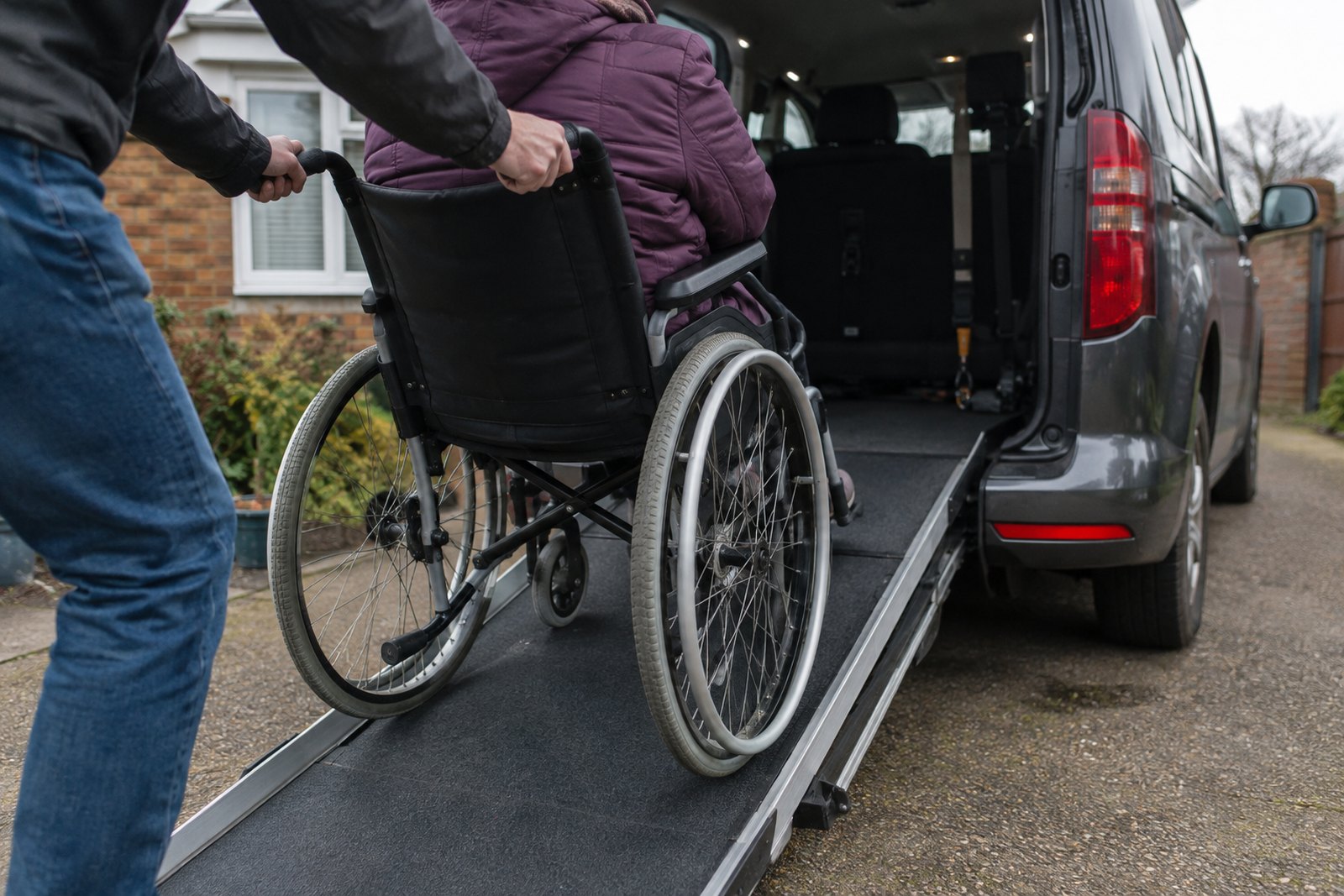
A wheelchair accessible vehicle (often shortened to WAV) is a vehicle that lets a wheelchair user travel while staying seated in their wheelchair, using a ramp or a lift. It can be a brilliant piece of independence. It can also be an expensive, stressful mistake if the everyday details do not work for your body, your wheelchair, your driveway and the person who will actually push you up the ramp.
If you are choosing a wheelchair accessible car for yourself or someone you care for, focus on five things first: is the wheelchair suitable to travel in, how steep the ramp feels in real life, headroom and seated height, how the wheelchair and person are restrained, and whether rear entry or side entry fits the places you go. Everything else comes after that.
What a wheelchair accessible vehicle (WAV) is
A WAV is a vehicle that has been converted (or built) so a wheelchair can enter via a ramp or a lift and be secured inside. The wheelchair user remains in their wheelchair and is restrained as a vehicle occupant, rather than transferring onto a standard car seat.
This is different from adaptations that help you transfer into a car seat (like a swivel seat or grab handle) and different again from driving aids like hand controls. Some people will do best with a WAV. Others will be safer and more comfortable transferring onto a car seat and storing the wheelchair separately. If transfers are part of your decision, see getting in and out of a car: swivel seats and transfer aids.
Common layouts include:
- Rear entry: the wheelchair goes in through the boot area via a ramp.
- Side entry: the wheelchair goes in through a widened side door, often with a ramp or lift.
First check: can the wheelchair safely be used as a vehicle seat?
This is the part that catches families out. Not every wheelchair is designed to be sat in during a vehicle journey.
A safe set-up depends on the wheelchair, the seating and the restraint system working together. Some wheelchairs have features that help with travel (for example, compatibility with tie-down points). Others have add-ons, seating systems or tilt functions that are excellent in day-to-day life but complicate travel. Powerchairs can be heavy, and not every WAV conversion can take the combined weight of chair plus person.
Practical steps you can take now:
- Ask the wheelchair provider (for example an NHS wheelchair service or a private supplier) whether the chair is suitable for transport use, and what needs to be fitted or adjusted. If you are unsure where to start, see NHS wheelchair services: how to get a wheelchair.
- Look at posture and head control: if the person slumps, slides forward, or their head drops, a car journey can make that worse. That is about comfort, breathing, swallowing safety and fatigue, not just appearance.
- Check essential supports: things like lateral supports, head supports, trays and footplates can affect whether the wheelchair fits the WAV space and whether the seatbelt sits properly.
- Plan for journey length: pressure, pain and spasms often change after 20 minutes. Try a realistic drive, not just a spin around the block.
If a wheelchair is not suitable for travelling in, you may still be able to use the vehicle by transferring onto a vehicle seat, or by using a different wheelchair for transport. An occupational therapist can help you work out which option is safest and most sustainable for you at home.
Rear entry vs side entry: what changes day to day
Rear entry and side entry can both work well. The best choice is usually the one that fits where you park, where you go, and who is helping.
Rear entry: typical pros and cons
- Often simpler to load on a driveway where you can line up straight behind the vehicle.
- Can be harder on the street because you need space behind the car for the ramp and for turning the wheelchair.
- Weather matters: you may be pushing someone up a ramp in the rain with traffic behind you. Picture a February evening, not a showroom.
- Where the wheelchair user sits is usually further back, which can feel isolating for some people.
Side entry: typical pros and cons
- Can work better with kerbside parking if you can deploy the ramp onto the pavement side.
- Often easier for conversation because the wheelchair user may sit closer to other passengers.
- Can be awkward in tight car parks if you cannot open the side door wide enough to use the ramp or lift.
- Positioning can take practice, especially if the wheelchair needs to line up with a docking or restraint system.
If you have one regular parking spot at home, measure it. If you park on the road, think about camber, dropped kerbs, and whether you can reliably get the ramp onto a flat surface.
Ramps and lifts: the bit that decides whether you will use it
Many people choose a WAV based on the vehicle, then discover the ramp is the problem. A ramp that is a struggle on a good day is a ramp you will stop using on a bad day.
Ramp angle and pushing effort
What matters is not the ramp existing, but how steep it feels with your wheelchair and your helper. The same ramp can feel completely different with a lightweight manual chair versus a heavier chair, different tyres, a larger person, or weaker grip and shoulder pain in the person pushing.
If you will be pushing a wheelchair up or down a ramp regularly, it is worth reading how to push a wheelchair safely: kerbs, slopes and transfers. The technique and the load on your back and shoulders matter, especially over months and years.
Ramps vs lifts
- Ramps are simpler and usually quicker, but the gradient and traction are key. Check non-slip surface, side edges, and whether it flexes under load.
- Lifts can reduce pushing force, which may be essential for heavier wheelchairs. They also add mechanical complexity and maintenance, and you still need safe positioning and restraint inside the vehicle.
Either way, ask to practise several times. Do it with the wheelchair user in their usual footwear and coat, and the person who will actually be helping, not just a fitter who does it all day.
Space, headroom and comfort: measure before you view
With wheelchair accessible vehicles, headroom is not a minor detail. A chair that fits on paper can still leave someone sitting with their head tilted, pressed into the roof, or forced forward because the headrest hits a panel. That becomes pain, fatigue and reluctance to go out.
Measure the person as they actually sit
Seated height changes with posture, cushions, head support and whether the person slides forward. Measure when they are sitting as well as they can in their own wheelchair, on their usual cushion, with the supports they normally use.
- Seated height: from the floor to the top of the head (or to the top of a head support if they need one).
- Overall wheelchair height: including any headrest hardware.
- Overall length: including footplates and anything mounted at the front.
- Overall width: including hands on the rims, side guards, joystick, and any lateral supports.
Check turning and positioning space
In some WAVs you drive straight in. In others you need a small turn onto a platform or into a space before securing. If the wheelchair user has limited neck movement, anxiety in tight spaces, or needs the chair in a specific position for breathing or comfort, this matters.
Also check where other passengers will sit. If a family member always travels with the wheelchair user to support communication or anxiety, make sure you can sit near enough without twisting awkwardly.
Securing the wheelchair and the person: what 'safe' looks like
In a WAV, the wheelchair needs to be secured to the vehicle, and the person needs to be restrained as a vehicle occupant. This is not optional. It is the difference between a workable solution and a serious safety risk.
Look for a crash-tested wheelchair tie-down and occupant restraint system fitted to the vehicle, and make sure you are shown exactly how to use it for that wheelchair.
Key questions to ask when viewing
- How is the wheelchair secured? (for example, tie-down straps or a docking system). Where do the attachment points go on this wheelchair?
- How is the person restrained? You want an occupant restraint that positions like a car seatbelt, not just a wheelchair posture belt. Ask the supplier to demonstrate the correct routing and tensioning.
- Is there suitable head support? Particularly if the person has poor head control or sits in a reclined position.
- Can you practise? A quick demonstration is not enough. You need to be able to do it yourself, calmly, without the fitter taking over.
If you will have carers using the system, build this into the plan. People need training, and you need a simple written reminder of the steps you agreed, kept with the vehicle paperwork.
Passenger, front passenger, or driver: different questions
When people search for a wheelchair accessible car, they are often thinking about access. But the bigger question is: what role will the wheelchair user have in the vehicle?
Travelling as a passenger in the wheelchair
For passengers, think about comfort and dignity as well as safety. Can the person see out? Can they talk to others without shouting? Do they get travel sickness if they have to travel rearward facing, which is sometimes used in approved rearward facing wheelchair passenger systems? Side facing wheelchair travel is not recommended. Can they manage temperature and noise?
Also consider toileting needs. If you regularly do longer journeys, think about how you will handle stops, doors that are too narrow, and the time it takes to unload. Planning beats optimism here.
Driving from the wheelchair
Driving while seated in a wheelchair is possible for some people, but it is a specialist set-up. It may involve docking systems, specialist driving controls (often hand controls and steering aids rather than standard pedals), and changes to seating and positioning to ensure safe visibility and emergency exit.
In the UK, this is where a formal driving assessment becomes important. Many people use Driving Mobility assessment centres to trial controls and get an objective view of what is safe and practical. You can search for your nearest centre online and ask what you need to bring. You should also check DVLA requirements for medical conditions and driving on GOV.UK, because the rules depend on the condition and the vehicle.
New vs used WAVs: what to inspect and test
Used WAVs can be a sensible route, but you need to check the conversion features, not just the base vehicle.
What to check on a used WAV
- Ramp or lift: does it deploy smoothly, lock securely, and feel stable under load? Try it with the actual wheelchair and person if possible.
- Floor and fixings: check for wear, damp smells, rust, or any movement around the restraint tracks and anchor points.
- Restraint system condition: look for fraying, damaged buckles, missing parts, or anything that suggests it has not been maintained. Ask when it was last inspected and serviced.
- Headroom and trim: check for sharp edges, low roof sections, and whether the wheelchair user ends up too close to windows or panels.
- Electrics: if there is a winch, lift, powered door, or kneeling function, try it repeatedly. Intermittent faults are common in real life, not in showrooms.
Bring a tape measure. Bring the wheelchair. If the seller cannot let you test the full loading and securing process, treat that as a serious warning sign.
Funding and assessments: Motability, Access to Work and other routes
People often assume there is one obvious funding route for a wheelchair accessible vehicle. In reality it depends on age, benefits, work, and what the vehicle is for.
Motability in general terms
The Motability Scheme allows some people who receive certain disability benefits to lease a vehicle using their mobility allowance. WAVs can be available through the scheme, but eligibility and the range of vehicles and adaptations depend on the scheme rules at the time. Check Motability information directly before you make plans, because details change.
If the vehicle is mainly for work
If the barrier is getting to work or doing your job, Access to Work may help with transport and some adaptations in some circumstances. It is not a quick fix, and it is not for everybody, but it is worth checking if employment is the main driver for the change.
When you need an assessment
For driving, think driving assessment. For getting in and out safely, think mobility and transfers. For fatigue, pain and posture over journeys, think seating and positioning. These are different questions, and sometimes you need more than one professional involved.
Where an occupational therapist fits
Choosing a WAV is not just a vehicle decision. It is a daily living decision. A private occupational therapist visiting at home can help you work out what will be safe, manageable and realistic in your actual routine.
An OT can:
- Assess whether travelling in the wheelchair is likely to work, or whether transfers to a vehicle seat are safer and more comfortable.
- Look at posture, head control, fatigue and pain over real journey lengths, not ideal ones.
- Assess the person who will be pushing or assisting, so you do not end up with an injury from ramp pushing or repeated awkward bending.
- Check practicalities at home: driveway slope, parking space, door widths, and whether you can unload in poor weather and low light.
- Write clear recommendations for equipment and set-up, and in some cases provide a report for funding or case management. See functional assessments and reports.
If you are wondering what an OT visit is like and how it is costed, see what happens in a private OT assessment and what it costs. A good OT will also tell you when this is really a job for a driving assessor, a wheelchair service, or a vehicle adaptation specialist.
Frequently asked questions
What does WAV stand for?
WAV stands for wheelchair accessible vehicle. It usually means a vehicle that has a ramp or lift so a wheelchair user can travel while seated in their wheelchair, with the wheelchair and the person both correctly restrained.
Is rear entry or side entry better?
Neither is always better. Rear entry can work well on a driveway with space behind the car. Side entry can be easier for kerbside parking if you can load onto the pavement side. The best choice is the one that works where you actually park, in real weather, with the person who will help.
Can any wheelchair go into a wheelchair accessible car?
No. Size and weight matter, but so does whether the wheelchair is suitable to be used as a vehicle seat and whether it can be secured properly with the vehicle's restraint system. Ask the wheelchair provider and the WAV supplier to confirm compatibility for your specific chair.
Do I need special seatbelts in a WAV?
You need a proper occupant restraint system used correctly for the wheelchair position, not just a wheelchair lap belt. The WAV should have a crash-tested system fitted, and you should be shown how to use it and allowed to practise until you can do it reliably.
Can a wheelchair user drive from their wheelchair?
Sometimes, with specialist vehicle adaptations and the right wheelchair set-up. This usually needs a formal driving assessment and advice on controls, visibility and emergency exit. Check current DVLA guidance for your medical condition on GOV.UK and speak to a driving assessment centre before you commit to a vehicle.
Should I buy a used WAV?
It can be a good option, but inspect the conversion features carefully. Test the ramp or lift repeatedly, check the condition of the restraint system, and make sure the wheelchair user has enough headroom and space. If you cannot test loading and securing properly, be cautious.
Next steps
See our home assessment page or functional assessments and reports, check current guide prices, and choose your area below.

Talk to an occupational therapist near you
This guide is general information. For advice about your own situation - or someone you look after - a local occupational therapist can visit you at home and see it for themselves.
Choose your area: