

Home adaptations: how an OT assessment works
By Mobile Occupational Therapist • 16 June 2026 • 6 min read
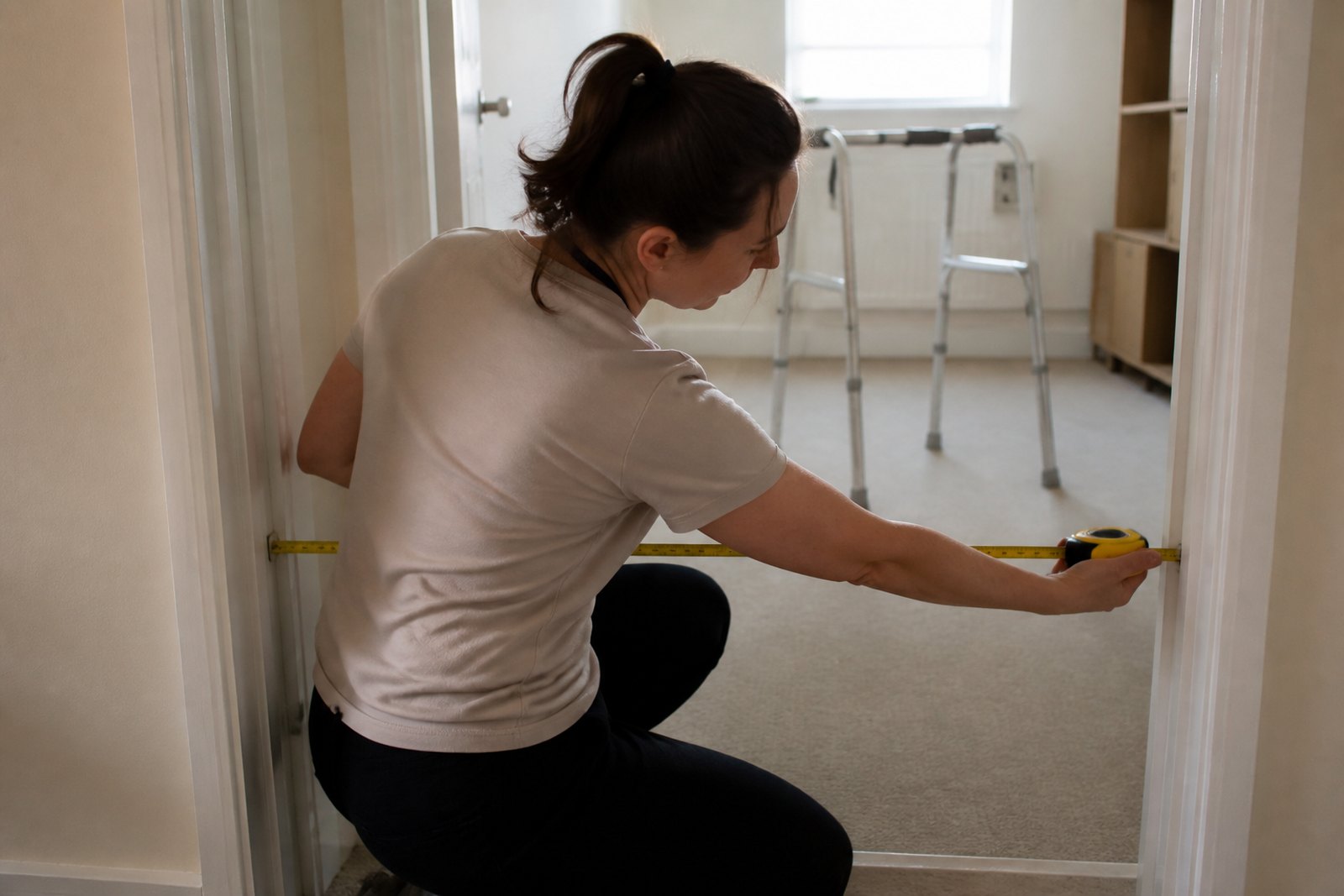
"Home adaptations" can mean almost anything - from a single grab rail costing a few pounds, to a full level-access wet room costing thousands. Because the range is so wide, it is easy to either under-do it (missing a change that would genuinely help) or over-do it (paying for work that was never really necessary). This is exactly the gap an occupational therapist's home adaptations assessment is designed to close.
Why an assessment comes before any building work
A common mistake is to start with a solution - "I need a walk-in shower" or "I need a stairlift" - before properly establishing the problem. An occupational therapist works the other way round: starting with how you actually use your home day to day, and only then working out what change, if any, would genuinely help. Sometimes the answer is a low-cost change. Sometimes it is something bigger. Often it is a combination of small, immediate wins alongside a longer-term recommendation.
This matters practically as well as financially. Adaptations funded through a council or housing association, such as a Disabled Facilities Grant, generally require an occupational therapist's assessment and report as part of the application - so getting this right from the start avoids delay later.
What the assessment actually looks at
A typical home assessment that leads into adaptation recommendations covers:
- Access into and around the property. Steps at entrances, narrow doorways, and changes of level are all common starting points.
- Stairs. How you currently manage them, whether a rail, a stairlift, or a change of sleeping arrangement downstairs would be more appropriate.
- Bathing and toileting. Often the area where the biggest day-to-day difference can be made - from a simple grab rail and non-slip mat through to a level-access shower.
- Bedroom set-up. Bed height, transfers in and out of bed, and whether the current sleeping arrangement still makes sense.
- Kitchen layout. Reach, worktop height and storage, particularly where someone uses a wheelchair, walking frame or has reduced strength.
Every one of these is assessed against your actual home and your actual routine - not a generic checklist applied regardless of circumstances.
Minor versus major adaptations
It helps to think of adaptations in two broad categories:
- Minor adaptations - grab rails, raised toilet seats, lever taps, better lighting, removing trip hazards such as loose rugs. These are usually quick to arrange, relatively low cost, and can often be actioned almost immediately after the assessment.
- Major adaptations - level-access showers, stairlifts, ramps, or more significant structural changes. These take longer to plan and cost more, and often benefit from - or require - a formal OT report, particularly if you are applying for grant funding.
A good assessment will be honest about which category applies, rather than defaulting to the most expensive option. Many people are relieved to discover that a relatively minor change addresses most of what was worrying them, at a fraction of the cost of a full renovation.
Working with equipment first
In some cases, daily living equipment can bridge the gap before - or instead of - permanent adaptation work. A perching stool, a bath board, or a well-positioned rail can make a real difference while a bigger change is planned, or may turn out to be all that is needed. Your occupational therapist will usually suggest trying lower-cost options first where it is safe and sensible to do so.
Who benefits from a home adaptations assessment
- Anyone finding the stairs, bath or shower increasingly difficult or risky
- People planning ahead after a change in mobility, a diagnosis, or a recent fall
- Families supporting a relative who wants to remain in their own home for as long as possible
- Anyone preparing a Disabled Facilities Grant or similar funding application, who needs a professional OT report
What you receive at the end
A written summary of recommendations, prioritised and explained in plain language, is standard practice. Where a bigger adaptation is recommended, this document is usually what you would share with a builder, a housing association, or a funding body - so it needs to be clear, specific and justified, not vague.
It is entirely reasonable to ask your occupational therapist to talk through the reasoning behind each recommendation, and to raise any concerns about cost, disruption or how a change might look. The goal is a home that works better for you - not simply the most thorough-looking list of changes.
How long does the process take?
Timescales vary considerably depending on the scale of the change. A minor adaptation, such as fitting a grab rail or a raised toilet seat, can often be arranged within days once the assessment is complete. A major adaptation involving building work - particularly one going through a Disabled Facilities Grant application - can take considerably longer, sometimes several months, once you account for the council's own assessment process, means testing where applicable, and the building work itself. Your occupational therapist should be honest about realistic timescales rather than leaving you guessing, and can often suggest sensible interim steps to keep things safer while a bigger change is arranged.
Paying for adaptations
Not every adaptation needs to go through a formal funding route. Minor adaptations are often paid for directly and can be arranged quickly. For larger adaptations, options can include a Disabled Facilities Grant (means-tested, arranged through your local council), self-funding, or in some cases funding via a housing association if you are a tenant. An occupational therapist's assessment and report is typically a required part of any of these routes, which is another reason it makes sense to start there rather than with a builder's quote alone.
Getting started
If your home no longer quite fits how you live - whether that is one stubborn step at the front door or a bathroom that has become genuinely difficult to use safely - a home adaptations assessment is usually the sensible first step, well before any building work is booked. Find your local occupational therapist via our areas we cover page, and see our prices page for current guide pricing.
Talk to an occupational therapist near you
This guide is general information. For advice about your own situation - or someone you look after - a local occupational therapist can visit you at home and see it for themselves.
Choose your area: