

Virtual Wards: Hospital Care at Home Explained
By Mobile Occupational Therapist • 26 September 2026 • 14 min read
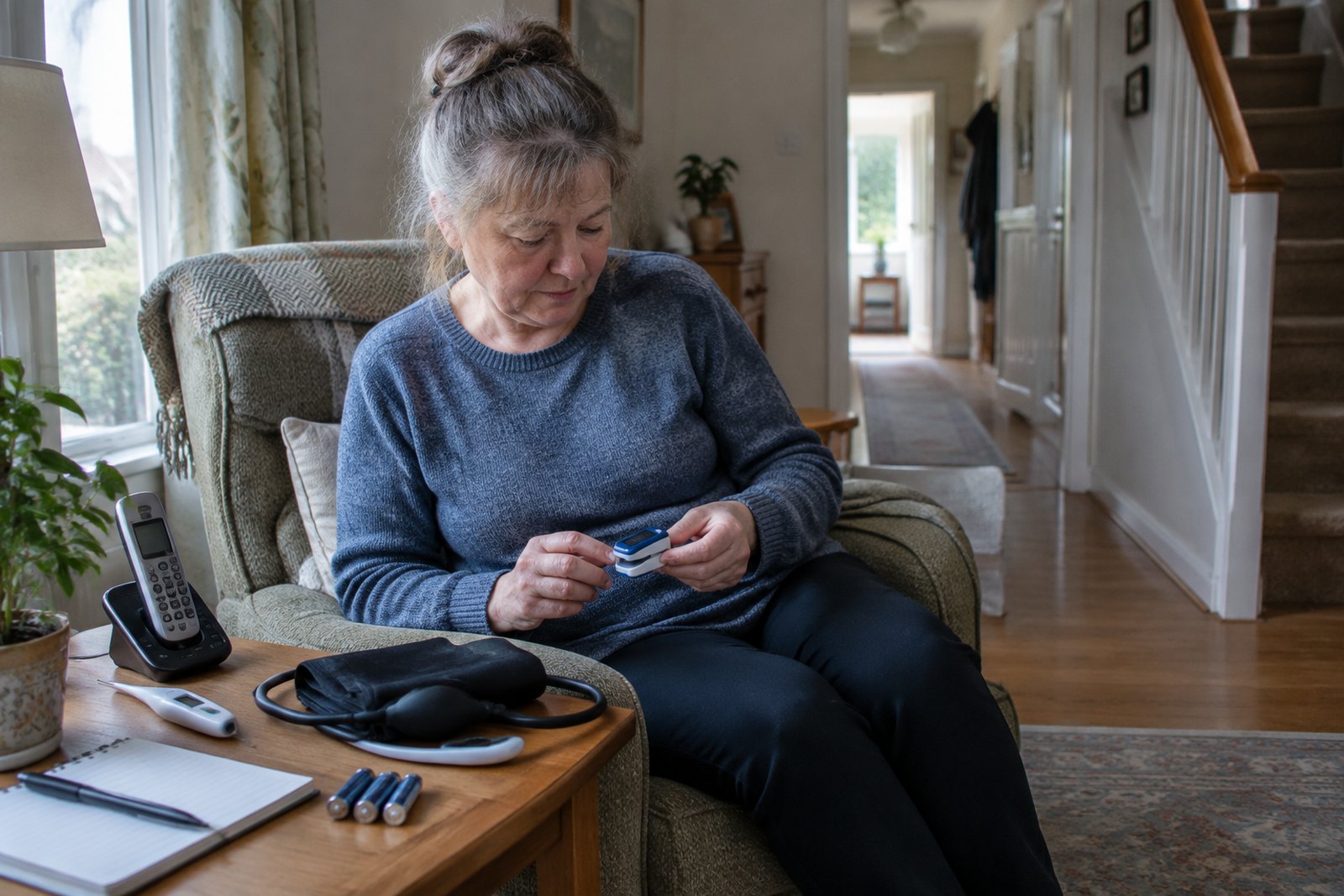
A virtual ward (sometimes called hospital at home) is NHS care that would otherwise happen on a hospital ward, delivered to you at home instead. You are still under an NHS clinical team, often led by or linked to a hospital. You are monitored and reviewed regularly, often daily, and you might be asked to use simple equipment like a thermometer, blood pressure monitor or oxygen saturation probe so the team can keep a close eye on you.
If you are a patient or family member in England, the simplest way to think of it is this: you are not being left to get on with it. You are being treated at home because the team believes it is safe, and because home can be calmer and reduce some hospital risks. You should be given a clear plan, a way to contact the team, and instructions for what to do if things get worse. If it does not feel safe or manageable, you can say so.
This article explains what virtual wards usually involve, who they are for, what you might be asked to do, how to set your home up, and where occupational therapy fits. (If you want the broader picture first, see hospital at home and virtual wards: what they actually mean.)
What a virtual ward is (and is not)
A virtual ward is a service that lets an NHS clinical team look after you at home, sometimes with support from hospital specialists. The "virtual" bit usually means your information is reviewed remotely some of the time, using phone or video calls and sometimes remote monitoring. The care is still real, and the responsibility still sits with a clinical team.
Virtual wards vary between areas, but they often include:
- Regular reviews by a clinical team (for example a nurse, doctor, paramedic, therapist, pharmacist or advanced practitioner).
- Home visits for assessments, treatment, bloods, injections, wound care, mobility checks or equipment.
- Remote monitoring of symptoms and basic observations (sometimes by you or a carer using simple devices, sometimes automatically).
- A clear route for help if you are worried, including out of hours arrangements.
A virtual ward is not:
- Social care (help with washing, dressing and meals). You might have social care alongside it, but it is a different service.
- A family member acting as a nurse. You may help with simple tasks if you want to, but you are allowed to say no.
- A reason to ignore new or severe symptoms. You still call 999 in an emergency.
Who virtual wards are for
Virtual wards are most commonly for adults who need hospital level monitoring or treatment, but do not need to be physically in a hospital bed. The exact criteria are local, and the team should explain why you are suitable.
People commonly supported include those with:
- Breathing problems (for example flare ups of long term lung conditions, or breathlessness after an infection).
- Heart failure (for example needing close monitoring of swelling, weight, breathlessness and medication changes).
- Frailty or multiple health conditions where a small change can tip someone into a crisis.
- Infections needing observation and sometimes intravenous antibiotics, where that is available locally.
- Recovery after a hospital stay where the hospital team wants close follow up before fully discharging you.
Virtual wards are not right for everyone. They may not be appropriate if:
- You are medically unstable or likely to deteriorate quickly.
- There is no safe way to manage at home (for example, you cannot get to a toilet safely, or you are at high risk of falling with no support).
- You do not have capacity to consent and there is no safe plan in place to support decisions.
- Your home environment makes care unsafe (for example, no heating, unsafe electrics, or severe clutter limiting access). The team should discuss options rather than simply proceeding.
Other parts of the UK have similar services, sometimes with different names and slightly different pathways. The practical questions to ask are the same wherever you live: who is responsible, how often you will be reviewed, and how to get urgent help.
What to expect day to day
Regular check-ins, but not always at the same time
Most virtual wards involve frequent contact, but it may not happen at a set hour. You might have a mix of phone calls, video calls and home visits depending on your condition.
Ask early:
- How often will someone contact or visit?
- Who will that be (nurse, doctor, therapist)?
- What counts as "normal" fluctuations for my condition, and what should trigger a call?
- How do I contact you if I miss a call?
Monitoring kit and what you are actually meant to do
Some people are sent home with monitoring equipment. This could include a thermometer, blood pressure cuff, oxygen saturation monitor (a finger probe), or weighing scales. Sometimes a tablet or hub is provided to send information.
You should be shown exactly how to use it, what readings to record (if any), and what to do if a reading is high or low. If you are not confident using it, say so. A good service will adapt the plan, simplify the monitoring, or arrange more in person support.
Treatments at home
Treatment varies. Some people need medication changes and careful observation. Others may need wound checks, blood tests, oxygen monitoring, physiotherapy input, or support to build up everyday activity again.
Two important boundaries:
- Medication decisions should be made by the clinical team. If you are confused about what to take, ask. Do not guess.
- Procedures and equipment (for example oxygen) should come with clear instructions. If something does not feel safe, contact the team straight away. Do not stop prescribed oxygen or medicines unless a clinician tells you to, and call 999 if you are severely breathless or think life is at risk.
How long will you be on a virtual ward?
Some people are on a virtual ward for a short burst, others for longer. It depends on why you are there, how quickly you improve, and what support is available locally. Your team should tell you what they are aiming for, what "success" looks like, and what the step down plan is when you no longer need hospital level oversight.
Getting your home set up for hospital care
You do not need a perfect home. You do need a safe, workable base where you can rest, get to the toilet, wash, eat and manage medication without constant struggle.
Create a "base" for the day
Pick one main place where you will spend most of the day during the acute phase. This might be your bed or an armchair.
- Keep essentials within easy reach: phone, charger, water, tissues, medication (stored safely), list of key numbers, a notebook for questions.
- Think about posture: if you are breathless, you may cope better sitting more upright with good back support and arm support.
- Plan the toilet route: the fewer tight turns, mats and clutter, the better.
If stairs are hard, tackle it early
If you are struggling with stairs, do not wait until you are exhausted at bedtime. Tell the team. They can help decide whether you need a temporary bed downstairs, a commode overnight, extra rails, or a different plan.
If you are trying to keep stairs in the mix, focus on safety over pride. Falls are more likely when you are tired, including later in the day.
Do a quick falls risk check
When someone is unwell, weaker than usual, or dizzy from illness, falls risk goes up fast. A few simple changes can reduce it.
- Clear walkways between bed or chair and toilet.
- Remove loose rugs and trailing cables if you can.
- Improve lighting, especially for night time trips to the bathroom.
- Use stable footwear rather than backless slippers if you can manage it.
- Keep frequently used items at waist height to reduce bending and reaching.
For a fuller, practical checklist, see falls at home: practical prevention beyond exercise.
Equipment: borrow if possible, and get it fitted
Virtual ward teams sometimes arrange equipment quickly, and in other areas you may be linked with community equipment services. Common items include toilet frames, raised toilet seats, shower stools or chairs, bed levers, perching stools, wheeled walkers, or simple aids to help you wash and dress safely.
The key word is fit. The wrong height or the wrong layout can make things less safe. If you are not sure what something is for or how to use it, ask for a demonstration. For plain English explanations of common aids, see occupational therapy equipment for daily living.
What carers do (and what you are not expected to do)
Carers matter on virtual wards, but you are not expected to become a clinician. You are allowed to have limits. You are also allowed to say, clearly, "I cannot do that" and ask what the alternative is.
Agree the roles in the first 24 hours
If you are supporting a parent or partner, ask the team:
- What do you expect the family to do day to day?
- What will the team do?
- What training will you provide (for example for taking a temperature or blood pressure)?
- What happens if the family carer is unwell, at work, or simply cannot manage?
Write the answers down. When you are tired, everything blurs.
Helping safely without lifting
Many families default to lifting and hauling because it feels faster. It is also one of the quickest ways to injure your back or put the person you care for on the floor.
Safer principles include:
- Use the person's own strength as much as possible, even if it is slower.
- Set up the environment so the move is simpler (higher chair, clear route, shoes on before standing).
- Avoid pulling on arms or under the armpits.
- Stop if it feels unsafe. Ask for professional moving and handling advice if transfers are becoming a daily struggle.
When it is too much
Sometimes the virtual ward plan only works because a family member is running on adrenaline. If you are reaching the point where you cannot cope, say it early. The team may be able to increase support, bring in therapy input, arrange short term care, or reconsider whether home is the safest place right now.
Not coping is not a moral failing. It is information the team needs in order to manage risk.
How to get help day and night
Know the contact route for "I am worried"
You should be given a phone number (and sometimes a written plan) for what to do if symptoms change. Keep it by the phone and save it in contacts. If there are multiple numbers, ask which one to use first.
Good questions to ask:
- What counts as urgent for my condition?
- Is there an out of hours service, and what time does it start?
- If I cannot get through, what is the back-up plan?
In an emergency, call 999
Being on a virtual ward does not change what you do in a medical emergency. If there is severe breathing difficulty, chest pain, signs of stroke, a collapse, uncontrolled bleeding, or you think life is at risk, call 999. Do not wait for a call back.
If you are unsure but it feels urgent, NHS 111 can advise, but you still use 999 for emergencies.
You can say no (and you can ask to change the plan)
Virtual wards are offered because the team believes it is a safe option, not because you have to accept it. If you do not feel safe at home, or you do not have the support the plan relies on, tell them. Ask what the alternatives are.
You can also ask to change parts of the plan. For example:
- You might accept home treatment but ask for fewer monitoring tasks if you are overwhelmed.
- You might ask for more in person visits for a few days while you stabilise.
- You might ask for an occupational therapy or physiotherapy review if mobility has changed.
If you are being discharged from hospital onto a virtual ward, it can help to understand the wider discharge process and what should be in place. See coming home from hospital: a family's guide to discharge planning.
Where occupational therapy fits
On a virtual ward, occupational therapy is about making day to day life workable and safe while you recover. That might sound "less medical" than blood tests or medication. In practice, it is often the difference between coping at home and ending up back in A&E.
Practical safety and independence
An occupational therapist can help with:
- Transfers (bed to chair, chair to toilet) and the set-up that makes them safer.
- Personal care strategies for washing and dressing when you are weak, breathless or in pain.
- Fatigue management and pacing, so you can do the essentials without wiping yourself out.
- Equipment recommendations that match your height, strength and layout at home.
- Falls prevention in the real world: thresholds, lighting, tight bathroom spaces, stairs, habits, and night time routines.
- Confidence after illness, when fear of falling or fear of breathlessness makes people avoid moving, which then makes them weaker.
If you are arranging extra support privately, a home visit matters because the risks are usually in the details: where you put your hands to stand, how narrow the bathroom door is, whether the bed is too low, and whether you can carry a hot drink safely from kitchen to chair.
Knowing when someone else should lead
Occupational therapists do not replace medical care. Contact the virtual ward team, GP, NHS 111 or emergency services for medical deterioration, new severe pain, new confusion, or worsening breathlessness.
Other professionals may be the right fit depending on the problem:
- Physiotherapy for exercise progression, strength, balance and breathlessness rehab plans.
- Speech and language therapy for swallowing problems, choking risk, or communication issues after neurological illness.
- District nursing for wound care, injections and some clinical monitoring in the community.
- Social care (via the council) for care packages if someone needs hands on help with personal care longer term.
Frequently asked questions
Is a virtual ward the same as being discharged?
It is a form of discharge from the hospital building, but not a full handover to routine community care. You are still under a hospital led team for that period, with a clearer escalation plan than a standard discharge.
Before you leave hospital, ask who is responsible for your care overnight, who to call, and what needs to happen before you are "stepped down" from the virtual ward.
Do I need internet or a smartphone for a virtual ward?
Not always. Some services use phone calls only. Others provide a device, or use equipment that sends data automatically. If you do not have reliable internet, tell the team. Lack of tech does not always exclude you, but the plan may need adjusting.
What if the monitoring equipment confuses me or I cannot use it?
Tell the team straight away. They can talk you through it, simplify the monitoring, arrange additional visits, or change the plan. If a family member is doing the readings, the team should check that person is willing and able, rather than assuming.
Can I still have carers coming in or family visiting?
Usually yes, and it can make the plan safer. Let the team know what support you already have. If paid carers are involved, ask the team to clarify who does what, especially around medication prompts, mobility assistance and any equipment.
What if things get worse at night?
You should be told what number to ring out of hours and what symptoms mean you should call immediately. If symptoms feel severe or life threatening, call 999. Being on a virtual ward does not mean you wait for a morning review.
What happens when the virtual ward ends?
There should be a step down plan. That might be a handover to your GP, community nursing, therapy services, or a follow up clinic, depending on your condition. Ask for a clear summary of what changed during the virtual ward period, what you should watch for next, and who to contact if you are worried.
Next steps
If you want help making home safer while you are on a virtual ward or just coming off one, see our home assessment page, check current guide prices, and choose your area below.

Talk to an occupational therapist near you
This guide is general information. For advice about your own situation - or someone you look after - a local occupational therapist can visit you at home and see it for themselves.
Choose your area: