

Vascular Dementia: Daily Life, Routines and Support at Home
By Mobile Occupational Therapist • 31 October 2026 • 14 min read
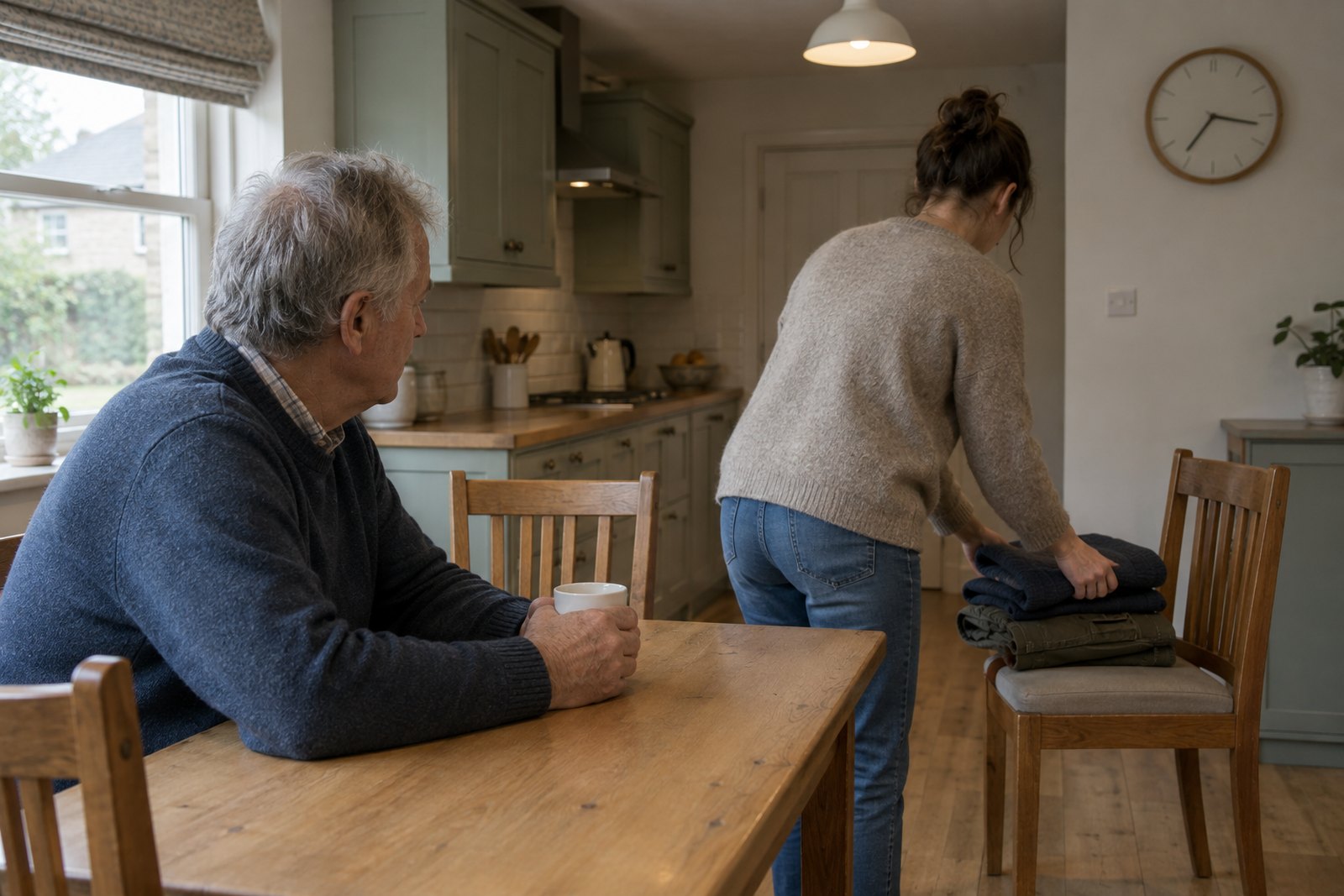
Vascular dementia is dementia caused by reduced blood flow to the brain. When blood vessels are blocked or damaged, parts of the brain do not get enough oxygen and brain cells are lost. That can happen suddenly, with a stroke or a series of small strokes, or slowly, as the tiny vessels deep in the brain narrow over years. A slower, more gradual form of vascular cognitive decline can be caused by cerebral small vessel disease, where the tiny vessels deep in the brain become damaged over time. Vascular dementia is one of the most common types of dementia in the UK, and it often sits alongside Alzheimer's disease in the same person.
What families notice first is not always memory. More often it is slowness. Thinking takes longer, conversations are harder to follow, planning a meal or sorting the post falls apart, and concentration goes. Mood often changes too. Some people get worse in noticeable steps, with a drop after each small stroke and then a level patch; others decline more gradually. The useful news is that a lot can be done at home to make daily life easier, and some of the underlying causes can be managed with the GP. This guide covers both, plus the warning signs that mean you need help today rather than next week.
What is actually going on in the brain
After a stroke or several small strokes
A major stroke can cause dementia straight away if it damages areas used for thinking. More commonly, a person has a number of small strokes, some of which nobody noticed at the time. Each one damages a little more brain tissue. Families often only realise afterwards that Dad went downhill after a bad week or a stay in hospital.
Small vessel disease
The small blood vessels deep inside the brain become stiff and narrowed, often linked to long-term high blood pressure, diabetes or smoking. The damage builds up quietly. This type tends to affect speed of thinking, mood and walking more than memory, at least at first.
Mixed dementia
Many older people have both vascular changes and Alzheimer's disease, which doctors call mixed dementia. The day-to-day help is much the same, so do not worry too much about the label. It matters more for which treatments a doctor might consider, and that is a conversation for the GP or memory clinic.
How vascular dementia can show up day to day
- Slower thinking. Answers take longer. If you rush in with the next question, the first one gets lost.
- Planning and organising. Following a recipe, using the washing machine, getting ready to go out. Each step may be possible on its own, but stringing them together in the right order is hard.
- Concentration. Losing the thread of a television programme, a conversation or a task halfway through.
- Mood changes. Low mood, anxiety, irritability, tearfulness, or emotions that swing quickly. Apathy, meaning a loss of interest and get-up-and-go, is very common and easy to mistake for laziness or sulking.
- Memory. Often less affected early on than in Alzheimer's, but it can still be patchy, especially for recent events.
- Walking, balance and bladder. Shorter, shuffling steps, unsteadiness, and needing the toilet urgently or more often.
- Stroke-related problems. Depending on where any strokes happened, there may be weakness on one side, speech difficulties or problems with vision.
Good days and bad days are typical. Someone can seem nearly themselves in the morning and struggle by teatime, especially when tired. They are not putting it on.
Vascular dementia stages: why the usual model fits badly
You will see dementia described in early, middle and late stages, and those words are useful as a rough guide. Early on, a person usually manages most things with some prompting. In the middle stage they need help with more daily tasks and with planning. Later, they need help with most personal care and with moving about.
Vascular dementia does not always follow that smooth line. With the step-like pattern, someone can be stable for a while and then change quite suddenly. With small vessel disease, change may be slow and steady. And because it depends on which parts of the brain are affected, one person may still walk well but cannot plan a cup of tea, while another thinks fairly clearly but struggles with balance. Nobody can tell you exactly how fast it will progress, so be wary of anything that claims to. The more useful question is: what does this person need help with now, and what is likely to come next? Plan for the next step rather than the last one.
Daily routines and strategies that help
Because vascular dementia so often affects planning, speed and attention, the most helpful changes at home reduce the thinking load. You are not trying to test the person. You are trying to make the right thing the easy thing.
Keep a steady routine
Doing the same things at roughly the same time each day means less to work out. Meals, medicines, washing, a walk, a rest. Put the demanding jobs, such as washing or bathing (only if it is safe and with appropriate supervision where there is any falls or scald risk), a GP appointment or a family visit, at the person's best time of day, which for many people is late morning. Build in rest before and after. Fatigue makes everything harder.
Use written and visual prompts
A short list on the fridge, a note by the front door saying what to take, a whiteboard with today's plan. Write in large, clear print, keep it brief and take notes down when they are out of date, or they become clutter. Our guide to memory aids for dementia covers what tends to work. A clock that shows the day and whether it is morning or afternoon can cut down repeated questions; see dementia clocks for how to choose one.
Break tasks into small steps
"Get dressed" is a big instruction. "Put your vest on" is a small one. Lay clothes out in the order they go on. When making a drink, hand over the mug and guide one safe step at a time, but do not leave the person to handle boiling water or the kettle if there is any risk of spills, confusion or burns. Let the person do each step they can manage, even if it is slower. Taking over completely is quicker today but often means the skill goes sooner.
Slow down and give one thing at a time
- Ask one question, then wait. Count to ten in your head if you need to.
- Offer two choices rather than open questions: "Tea or coffee?" rather than "What would you like?"
- Turn the television or radio off when you are talking or doing a task together.
- Keep things where they live. Moving items around takes a lot of effort to relearn.
Keep doing things that matter
Apathy means the person may not start things, but often still enjoys them once started. Invite rather than ask: "Come and help me shell the peas" works better than "Do you want to do something?" Familiar hobbies, short walks, music, gardening and seeing people all help with mood and with staying active.
Managing risk factors with the GP
This is the part of vascular dementia where medical care can make a real difference. Damage that has already happened cannot be undone, but keeping blood vessels as healthy as possible may help reduce the risk of further strokes. The GP or practice nurse will usually look at:
- Blood pressure. Regular checks, and taking any prescribed tablets as directed.
- Diabetes. Keeping blood sugar within the range agreed with the diabetes team.
- Cholesterol and heart rhythm. The GP may check these and discuss treatment.
- Smoking. Stopping helps at any age, and the GP or local stop smoking service can support this.
- Activity, diet and alcohol. Gentle regular movement, a balanced diet and keeping within recommended alcohol limits.
Medicines are often where things slip. Missed or doubled doses of blood pressure or diabetes tablets matter. Talk to the GP or pharmacist about a simpler routine or a different way of organising tablets, and never stop or change a medicine without medical advice. Ask for a regular dementia review, and take a written list of changes you have noticed since the last one.
Mobility, falls and continence
Walking changes are common, particularly with small vessel disease. Steps get shorter, turning is harder, and the person may hesitate or freeze in doorways. Falls are a real risk. Practical things that help:
- Clear walkways and remove loose rugs and trailing cables.
- Good lighting, including at night between the bed and the toilet.
- Well-fitting shoes or slippers with a back, rather than backless mules.
- A chair of the right height, with arms to push up from.
- Asking the GP about a physiotherapy referral if walking or balance is getting worse. Physiotherapists lead on walking, balance and strength exercise.
Bladder urgency and incontinence can come from the brain changes themselves, but also because getting to the toilet in time is harder, or the person cannot find it. Ask the GP to check for treatable causes such as infection or constipation, and about a referral to the NHS continence service. At home, a clear route, a light left on and a picture on the toilet door can help. Our guide to continence problems in dementia goes into more detail.
Warning signs: when to get help quickly
Signs of a new stroke: call 999
People with vascular dementia are at higher risk of further strokes. Use FAST:
- Face - has one side dropped? Can they smile evenly?
- Arms - can they lift both arms and keep them there?
- Speech - is it slurred, muddled or gone?
- Time - call 999 straight away if you see any of these.
Other sudden signs include loss of vision, severe dizziness or loss of balance, sudden weakness or numbness, or a sudden severe headache. Call 999 even if symptoms pass within minutes. A short-lived episode can be a mini-stroke, known as a TIA, and still needs urgent assessment.
Sudden worsening or new confusion: same-day help
Most dementia symptoms change gradually, but a sudden change over hours or a day or two can be due to delirium or a new stroke and needs same-day medical assessment. If someone becomes suddenly much more confused, drowsy or agitated, sees things that are not there, or cannot do things they managed yesterday, do not assume it is just the dementia. It could be delirium, which is often triggered by an infection such as a urine or chest infection, dehydration, constipation, pain or a medicine. Delirium needs medical attention the same day. Ring the GP surgery and say it is urgent, or call NHS 111. If they are very unwell, struggling to breathe or cannot be woken properly, call 999.
Support for you as the carer
Vascular dementia can be particularly wearing because of the mood changes and the unpredictability. A person who seems fine one week and much worse the next is hard to plan around, and you will need help that flexes with them.
- Carer's assessment. If you care for someone, you can ask the council's adult social care team to assess your own needs. See our guide to carer's assessments.
- Needs assessment for the person. The council can also assess the person with dementia for care and support at home.
- Specialist dementia nurses. Dementia UK runs a helpline staffed by Admiral Nurses, who are specialist dementia nurses. Check their website for current details. Some areas also have local Admiral Nurse services.
- Post-diagnosis support. Many areas offer a dementia adviser or support through the memory service. Ask the GP what is available locally.
- Legal and money matters. A lasting power of attorney is best set up while the person can still make that decision, and GOV.UK explains how. It is also worth checking whether disability benefits such as Attendance Allowance apply.
Where an occupational therapist fits
An occupational therapist looks at how someone manages everyday life: washing, dressing, cooking, getting around the home, getting out, and keeping up the activities that give a day its shape. With vascular dementia, that often means working out exactly which part of a task is breaking down, whether it is starting, sequencing, seeing, balance or fatigue, and then changing the task or the setting to suit.
A private occupational therapist visiting at home can:
- Watch the person do real tasks in their own home and spot where and why they get stuck.
- Suggest ways to simplify routines, set up prompts and break tasks into manageable steps.
- Assess falls risk and recommend equipment such as grab rails, raised toilet seats, perching stools or shower seats, along with lighting and layout changes.
- Advise on safer ways to bath, use the toilet and get in and out of bed or a chair, for the person and for you.
- Recommend adaptations and write reports that can support applications to the council or for funding.
- Help you plan ahead for the next likely changes, so things are in place before a crisis.
An occupational therapist does not diagnose dementia, manage blood pressure or advise on medicines; that is the GP and memory service. Walking and balance exercise is mainly the physiotherapist's field. Swallowing and communication difficulties are for a speech and language therapist, and continence assessment is usually done by the NHS continence service. Severe distress, agitation or depression may need the older people's mental health team, via the GP. NHS occupational therapy is free at the point of use, and you can usually access NHS or council occupational therapists through adult social care or community health teams, although charges can apply for some social care services, equipment or adaptations depending on your area and means.
Frequently asked questions
Is vascular dementia the same as having a stroke?
Not quite. A stroke is an event where blood supply to part of the brain is cut off. Vascular dementia is the ongoing problem with thinking and daily life that can follow one or more strokes, or that can develop without any obvious stroke through small vessel disease. Many people who have a stroke do not develop dementia.
What are the stages of vascular dementia?
People often talk about early, middle and late stages, moving from needing some prompting to needing help with most daily care. Vascular dementia does not always follow that neatly. It can stay level and then change suddenly, or decline slowly. Focus on what help is needed now and what to put in place next.
Can vascular dementia get better?
The brain damage itself does not reverse. But many people have stable periods, and treating things that make dementia look worse, such as infection, constipation, low mood, poor sleep, pain or uncorrected hearing and eyesight problems, can make a real difference. Managing blood pressure and other risk factors with the GP may help reduce the risk of further strokes.
Can someone with vascular dementia live alone?
Many people do for a time, with the right support. It depends on what they can manage safely, such as cooking, medicines, getting up after a fall and answering the door to strangers. A council needs assessment or an occupational therapy home visit can help you weigh up the risks honestly and see what support or equipment would make it workable.
Why are they so much worse when tired or late in the day?
Slower thinking and poor concentration use up energy quickly, so by afternoon there is often little left. Noise, busy rooms and too many questions make it worse. Plan harder tasks for the person's best time, keep evenings quiet and simple, and build rests into the day. If a change is sudden rather than the usual pattern, seek same-day medical advice.
Can someone with vascular dementia still drive?
A diagnosis of dementia does not automatically mean someone must stop driving, but they must tell the DVLA and their motor insurer, and they should stop driving if a doctor advises it or if symptoms make it unsafe. Check the current rules on GOV.UK. If you are worried about safety now, talk to the GP rather than waiting.
Next steps
If daily tasks are getting harder or you want to plan ahead before a crisis, a home visit can help you see what would make the biggest difference. See our older people's independence page, or current guide prices, and choose your area below.
Talk to an occupational therapist near you
This guide is general information. For advice about your own situation - or someone you look after - a local occupational therapist can visit you at home and see it for themselves.
Choose your area: