

Incontinence in Dementia: Practical Help That Protects Dignity
By Mobile Occupational Therapist • 22 October 2026 • 13 min read
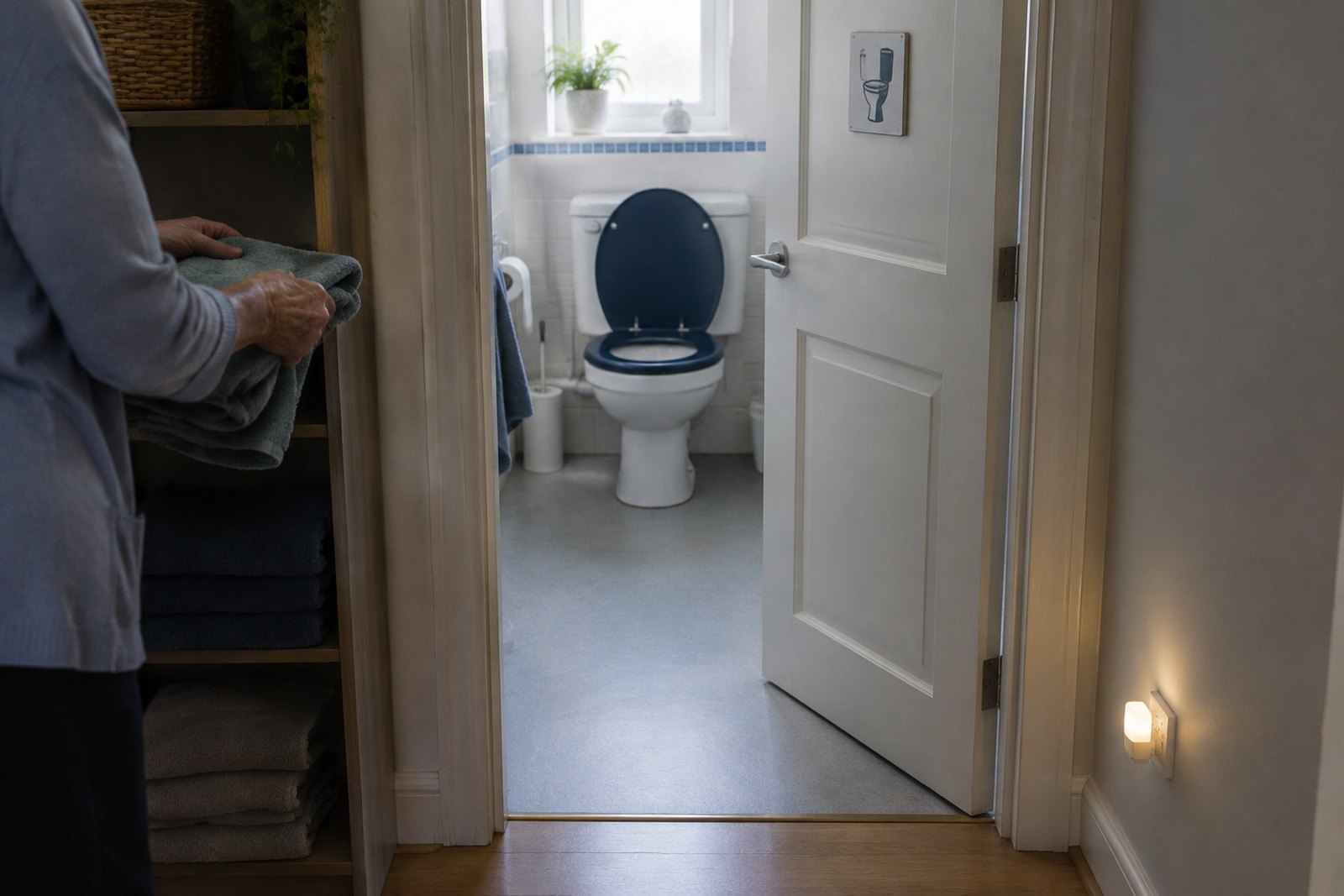
Incontinence in dementia is common, and it is one of the parts of caring that people find hardest to talk about. It usually does not happen because the bladder or bowel has simply stopped working. More often the person no longer notices the feeling that they need to go, cannot find the toilet in time, cannot manage their clothes quickly enough, or has something treatable going on, such as a urine infection or constipation.
So the first step is a check with the GP. The second is a set of small, practical changes at home: a toilet that is easy to find and easy to see, clothes that come off quickly, a regular routine, and prompting that protects the person's dignity. None of this fixes everything. But it often reduces wetting and soiling more than families expect, and it makes the bad days easier to handle.
Why continence problems happen in dementia
Going to the toilet is a chain of steps. You notice the feeling, understand what it means, remember where the toilet is, get there, recognise it, undo your clothes, sit down and use it. Dementia can break any link in that chain. Here are the common ones.
- Not recognising the need. The signal from the bladder or bowel may not register, or may not be understood. Some people show it in other ways instead: restlessness, fidgeting, pulling at clothes, standing up and sitting down again, or wandering.
- Not finding the toilet. Even in a home they have lived in for years, especially at night, in a new place, or when the bathroom door is shut.
- Not recognising the toilet. A white toilet against white tiles and a pale floor can be hard to pick out. Some people use a bin, a plant pot or a corner instead, not out of bad behaviour but because it looked right at the time.
- Mobility. Slow walking, stiffness, pain or unsteadiness mean the trip takes longer than the bladder allows.
- Clothing. Buttons, zips, belts, braces, tights and layers can defeat someone whose hands and planning are not what they were.
- Urine infections. These can cause urgency, frequency and leaking, and in older people they can also cause a sudden increase in confusion.
- Constipation. A full bowel can press on the bladder and cause leaking. Hard stool can also let liquid leak around it, which can look like diarrhoea. Constipation can make confusion worse too.
- Medicines. Some medicines make you pass more urine, cause drowsiness or cause constipation, and any of those can tip the balance.
- Not drinking enough. Concentrated urine can irritate the bladder and makes infection and constipation more likely.
Often several of these are happening at once. And because wetting is embarrassing, many people hide it: wet clothes pushed into drawers, pads thrown away, a sudden reluctance to go out. If you are finding things like this, it is a sign the person needs help, not a sign they are being difficult.
Start with the GP
Before you buy anything, book a GP appointment and say clearly that continence has changed. Ask them to:
- Check for infection. Usually a urine sample and a few questions.
- Check for constipation. Tell them how often the person opens their bowels, if you know.
- Review medicines. Bring a list or the boxes. Do not stop or change any medicine yourself.
- Look for other causes. Prostate problems in men, pelvic floor or prolapse problems in women, diabetes and other conditions can all play a part, and some are treatable.
- Refer to the continence service if the problem continues.
It helps to keep a simple diary for three or four days beforehand: roughly when they drink, when they go, when they are wet, and anything you notice before an accident. You do not need to be precise. Patterns are what matter.
When it cannot wait
If incontinence starts suddenly, over hours or a day or two, and the person is also more confused, more drowsy, more agitated or seeing things that are not there, this can be delirium. Delirium often has a physical cause such as an infection, and it needs checking the same day. Ring the GP and say it is urgent, or call NHS 111. Call 999 if they are very hard to wake, struggling to breathe, or seem seriously unwell. If they cannot pass urine at all, especially with tummy pain, get help straight away: call NHS 111 or go to A&E. Blood in the urine always needs a GP appointment.
Make the toilet easy to find and easy to see
Much of what helps here is cheap and quick. Our guide to a dementia-friendly home, room by room goes wider, but these are the changes that matter most for the toilet.
A sign with a picture
Put a sign on the bathroom door with a clear picture of a toilet as well as a word. Fix it at the person's eye level, which may be lower than yours if they stoop or use a wheelchair. If they get lost on the way, a second sign or arrow along the route can help. Leaving the bathroom door open during the day, so the toilet is visible from the hall, often works better than any sign.
A light on at night
Many accidents happen at night, when the person wakes, is disorientated and cannot find the way. Leave the bathroom light on, or use plug-in night lights or motion-sensor lights along the route from bed to toilet. A dim, steady light is less startling than a bright one snapping on.
A clear route
Walk the route yourself. Move furniture, laundry baskets and loose rugs out of the way. Dark mats can look like holes to someone with dementia, and they may step around them or refuse to cross them. If the person uses a walking aid, make sure it fits through every doorway on the way.
A toilet that stands out
A toilet seat in a colour that contrasts with the toilet, the floor and the walls makes the target much easier to see. A contrasting rail or frame helps for the same reason. Some people are unsettled by their reflection in a bathroom mirror and think a stranger is in the room. If that is happening, cover or remove the mirror.
Clothes that come off quickly
Look at what the person wears and ask how long it takes them to get it down. Trousers and skirts with elasticated waists are usually easiest. Swap fiddly buttons and stiff zips for simpler fastenings, and avoid belts, braces, all-in-one underwear and tights if they slow things down. Fewer layers help too. Keep it dignified: these can still be clothes the person likes and recognises as their own. A spare set of clothes in an easy-to-reach place saves a lot of stress when things go wrong.
A regular routine and prompting with dignity
Find their pattern
Your diary may show that accidents tend to happen at certain times, often after drinks, after meals or first thing in the morning. Offer the toilet just before those times. Many carers build it into the day: on waking, after each meal, before going out, and before bed. Regular, predictable visits mean the bladder is emptied before it becomes urgent.
How to prompt
Asking "Do you need the toilet?" often gets an automatic "no", because the person does not feel the need or does not like being asked. It usually works better to make it part of what is happening anyway: "Let's go to the bathroom before lunch" or "I'm just going, come with me." Speak quietly, out of earshot of others. Use the words the person has always used. Give one instruction at a time, and allow time. Watch for their signals, such as fidgeting or getting up suddenly, and offer then.
When accidents happen
Stay calm and matter-of-fact. No telling off, no sighing, no jokes at their expense. A simple "Let's get you into something fresh" is enough. Keep a small kit ready with wipes, clean pants, trousers and a bag for wet things, so you can deal with it quickly and privately.
Drinks and food
It is tempting to cut down drinks to reduce wetting. Please do not. Not drinking enough makes urine more concentrated, which can irritate the bladder, and raises the risk of infection, constipation and more confusion. Aim for regular drinks spread through the day instead. Having fewer drinks in the last hour or two before bed is reasonable. Tea, coffee, cola and fizzy drinks can irritate some people's bladders, so decaffeinated versions are worth trying. For constipation, enough fluid, fibre in food and moving around as much as possible all help, and the GP or pharmacist can advise if that is not enough.
Pads, pants and the NHS continence service
If wetting or soiling continues after the GP has checked for causes, ask for a referral to the local NHS continence service. A continence nurse can assess the problem properly, suggest treatment and advise on products. In many areas they can supply products such as pads if the person meets local criteria, which vary. Our guide to free incontinence pads and NHS continence services explains how to get assessed.
The main types are pull-up pants that look and feel like underwear, pads worn inside close-fitting stretch pants, all-in-one products for heavier incontinence, and washable or disposable bed protection. Getting the size and absorbency right makes a big difference to leaks and comfort. A product that is too big leaks; one that is too absorbent can be bulky and hard to manage. Introduce them gently. Calling them pants or underwear rather than nappies helps a great deal.
Looking after their skin
Urine and faeces left on the skin quickly cause soreness. After each accident, wash with warm water and a mild, soap-free cleanser, then pat dry gently rather than rubbing. Change wet products promptly. A barrier cream may help, but ask the continence nurse, district nurse or pharmacist which kind, as using too much can stop pads absorbing. Check the skin daily, especially in skin folds, on the bottom and on the hips. If you see redness that does not fade, broken skin or soreness, tell the GP or district nurse, because damaged skin can lead to pressure sores, particularly in someone who sits or lies for long periods.
Commodes, urinals and night-time
If the walk to the toilet is simply too far, especially at night, a commode by the bed can turn a crisis into a manageable routine. There are several types, and some look much like an ordinary chair. Our guide to commodes and using one with dignity goes through them. For some men and women, a handheld urinal kept within reach is simpler still; see urinals for men and women. A commode or urinal only helps if the person recognises it and can use it safely, so try it in daylight first, and do not leave a commode where they could trip over it in the dark.
Looking after yourself
Continence problems are often the point at which caring stops feeling manageable. The laundry, the broken nights, the smell you worry visitors will notice, the feeling that you cannot leave the house. If that is where you are, you are not failing. It is genuinely one of the hardest parts of caring.
Ask the council for a carer's assessment, which looks at your own needs, and ask the person's GP about support. Tell family and friends what is happening; people cannot help with what they do not know about. Our article on carer burnout has practical ideas for when you are running on empty.
Where an occupational therapist fits
An occupational therapist does not treat the bladder or bowel. The GP leads on medical causes and medicines, and the NHS continence service leads on continence assessment, treatment and products. If walking or balance is the main problem, a physiotherapist may be the right person too.
Where an occupational therapist helps is the practical side of getting to, onto and off the toilet. On a home visit they can look at the route, the lighting and the bathroom; check whether the toilet is the right height and whether a raised seat, frame or rails would help; advise on a commode or urinal; suggest clothing and routines that suit the person; and work out cues and prompts that fit how this person's dementia affects them. They can also show carers safer ways to help someone stand, sit and turn in a small room.
NHS occupational therapy is usually reached through the council's adult social care team or the GP. Waits vary. A private occupational therapist visiting at home can usually see you sooner, and can write recommendations to share with the council, the continence service or the rest of the family.
Frequently asked questions
Does incontinence mean the dementia is getting worse?
Not always. Continence problems become more common as dementia progresses, but a new problem may have a treatable cause such as an infection, constipation or a medicine. Always ask the GP to check before assuming it is the dementia.
Should I cut down their drinks to stop the accidents?
No. Too little fluid can irritate the bladder and raise the risk of infection, constipation and confusion. Keep drinks regular through the day, and if you want, have fewer in the last hour or two before bed.
Can we get incontinence pads free on the NHS?
In many areas the NHS continence service supplies products after an assessment, if the person meets local criteria. Ask the GP or district nurse for a referral, and check with your local service what they provide.
What if they keep taking pads off or refuse to wear them?
This is common. Pull-up pants that look like ordinary underwear are often better accepted than pads. Use everyday words, not "nappies". Check the product fits and is not itchy or bulky, and ask the continence nurse about alternatives.
Why do they wee in odd places, like a bin or a wardrobe?
Usually because they need to go urgently and cannot find or recognise the toilet, so something else looks right. Clear signs, an open bathroom door, a light on at night and a contrasting toilet seat often help. Move bins and pots out of rooms where it keeps happening.
When should I worry about sudden incontinence?
If it comes on suddenly along with more confusion, drowsiness or agitation, contact the GP the same day or call NHS 111, as this can be delirium. Call 999 if they are very hard to wake, struggling to breathe or seriously unwell.
Next steps
If getting to and using the toilet is becoming a struggle, an occupational therapist can look at the whole picture at home. See our home assessment and equipment and aids pages, or current guide prices, and choose your area below.

Talk to an occupational therapist near you
This guide is general information. For advice about your own situation - or someone you look after - a local occupational therapist can visit you at home and see it for themselves.
Choose your area: