

Toe Walking in Children: When to Worry and What Helps
By Mobile Occupational Therapist • 23 October 2026 • 12 min read
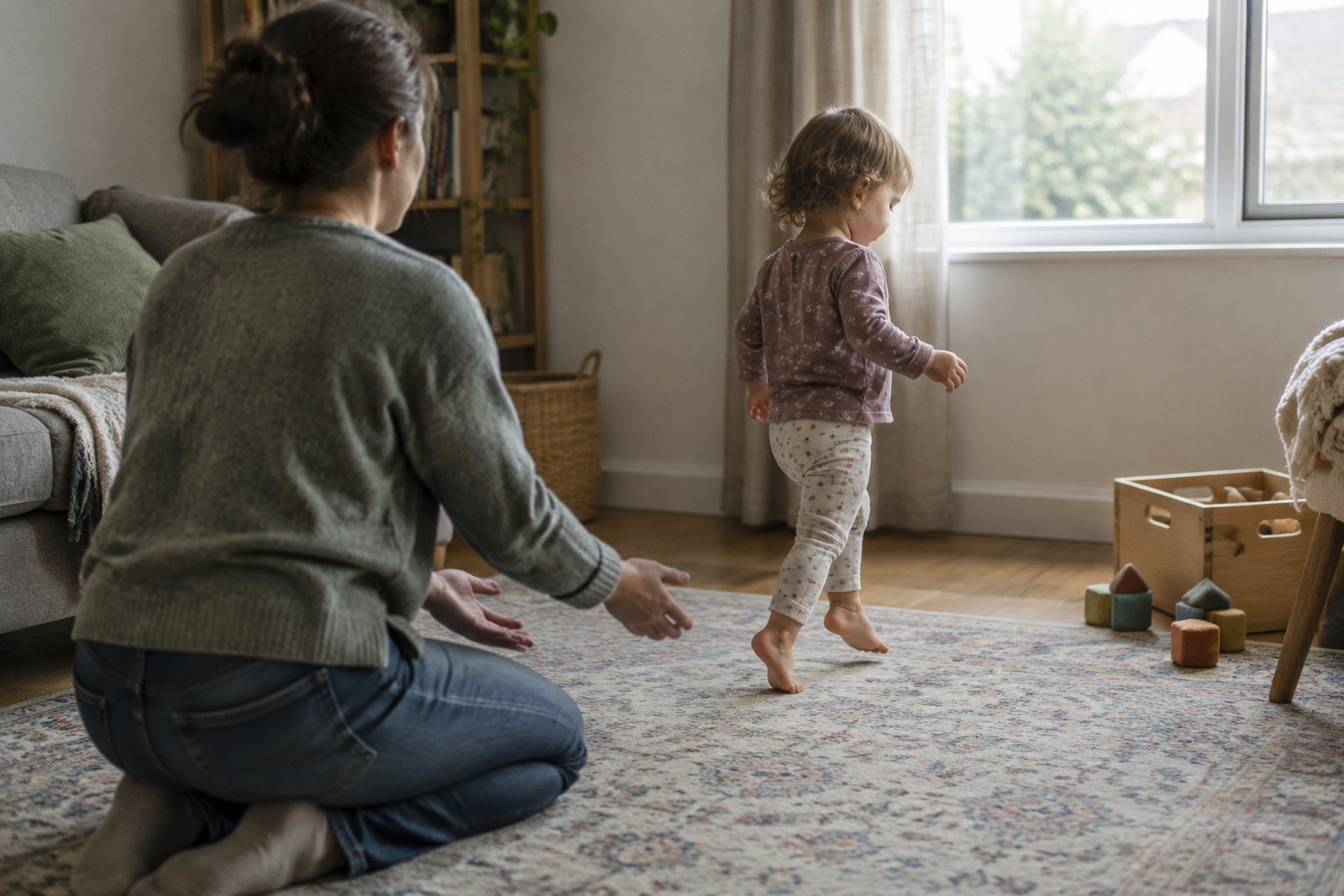
If your child walks on their tiptoes, the honest answer is that it is very often nothing to worry about. Lots of toddlers toe walk while they are learning to walk, and most settle into walking with their heels down without anyone doing anything. Some children carry on toe walking for longer with no medical cause ever found. Doctors call this idiopathic toe walking, which simply means toe walking without a known reason.
It is worth getting it checked by a GP if your child only ever walks on their toes, cannot stand with their heels flat on the floor, does it on one side only, has stiff or tight legs, is falling a lot, has lost skills they used to have, or you have other worries about how they are developing. If any of those apply, book the appointment. If none do, the sections below explain what to watch, what you can do at home and who helps with what.
Why young children walk on their toes
Walking is a new skill, and toddlers try out all sorts of ways of doing it. Some go up on their toes when they are excited, when they are trying to go faster, or when the floor is cold. Some do it more when barefoot and less in shoes. For many, it is a phase that fades as balance and strength improve.
A smaller group of children keep toe walking as they get older. Many of them can put their heels down when asked, stand flat and squat to play, and are otherwise developing as expected. When a doctor has checked them and found nothing else going on, that is idiopathic toe walking. It is not something you caused, and it is not a sign that your child is being lazy or awkward.
The thing that matters over time is the calf muscles and the tendon at the back of the ankle (the Achilles tendon). If a child spends most of their time up on their toes, these can gradually become tighter, which can make heels-down walking harder. That is the main reason persistent toe walking is worth keeping an eye on, rather than because it is harmful in itself.
When to see a GP
Book a GP appointment if any of these apply:
- Your child only ever walks on their toes and rarely or never puts their heels down.
- They cannot stand with both heels flat on the floor, even when you ask or help them.
- It is one side only, or one leg looks or moves differently from the other.
- Their legs, ankles or feet seem stiff, or their calves feel very tight.
- They have lost skills they used to have, such as walking, running, climbing stairs or getting up from the floor.
- They fall over much more than other children their age, or seem clumsy in a way that worries you.
- They started toe walking after walking normally for some time.
- They complain of pain in their feet, legs or back.
- You have other concerns about their development, such as speech, play, social interaction or movement milestones.
Toe walking that carries on beyond the toddler years is also worth mentioning to your GP or health visitor, even if your child seems fine otherwise. The NHS toe walking page sets out the current guidance on ages, and it is worth checking it rather than relying on what friends or forums say.
Loss of skills or new weakness should be seen promptly, not left for a routine check. If your child suddenly cannot walk, cannot bear weight, or seems unwell with it, contact your GP the same day or call NHS 111. Call 999 if they are seriously unwell.
What the GP will do
The GP will usually ask when it started, whether it is both sides, whether your child can stand flat, and how they are getting on with other milestones. They will look at how your child walks, check how far the ankles bend and look at muscle tone and reflexes. Most children are reassured and sent home. Some are referred on to a children's physiotherapist, a paediatrician, or occasionally an orthopaedic specialist, to look more closely and rule out conditions affecting the nerves, muscles or development. A referral is not a diagnosis. It is just the next person taking a proper look.
Toe walking, autism and sensory differences
This is the part many parents have already read about late at night, so it is worth being clear and calm about it.
Toe walking is seen more often in autistic children and in children with sensory processing differences. But toe walking on its own is not a sign of autism. Plenty of children toe walk and are not autistic, and plenty of autistic children do not toe walk. If toe walking is the only thing you have noticed, there is no reason to jump to that conclusion.
If you have noticed other things, such as differences in communication, play, social interaction, very strong reactions to noise, textures or certain foods, or a strong need for routine, then mention all of it to your GP or health visitor together. It is the whole picture that matters, not one sign.
Why might sensory differences play a part? Nobody fully knows, and different children seem to have different reasons. Some ideas that come up in practice:
- Some children may dislike the feeling of their heels on the floor, especially on cold, rough or unfamiliar surfaces. This links with touch sensitivity.
- Some may enjoy the extra pressure and muscle feedback that comes from being up on their toes. This links with the body awareness sense called proprioception, explained in our guide to proprioception and clumsiness.
- Some may find toe walking helps them feel steadier or more alert, which links with balance and movement processing.
These are possibilities, not explanations for every child. If you want to understand more, our guide to sensory processing differences in children covers the signs and what tends to help.
Who leads treatment
It helps to know who does what, because the advice online mixes it all together.
Physiotherapy leads on the legs
A children's physiotherapist is usually the lead professional for persistent toe walking. They assess muscle length, strength and walking pattern, and decide on things like:
- Stretching programmes for the calves, with guidance on how and how often.
- Strengthening and balance exercises.
- Splints, such as ankle foot orthoses, worn in shoes or at night.
- Serial casting, where a series of plaster casts gently stretches the calf over a few weeks.
- Referral to an orthopaedic surgeon in the small number of children where tightness is significant and other approaches have not worked.
These are clinical decisions that need a hands-on assessment. Please do not try to cast, bandage or splint a child's foot yourself, and do not force stretches. If your child has been given a stretching programme, follow it as shown.
Doctors and other professionals
Your GP and, if needed, a paediatrician look at the bigger medical picture. If there are concerns about development or autism, your child may be referred for a developmental assessment. A podiatrist may sometimes be involved with foot shape or footwear, depending on local services.
What you can do at home today
None of this replaces a check if you are worried. But there is plenty you can do that is useful.
Watch and write it down
Before any appointment, spend a few days noticing:
- Is it all the time, or only sometimes? Barefoot, in shoes, or both?
- Is it worse when tired, excited, rushing or on certain floors?
- Can your child stand still with both heels flat? Can they squat down to play with heels on the floor?
- Is it both feet equally?
- Are they keeping up with other children on walks, at the park and on stairs?
Take a short video of them walking, ideally barefoot and in shoes. Children often walk perfectly normally the moment they are in a GP surgery, and a clip on your phone saves a lot of explaining.
Play that brings the heels down
These are simple games that encourage heel contact and ankle movement. They are not treatment and they will not undo tight muscles, but most children enjoy them and they build balance and strength generally.
- Penguin walking on heels, or walking like a dinosaur with big heavy steps.
- Walking up slopes, grassy banks or a gentle ramp in the park, which naturally stretches the calves.
- Squatting play: doing jigsaws, posting games or drawing with chalk on the ground while squatting with heels down.
- Marching to music, stamping in puddles or stomping on bubble wrap.
- Riding a trike or balance bike and scooting, which use the whole foot.
- Walking on different surfaces such as grass, sand, carpet and play mats, if your child is happy to.
For more ideas by age, see our guide to gross motor skills and activities.
Go easy on the reminders
Saying "heels down" fifty times a day is tempting and usually does not work. Many toe walkers do not notice they are doing it, and constant correction can turn walking into a battle. A calm reminder now and then, or a shared game, tends to go better than nagging.
Footwear
Well-fitting shoes with a flat, flexible sole and a firm heel are a sensible everyday choice. Some children toe walk less in shoes, others more. Some physiotherapists suggest shoes or boots that come up over the ankle for certain children, but that is their call after an assessment. Shoes alone are unlikely to fix persistent toe walking, so do not spend a fortune on special footwear before anyone has looked at your child.
If your child refuses shoes or socks, finds seams unbearable or will only wear one pair, that is worth noting too. It can be a sensory issue as much as a foot issue.
Where an occupational therapist fits
An occupational therapist does not lead on calf stretching, splinting or casting. That is physiotherapy. Where an occupational therapist can help is with the sensory and everyday-life side, particularly when toe walking comes alongside other things.
A private occupational therapist visiting at home can:
- Look at sensory factors that might be linked to the toe walking, such as touch sensitivity or a need for movement and pressure, and suggest activities that meet those needs in other ways. The evidence that this reduces toe walking itself is limited, but it can help with comfort and everyday life.
- Help with shoes and socks when a child cannot tolerate them, so they can wear the footwear or splints their physiotherapist has recommended.
- Look at balance, coordination and confidence in daily life: getting dressed standing up, stairs, playground equipment, PE and keeping up with friends.
- Build exercises into routines so a physiotherapy programme actually gets done, for example linking stretches to bath time or bedtime.
- Write reports for school or nursery where sensory or motor difficulties are affecting learning or joining in.
Occupational therapy is most useful when toe walking is one part of a wider picture, such as sensory differences, coordination difficulties, autism or developmental concerns. If your child is simply a toe walker who is otherwise doing well, the GP and physiotherapist are the right people first. Our sensory needs page explains more about how sensory assessments work.
Frequently asked questions
Will my child grow out of toe walking?
Many do, especially toddlers who are still learning to walk. Some carry on for longer, and a smaller number develop tight calves that need physiotherapy. You cannot always tell in advance, which is why persistent toe walking is worth a check rather than waiting indefinitely.
Does toe walking mean my child is autistic?
Not on its own. It is more common in autistic children, but many toe walkers are not autistic. If you have noticed other differences in communication, play or reactions to sensory things, raise them all with your GP or health visitor together.
Can I stretch my child's calves myself?
Gentle play that brings the heels down is fine. For actual stretching, ask a physiotherapist to show you what to do and how often. Never force a stretch or continue if it hurts, and do not try homemade splints or bandaging.
Is toe walking bad for their feet in the long run?
The main concern is that spending most of the time on tiptoe can make the calf muscles and Achilles tendon tighter, which can make flat-footed walking harder later. That is why a professional will check ankle movement. Many children who toe walk never have problems.
Can my child see an occupational therapist without a diagnosis?
Yes. You do not need a diagnosis to see a private occupational therapist, and NHS services have their own referral routes. But if you have not yet seen a GP about the toe walking, start there so medical causes can be considered.
Should I buy special shoes or insoles?
Not before an assessment. Ordinary well-fitting shoes with a flat sole and firm heel are a good start. If special footwear, insoles or splints are needed, a physiotherapist or orthotist will advise on the type.
Next steps
If toe walking is part of a wider picture of sensory, coordination or developmental concerns, see our children's occupational therapy page, or current guide prices, and choose your area below.

Talk to an occupational therapist near you
This guide is general information. For advice about your own situation - or someone you look after - a local occupational therapist can visit you at home and see it for themselves.
Choose your area: