

Tactile Defensiveness: When Touch Feels Too Much for Your Child
By Mobile Occupational Therapist • 12 October 2026 • 13 min read
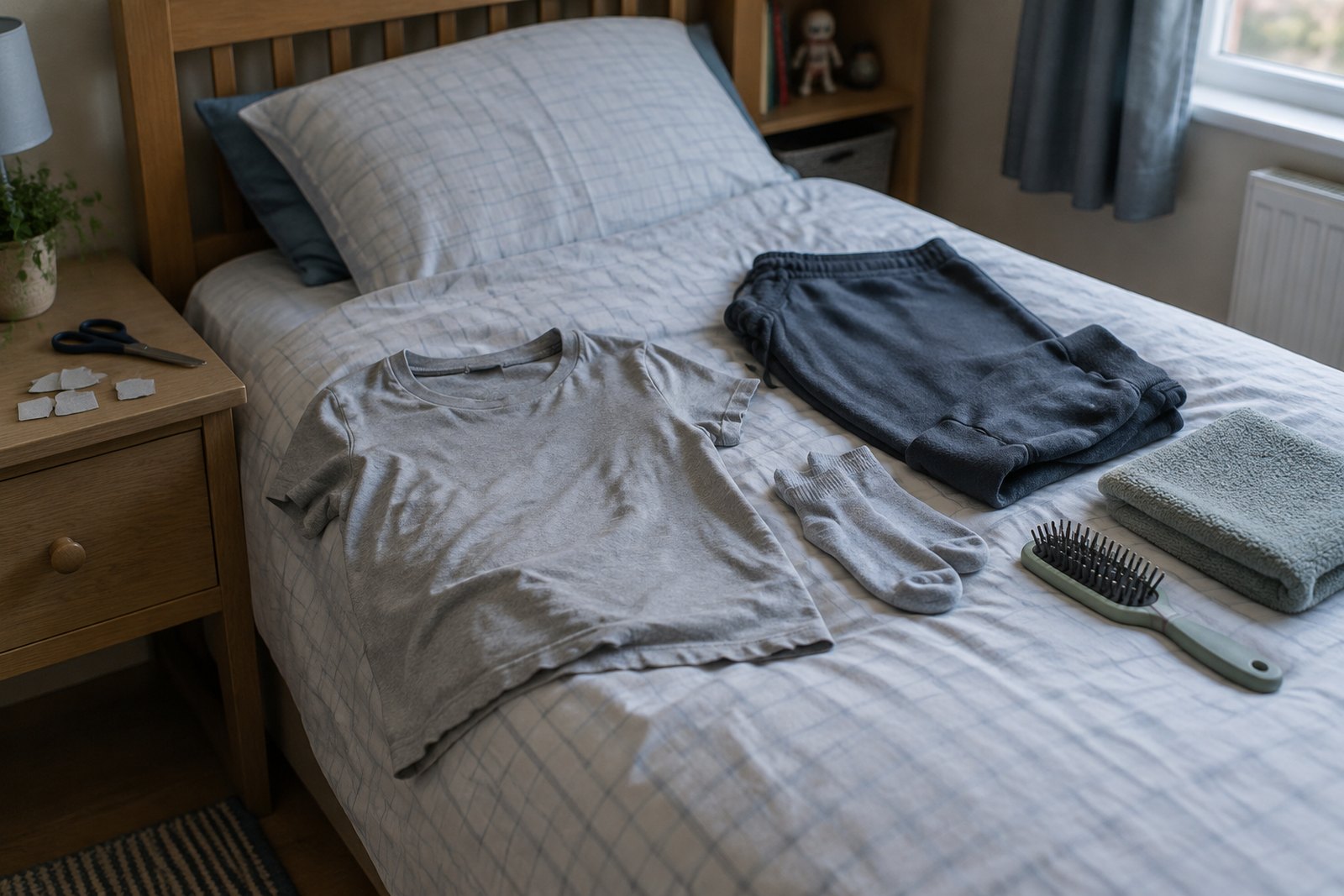
Tactile defensiveness means a child's nervous system reacts to ordinary touch as if it were a threat. A sock seam, a clothing label, a light tap on the arm or a splash of water on the face can feel genuinely uncomfortable, even painful, to them. The reaction you see (screaming at hair washing, ripping off clothes, pulling away from a hug) is not naughtiness or fussiness. It is their body sounding an alarm.
The good news is that a lot can be done at home, starting today, to make daily life calmer. The guiding rule is simple: work with your child's nervous system, never against it. That means preparing their body, warning before touch, giving them control and building tolerance slowly. It never means forcing them to put up with it.
Signs your child may be sensitive to touch
Every child dislikes some things. What marks out tactile sensitivity is how strong the reaction is, how often it happens and how much it gets in the way of ordinary life. Common signs include:
- Clothes: cutting out or complaining about labels, refusing socks unless the seams are perfect, wanting the same few soft items, hating new clothes, refusing coats, hats or gloves, or wanting to be naked at home.
- Hair washing and brushing: distress far beyond what you would expect, especially water on the face or head.
- Nail cutting and haircuts: panic, hiding or fighting, sometimes from the moment the scissors or clippers appear.
- Teeth brushing and face washing: gagging, clamping the mouth shut or pushing your hand away.
- Messy play: avoiding paint, glue, sand, playdough or mud, or wiping hands constantly when they do get messy.
- Food: strong reactions to certain textures, or getting upset about food on their hands or face.
- Touch from people: pulling away from hugs or kisses, especially light ones or ones they did not see coming, while sometimes being happy to give a big squeeze on their own terms.
- Crowded places: distress in queues, busy playgrounds or the carpet at school, where other children might brush past them.
- Lashing out: hitting or pushing a child who bumped them, which can look like aggression but is often a defensive reflex.
Many children with tactile sensitivity are also the ones who crave deep pressure. They burrow under cushions, love being squashed, or wrestle. That is not a contradiction, and it is a useful clue for helping them.
Why touch can feel too much
Touch is processed by the tactile system, one of several sensory systems the brain uses to make sense of the body and the world. Our guide to the 8 sensory systems explains how they fit together.
Roughly speaking, the brain handles two kinds of touch. Light, unexpected touch acts as an early warning: is that a spider on my arm? Firm, expected touch tells you where your body is and tends to feel calming. In most people, the brain quickly decides that a sock seam or a brush of a sleeve is nothing to worry about and stops paying attention. In a child who is over-responsive to touch, that filter does not work as well. The warning signal stays switched on, and the body can tip into a fight, flight or freeze response.
This is why the same child may cope at 9am and fall apart at 5pm. Sensory tolerance drops when a child is tired, hungry, anxious or has already had a busy day. Small irritations add up until one more thing is too much.
Tactile sensitivity is common in autistic children, and is also seen in children with ADHD, dyspraxia and anxiety, and in children with no other diagnosis at all. Having it does not mean your child has any particular condition. If you are wondering about autism or ADHD, that is a conversation for your GP, health visitor or school SENCO, who can explain the local assessment route.
Clothes and dressing
Clothing is where many families feel the daily battle, and it is often the easiest place to win quick relief.
- Remove labels properly. Cutting them leaves a sharp edge that can be worse. Unpick the stitching, or choose clothes with printed labels.
- Turn socks inside out so the seam faces outwards, or look for seamless socks and underwear.
- Wash new clothes several times before they are worn, to soften them. Second-hand clothes are often softer already.
- Let your child choose fabrics. Take them to feel things in a shop. Many prefer soft cotton or stretchy fabrics. Some prefer clothes that fit snugly, because firm, even pressure is easier than loose fabric moving against the skin.
- Buy multiples of things that work. Wearing the same type of trousers every day is a perfectly reasonable solution.
- Plan seasonal changes slowly. Introduce winter coats, hats and gloves a few weeks early, at home, for short periods, before they are actually needed.
- Watch for washing products. Some children react to a change in detergent or fabric conditioner. Keep to what works.
School uniform is a common sticking point. Many schools will allow a softer version of the uniform or a different fabric if you explain the reason, so it is worth asking.
Prepare the body with firm pressure
Firm, deep pressure and "heavy work" (activities that push or pull against the muscles and joints) send calming signals through the body's sense of position, called proprioception. Our guide to proprioception explains this in more detail. In practice, many families find that a few minutes of heavy work before a difficult touch task makes the task easier, although it does not work for every child.
Things to try before hair washing, dressing or nail cutting:
- A firm towel rub, using steady pressure rather than light strokes.
- Rolling a large soft ball firmly over their back and legs while they lie on the floor, if they enjoy it.
- Pushing against a wall, carrying a laundry basket, or helping move cushions.
- Wheelbarrow walks, crawling games or a few jumps.
- A tight "sandwich" between two sofa cushions, with their head always out and them in charge of when it stops.
Always let your child say stop, and stop straight away. If pressure games become part of the daily routine, an occupational therapist can help shape them into a sensory diet that fits your family.
Warn before touch, and let them do it themselves
Unexpected touch is the hardest kind. Touch your child can see coming, and especially touch they control, is much easier for the brain to accept.
- Say it before you do it. "I am going to put my hand on your shoulder." Approach from the front, where they can see you.
- Use firm touch, not light. A steady hand on the shoulder is usually easier than a tickle or a gentle stroke.
- Count it down. "Three more brushes, then done." A clear end point makes things feel survivable.
- Hand over control. Let your child brush their own hair, wash their own face with a flannel, or apply their own sun cream, even if the result is imperfect. Self-touch rarely triggers the same alarm.
- Offer choices. Flannel or sponge? Before or after their programme? Choice gives a sense of control, which lowers anxiety.
Making grooming bearable
Hair washing
Water running down the face is often the worst part. Try a bath visor or a folded flannel held over the eyes, a jug with a gentle pour rather than a shower head, or tipping the head back while lying in the bath. Some children cope better washing hair at the kitchen sink, or in the shower wearing swimming goggles. Wash less often if you can; there is no rule that says it must be every day. Keep the routine identical each time so it becomes predictable.
Hair brushing and haircuts
Brush from the ends upwards, holding the hair above the tangle so the scalp is not pulled. A detangling spray and a wide-toothed comb help. Shorter styles can reduce the daily struggle. For haircuts, ask for a quiet appointment time, explain to the hairdresser beforehand, and bring a familiar cape or towel. Some children prefer scissors to the buzz of clippers, others the reverse.
Nail cutting
Cut nails after a bath, when they are softer, and after some heavy work. Press firmly on each fingertip before cutting. Do one or two nails at a time, spread across the day, rather than all ten in a battle. A nail file can be easier than clippers. Let your child watch, or hold the clippers with you if they want to.
Teeth
Try a softer brush, a smaller head, or a mild-flavoured toothpaste, and let your child brush first. If brushing is very difficult, tell your dentist, who can advise on keeping teeth healthy.
Messy play, without force
Messy play helps the brain get used to different textures, but only when the child feels safe. Forcing a hand into paint teaches the opposite.
- Start dry. Rice, pasta or lentils (supervise young children closely because of choking, and avoid raw kidney beans, which are harmful if eaten).
- Use tools first. Spoons, scoops, toy diggers, paintbrushes. Touching mess with a tool is a real step.
- Contain it. Textures inside a sealed food bag can be squashed without touching them.
- Keep a towel and a bowl of water nearby so your child knows they can wipe their hands whenever they want.
- Go one finger at a time. Let them decide when to touch, and how much.
- Join in yourself and make it fun, without commentary on whether they are touching it.
Progress can take weeks or months. That is normal. A child who watches from a safe distance is still taking part.
Hugs, family and crowded places
It can hurt when your child pulls away from a cuddle. Try offering firm hugs that they start, back squeezes, or sitting side by side. Let relatives know that your child is not being rude, and that a wave or high five is a fine greeting. Teaching your child that they are allowed to say no to touch is important for their safety too.
In crowds, position your child at the edge or the back of a queue, plan trips for quieter times, and let them wear a hood or carry a backpack, which some children find gives a protective buffer.
Nursery and school
School is full of unexpected touch: lining up, carpet time, PE changing, messy art. Speak to the class teacher or the SENCO. Useful adjustments can include sitting at the end of the row or on a chair at carpet time, lining up at the front or back, extra time and a quiet space to change for PE, an apron or gloves for messy activities, and a warning before adults help with coats or zips. A short written note about what helps is easy for staff to share.
If your child's needs are significant and affect their learning, the school may involve outside professionals. In England, an occupational therapy report can form part of the evidence for extra support, including for an EHCP.
Where an occupational therapist fits
Occupational therapists are the profession most closely involved with sensory processing in children. A paediatric occupational therapist, ideally one with sensory integration training, can observe your child, take a detailed history from you, use standardised questionnaires and assessments, and work out what is driving the difficulties. Our guide to sensory processing assessments explains what that involves. They can then help you build a practical plan for dressing, grooming, school and home, and write a report for the school if needed. Visiting at home lets them see the real bathroom, the real sock drawer and the real morning routine. Find out more on our paediatric occupational therapy page.
It is worth getting help if touch sensitivity is causing daily distress, limiting what your child can wear or do, affecting school, or straining family life. On the NHS, routes vary by area; your GP, health visitor or school SENCO can tell you how to access children's occupational therapy locally.
Other professionals lead in some situations:
- Your GP if there is a sudden change in how your child reacts to touch, if skin is sore, broken or itchy (eczema and other skin conditions can make touch genuinely painful), or if you are worried about their development generally.
- Your GP or health visitor, and a speech and language therapist or dietitian, if your child eats a very narrow range of foods, is losing weight, or gags or chokes. Feeding difficulties need a proper medical check.
- Your GP or school if you think your child may be autistic or have ADHD, to start the assessment pathway.
- Your GP or local children's mental health service if anxiety is spreading well beyond touch, or your child seems low or withdrawn.
Frequently asked questions
Will my child grow out of tactile defensiveness?
Many children become more tolerant as they get older, especially with the right support, and they also learn their own strategies. Some remain more sensitive to touch as adults and simply learn what works for them. Supporting them now makes daily life easier either way.
Is tactile defensiveness a sign of autism?
It is common in autistic children, but it is also seen in children who are not autistic. On its own it does not mean your child is autistic. If you have wider concerns about communication, social interaction or play, talk to your GP or health visitor.
Should I make my child get used to it?
No. Forcing exposure, such as holding a child still for hair washing or pushing their hands into messy play, usually makes the fear worse and can damage trust. Gradual, child-led steps, with preparation and control, work far better.
Is it the same as being ticklish?
Not quite. Most children are ticklish and find it fun at least some of the time. A child with tactile defensiveness experiences light touch as unpleasant or alarming, and their reaction is out of proportion and hard to calm.
Can a weighted blanket help?
Some children find deep pressure calming, but weighted blankets carry real safety risks, especially for young children. Read our safety guidance first and ask an occupational therapist before using one.
How long does occupational therapy take to help?
It varies a lot. Many families notice easier days quickly once they change clothing, routines and preparation. Building tolerance for things like messy play or haircuts usually takes longer and happens in small steps.
Next steps
If touch is making everyday life a struggle, a home visit from a paediatric occupational therapist can help you understand why and what to do next. See our sensory needs page, or current guide prices, and choose your area below.

Talk to an occupational therapist near you
This guide is general information. For advice about your own situation - or someone you look after - a local occupational therapist can visit you at home and see it for themselves.
Choose your area: