

Sensory Diet: What It Is and How to Build One at Home
By Mobile Occupational Therapist • 19 September 2026 • 12 min read
A sensory diet is a planned set of movement and sensory activities spread through the day. It is designed to help a person stay calm, alert and ready for whatever comes next. The term comes from occupational therapy practice, and it has nothing to do with food. Think of it the way you think of meals: small, regular 'servings' of the right kind of input at the right times, rather than one big burst when things have already gone wrong.
Most sensory diets are written for children who seem to need far more movement and pressure than others (sensory seeking), or who are easily overwhelmed by noise, touch or busy places, or both on different days. A good one is short, practical and built around your child's real routine. The best ones are put together by an occupational therapist who has assessed your child, but there is plenty you can understand and try at home in the meantime.
What a sensory diet actually is
We all use sensory input to regulate ourselves without noticing. You jiggle your leg in a long meeting, chew gum on a drive, or want a dark, quiet room after a loud day. Some children's nervous systems process sensory information differently, so they either need much more input to feel settled, or they reach overload quickly.
A sensory diet tries to meet those needs on purpose, before behaviour does it for them. Instead of a child crashing into the sofa forty times because their body is asking for pressure, you build in proper heavy work at set points. Instead of waiting for a meltdown at the supermarket, you plan a calming activity beforehand and a quiet recovery afterwards.
It draws on senses beyond the familiar five. The two that matter most here are proprioception (the sense of where your body is, fed by muscles and joints working against resistance) and the vestibular sense (balance and movement, from the inner ear). Touch, sound, sight and mouth-based input come in too. If these terms are new, our guide to the 8 sensory systems explains them plainly.
Sensory seeking behaviour: what it can look like
Sensory seeking is usually what brings parents to this page. It can look like:
- constant jumping, running, climbing or crashing into furniture and people
- spinning or rocking a lot, seemingly without getting dizzy
- chewing sleeves, collars, pencils or toys
- touching everything and everyone, or rough play that goes too far
- finding it very hard to sit still at the table or on the carpet at school
Other children show the opposite pattern: covering their ears, hating labels in clothes, refusing messy play, avoiding crowds. Many show a mix. None of this on its own means anything is wrong, and lots of young children are simply busy. It is worth noting when it happens, what came before and what helps, because that pattern is exactly what an occupational therapist will want to know. Our page on sensory processing differences covers this in more detail.
Some things need a doctor rather than a sensory plan. Talk to your GP or health visitor if your child bangs their head or hurts themselves, regularly eats things that are not food (such as soil, paper or paint), has sudden changes in behaviour, sleep or toileting, or if you have any concerns about hearing, vision or development. If a child is hurt or unwell and you are not sure what to do, call NHS 111, or 999 in an emergency.
Alerting and calming: the two directions
Sensory activities tend to push a child in one of two directions. Getting the direction right matters more than the specific activity.
Alerting activities
For a child who is sluggish, floppy, slow to start or 'switched off', quick and changeable movement tends to wake the system up:
- star jumps, skipping or a quick dance to fast music
- bouncing gently while sitting on a gym ball
- a fast run to the end of the garden and back
- crunchy or sour snacks, if safe for your child's eating and swallowing
- a cold drink through a straw, or washing their face with cool water
Calming activities
For a child who is wound up, overexcited or close to overload, slow, rhythmic, heavy and predictable input tends to settle things:
- slow rocking in a chair or on your lap
- being rolled firmly in a blanket with their head out, briefly, and only if they enjoy it
- squeezing a stress ball or playdough
- sucking a thick drink like a smoothie through a straw
- a den with cushions, dim light and less noise
- slow breathing games such as blowing bubbles or blowing a feather across the table
Watch out for one trap. Spinning and very fast swinging are powerful and can leave some children more wired, dizzy or sick later. Keep these short, let the child control them, and stop if they look pale, sweaty or upset.
Heavy work and proprioceptive activities
Heavy work is the workhorse of most sensory diets. It means any activity where muscles push, pull, lift or carry against resistance. For most children it is both organising and calming, which makes it a sensible place to start. It is also the easiest kind to sneak into ordinary life.
Around the house
- carrying shopping bags in, at a sensible weight for their size
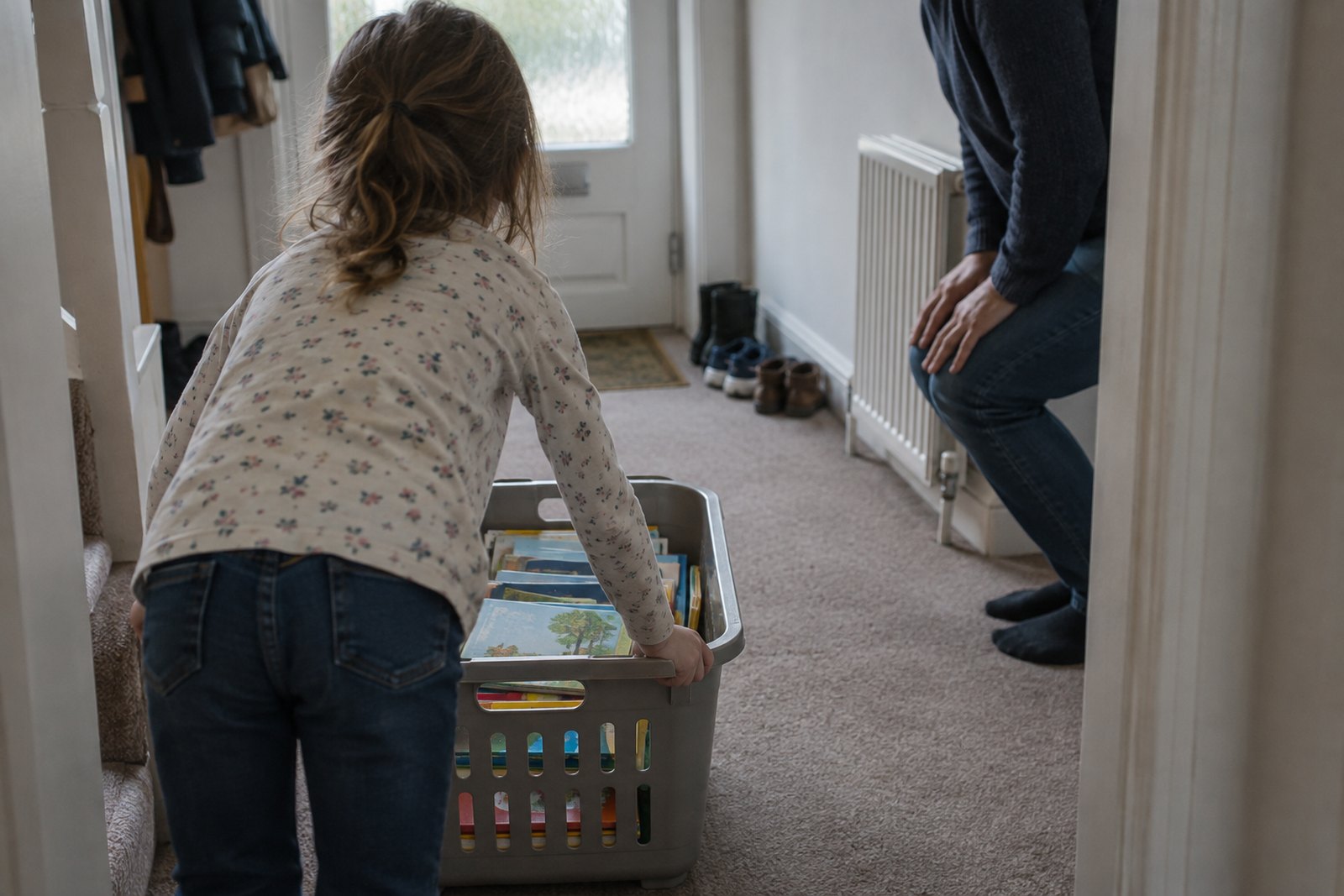
- pushing a laundry basket full of books along the hall
- helping strip the bed or carry wet washing to the line
- wiping tables, washing windows or scrubbing the car
- wall push-ups: pushing against the wall as if trying to move it
- kneading bread dough or rolling pastry
Play and movement
- animal walks: bear crawl, crab walk, frog jumps, or wheelbarrow walking with an adult holding the legs
- tug of war with a towel
- climbing frames, monkey bars and scrambling up a hill
- pillow squash: the child lies on their tummy and you press a large cushion firmly down their back and legs, never over the head, checking they like it
- a trampoline with a safety net, one child at a time
- swimming, which gives pressure and resistance all over
Mouth-based heavy work
Some children seek input through their mouth. Chewy or crunchy foods, thick drinks through a narrow straw, blowing bubbles and chew tools made for the purpose can all help. If your child has any difficulty with eating or swallowing, check with your GP first. A speech and language therapist, not an occupational therapist, leads on feeding and swallowing problems.
A word on weighted blankets, vests and lap pads. They are popular, but weight, fit and timing all matter, and they are not suitable for babies or for overnight use with young children unless a professional has advised it. Get an occupational therapist's advice before buying one.
How to build a sensory diet at home
You do not need a laminated chart and a shed full of equipment. Start small.
- Watch for a week. Jot down when things go well and when they fall apart. Morning rush? After school? Bath time? Busy shops? Note what your child seeks out or avoids.
- Find the pinch points. Most families find two or three times of day are hardest. That is where a sensory 'snack' helps most, ideally just before, not in the middle of a meltdown.
- Pick two or three activities. Choose ones your child already enjoys and you can realistically do. Heavy work is usually a good first choice.
- Schedule them. A typical pattern might be something on waking, something before leaving for school, a proper movement session after school and a calming wind-down before bed. Five to ten minutes is often plenty.
- Make it visual and give choices. A simple picture menu lets your child pick, which helps them learn what their own body needs.
- Review honestly. After two or three weeks, ask whether anything is easier. Drop what does not help and keep what does.
A sensory diet should never be a reward to be earned or something withheld as punishment. A child who needs to move needs to move, whether or not they have had a good morning.
During an actual meltdown, the plan pauses. Keep everyone safe, cut noise and demands, stay calm and close if they want you there, and save the activities for when they have settled.
Fitting a sensory diet into the school day
School is often where the need is greatest, because it asks children to sit still, listen and cope with noise for long stretches. A few small adjustments go a long way:
- Movement breaks at set times, such as before phonics or after lunch, rather than only when a child is already struggling
- Jobs with heavy work: taking the register to the office, carrying a box of books, stacking chairs, wiping the whiteboard
- Seating options: a wobble cushion, a resistance band around the chair legs to push feet against, or permission to stand at a table
- Fidget items agreed with the teacher so they help rather than distract
- Ear defenders for assemblies, the dining hall or noisy lessons, if sound is a problem
- A quiet place to go briefly when overwhelmed
Speak to the class teacher and the SENCO (special educational needs coordinator), and bring a short list of what works at home. In England, occupational therapy recommendations can feed into a child's SEN support and, where one exists, an Education, Health and Care plan. Arrangements differ in Scotland, Wales and Northern Ireland, so check GOV.UK or your local council for the system where you live. It works best when home and school use the same language, so your child hears 'time for heavy work' in both places.
An honest note on the evidence
Sensory diets are widely used and many families find them genuinely helpful. But the research is still developing. Studies tend to be small, use different methods and show mixed results, so nobody can honestly promise a sensory diet will change your child's behaviour. What it can do is add structure, more movement and more predictable calm moments, which are good for most children anyway. Be wary of anyone selling expensive programmes or equipment with big claims.
Where an occupational therapist fits
A generic list of activities, this one included, is a starting point. An occupational therapist who has assessed your child can work out which sensory systems are involved, whether your child is seeking, avoiding or both, and how that links to what is actually hard, like dressing, eating, sleeping, handwriting or coping in class. They then tailor the plan, show you how to do activities safely, and review it as your child grows.
An assessment usually involves talking with you, watching your child play and do everyday tasks, and often questionnaires completed by parents and teachers. Our guide to sensory assessments explains what is involved. An occupational therapist can also write a report with recommendations for school.
On the NHS, children's occupational therapy is usually reached through a referral from a GP, health visitor, paediatrician or school, and criteria and waiting lists vary by area. A private occupational therapist visiting at home can see your child in their own surroundings, where sensory difficulties often show up most clearly. Check that anyone you use is on the HCPC register. Our sensory needs page explains what this support involves.
An OT is not always the right first person. A paediatrician or specialist assessment team leads on diagnosis, such as autism or ADHD, and your GP or your child's school can help with a referral. A speech and language therapist leads on communication, feeding and swallowing. A physiotherapist may be better placed for concerns about coordination or muscle tone. If anxiety or low mood seems to be the main issue, talk to your GP about mental health support.
Frequently asked questions
Is a sensory diet anything to do with food?
No. The word 'diet' is used because the activities are spread through the day like meals and snacks. Some involve the mouth, such as crunchy snacks or drinking through a straw, but it is not an eating plan.
Can I make a sensory diet without seeing an OT?
You can safely try everyday heavy work and calming activities at home, and many parents do. A tailored plan from an occupational therapist who has assessed your child is better, especially if difficulties are affecting school, sleep or family life, or you are not sure whether your child is seeking or avoiding input.
How quickly should it work?
Some activities have an effect within minutes, such as a child settling after heavy work. Bigger changes, if they come, take weeks of regular use. Give a plan two or three weeks before judging it, and keep notes so you can spot patterns.
Does my child need a diagnosis to have a sensory diet?
No. Sensory differences are common in autistic children and children with ADHD, but plenty of children without any diagnosis benefit from more movement and calmer routines. An occupational therapist assesses needs, not labels.
What if school will not follow the plan?
Ask for a meeting with the class teacher and SENCO and bring written recommendations, ideally from an occupational therapist. A few simple, specific suggestions that fit the classroom are far more likely to happen than a long list.
Next steps
If you would like a plan tailored to your child, see our children's occupational therapy page, or current guide prices, and choose your area below.

Talk to an occupational therapist near you
This guide is general information. For advice about your own situation - or someone you look after - a local occupational therapist can visit you at home and see it for themselves.
Choose your area: