

Social Prescribing: What It Is and How to Get Referred
By Mobile Occupational Therapist • 20 September 2026 • 12 min read
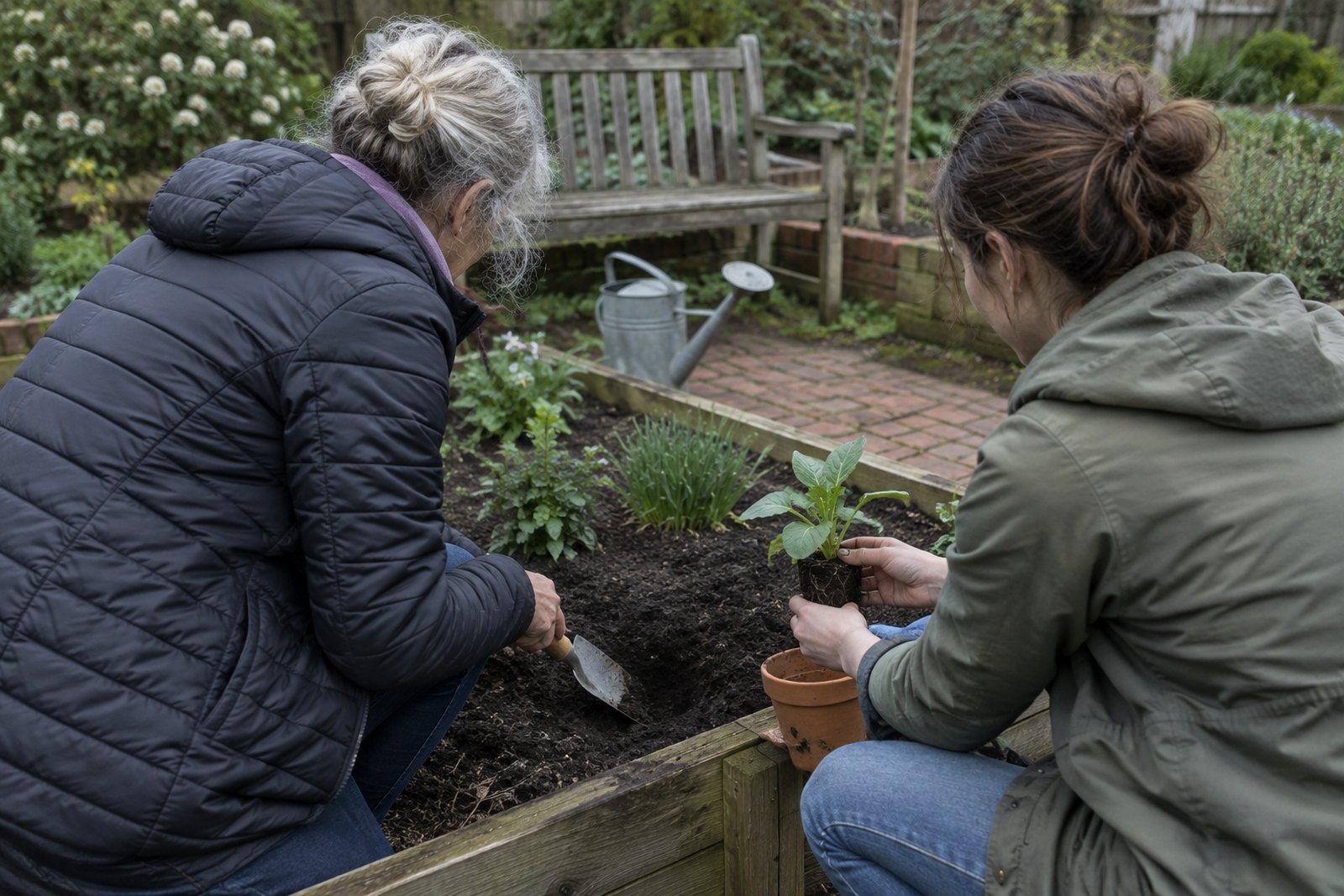
Social prescribing is a way for your GP practice to connect you with things that are not medicine but still matter to your health. That might be a walking group, a community choir, help with a debt, advice about a damp flat, or simply a reason to leave the house on a Tuesday. The person who makes the connection is usually called a social prescribing link worker. They are part of the wider GP practice team. Their job is to sit down with you, find out what is actually going on in your life, and help you find local support that fits.
To get referred, the simplest route is to ask at your GP practice. You do not usually need to see a GP first. A receptionist, practice nurse, pharmacist or GP can often refer you, and in some areas you can refer yourself. It is free on the NHS. It does not replace treatment you need. But for loneliness, low mood, stress, money worries or living with a long-term condition, it can help with the parts of life a prescription does not touch.
What social prescribing actually is
A lot of what brings people to their GP is not purely medical. Being lonely. Being in debt. Caring for someone with no break. Grieving. Living somewhere cold. Having slowly stopped doing the things that used to make the week feel like yours. A short appointment cannot fix those, and tablets do not either.
Social prescribing gives those problems a proper route. In England, NHS England has funded link workers through primary care networks (groups of local GP practices working together) for several years, so most practices now have access to one. Scotland, Wales and Northern Ireland have their own versions, sometimes called community link workers or community connectors, and how they work varies from area to area. If you are not sure what exists near you, your GP practice should know.
The phrase you will hear a lot is what matters to you. The point is to start with your life, not your diagnosis.
What a link worker does
- Gives you time. Conversations are usually longer and more relaxed than a GP appointment. They may happen by phone, at the surgery, at a community venue or, in some areas, at home.
- Listens to the whole picture. Not just symptoms, but money, housing, family, work, routine, what you used to enjoy and what has stopped.
- Helps you make a simple plan. Usually one or two small, realistic steps rather than a long list.
- Knows what is on locally. Groups, charities, council services and community projects, and crucially, which ones are actually still running.
- Helps with the first step. That might mean making a phone call with you, sorting out transport, or in some schemes going along with you the first time.
- Checks back in. Most link workers see people over a few sessions, so it is not one conversation and a leaflet.
Who social prescribing helps
You do not need a diagnosis and you do not need to be at breaking point. People are often referred because they are:
- Lonely or isolated, perhaps after a bereavement, retirement, a move, or a long spell of illness.
- Feeling low, anxious or stressed, usually alongside any other treatment they are having rather than instead of it.
- Living with a long-term condition such as arthritis, diabetes, COPD or chronic pain, and finding it has shrunk their life.
- Worried about money, benefits, housing, heating or work.
- Caring for someone and running on empty.
- Recovering from an illness, operation or hospital stay and trying to rebuild a routine.
- Visiting the GP often with things that never quite feel like a medical problem.
Some schemes also work with young people and families. Ask your practice what is available locally.
How to get referred
- Ask at reception. You can say, plainly: I would like to be referred to the social prescribing link worker. You do not have to explain much. Something like I have been feeling quite isolated, or I have got some money worries that are affecting my health, is enough.
- Mention it at your next appointment. If you are seeing a GP, nurse or practice pharmacist anyway, ask them. Sometimes they will suggest it first.
- Check the practice website or online services. Some practices let you self-refer through an online form or have a direct number for the link worker.
- Other people can refer too. Depending on where you live, referrals may come from community pharmacists, hospital teams, social workers, housing officers or local charities.
Asking on behalf of someone else
If you are an adult child worried about a parent, you can help them ask, sit in on the call if they want you to, and make a note of what is suggested. The person themselves generally needs to agree to the referral and to take part. A link worker cannot do much for someone who does not want to see them. If your parent is resistant to any help at all, that is a common and frustrating situation, and it often helps to start with what they would like to do again rather than what they are struggling with.
If your practice says there is no link worker
Ask whether there is one covering your primary care network rather than your individual surgery. You can also contact your local council, your local carers centre, or your local branch of a national older people's charity, which often run similar connecting services under a different name.
What happens at the first conversation
It is a conversation, not an assessment you can fail. A link worker will usually introduce themselves, explain what they can and cannot help with, and then ask you about your life. Expect questions like:
- What does a normal week look like for you at the moment?
- What is getting in the way?
- What did you used to enjoy, or what have you always wanted to try?
- Who do you see, and how often?
- Is anything practical worrying you, such as bills, housing or work?
- If one thing changed, what would make the biggest difference?
Some schemes ask you to fill in a short wellbeing questionnaire at the start and later on, so they can see whether things have improved. You set the pace. If you only want to talk about the boiler and your benefits this time, that is fine.
At the end you will usually agree one or two next steps. The link worker will then follow up, often over a few weeks, to see how it went and what needs changing.
Things worth thinking about beforehand
- What would a slightly better week look like?
- What stops you going out: cost, transport, energy, pain, nerves, not knowing anyone?
- Times of day when you feel best, and worst.
- Any practical letters, bills or forms that are worrying you. Bring them.
Examples of what you might be connected to
What is on offer depends entirely on your area, but these are typical.
Getting active, gently
Health walks led by volunteers, usually short, slow and sociable. Chair-based exercise classes. Gentle swimming or dance sessions. Groups for people with specific conditions who want to move more without feeling out of place.
Arts, music and making
Community choirs, art classes, craft groups, writing groups and community workshops where people fix things and make things side by side. You do not need to be any good. That is rather the point.
Nature and gardening
Community gardens, allotment groups, conservation volunteering and green spaces projects. If pain or stiffness makes gardening hard, there are plenty of ways to adapt it, which we cover in our guide to gardening with arthritis or limited mobility.
Volunteering and purpose
Helping at a food bank, a charity shop, a library or a community café. For many people, being useful does more for their mood than being looked after.
Practical help
This is the part people often do not expect. Link workers regularly connect people with debt advice, benefits checks, housing support, help with heating and energy costs, employment support, digital skills sessions and carer support services. Sorting out a money worry can lift a weight no amount of positive thinking will shift.
Company and peer support
Lunch clubs, coffee mornings, bereavement groups, condition-specific support groups and befriending services, where a volunteer phones or visits regularly.
What social prescribing is not
- It is not a replacement for medical treatment. If you have new or worsening symptoms, you still need your GP. A link worker works alongside your care, not instead of it.
- It is not a crisis service. If you are thinking about harming yourself or feel unable to keep yourself safe, call 999, call NHS 111, or call Samaritans free on 116 123. Do not wait for a link worker appointment.
- It is not counselling or therapy. Link workers are not therapists. If you need talking therapy, in England you can usually refer yourself. Our guide to getting mental health support in the UK explains the routes.
- It is not a social care assessment. If you need help with washing, dressing or meals, ask for a social care needs assessment. In England this is a Care Act needs assessment from your council. In Wales and Scotland ask your council, and in Northern Ireland ask your local Health and Social Care Trust. A link worker may help you ask, but they do not arrange care packages.
- It is not a way of fobbing you off. If you feel you have been sent to a link worker instead of being taken seriously about a health problem, say so to your GP.
Where an occupational therapist fits
Occupational therapy and social prescribing share a core belief: doing things that matter to you is good for your health. Occupational therapists have built a profession on that idea. So there is real overlap, and they work well together.
The difference is mainly in what each one does. A link worker connects you to what is out there. An occupational therapist looks closely at why you cannot do the things you want to, and then works on the barriers. For example:
- The walking group sounds lovely, but you cannot manage the front step, or you are frightened of falling since the last one.
- You would like to go to the craft group, but by mid-morning your energy has gone.
- Pain, stiffness or a tremor makes the activity itself hard.
- After a stroke or with memory problems, planning a trip out feels overwhelming.
- Low mood has stopped you doing almost anything, and you need a structured way back in. Occupational therapists often use approaches similar to behavioural activation.
An occupational therapist can assess you at home, suggest equipment or adaptations, help you pace your energy, and build a realistic routine. You can be seen through the NHS, usually via your GP, community team or council, or privately. A private occupational therapist visiting at home can be useful if you want help quickly or need a detailed look at what is getting in the way. Our page on independence for older people explains more.
Be clear about where others lead. New, unexplained or worsening symptoms belong with your GP. Exercise rehabilitation after an injury or operation is often led by a physiotherapist. Difficulties with speech or swallowing are for a speech and language therapist. Serious mental health problems need your GP or the mental health team. And if you are a carer, ask your council for a carer's assessment as well.
Frequently asked questions
Is social prescribing free?
Seeing a link worker is free on the NHS. Some of the activities you are connected to may have a small charge, but link workers know about free options and can often help with costs or transport.
Can I refer myself to a social prescribing link worker?
In some areas, yes, through the practice website, a phone number or a local organisation. In others you need a referral from someone at the practice. Asking at reception is the quickest way to find out.
What is the difference between a link worker and a social worker?
A social worker assesses care needs and safeguarding concerns and can arrange council-funded support. A link worker focuses on wellbeing, connection and practical signposting, and does not arrange care. If you need both, a link worker can help you contact adult social care.
How many sessions will I get?
It varies by scheme. Many people have a few conversations over several weeks or months, but there is no single national rule. Your link worker will explain how their service works at the first session.
Can I ask for a referral for my mum or dad?
You can help them ask and support them through it, but they will usually need to agree and take part. Framing it around something they would enjoy, rather than something they are struggling with, often goes down better.
Will a link worker come to my home?
Some do, especially if you find it hard to get out. Many work by phone or at the practice. If getting there is a barrier, tell the practice when you ask for the referral.
Next steps
If something practical is stopping you getting out and doing what matters, an occupational therapist can help alongside your link worker. See our older people's independence and home assessment pages, or current guide prices, and choose your area below.

Talk to an occupational therapist near you
This guide is general information. For advice about your own situation - or someone you look after - a local occupational therapist can visit you at home and see it for themselves.
Choose your area: