

Behavioural Activation: How Doing More Can Lift Low Mood
By Mobile Occupational Therapist • 19 October 2026 • 13 min read
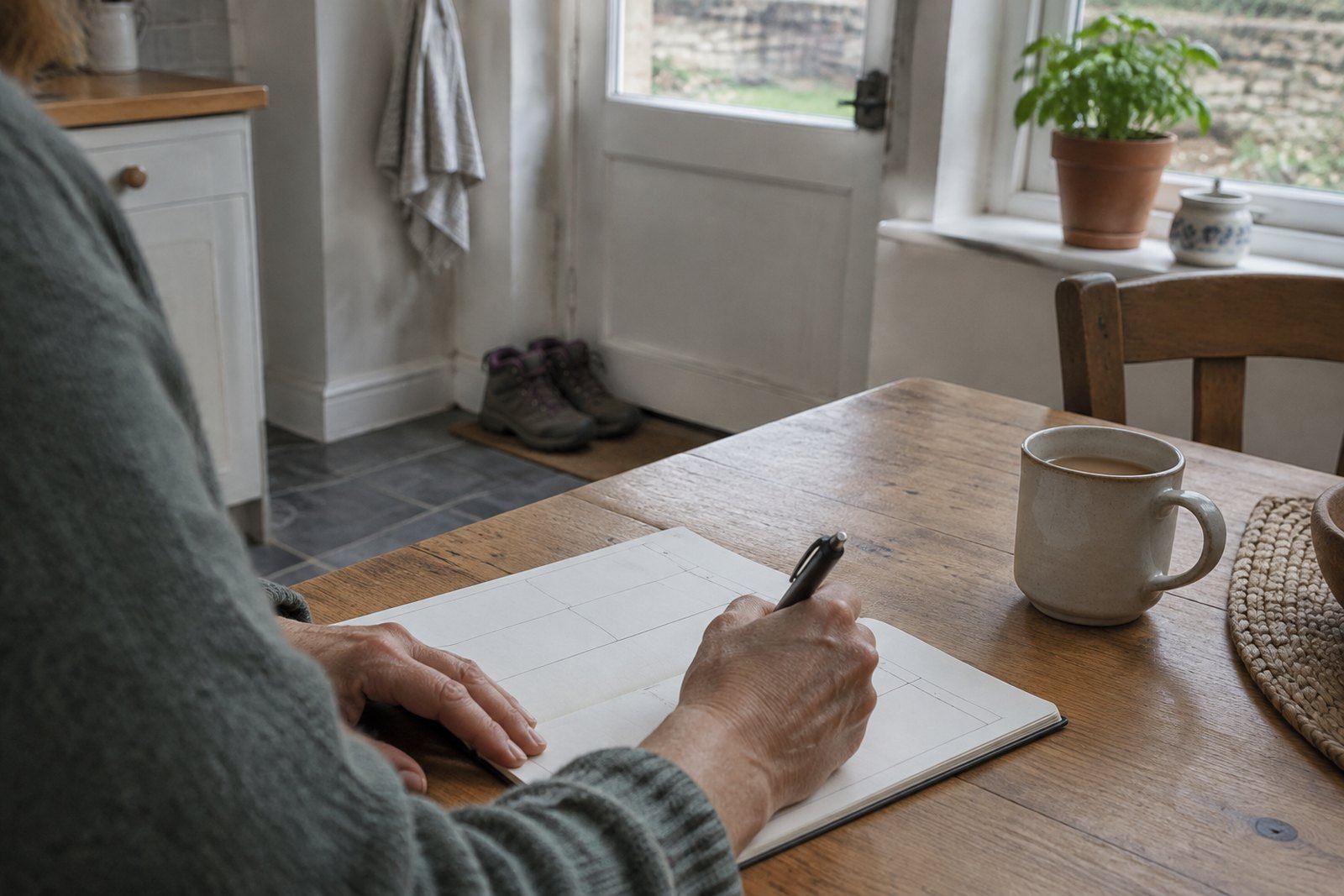
Behavioural activation is a structured way of lifting low mood by changing what you do, rather than waiting until you feel like doing it. It is one of the main approaches used for depression in NHS Talking Therapies. It is based on a simple, slightly annoying observation. When you feel low, you stop doing the things that used to give you pleasure, purpose or contact with other people. Stopping them makes you feel lower still.
Behavioural activation therapy works on that loop. You look at how you are actually spending your days, work out what matters to you, and build small, planned steps back towards it. Not huge changes. Not 'just get out more'. Small, specific, scheduled things, reviewed honestly. This page explains how it works, what you can try at home, where an occupational therapist fits, and when to talk to your GP instead. It is a guide, not a treatment plan. If things feel very bad right now, skip to the section on urgent help.
Why doing less makes low mood worse
Depression changes behaviour before most people notice. Energy drops. Things that used to be enjoyable feel flat or effortful. Seeing friends feels like a performance. So you cancel, rest, put things off. In the short term that brings relief, which is exactly why it is so easy to keep doing.
The cost comes later. With fewer good things in the day, there is less to lift your mood. Jobs pile up, which brings guilt. Friends drift, which brings loneliness. More time in bed or on the sofa often means more time going over the same worries. Mood drops further, energy drops further, and doing anything feels harder still. This is sometimes called the withdrawal cycle, or the vicious circle of low mood.
Behavioural activation does not ask you to think your way out of it. It starts from the other end. Instead of waiting for motivation to come back before you act, you act in small ways first and let mood and motivation follow, often slowly and unevenly. Outside in, rather than inside out. That is the heart of it.
It is not the same as being told to cheer up or keep busy. Busyness for its own sake can be another way of avoiding things. Behavioural activation is about activity that is rewarding or meaningful to you, and about noticing and gently tackling the things you have been avoiding.
How behavioural activation is done
In NHS Talking Therapies it is often offered as guided self-help with a practitioner, or as part of a longer course of therapy. The details vary, but most versions follow similar steps. You can use the same broad structure at home, ideally with some support.
1. Notice what you are actually doing
For a few days, jot down what you do in each part of the day, hour by hour or in rough blocks. Next to each, give two quick ratings out of ten: how much you enjoyed it, and how much it gave you a sense of achievement or closeness to someone. Some people also rate their mood.
This is not a test and nobody is marking it. Most people find patterns they had not spotted. Mornings in bed might be the lowest point of the day. A short phone call with a sister might score higher than expected. Two hours of scrolling might feel like rest but rate a two for everything.
2. Work out what matters to you
Next, think about values: what you care about in different areas of life, regardless of how you feel today. Areas often include relationships, family, work or study, home, health, creativity, community and faith. Ask yourself what kind of parent, friend, neighbour or worker you want to be, and what you used to enjoy before things got hard.
Values give direction. 'Be a good friend' is a value. 'Text Sam back' is an activity that moves towards it. Behavioural activation turns the first into lots of the second.
3. Make a list and break it down
List activities in three rough groups:
- Routine things that keep life ticking over, such as washing, eating and going to bed at a sensible time.
- Necessary things you have been avoiding, such as the bill, the letter from the hospital, the overflowing laundry basket.
- Things that are enjoyable or meaningful to you.
Then rank them from easiest to hardest. Break the big ones down until the first step feels almost too small to bother with. 'Sort out the house' becomes 'clear the kitchen table'. 'Get fit' becomes 'walk to the end of the road and back'. The aim is a step you would probably manage on a bad day, not a good one.
4. Schedule it, specifically
Plan when you will do each step, and write it down: what, when, where and with whom. 'Tuesday, 10am, walk round the block after breakfast' works far better than 'go for a walk this week'. Start with one or two planned activities a day, mixed in with routine ones, and build gradually.
The important rule is to follow the plan, not the mood. You will often not feel like it. That is expected, and it is not a sign the approach is failing.
5. Review, adjust, repeat
After each activity, rate it again. At the end of the week, look back. What helped? What was too much? What got skipped, and why? If something did not happen, the step was probably too big or the timing was wrong. That is useful information, not failure. Adjust and try again.
Self-help examples to try this week
These are examples, not prescriptions. Pick one or two that connect with something you care about.
- Get dressed by a set time, even if you are staying in. It changes the feel of the day for many people.
- Step outside once a day. The bin, the front step, the corner shop. Daylight and a change of scene count.
- One small job for ten minutes. The washing up, one drawer, one envelope opened. Set a timer and stop when it goes if you want to.
- One contact a day. A text, a voice note, a hello to a neighbour. Short is fine.
- A shrunk version of an old interest. One song on the guitar, one page of a book, ten minutes in the garden, one simple recipe.
- Something for someone else. Fill the bird feeder, water a neighbour's plants, cook an extra portion for a friend. Helping often scores high on meaning.
- Anchor your day with regular times for getting up, meals and bed. Routine gives the rest of the plan something to hang on.
If you live with pain, fatigue or a long-term condition, the same ideas apply but pacing matters more, because pushing hard on a good day can mean a crash on the next. Our guides to fatigue management and pacing and living with chronic pain explain how to plan activity without setting yourself back.
What gets in the way, and what helps
'I just cannot get started'
Make the first step smaller. Then smaller again. Putting your shoes on can be the whole task for day one. Linking a new activity to something you already do, such as straight after your morning cup of tea, also helps.
'I did it and felt nothing'
Very common, especially early on. Depression flattens enjoyment, and pleasure often returns after doing things rather than before. Keep rating honestly. A shift from a two to a four is progress, even if it does not feel like much.
'I had a bad day and the whole plan fell apart'
Expect this. Mood goes up and down. Pick the plan back up the next day at an easier level, rather than starting from scratch or deciding it does not work for you.
'I am a carer and have no time for myself'
Then the steps need to fit the life you actually have. Ten minutes still counts. If caring is part of why you feel low, read our guide to carer burnout too, because some of the answer may be practical help rather than mood work.
When to see your GP, and when to get urgent help
Self-help is reasonable for low mood that is mild and not getting worse. See your GP if:
- you have felt low or hopeless, or lost interest in things, most days for more than two weeks
- low mood is affecting work, relationships, eating, sleep or looking after yourself
- you have tried self-help and nothing is shifting
- you are drinking more or using drugs to cope
- there could be a physical or medical factor, for example after a stroke, a new diagnosis, a change in medication or having a baby
Your GP can talk through options, which may include talking therapy, medication or both. If you already take medication, do not change or stop it without speaking to your GP or pharmacist. In England you can also refer yourself directly to NHS Talking Therapies without seeing a GP. Services in Scotland, Wales and Northern Ireland are organised differently, so check with your GP or your local NHS. Our guide to getting mental health support in the UK explains the different routes.
Get help now if you are thinking about ending your life or harming yourself, or you feel unable to keep yourself safe.
- Call 999 or go to A&E if your life is in immediate danger.
- In England, call NHS 111 and choose the mental health option for urgent support. In Scotland, Wales and Northern Ireland, check your nation's NHS website for the right urgent number.
- Call Samaritans free on 116 123, any time of day or night, to talk to someone.
- If you are already under a mental health team, use the crisis contact they gave you.
Behavioural activation is not a crisis tool. If you are in that place, getting safe and getting support comes first. The planning can wait.
Where an occupational therapist fits
Behavioural activation was developed within psychology, and in the NHS it is delivered mainly through talking therapy services. An occupational therapist does not replace that. If you have depression, psychological treatment and any medical care should be led by your GP, NHS Talking Therapies or a mental health team.
What occupational therapy brings is a long-standing focus on the same idea from a different angle: that what people do each day, and whether it feels meaningful, affects health and wellbeing. Occupational therapists work in NHS mental health services, and some work privately. Their particular skill is the practical side: working out why everyday tasks have become hard, and how to make them possible again.
That matters when the barrier to activity is not only mood. For example:
- pain, fatigue, breathlessness or weakness make planned activities hard to finish
- a stroke, brain injury or long-term condition has changed what you can do, or how you plan and organise
- washing, dressing or cooking has become difficult, and the set-up at home is part of the problem
- you are trying to get back to work after time off and need a graded, realistic plan
- you have lost the roles that structured your week, such as work, caring or driving, and need to rebuild a routine
A private occupational therapist visiting at home can look at your daily routine, what you need and want to do, and what is getting in the way. They can then suggest practical changes, equipment or a graded plan, and write a report if one is needed, for example for work. A good occupational therapist will also tell you when what you need is psychological therapy or a medical review, and suggest you go through your GP. If you are already under a mental health service, let them know so plans stay joined up. Our mental health page explains more about where occupational therapy fits.
Frequently asked questions
Is behavioural activation the same as CBT?
They are closely related. Behavioural activation is often used as part of cognitive behavioural therapy, but it can also be used on its own. The difference is emphasis: CBT works on both thoughts and behaviour, while behavioural activation focuses mainly on what you do and what you avoid.
Can I do behavioural activation on my own?
Many people use the ideas as self-help for mild low mood, and the steps on this page are a reasonable starting point. Guided support tends to make it easier to stick with, because someone helps you set realistic steps and troubleshoot. If your mood is low most days, or not improving, talk to your GP or refer yourself to NHS Talking Therapies if you live in England.
How long does behavioural activation take to work?
There is no fixed timescale and it varies a great deal from person to person. Many people notice small changes over weeks rather than days, and progress is rarely a straight line. If you feel worse, or nothing is changing after a fair try, speak to your GP.
Does it work for anxiety?
Its main use is for depression and low mood. Anxiety is usually treated with other approaches, although tackling avoidance in small steps is part of many anxiety treatments too. A talking therapy practitioner can tell you which approach fits your situation.
My mum has stopped doing anything. Can behavioural activation help her?
The principles can help, but she needs to want to try, and the plan needs to be built around what matters to her, not what you think she should do. Withdrawal in an older person can also have physical causes, such as pain, hearing loss, infection or memory problems, so encourage a GP check first. If the change has come on suddenly over hours or days, or she seems newly confused or drowsy, contact the GP the same day or call NHS 111. If physical difficulties are part of the picture, an occupational therapist can help with the practical side.
Will an occupational therapist do behavioural activation with me?
Some occupational therapists in mental health services use activity-based approaches such as routine building and activity scheduling. A private occupational therapist visiting at home usually focuses on the practical barriers to daily activity. Neither replaces psychological therapy for depression, and a good occupational therapist will be clear about that.
Next steps
If practical problems at home, such as pain, fatigue or a change in what your body can manage, are making it hard to do the things that matter to you, an occupational therapist may be able to help alongside your GP or talking therapy. See our home assessment page, or current guide prices, and choose your area below.
Talk to an occupational therapist near you
This guide is general information. For advice about your own situation - or someone you look after - a local occupational therapist can visit you at home and see it for themselves.
Choose your area: