

Sensory Room Ideas for Home: A Calm Corner on a Budget
By Mobile Occupational Therapist • 30 September 2026 • 12 min read
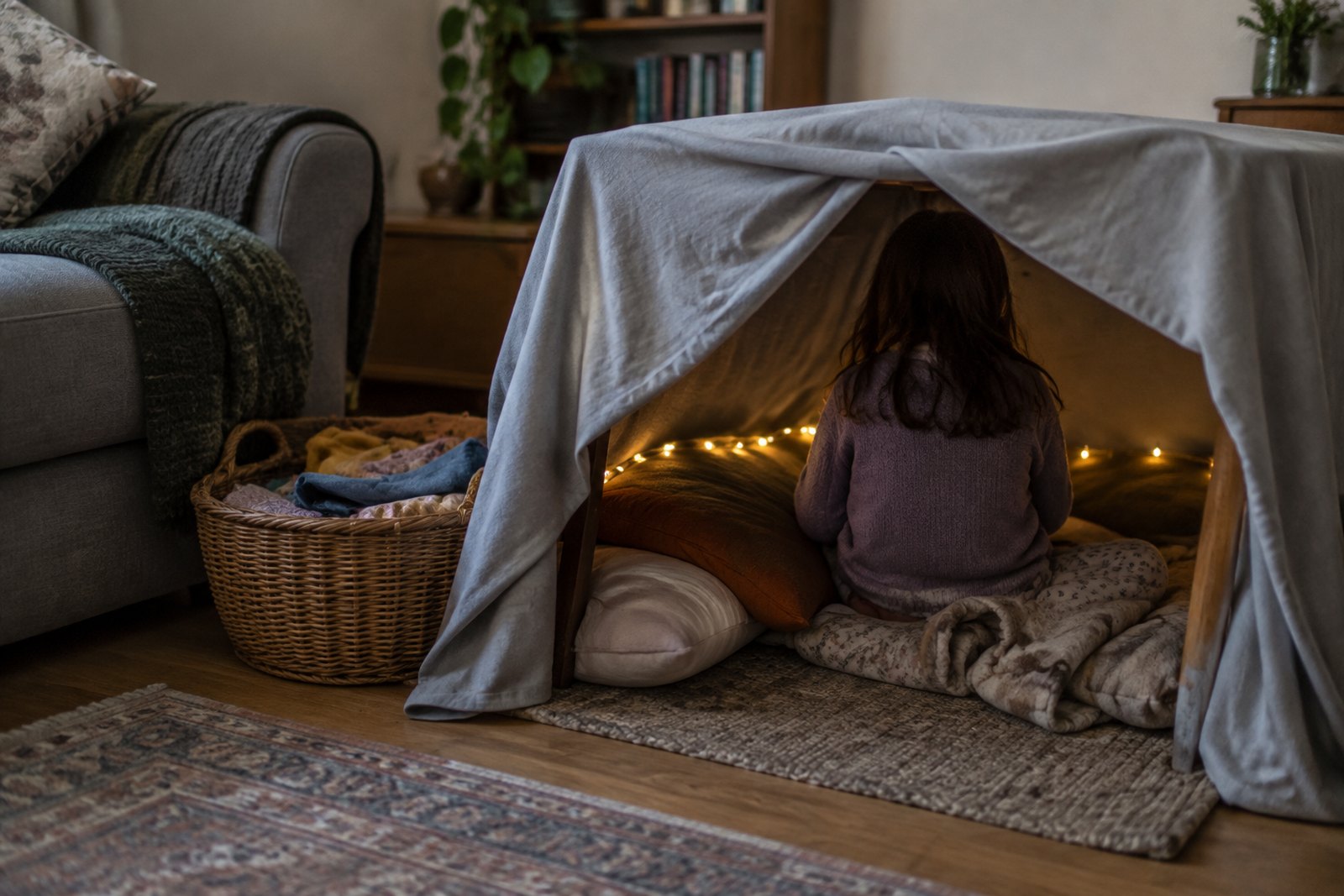
A sensory room at home does not need to be a room, and it does not need to cost much. Most children, and plenty of adults, need a small, predictable space where the light is softer, the noise is lower, and there are a few things to touch, squeeze, lean into or move with. A corner of a bedroom, a den under a table or a pop-up tent with cushions can do the job as well as a fitted room full of glowing equipment.
The ideas that work best are not the most expensive. They are the ones matched to the person using the space. A child overwhelmed by noise and light needs something very different from a child who is constantly climbing, crashing and spinning. So before you buy anything, work out what the space is for. This guide covers that, then lighting, sound, dens, seating, touch, movement and deep pressure, and the safety points that catch families out.
Start with what the space is for
Most sensory corners do one of two jobs. The first is calming: somewhere to come down after school, after a busy trip out, or when things are building towards a meltdown. The second is alerting or organising: somewhere to get the movement and input a child is looking for, so they can then settle to eat, do homework or sleep.
Many children need both at different times, and some need one to get to the other. A child who has held it together in a classroom all day may need ten minutes of heavy, energetic play before they can be calm. Watch for a week and jot down:
- What tips them over: noise, crowds, bright light, certain clothes, unexpected touch, changes of activity.
- What they seek out: hiding under covers, spinning, jumping, chewing, squeezing into tight gaps.
- What already calms them, even if it looks odd: rocking, humming, lying under sofa cushions.
- Which times of day are hardest.
That list is a rough sensory profile, and it tells you more than any shopping list. If you want to understand the systems involved, including the less familiar ones like balance and body awareness, our guide to the 8 sensory systems explains them in plain English.
Calming and alerting: the general pattern
Everyone is different, but some input tends to calm and some tends to wake people up.
- Usually calming: dim, warm light; steady, low or familiar sounds; slow, rhythmic, back-and-forth movement; firm deep pressure; enclosed, den-like spaces; predictability.
- Usually alerting: bright or flickering light; sudden noise; fast movement, spinning and bouncing; light, tickly touch; cold; strong smells; crunchy or sour food.
Light touch is the one that surprises parents. A gentle stroke on the arm can feel irritating or even alarming to some children, while a firm hug or a heavy cushion pressed on their back feels settling. Follow the child's lead.
Finding the space
You do not need a spare room. Good options include:
- A corner of a bedroom or living room, screened off with a curtain on a tension rod or a low bookcase fixed to the wall.
- A den: a sheet or blanket over a table, between two chairs, or over a bunk bed frame.
- A pop-up play tent, or a large cardboard box with a doorway cut in it.
- The space under a sturdy high-sleeper bed.
Some families think about an under-stairs cupboard. It can work, but it must never have a lock or latch that closes from outside, it needs air and light, and you need to be able to see in and reach the child easily. The same goes for any enclosed space: easy in, easy out.
Keep fabric away from radiators, heaters and hot lamps. And keep it sparse. A space crammed with stimulating objects can end up more overwhelming than the room it is meant to be an escape from.
Lighting
Lighting makes the biggest difference for the least money.
- Switch off the overhead light and use a lamp with a warm, low-wattage bulb, or a dimmer if you have one.
- Battery LED string lights or tea lights give a soft glow without hot bulbs or trailing cables. Check the battery covers are screwed shut.
- A torch with coloured covers, or a simple projector that throws slow-moving shapes on the ceiling.
- Glow-in-the-dark stickers on the underside of a den roof.
- A dark throw or blackout fabric over the den to cut glare.
Avoid anything that flashes or strobes, particularly if a child has epilepsy or you are not sure. Slow colour changes are better than fast ones, and many children prefer one steady colour.
Sound
For a noise-sensitive child, the aim is less sound, not more. Rugs, cushions and a blanket over the den soften echo. Ear defenders help in the space and out of it. Some children like steady background sound such as rain or waves, because it masks the unpredictable household noises that bother them. Others want one piece of music on repeat, which is fine. Sound-seekers might enjoy a rain stick or a bottle half filled with rice, lid glued shut.
Seating and somewhere to sink into
- Floor cushions, a folded duvet or an old cot mattress make a soft base.
- A bean bag lets a child sink in and feel held. Choose one with a childproof zip, because the small polystyrene beads inside can be inhaled or choked on.
- A rocking chair gives slow, rhythmic movement.
- A pile of large cushions to burrow under gives gentle pressure, with the head always kept clear.
For adults, a supportive chair at a sensible height usually beats floor cushions, especially if getting up from low down is hard.
Touch: the tactile basket
A basket of things to handle is cheap and easy to change. Use what you have:
- Fabric scraps: fleece, velvet, corduroy, silk, towelling, bubble wrap.
- Soft brushes, a sponge, a loofah.
- Playdough or putty to squeeze and pull.
- A stress ball, or a balloon filled with flour, double-layered and supervised, but not for children who mouth or bite things or who have a latex allergy.
- A tray of dry rice or lentils to run hands through, for children who will not put it in their mouth.
Rotate the contents every week or two so they stay interesting. Never push a child who dislikes messy textures into touching them. Let them watch, use a spoon, or try one finger. The space is meant to feel safe.
Movement and heavy work
Movement (vestibular input) and pressure through muscles and joints (proprioceptive input, often called heavy work) are things many families find help a child settle, although research is limited, and they cost almost nothing.
Heavy work ideas
- Crashing onto a pile of cushions or an old mattress from standing, not from furniture.
- Wall push-ups, or pushing against your hands.
- Carrying a basket of books, pushing a box of toys across the floor, pulling a sibling along on a blanket.
- Crawling through a play tunnel or under a row of chairs.
- A 'sandwich' between two big cushions with gentle pressure from you, head always out.
- Chewing something crunchy or chewy, or sucking a thick drink through a straw.
Movement ideas
- Slow rocking in a chair or on your lap.
- Sitting on a large therapy ball and bouncing gently while you hold them steady.
- A small indoor trampoline with a handle, one child at a time.
Slow back-and-forth movement is generally calming. Spinning is powerful and can leave some children dizzy, sick or wound up for hours, so go carefully. Swings and hammocks are popular, but only fit one if the ceiling fixing has been checked by someone competent as safe for the weight and the movement. Never hang one from a door frame, light fitting or curtain pole.
To plan movement and calming activities through the day, rather than only when things go wrong, see our guide to building a sensory diet at home.
Weighted items: get advice first
Weighted blankets, lap pads and vests are widely sold and some children find them helpful. They are also the item most likely to cause harm if used wrongly. Too heavy, used for sleep, or used by a child who cannot easily push it off, a weighted item can restrict breathing. Do not use them with babies or very young children, and do not use one without advice from a professional who has seen your child. Our weighted blanket safety guide explains why.
Safety checklist
- Cords and blind pulls: looped blind and curtain cords can strangle a child very quickly. Keep the space away from windows or tie cords up high and out of reach. No ribbons, ropes or string lights hanging where they could go round a neck.
- Button batteries and magnets: both can cause severe internal injury if swallowed. If you think a child has swallowed one, go to A&E straight away.
- Choking: watch for small parts, beads, dried pasta and rice with children who mouth things. Water beads, the gel balls that swell in water, have caused serious harm and are best kept out of the house.
- Fixings: anchor bookcases, shelves and anything tall to the wall.
- Heat and electrics: no mains cables inside the den, no fabric near heaters or hot bulbs.
- Supervision: the space can be a retreat, but you still need to see and hear your child. Never use it as a punishment or stop them leaving.
Making it work day to day
Introduce the space when your child is calm, not mid-meltdown, and spend time in it together first. Make it clearly theirs, not a time-out corner. Short visits at predictable times, such as after school or before bed, often help more than waiting until things fall apart. Notice what actually gets used: if the projector is ignored and the cushion pile is loved, that tells you something. When a meltdown does happen, our guide to autistic meltdowns covers what helps in the moment.
Sensory spaces for adults
Adults benefit too: autistic adults, people with ADHD, anxiety or sensory processing differences, and people living with dementia. The principles are the same; the look is different. A comfortable chair in a quiet corner, a lamp instead of overhead light, headphones, a heavy throw, something to fiddle with, and permission to go there without explaining. For someone with dementia, familiar textures and music from their younger years can help, but avoid anything that could be mistaken for food. Our guide to sensory processing differences in adults goes further.
Where an occupational therapist fits
You can build a perfectly good sensory corner on your own. Where an occupational therapist adds value is in working out why your child, or you, react the way you do, and what input genuinely helps rather than what looks good. An occupational therapist can assess sensory processing alongside everyday tasks such as dressing, eating, sleep and school, look at your home, suggest a space and routine that fits your family, and advise on safe use of weighted items and swings. They can also write reports that schools can use.
Be realistic about the evidence. Research on sensory rooms is limited and mixed. A sensory corner is best seen as a comfortable, predictable place to settle, not a treatment.
Other professionals lead in some areas:
- Your GP or health visitor if you are worried about development, sleep, or a child losing skills they used to have. They can refer on to a paediatrician.
- A speech and language therapist for communication, or for eating and swallowing difficulties.
- Children and young people's mental health services, usually via your GP or school, if anxiety, low mood or self-harm are concerns.
If your child has a first seizure, a seizure lasting more than 5 minutes or one that is not following their usual care plan, is struggling to breathe or is seriously hurt, call 999. For urgent advice that is not an emergency, call NHS 111. You can read about sensory assessments on our sensory needs page.
Frequently asked questions
Do I need a whole room for a sensory space?
No. A corner, den or tent works well, and many children prefer a small, enclosed space to a big room. What matters is that it is predictable, comfortable and offers the right kind of input for them.
How much does a sensory corner cost?
It can cost very little. Blankets, cushions, a lamp, a fabric basket and somewhere to crash and push are already in most homes. Spend money only once you know what your child actually uses.
Can I use the sensory corner as time out?
Better not. If the space becomes linked with being in trouble, a child may stop choosing it when they need it most. Keep it somewhere they go by choice, with you nearby.
Should there be a tablet or TV in the space?
Screens tend to be alerting rather than calming, and bright, changing images can make winding down harder. Many families keep the corner screen-free and use slow lights or music instead.
My child seeks constant movement. Will a calm space help?
Perhaps not on its own. Children who crave movement often need plenty of heavy work and active play first, then somewhere quiet to come down. Building both into the day usually works better than asking them to sit still.
Next steps
If you would like help understanding your child's sensory needs or setting up a safe space at home, see our sensory needs and children's occupational therapy pages, or current guide prices, and choose your area below.
Talk to an occupational therapist near you
This guide is general information. For advice about your own situation - or someone you look after - a local occupational therapist can visit you at home and see it for themselves.
Choose your area: