

Weighted Blankets for Children and Autism: Who They Help and Safety
By Mobile Occupational Therapist • 20 September 2026 • 12 min read
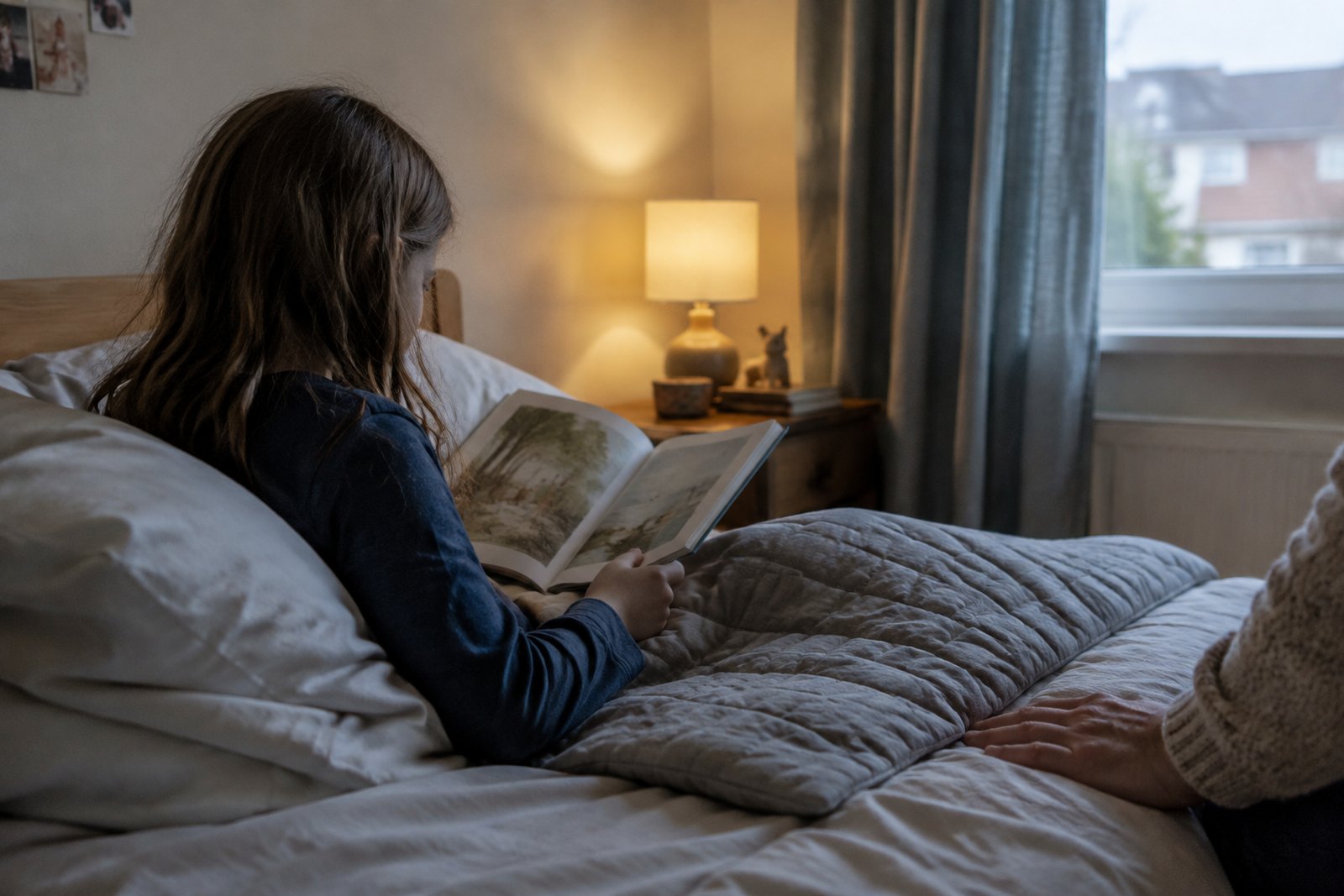
A weighted blanket is a blanket filled with small beads or pellets so that it presses gently and evenly on the body. Some children, including many autistic children and children with sensory processing differences, find that steady pressure calming. Others hate it, and plenty feel no difference at all. It is not a treatment for autism, and the research does not show that weighted blankets reliably make children fall asleep faster or sleep longer, although many families say their child prefers one.
If you are thinking of trying one, the safety rules matter more than the brand, the fabric or the price. Never use one for a baby or toddler. Your child must be able to push it off and get out from under it on their own, every time. It must never be used to hold a child still. And the weight should be decided with a professional who knows your child, not taken from a chart on a website. The rest of this page explains why, and what else to try if a blanket is not the right answer.
What a weighted blanket actually is
Most weighted blankets are made of quilted squares, each holding a small amount of filling so the weight stays spread out rather than sliding to one end. They come in different sizes and weights, and some have a removable washable cover. There are also smaller versions: weighted lap pads, which sit across the knees while a child is sitting, and weighted shoulder wraps.
They are heavier than they look. A blanket that seems light when you lift it from a shop shelf can feel very different to a small child lying under it, especially one who is tired, unwell or not very strong.
Why some children find deep pressure calming
The idea behind weighted blankets is something called deep pressure: firm, steady touch that is thought to work through the skin and through the body's sense of position and movement, known as proprioception, although exactly how it calms people is not fully understood. Think of how a firm hug can feel more settling than a light touch, or how some children like to squeeze into tight spaces, burrow under cushions or be wrapped snugly in a towel after a bath.
For children who are very sensitive to light touch, sound or movement, or who seem to be constantly seeking strong physical input, steady pressure can sometimes help the body feel more organised and less on high alert. You can read more about how the senses work together in our guide to the eight sensory systems.
That said, every child's sensory profile is different. A child who craves pressure may love a weighted blanket. A child who finds pressure or heat overwhelming may find it distressing. There is no way to know in advance just from a diagnosis.
What the evidence does and does not show
This is where a lot of online selling gets ahead of itself, so it is worth being plain.
- For sleep: one of the larger and better designed trials in autistic children found that weighted blankets did not help them fall asleep faster or stay asleep longer when sleep was measured objectively. However, many children and parents in that trial preferred the weighted blanket and felt it helped.
- For calm and anxiety: there is some research, much of it small, suggesting deep pressure can help some people feel calmer. The quality of the evidence is mixed, and studies in children are limited.
- For autism itself: weighted blankets do not change autism and are not a treatment for it. At best they are one comfort tool among many.
So the honest summary is this. A weighted blanket may help your child feel more comfortable or settled, and that can be worth something. It is unlikely to fix a serious sleep problem on its own, and if your child's sleep is badly disrupted, there may be other causes worth looking into first.
The safety rules
Weighted blankets are not harmless just because they are sold as comfort products. Children have died after being wrapped in or restrained with weighted blankets. These rules are not optional.
Never for babies or very young children
Do not use a weighted blanket, weighted sleeping bag or any weighted bedding for a baby. UK safe sleep advice for babies is to sleep them on their back, in a clear cot, with nothing that could cover their face or restrict their breathing. Weighted products work against all of that.
Toddlers and young children should not use them either. Many manufacturers and professionals advise against weighted blankets for young children, and the right minimum age for an individual child is a question for a professional who has assessed them, not a label on the packaging.
Your child must be able to remove it themselves
This is the most important test. Your child must be strong enough, coordinated enough and aware enough to push the blanket off and get out from under it without help, whether they are awake, drowsy or half asleep. Watch them do it several times before you even consider leaving them with it.
If your child cannot reliably do this, the blanket is not safe for them. That includes many children with low muscle tone, physical disabilities, or significant learning disabilities.
Never use it as restraint
A weighted blanket must never be used to hold a child down, keep them in bed, stop them moving during a meltdown, or as any kind of punishment or containment. Never wrap a child in one, roll them up in one, tuck it tightly round them or put anyone or anything on top of them while they are underneath. It should always be loose, on top, and below the face.
Get weight guidance from a professional
You will see a rule of thumb online, usually a percentage of the child's body weight. It is widely repeated, but it is not a firm safety standard and it does not account for your child's strength, breathing, health or sensory needs. An occupational therapist who has assessed your child can help you decide whether a blanket is sensible at all, and if so, what weight and size to start with. When in doubt, lighter is safer.
Children who need extra caution
Speak to your child's GP or paediatrician before using any weighted product if your child has:
- breathing problems, asthma that is hard to control, or sleep apnoea or loud snoring
- epilepsy or seizures
- a heart or circulation condition
- low muscle tone or limited movement
- difficulty communicating that they are uncomfortable, hot or frightened
Everyday safety habits
- Introduce it during the day, while you are in the room, for short periods.
- Keep it away from the face and head. Never let it cover the face.
- Check your child is not overheating. Weighted blankets can be warm.
- Take it away at once if your child seems distressed, breathless, hot or stuck.
- Do not let younger siblings play with or under it.
- Check the seams and stitching regularly so filling cannot leak out, which could be a choking risk.
If your child ever has trouble breathing, turns blue or grey, or becomes unresponsive, call 999.
How to try one sensibly
If you and a professional agree a weighted blanket is worth trying, go slowly. Start with it over your child's legs while they sit on the sofa reading or watching something, with you nearby. Let them decide when it comes off. If they like it, they can use it at quiet times in the day before you think about bedtime.
Some families find a weighted lap pad, used for short periods while a child is sitting, gives them a good sense of whether deep pressure helps without the risks that come with a full blanket at night. Again, the same rules apply: supervised, removable, never forced.
Keep a simple note for a couple of weeks. Is your child calmer? Do they ask for it? Do they push it off straight away? A tool your child chooses to use is far more useful than one they put up with because you paid for it.
Alternatives that give similar input
A weighted blanket is only one way to give a child deep pressure. Many of these cost nothing and can be built into the day.
Heavy work
Activities that make muscles push, pull or carry often have a settling effect. Try:
- carrying shopping bags, books or a basket of washing
- pushing a laundry basket full of toys across the floor
- wall push-ups, crawling games or wheelbarrow walks
- climbing at the park, swinging on bars or digging in the garden
- helping move cushions or rearrange furniture with an adult
Pressure without weight
- a firm hug or squeeze if your child likes them
- a "sandwich" between two sofa cushions with gentle pressure, head always out and with an adult in charge
- rolling a large soft ball firmly over their back and legs while they lie on their tummy
- snug, stretchy clothing, which some children find comforting
Bedtime and sleep
If sleep is the main worry, the basics often matter more than any equipment. A predictable routine, a dim and quiet room, a comfortable temperature, less screen time before bed and a calm wind-down all help. Some children are bothered by scratchy fabrics, seams, the feel of the duvet or light creeping round the curtains, so it is worth looking at the room through your child's senses. The National Autistic Society has practical sleep advice for families.
If your child snores loudly, stops breathing briefly in their sleep, is very restless every night or is exhausted during the day, see your GP. These can have medical causes that a blanket will not help, and a GP or paediatrician is the right person to look into them.
Where an occupational therapist fits
Occupational therapists who work with children look at how a child's senses, body and environment affect everyday life, from getting dressed and eating to sleeping and coping at school. For a child who seems to seek or avoid certain sensations, an occupational therapist can assess their sensory processing and help you understand what is going on. Our guide to sensory assessments explains what that involves.
When it comes to weighted blankets, an occupational therapist can help you decide:
- whether deep pressure is likely to suit your child at all
- whether a blanket, lap pad or something else entirely is the safer option
- a sensible weight, size and time limit to start with
- how to introduce it and what to watch for
- other everyday strategies, often called a sensory diet, that fit your child's routine at home and school
Our guide to occupational therapy for autistic children covers this wider picture, and there is more on sensory processing differences on our conditions page.
Children's occupational therapy is available on the NHS, though how you are referred and how long you wait vary by area. Your GP, health visitor, paediatrician or your child's school SENCO can usually tell you how to get a referral locally. Some families choose a private occupational therapist visiting at home, which lets the therapist see your child in their own bedroom and routine. You can read about children's occupational therapy on our services page.
An occupational therapist is not the right person for everything. If you are worried about breathing in sleep, seizures or a possible medical cause of poor sleep, that is for your GP or paediatrician. If your child is very anxious or low, the GP can refer to children's mental health services. Questions about medicines for sleep belong with your child's doctor.
Frequently asked questions
Is a weighted blanket good for autism?
Some autistic children find one calming and comforting, and some dislike it or feel no benefit. It is not a treatment for autism. Research has not shown that it reliably improves sleep, though many children and parents say they prefer it. Whether it suits your child depends on their individual sensory needs.
What age can a child use a weighted blanket?
Never use one for a baby or toddler. Beyond that, there is no single safe age, because what matters is whether your child can remove it themselves easily and reliably, and whether they have any health conditions that make it risky. Ask a professional who has assessed your child.
How heavy should a weighted blanket be for a child?
You will often see a percentage of body weight quoted online, but that is a rule of thumb, not a safety standard. Weight should be decided with a professional who knows your child. Starting lighter is safer than starting heavier.
Can my child sleep with a weighted blanket all night?
Only if a professional has agreed it is safe for your child and they can reliably remove it on their own while drowsy. Many families use one only at quiet times or for settling, then remove it once the child is asleep. Never leave a child with one if you are unsure they can get out from under it.
Can I get a weighted blanket on the NHS?
Provision varies by area and is not routine. If you think your child needs sensory support, ask your GP, paediatrician or school SENCO about a referral to children's occupational therapy, who can advise on what is appropriate and safe.
Can school use a weighted blanket or lap pad?
Some schools use weighted lap pads or other sensory tools as part of a child's support plan. They should follow the same rules: agreed with a professional, used for short supervised periods, never to keep a child in their seat, and always removable by the child.
Next steps
If you want help working out whether deep pressure suits your child, see our sensory needs page, or current guide prices, and choose your area below.
Talk to an occupational therapist near you
This guide is general information. For advice about your own situation - or someone you look after - a local occupational therapist can visit you at home and see it for themselves.
Choose your area: