

Sensory Friendly Clothing for Children: What Helps and Where to Start
By Mobile Occupational Therapist • 4 October 2026 • 13 min read
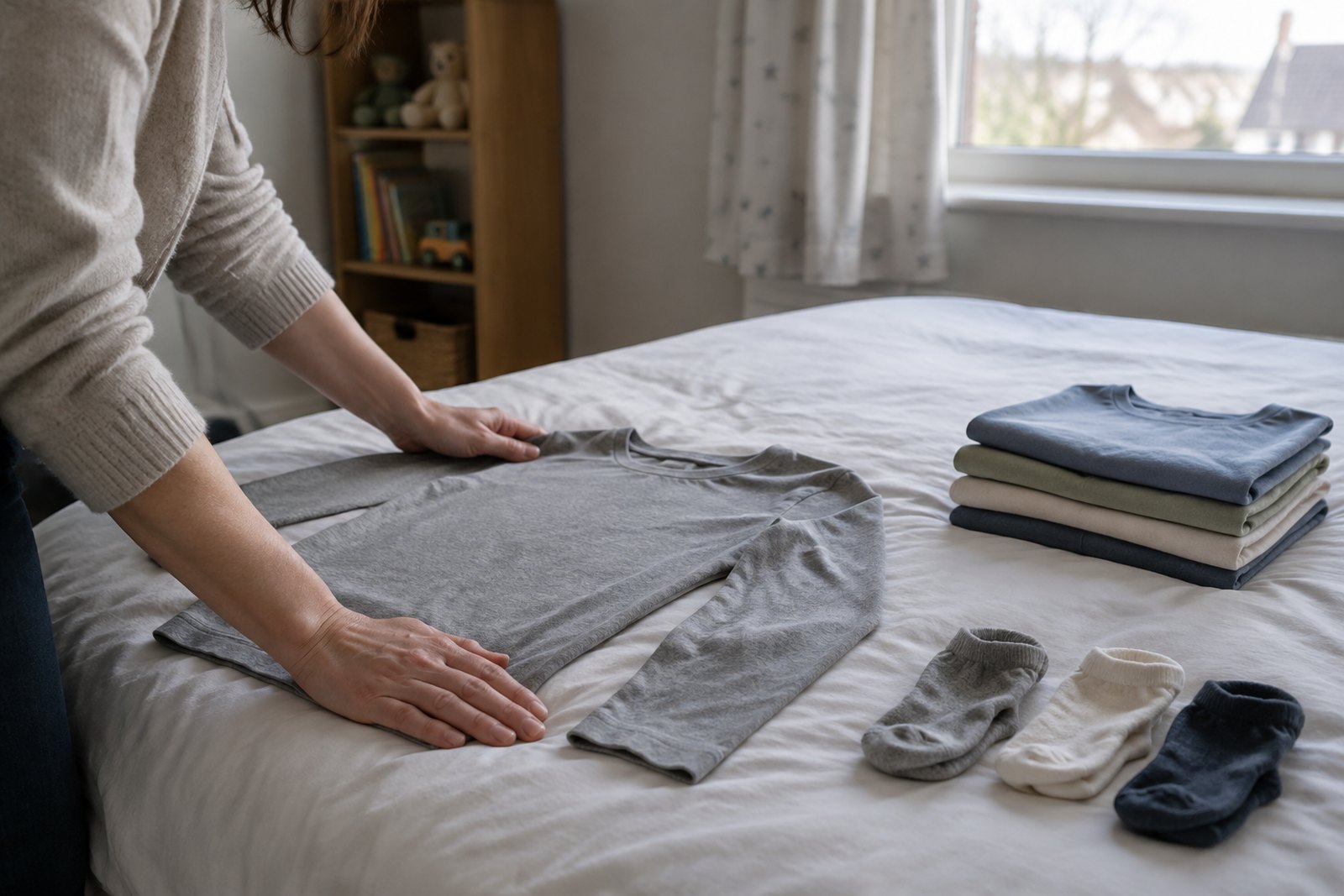
If your child screams at socks, pulls off a jumper the second it goes on, or will only wear the same soft grey leggings every day, you are not imagining it and you have not spoiled them. For some children, ordinary clothes feel unbearable. A seam you cannot feel can feel like a stone in a shoe to them. A label can feel like a scratch that never stops. This is common in autistic children and children with sensory processing differences, but plenty of other children have it too.
Sensory friendly clothing means clothes that remove whatever your child's body is reacting to: rough seams, labels, tight waistbands, scratchy or stiff fabrics, and the wrong temperature. You do not need specialist suppliers to start. Most of what helps comes down to choosing carefully, preparing new clothes properly and holding on to what already works. If clothing battles are stopping your child getting to school, sleeping or joining in, it is worth asking about an occupational therapy sensory assessment. We explain when below.
Why some children find clothes unbearable
Skin sends a constant stream of messages to the brain. Most of us stop noticing a waistband or a sock seam within seconds. Some children never stop noticing, or their brain treats the feeling as a threat. It does not fade, and it builds through the day. A child who seemed fine at breakfast can be at the end of their tether by lunchtime, and their clothes may be part of the reason.
The usual culprits are:
- Seams, especially the toe seam on socks, side seams on trousers and shoulder seams on tops.
- Labels, and the stiff stitching left behind when they are cut out.
- Tight or elasticated waistbands, cuffs and collars, which press on one spot all day.
- Fabric texture: wool, stiff denim, slippery or static synthetic fabrics, glitter, sequins, and thick rubbery prints.
- Temperature: some children overheat quickly and feel trapped in layers. Others feel the cold badly but still cannot bear a coat.
- Change: new clothes, a different washing product, or a favourite item that has shrunk can all tip things over.
Some children are the opposite. They seek out tight, heavy or snug clothing because firm pressure feels calming, and they may want their hood up or sleeves pulled over their hands. Both patterns are worth noticing, because what helps depends on which way your child leans.
If you want to understand touch sensitivity in more depth, our guide to tactile defensiveness explains what is going on. This article stays with the practical question: what can they actually wear?
Rule out the simple things first
Before assuming it is sensory, look at the skin. Eczema, dry skin, a rash or an infection between the toes can make clothes genuinely painful. If your child has suddenly started refusing clothes they used to be happy in, or is scratching a lot, ask a pharmacist or your GP to have a look. Check that shoes and socks still fit, too. Children's feet grow faster than anyone expects.
What helps: changes you can make this week
Start with the worst item
Ask your child, or simply watch, which item causes the most trouble. Socks and underwear are often top of the list because they sit right against the skin. Fix one thing at a time. If you change everything at once, you will not know what worked.
Choose fabrics and construction carefully
- Soft, plain cotton, or cotton with a little stretch, is a good starting point. Some children also get on well with other very soft fabrics. Let your child feel the fabric in the shop, or buy where returns are easy.
- Flat seams lie smoothly against the skin instead of forming a ridge. Run your fingers along the inside of a garment and you will feel the difference.
- Seamless socks, or socks with a flat toe seam, remove the most common trigger of all. Some children manage ordinary socks worn inside out.
- Printed care information inside the garment rather than a sewn-in label.
- Soft, wide or covered waistbands rather than thin elastic. Adjustable buttonhole elastic in trousers lets you loosen them a little.
- Plain fronts. Large prints and sequins are often stiff or scratchy on the inside.
- Looser fits for children who avoid pressure, and snugger fits for children who seek it.
Remove labels properly
Cutting a label out with scissors often leaves a sharp stub that is worse than the label was. Use a seam unpicker to take out the stitching completely, then run your finger over the spot to check it is smooth. If the label is sewn into a seam, it may be easier to choose a different garment.
Wash new clothes several times before they are worn
New clothes are stiffer and smell unfamiliar. Washing them several times before your child tries them softens the fabric and makes them smell like home. Stick to one washing product your child tolerates and avoid strong fragrances where you can. Many sensitive children react to smell as well as touch.
Buy multiples of anything that works
When you find a top or a pair of leggings your child will happily wear, buy several, and the next size up as well if you can. Ranges change and favourites disappear. It feels extravagant, but it often costs less than buying clothes that never get worn. Second-hand sites can help you track down more of an item you already know works.
Use layers to manage temperature
A thin, soft base layer under a jumper stops wool or rough fabric touching the skin. Layers also let a child who overheats take something off, rather than refusing to wear anything warm at all. For children who will not wear a coat, try a soft fleece, a hoodie, or a coat a size bigger so it does not press anywhere. Keep a spare layer in the bag or car for when they change their mind.
For children who like pressure
If your child seeks out snug clothing, a close-fitting cotton vest or leggings under looser clothes can be calming. Specialist compression garments exist, but it is worth getting advice from an occupational therapist before using them, especially for a child who cannot easily tell you when something is uncomfortable.
Give your child some control
Offering a choice between two tolerated tops feels very different to a child from being handed one outfit and told to put it on. Let older children help choose fabrics and styles. A child who chose something is far more likely to try it.
School uniform: what to try and what to ask for
Uniform is where many families hit a wall. Stiff shirts, polyester trousers, ties, blazers and hard-backed shoes can be hard work for a sensory sensitive child, all day, five days a week.
At home, you can:
- Choose the softest version of each required item, such as cotton-rich polo shirts, stretch or jersey school trousers, and skirts or pinafores with soft waistbands.
- Wash new uniform many times before the start of term, and let your child wear it at home for short spells in the holidays.
- Put a soft cotton vest or thin long-sleeved top underneath so scratchy fabric does not touch the skin.
- Use clip-on or elastic ties instead of knotted ones.
- Look for shoes with soft linings and velcro or elastic fastenings, and try them on later in the day when feet are slightly bigger.
Then talk to the school. Many schools will agree sensible adjustments, such as a softer plain jumper in the school colour, a polo shirt instead of a collared shirt, plain black soft shoes, or permission to take off a blazer in class. Start with the class teacher or the SENCo (special educational needs co-ordinator). Explain what the difficulty is and what you are proposing, rather than simply asking for an exemption. Where a child is disabled, schools have legal duties to make reasonable adjustments (under the Equality Act 2010 in England, Scotland and Wales, and under separate disability law in Northern Ireland). In England, the Department for Education's guidance on school uniform is on GOV.UK, and the governments in Scotland, Wales and Northern Ireland publish their own guidance. A short letter from a professional explaining your child's sensory needs often helps.
Teenagers face different pressures. They may cope with uniform in the morning but feel it badly by the afternoon, and they often care a great deal about looking the same as their friends. Our guide to sensory processing in teenagers covers that stage in more detail.
Getting dressed calmly
Even with the right clothes, getting dressed can be a flashpoint, particularly on school mornings. A few things make a real difference:
- Lay clothes out the night before, ideally chosen with your child, so there are no surprises.
- Take the chill off clothes in winter by keeping them in a warm room. Cold fabric on bare skin can be a shock. Never leave clothes on a heater or near a fire.
- Use firm rather than light touch if you are helping. Many sensitive children tolerate a firm hand far better than a light brush.
- Keep the order the same every day. A simple picture sequence by the bed helps younger children.
- Allow time. Rushing is the quickest route to a meltdown. Some children manage better dressing after breakfast, once they are fully awake.
- Let them change into home clothes as soon as they get in from school. Many children hold it together all day and need the relief.
Some children struggle with buttons, zips, sleeves and socks for motor reasons as well as sensory ones. If you are not sure which is which, our guide to teaching children to dress themselves sets out what is typical at each age.
When it might be more than preference
Lots of children go through fussy phases with clothes. It is worth looking further if:
- Clothing refusal is stopping your child getting to school, going out or sleeping.
- Meltdowns over clothes happen most days, are intense, and do not ease with the changes above.
- Your child reacts strongly to other sensations too, such as hair washing, teeth brushing, nail cutting, noise, food textures or being touched.
- The list of clothes your child can bear is getting shorter, not longer.
- Your child seems to be in real distress or pain, not just irritated.
These can be signs of sensory processing differences, which often sit alongside autism, ADHD or dyspraxia but can also happen on their own. Our guide to sensory processing disorder in children explains the wider signs. If you think your child might be autistic or have ADHD, speak to your GP, health visitor or the school SENCo about an assessment. An occupational therapist can contribute to that process but does not diagnose autism or ADHD on their own.
Where an occupational therapist fits
Occupational therapists look at how a child manages everyday activities, including getting dressed, and what is getting in the way. For clothing difficulties, a children's occupational therapist with sensory experience can:
- Carry out a sensory assessment, usually combining questionnaires for parents and school, observation and talking with your child.
- Work out which sensations are causing the problem, and whether your child is mainly avoiding or seeking input.
- Untangle sensory difficulties from motor skills, anxiety or simple habit.
- Suggest clothing changes, routines and calming activities that suit your particular child.
- Write recommendations for school, which can support a request for uniform adjustments or feed into a formal support plan, such as an EHCP in England.
NHS children's occupational therapy is usually reached through your GP, health visitor, school or another professional, and criteria and waiting times vary by area. Some families choose a private occupational therapist who visits at home, where they can see the actual wardrobe, the morning routine and the clothes that do and do not work.
An occupational therapist is not the right first stop for everything. Skin problems belong with a pharmacist or GP. If clothing difficulties come with low mood, severe anxiety or self-harm, speak to your GP about child and adolescent mental health services. If your child is also eating a very narrow range of foods, involve your GP. If your child is unwell or you are worried, call NHS 111, and in an emergency call 999.
Frequently asked questions
Is sensory friendly clothing only for autistic children?
No. Sensory clothing for autism is a common search, and many autistic children do benefit, but plenty of children without any diagnosis are sensitive to seams, labels or fabrics. The same practical changes help whatever the reason.
Will my child grow out of hating clothes?
Some children do become more tolerant as they get older and more familiar with what suits them. Others stay sensitive but learn to manage it by choosing their own clothes carefully. Either way, reducing daily distress now matters more than waiting for it to pass.
Should I make my child wear clothes they hate so they get used to them?
Forcing usually makes things worse and can turn dressing into a daily fight. If you want to widen what your child wears, do it gradually, on their terms, starting with clothes that are only slightly different from what they already accept. An occupational therapist can help you plan this if you are stuck.
Do I need to buy specialist sensory clothing?
Not necessarily. Many children do well with ordinary soft cotton clothing, chosen carefully and washed several times. Specialist seamless or adaptive items can help some children, particularly with socks and underwear, so try them for the items that cause the most trouble rather than replacing everything.
Can the school insist on full uniform?
Schools set their own uniform policies, but many will agree adjustments when the reason is explained. Where a child is disabled, the school has a duty to make reasonable adjustments. Check the school's policy and the uniform guidance for your nation (in England this is on GOV.UK), and start with a calm conversation with the SENCo or the staff member who leads on additional support needs.
My child will only wear one outfit. Is that a problem?
Not in itself. Buy several of the same item and treat it as a sensible strategy. It becomes worth getting help if the range keeps shrinking, or if it stops your child going to school, going out or dressing for the weather.
Next steps
If clothing is causing daily distress and the changes above have not been enough, a sensory assessment can show what is driving it and what will help. See our sensory needs page, or current guide prices, and choose your area below.

Talk to an occupational therapist near you
This guide is general information. For advice about your own situation - or someone you look after - a local occupational therapist can visit you at home and see it for themselves.
Choose your area: