

Elderly Parent Not Eating: Reasons, Warning Signs and What Helps
By Mobile Occupational Therapist • 10 October 2026 • 12 min read
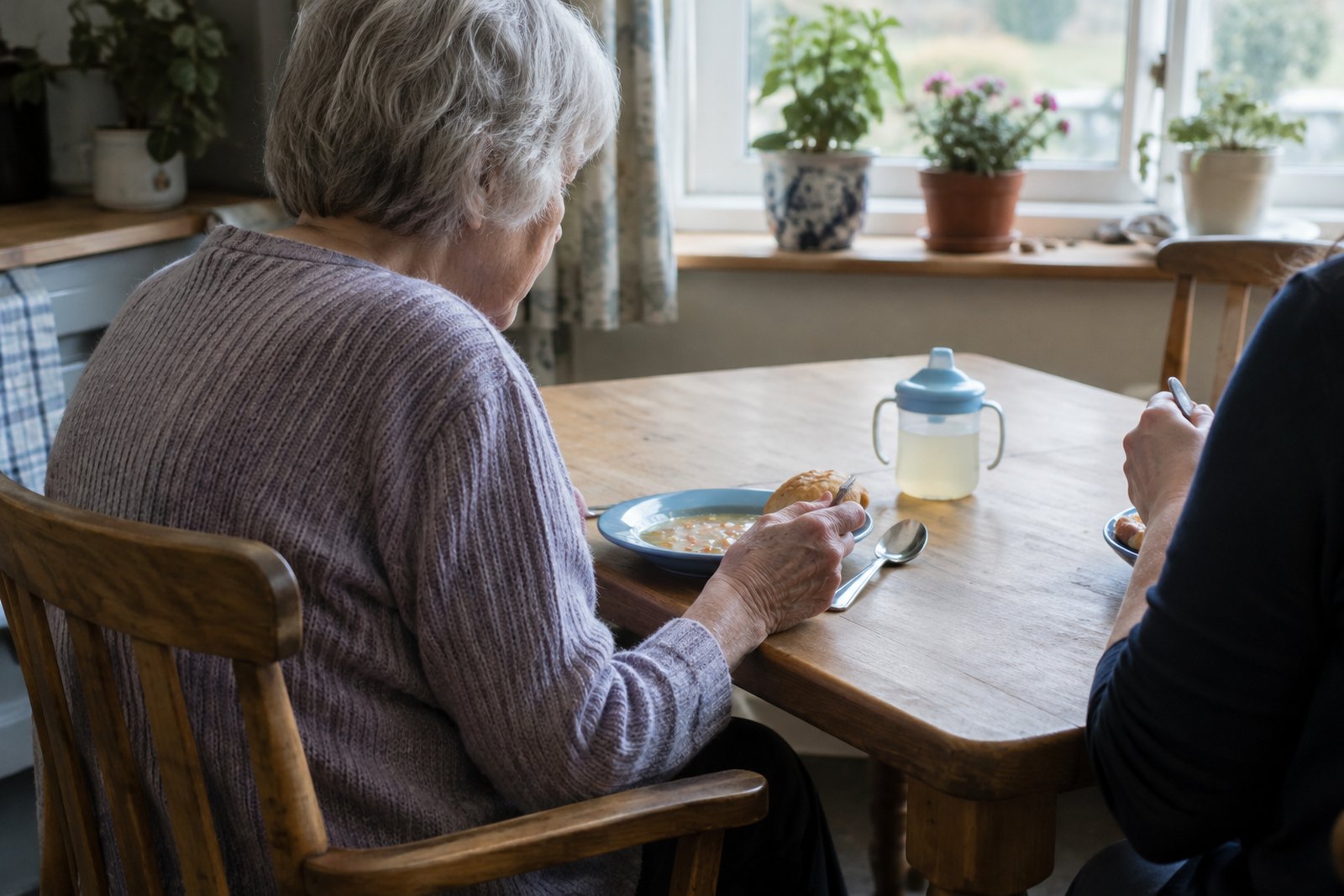
If your mum or dad has stopped eating properly, the cause is rarely one big thing. It is usually several small ones stacking up: a sore mouth, a new tablet, some constipation, a kitchen that has become hard work, eating alone every night. Many older people eat a little less than they used to, and some drop in appetite is normal with age. Losing weight without trying is not normal, and it is worth taking seriously.
The short answer is this. If they are losing weight, struggling to swallow, or have other new symptoms, book a GP appointment. Alongside that, there is a lot you can do at home: smaller meals more often, food that needs little preparation, company at mealtimes, enough to drink, and a few changes in the kitchen. This guide goes through the common reasons, the warning signs and what actually helps.
Why older people stop eating: the common reasons
It helps to play detective. Try to work out when the appetite changed and what else changed around the same time.
Illness and pain
Almost any illness can blunt appetite: infections, heart and lung conditions, kidney problems, cancer, and the after-effects of a hospital stay. Pain matters too. If it hurts to sit at the table or stand at the cooker, people quietly skip meals. Breathlessness makes chewing tiring, so meals get abandoned halfway.
Medicines
Many common medicines can cause nausea, a dry mouth, constipation, drowsiness or a change in taste. A new tablet or a change of dose shortly before the appetite dropped is a useful clue. Do not stop or change any medicine yourself. Ask the GP or a pharmacist for a medicines review, which is an ordinary request.
Constipation
Feeling full, bloated or slightly sick puts anyone off food. Constipation is common in later life, especially when someone is eating, drinking and moving less. It becomes a loop: less food and fluid, more constipation, less appetite. Mention it to the GP or pharmacist rather than guessing.
Mouth, teeth and dentures
Ask, or have a gentle look. Loose dentures, broken teeth, sore gums, ulcers and a dry or coated tongue make eating miserable. Weight loss itself can loosen dentures, which makes eating harder, which causes more weight loss. A dentist can help. Taste and smell also fade with age, so food can seem bland and not worth the bother.
Swallowing problems
Coughing or spluttering at meals, a wet or gurgly voice after drinking, food sticking, very slow eating or avoiding certain textures can all point to a swallowing difficulty. It is common after a stroke and in Parkinson's and dementia, but it can also creep in gradually. This needs the GP.
Low mood, grief and loneliness
Depression often shows up as not eating rather than as obvious sadness. So does grief. Someone who cooked for two for fifty years may see no point in cooking for one, and a slice of toast becomes dinner. If your parent seems withdrawn, has lost interest in things they enjoyed or is sleeping badly, raise it with the GP. Low mood is treatable at any age.
Shopping and cooking have become too hard
This is the one families most often miss. The fridge is empty not because they are not hungry but because getting to the shop, carrying bags, standing to chop, lifting a full pan or opening packaging has become difficult. Arthritis, a tremor, poor balance and fatigue all chip away at it. People rarely say so. They just eat whatever is easy, which is often biscuits.
Sight
Poor eyesight makes it hard to read dates, see the cooker controls or even see pale food on a white plate. Some people stop cooking because they no longer trust themselves with the hob.
Dementia and memory problems
Forgetting to eat, forgetting they have not eaten, or losing the steps needed to make a meal are common in dementia. Rather than repeat it here, see our guide to eating and drinking problems in dementia.
When to see the GP, and when it is urgent
Book a GP appointment if your parent:
- is losing weight without trying, or clothes, belts, rings or dentures have become loose
- has had a poor appetite for more than a few weeks with no obvious reason
- coughs, chokes or has trouble swallowing food, drink or tablets
- has other new symptoms, such as tummy pain, vomiting, a change in bowel habit, blood in their poo or unexplained tiredness
- seems low, withdrawn or anxious
- is becoming more frail or unsteady, or has had falls
Go with them if you can, or ask to join by phone. Take notes: what they eat in a typical day, roughly how much weight has gone and over what time, and when it started. The GP may arrange blood tests, review medicines and refer on.
Call the GP or NHS 111 the same day if they have stopped drinking, are very drowsy, have become suddenly confused or are passing very little urine. Call 999 if they are choking and it is not clearing, are struggling to breathe, cannot be woken properly, have chest pain, or have sudden confusion with signs of a stroke such as a drooping face, arm weakness or slurred speech.
Weighing regularly and malnutrition screening
Weight is the simplest early warning you have. Weigh your parent once a week, on the same scales, at the same time of day, in similar clothes, and write it down. One reading means little. A steady downward trend over several weeks is what matters. If standing on scales is not safe, watch how clothes fit, whether rings slip off, and whether a watch strap needs a new hole.
GP practices, community nurses, hospitals and care homes use screening tools to judge malnutrition risk. The most widely used in the UK is MUST, the Malnutrition Universal Screening Tool, which looks at body mass index, recent unplanned weight loss and whether illness has stopped someone eating. You do not need to do it yourself, but it is reasonable to ask the GP or practice nurse whether your parent has been screened.
Practical help at home
Little and often
A full plate can be off-putting when appetite is low. Offer small meals or snacks every two to three hours instead, on a smaller plate so it looks manageable. Serve the most nourishing part first, while they are hungriest.
Make every mouthful count
When someone is eating very little, the usual advice about cutting fat and sugar may not be what they need right now. Dietitians often suggest food fortification: adding energy and protein without adding volume. Think whole milk, a spoonful of milk powder in soup or porridge, butter or grated cheese on mash and vegetables, cream or yoghurt with puddings, and snacks like cheese and crackers or a milky drink. If your parent has diabetes, kidney disease or a special diet, check with the GP or dietitian first.
Eat together when you can
People eat more in company. Share a meal a few times a week if you live nearby. If you do not, a video call at teatime where you both eat works better than you might expect. Lunch clubs and community cafés offer food and company in one go, and the council or a local older people's charity can tell you what is nearby.
Food that is easy to prepare
Stock the cupboard and freezer with things that need almost no effort: single-portion ready meals, tinned soup and fish, porridge pots, yoghurts, cheese, soft fruit, and sliced bread in the freezer for toast. Batch cook and freeze labelled single portions. Check the packaging can actually be opened, because film lids and ring-pull tins defeat a lot of hands.
Meal delivery and help with cooking
There are services that deliver hot meals or boxes of frozen meals, and grocery delivery takes away the carrying. Some councils still arrange meal delivery; others will point you to local providers. If your parent cannot manage shopping or cooking, they can ask the council's adult social care team for a needs assessment. The assessment is free, and it can lead to help with meals, though they may be asked to contribute to the cost depending on their finances.
Make the kitchen easier
Move everyday items to between waist and shoulder height. Use a kitchen trolley rather than walking with full hands. Sit at a perching stool to prepare food. A kettle tipper, a one-cup hot water dispenser, jar openers and lighter pans all help. Our guide to kitchen aids and mealtime independence covers the options, and if eating itself is the struggle, see adapted cutlery, plate guards and drinking aids.
Make food appealing
Fading taste means flavour matters more. Favourite foods, a little more seasoning, sauces and pickles help. A coloured plate that contrasts with the food makes it easier to see.
Drinking enough
Older people often do not feel thirsty until they are already short of fluid, and some cut back on drinks to avoid trips to the toilet. Dehydration can cause dizziness, headaches, constipation, falls and confusion, and it makes appetite worse.
The NHS generally suggests 6 to 8 cups or glasses of fluid a day. Tea, coffee, milk, water and squash all count, and so do soup, jelly and yoghurt. Some people with heart or kidney conditions are told to limit fluids, so follow their own medical advice.
- Leave a drink within reach of every chair they use, in a cup they can easily lift.
- Offer a drink with every meal, snack and visit.
- A lightweight cup with two handles or a lid helps shaky hands.
- If night-time toilet trips are the worry, encourage most drinking earlier in the day.
- Pale straw-coloured urine is a good sign; dark urine suggests they need more.
Dietitians and speech and language therapists
A dietitian is the expert on what someone should eat. They assess nutrition, plan how to stop weight loss, advise on fortifying food and decide whether prescribed supplement drinks are appropriate. Referral is usually through the GP, so ask if weight keeps dropping despite simple changes.
If swallowing is the problem, a speech and language therapist leads. They assess the swallow and can recommend safer food textures, thickened drinks, positions and techniques. Again, ask the GP for a referral. Do not start pureeing food or thickening drinks on a hunch, as the wrong texture can make things worse.
Where an occupational therapist fits
An occupational therapist is not the person to find out why appetite has gone, write a diet plan or assess swallowing. That is the GP, dietitian and speech and language therapist. Where an occupational therapist helps is the practical side: whether your parent can still shop, cook, carry food, open packaging, sit comfortably at the table and get food to their mouth.
On a home visit, an occupational therapist will usually watch your parent make a drink or a simple meal in their own kitchen, which reveals far more than asking how they are managing. They look at reach, balance and standing tolerance, grip for jars and kettles, safely carrying hot drinks, fatigue and how to pace cooking so there is energy left to eat, memory and sequencing, seating at the table, and kitchen lighting. They can then recommend equipment, rearrange the kitchen, suggest simpler routines and write up findings that can support a council needs assessment.
NHS and council occupational therapy is free, though there may be a wait. A private occupational therapist visiting at home is another option. Read more about occupational therapy for older people's independence, and if your parent is resistant to any of this, see when a parent refuses help at home.
Frequently asked questions
Is it normal for older people to eat less?
Some reduction is normal, because many older people are less active and feel full sooner. What is not normal is losing weight without trying, or a sudden change in appetite. Either is worth a GP appointment.
How long can an elderly person go without eating?
There is no safe number of days to wait for. If your parent has eaten very little for several days, contact the GP. Not drinking is more urgent: if they have stopped drinking, call the GP or NHS 111 the same day.
Should I buy nutritional supplement drinks?
Talk to the GP or a dietitian first. They can judge whether supplements are needed, and they can be prescribed if appropriate. In the meantime, fortified food and milky drinks are a sensible start.
My parent says they are not hungry and refuses food. What can I do?
Pressure usually backfires. Offer small amounts of favourite foods, eat with them, and look for a reason behind the refusal, such as a sore mouth or low mood. An adult who can make their own decisions has the right to choose, but tell the GP if you are worried.
Can the council help with meals?
Yes, potentially. Ask the council's adult social care team for a needs assessment. It may lead to help with shopping or meal preparation, meal delivery, or information about local lunch clubs.
Does an occupational therapist help with swallowing?
No. Swallowing is assessed by a speech and language therapist. An occupational therapist can help with seating, posture, cutlery, cups and the practical side of preparing food.
Next steps
If the kitchen or mealtimes have become a struggle, see our home assessment and equipment and aids pages, or current guide prices, and choose your area below.
Talk to an occupational therapist near you
This guide is general information. For advice about your own situation - or someone you look after - a local occupational therapist can visit you at home and see it for themselves.
Choose your area: