

Dementia and Eating: What Helps at Mealtimes
By Mobile Occupational Therapist • 4 October 2026 • 13 min read
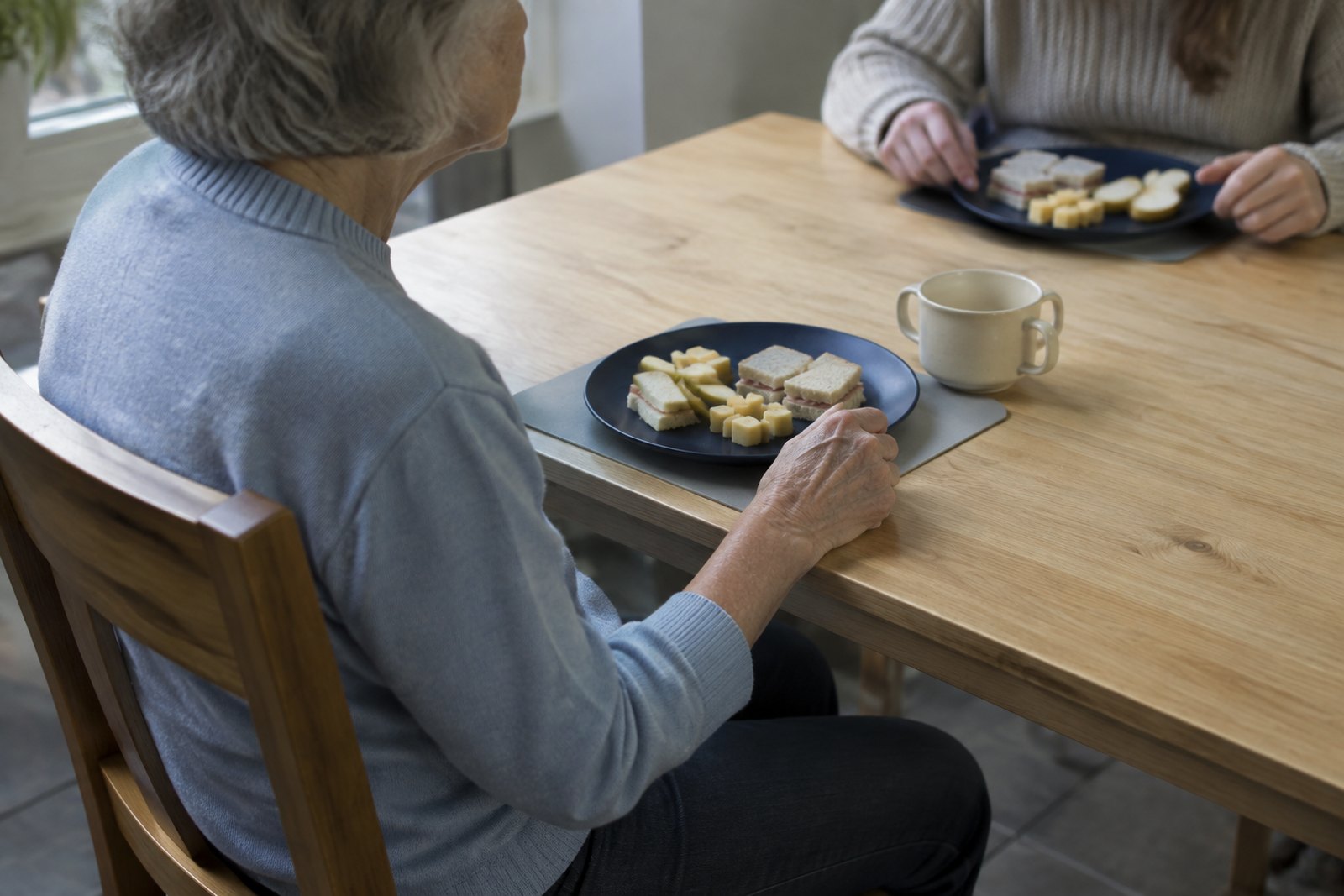
If someone you care for has dementia and has stopped eating properly, you are not imagining it and you are not doing anything wrong. Eating and drinking problems are among the most common changes in dementia. They usually happen for a reason you can find. The person may not recognise the food in front of them, may have lost track of how to use a knife and fork, may have a sore mouth, may be too distracted to finish, or may be finding it harder to swallow.
Most mealtime problems improve when you work out which of these is going on and change the meal to fit. A calm table, a plain plate that contrasts with the food, smaller portions, finger foods and sitting down to eat together help more than you might expect. Some signs need a professional, and quickly. Coughing or spluttering on food or drink, a wet or gurgly voice after swallowing, repeated chest infections or steady weight loss all mean a call to the GP, who can refer to a speech and language therapist or a dietitian. If someone is choking and cannot breathe, speak or cough, call 999.
Why eating changes in dementia
Eating looks simple. It is actually a long chain of small skills: noticing you are hungry, recognising food, knowing it is time to eat, picking up the right tool, getting food from plate to mouth, chewing, swallowing, and staying focused long enough to finish. Dementia can break any link in that chain. Finding the broken link is most of the work.
Not recognising food or knowing what to do with it
Someone may look at a plate of shepherd's pie and not register it as food. They may stare at it, push it around, or wait to be told what to do. Some people forget they have just eaten and ask again; others forget to eat at all if nobody reminds them. Changes in how the brain processes what the eyes see can also make white food on a white plate, or a pale soup in a pale bowl, genuinely hard to make out.
Coordination and using cutlery
Holding a fork, cutting meat, scooping peas and steering a spoon to the mouth all need coordination and planning. As dementia progresses these become harder. The person may switch to eating with their fingers, give up halfway through, or get frustrated and push the plate away. This is often mistaken for not being hungry.
Appetite, taste and thirst
Appetite often drops, especially if the person is less active. Taste and smell can change, and many people with dementia develop a strong preference for sweet food. The sense of thirst can fade too, so someone may genuinely not feel the need to drink. Some medicines affect appetite or cause a dry mouth. Do not stop or change anything yourself, but it is reasonable to ask the GP or pharmacist for a medication review if appetite has changed.
Mouth pain and dentures
A loose denture, a mouth ulcer, a broken tooth, sore gums or oral thrush can make eating painful. Someone with dementia may not be able to tell you their mouth hurts. Instead they refuse food, chew on one side, pull at their face, or become agitated at meals. This is one of the most overlooked causes of not eating, and one of the most fixable.
Swallowing
In some people, and more often in the later stages, the muscles and reflexes involved in swallowing stop working as well. Food or drink can go towards the airway instead of the stomach. This needs proper assessment, which is covered below.
Low mood, tiredness and distraction
Depression is common in dementia and can take away the wish to eat. Tiredness matters too: someone who is drowsy at lunchtime will not eat well, and many people are at their worst in the late afternoon and evening, which is when the main meal often lands. Our guide to sundowning explains why. A television, a busy room, a dog under the table or several people talking can be enough to pull attention away from the plate for good.
Practical things that help at the table
None of these needs to be done all at once. Pick the ones that match what you are seeing and try them for a week or so.
Make the room calm
- Turn the television and radio off during meals. Quiet background music is fine if the person likes it.
- Clear the table of everything that is not needed. Salt, sauces, post, a vase of flowers and spare cutlery all compete for attention.
- Sit the person in the same place each time, facing away from doors and busy areas if possible.
- Make sure the room is well lit, ideally without bright light shining into their eyes.
- Check they are sitting upright, well supported, with feet on the floor and the table at a comfortable height. Slumped in an armchair is a poor position for eating and a risky one for swallowing.
Make the food easy to see
- Use a plain plate in a colour that contrasts with the food and with the table. A solid coloured plate on a plain tablecloth in a different colour works well.
- Avoid patterned plates, which can be confusing and make food hard to pick out.
- Serve one or two things at a time rather than a full plate with several items.
- Use a plain-coloured cup that stands out from the drink inside it.
Smaller portions, more often
A full plate can be overwhelming. Serve a small portion and offer more if it is finished. Many people with dementia do better with three small meals and several snacks than with three large meals. Offer food at the time of day they eat best, which for many people is breakfast. If they eat a big breakfast and pick at dinner, that is fine. Make breakfast the main meal.
Finger foods
When cutlery becomes hard, finger foods let someone keep feeding themselves, which matters for dignity and often means they eat more. Ideas include sandwiches cut into small squares, cheese cubes, cooked vegetable sticks, slices of soft fruit, small sausages, fish fingers, quiche cut into pieces, chicken pieces, crackers, small pastries and pieces of cake. Keep a plate of finger food within reach for people who will not sit for long, or who walk about a lot and use up more energy. If there is any question about swallowing, check with a speech and language therapist before changing textures.
Adapted cutlery, plates and cups
Simple equipment can keep someone independent for longer:
- Cutlery with thicker, cushioned handles for a weaker or less steady grip.
- Plates with a raised rim or a plate guard clipped to the edge, so food can be pushed against it onto a spoon.
- A non-slip mat under the plate.
- Lightweight cups with two handles, or cups with a lid and spout. Many people dislike lidded beakers because they feel childish, so try an ordinary-looking cup first.
- A spoon instead of a fork if scooping is easier.
Our guide to kitchen aids and mealtime independence goes into more detail on equipment types.
Eat together and prompt gently
People often copy what they see. Sitting down and eating the same food alongside them can remind them what to do far better than instructions. Keep prompts short and positive: "Here is your fork" or "Try some of the chicken." If they have stopped, you can put the fork in their hand, or guide their hand to the plate and let them carry on. Allow plenty of time. Rushing is the quickest way to end a meal early.
If they refuse, do not argue. Take the plate away and try again in twenty minutes. It is often a different meal the second time.
Drinking enough
Dehydration can make confusion noticeably worse, and it raises the risk of urine infections, constipation, dizziness and falls. Because thirst can fade, you often have to bring drinks to the person rather than wait to be asked.
- Offer a drink at regular times through the day, linked to routines: on waking, with each meal, mid-morning, mid-afternoon.
- Put the drink in their hand rather than on a table where it may be forgotten.
- Try different drinks. Some people drink more squash, milky drinks or warm drinks than water.
- Food counts too: soup, jelly, ice lollies, yoghurt and watery fruit all add fluid.
- Watch for signs of dehydration: dark or strong-smelling urine, passing urine less often, dry lips, headaches, or confusion that is worse than usual.
A sudden increase in confusion can be a sign of infection or dehydration. Contact the GP or NHS 111 the same day if this happens.
Weight loss: what to watch and when to act
Some weight loss is common as dementia progresses, but it should not be accepted without asking why. Weigh the person every month or so if you can, on the same scales at the same time of day, and write it down. Notice if clothes, rings or dentures have become loose.
If they are losing weight, see the GP. They can look for treatable causes, check for depression, review medicines and refer to a dietitian, who can advise on making food more nourishing. In the meantime, small changes help: full-fat milk and yoghurt, a little extra butter or cheese stirred into mashed potato and vegetables, milky puddings, and nourishing snacks between meals. Do not start prescribed nutritional supplements without the GP or dietitian advising them.
Swallowing problems and choking: when to get help
This is the part where you need a professional rather than a better plate. Signs that swallowing may not be safe include:
- Coughing, spluttering or clearing the throat during or straight after eating or drinking.
- A wet, gurgly voice after swallowing.
- Eyes watering or breathlessness at meals.
- Holding food in the mouth for a long time, or food left in the cheeks afterwards.
- Taking much longer to eat than before.
- Repeated chest infections.
If you notice any of these, tell the GP and ask for a referral to a speech and language therapist. They are the professionals who assess swallowing and advise on safe food textures, thickened drinks and the best position for eating. Do not start thickening drinks or pureeing food on your own guess. The right texture depends on the individual, and getting it wrong can make things worse.
If someone is choking and cannot breathe, speak or cough, or is turning blue, call 999 immediately.
Teeth, gums and dentures
Regular dental checks matter more as dementia progresses, not less. Ask the dentist to check dentures still fit, because gums change shape with weight loss and a denture that fitted last year may not now. If the person cannot easily get to a surgery, ask your local NHS dental service or the GP practice how to access home visits or special care dentistry in your area, as provision varies. Day to day, help with brushing twice a day, check the mouth for redness, ulcers or white patches, and clean dentures daily. If eating suddenly gets worse, look in the mouth first.
The later stages
In the later stages of dementia, eating and drinking often become much harder, and the person may eat very little. This is one of the most painful things for families to watch, because feeding someone feels like the most basic way to care for them.
At this point the aim usually shifts towards comfort and enjoyment rather than hitting a target. Careful hand feeding with small mouthfuls of foods they like, at their own pace, is often what is recommended. NICE guidance advises that tube feeding should not routinely be used in advanced dementia, though there can be exceptions. These decisions should be talked through with the GP, the care team and, ideally, the person themselves earlier on through advance care planning. You are allowed to ask questions, ask for time, and ask for a second conversation.
Looking after someone through this is exhausting. If you are running on empty, our piece on carer burnout is written for you.
Where an occupational therapist fits
An occupational therapist looks at how someone manages everyday tasks, and eating is one of the most important. An occupational therapist visiting at home, whether through the NHS, the council's adult social care team or privately, can watch a real meal, which is often where the answers are. They can look at seating and posture at the table, lighting and distractions, how the person holds and uses cutlery, and whether adapted cutlery, plates, cups or non-slip mats would help. They can also look at the wider routine: when meals happen, whether the person can still make a drink or a simple snack safely, and how to set things up so they stay involved. See our equipment and aids page and our page on dementia for more.
An occupational therapist does not assess swallowing or prescribe food textures. That is the speech and language therapist's job. Weight loss and nutrition sit with the GP and dietitian, and dental problems with the dentist. A good occupational therapist will tell you if they spot signs that need one of these, and will work alongside their advice rather than replace it.
Frequently asked questions
Why has my mum with dementia stopped eating?
Common reasons include not recognising food, difficulty using cutlery, a sore mouth or badly fitting dentures, low mood, tiredness, distraction, constipation, infection, side effects of medicines or swallowing problems. Work through the possibilities, and see the GP if it continues or she is losing weight.
Is it normal for someone with dementia to only want sweet food?
Yes, a liking for sweet food is common. You can use it, for example by offering fruit, sweet yoghurts or a little honey on porridge. Keep an eye on teeth and mention it to the GP if the person has diabetes.
How do I know if someone with dementia is drinking enough?
Look at their urine: pale straw-coloured is a good sign, dark or strong-smelling is not. Other warning signs are dry lips, headaches, constipation and worse confusion. Offering drinks at set times through the day is more reliable than waiting for them to ask.
Should I puree their food if they are coughing when they eat?
No, not without advice. Coughing while eating can be a sign of a swallowing problem, and the right food texture depends on the person. Ask the GP for a referral to a speech and language therapist, who will assess and advise.
What if they refuse to eat at all?
Do not force food or argue. Take the plate away and offer something else later, perhaps finger food or a favourite snack. If refusal lasts more than a day or two, or they are also not drinking, contact the GP or NHS 111.
Can an occupational therapist help with dementia and eating?
Yes, with the practical side: seating, the setup of the table, adapted cutlery and cups, and routines that help someone keep feeding themselves. Swallowing is assessed by a speech and language therapist, and weight and nutrition by the GP or dietitian.
Next steps
If mealtimes have become a daily struggle, an occupational therapist can look at the practical side at home. See our older people's independence page, or current guide prices, and choose your area below.

Talk to an occupational therapist near you
This guide is general information. For advice about your own situation - or someone you look after - a local occupational therapist can visit you at home and see it for themselves.
Choose your area: