

Occupational Therapy During Cancer Treatment and After
By Mobile Occupational Therapist • 7 October 2026 • 12 min read
Occupational therapy during cancer treatment and after is about one thing: helping you keep doing the parts of daily life that matter to you while your body and energy are being knocked about. An occupational therapist does not treat the cancer. They help with the fallout: fatigue that sleep does not fix, washing and dressing when you are wiped out, cooking safely, memory slips, getting back to work, and setting up the home so it works for you rather than against you.
You can get occupational therapy through the NHS (in hospital, in the community or through a hospice), and some people also use a private occupational therapist. Many people with cancer are never offered it, simply because nobody thought to ask. If daily life has become hard, you are allowed to ask your cancer team, your clinical nurse specialist or your GP for a referral.
First, the urgent bit
This article is about practical daily life, not medical care. If you are having chemotherapy or some other cancer treatments and you get a high temperature, feel shivery, or suddenly feel unwell, call your chemotherapy or acute oncology helpline immediately, day or night. Do not wait to see if it settles and do not wait for a GP appointment. An infection during treatment can become serious quickly. Your team will have given you the number and told you what temperature to act on; put it in your phone and on the fridge now.
Call 999 if you are struggling to breathe, have chest pain, are confused, or are collapsing. For new or worrying symptoms that are not an emergency, use your helpline first, then your GP or NHS 111.
Fatigue during chemotherapy and after
Cancer-related fatigue is not ordinary tiredness. People describe it as being drained to the bottom, where a shower can use up the morning and a night's sleep changes very little. It can come from the cancer itself, the treatment, anaemia, poor sleep, low mood, eating less and doing less. It often carries on for months after treatment ends, which surprises people and their families. Tell your team about it, because some causes can be checked and treated.
Pacing: spending energy on purpose
The most useful thing an occupational therapist teaches for fatigue is pacing. The idea is simple and hard to do: instead of using everything on a good day and crashing for three days afterwards, you spread activity out more evenly. Our practical guide to fatigue management and pacing goes into this in detail. The short version:
- Keep a simple energy diary for a week or two. Note what you did, when, and how you felt afterwards. Patterns appear, such as being better in the morning or flattened the day after a hospital visit.
- Plan the week around treatment. Most people have predictable bad days in each cycle. Put nothing on those days that cannot be cancelled.
- Break tasks up. Change the bed in two goes. Shower one day, wash your hair another.
- Rest before you are exhausted, not after. Short planned rests work better than collapsing.
- Prioritise. Ask: does this need doing, does it need doing today, does it need doing by me?
- Keep some gentle movement if your team agrees. Total rest tends to make fatigue worse over time. A physiotherapist or your team can advise on exercise.
Energy-saving changes around the house
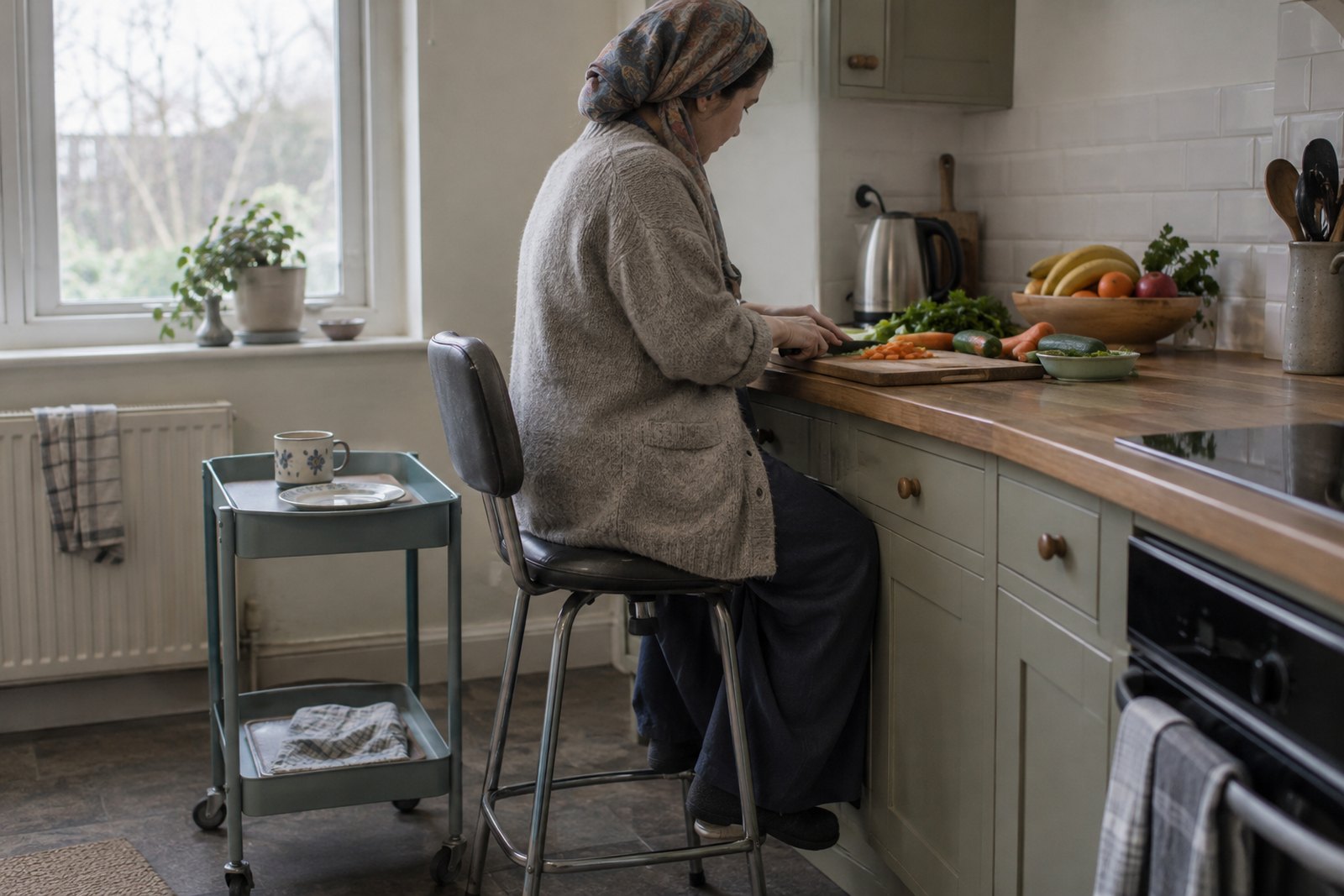
- Sit down for anything you can: drying yourself, dressing, preparing vegetables, brushing teeth.
- Keep things you use daily between waist and shoulder height so you are not bending and stretching.
- Keep a set of basics upstairs and downstairs so you are not climbing stairs for a forgotten item.
- Use a towelling dressing gown after a shower instead of drying yourself fully.
- Slide heavy things along the worktop rather than lifting them.
Managing daily tasks during treatment
Treatment changes week to week, so the aim is a routine that bends. A few things that make a real difference:
Washing and dressing
Showers are hot, steamy and tiring. Sitting on a shower stool, having a chair outside the shower, and keeping the bathroom door slightly open can help if you feel faint. Loose clothes, front fastenings and slip-on shoes save energy. If you have a line, port or surgical wound, follow your nurses' advice about keeping it dry and covered.
Food and cooking
Cook in batches on better days and freeze portions. Keep easy snacks and drinks within reach of where you sit. If smells make you feel sick, cold food or someone else cooking may help. Your team will tell you about any food hygiene precautions during treatment. If eating or swallowing is difficult, ask about a dietitian or a speech and language therapist rather than battling on.
Housework, shopping and the rest
This is the moment to accept online shopping, a cleaner if you can afford one, and the friend who keeps asking what they can do. Give them a specific job. Ask your team what to avoid during treatment, for example certain jobs in the garden or with pet litter, as advice depends on your treatment.
Children, pets and caring for others
If you look after someone else, an occupational therapist can help you work out which jobs to hand over, and you may be entitled to support from your council. Do not try to carry on as if nothing has changed.
Equipment and setting up the home
Simple equipment can stretch your energy a long way. Common items include:
- a shower stool or bath board, so you can wash sitting down
- a raised toilet seat or toilet frame if getting up is hard
- a perching stool for the kitchen
- a long-handled sponge, sock aid or grabber if bending is difficult after surgery
- a trolley for moving food and drinks between rooms
- a bed lever or extra stair rail
Much of this can be borrowed free through your council's community equipment service after an NHS or social care assessment. It is worth getting someone to look first: the wrong height of seat, or a bath board in the wrong bath, can make things less safe rather than more. Our equipment and aids page explains how an occupational therapist assesses for this.
If you are likely to need more help over time, for example after major surgery or with advanced illness, an occupational therapist can also think ahead about moving a bed downstairs, a commode, or bigger adaptations, so you are not scrambling during a crisis.
Chemo brain: memory and concentration
Many people notice problems with memory, concentration, finding words or doing two things at once during and after treatment. It is often called chemo brain, although it can happen with other treatments and with the stress and fatigue of cancer too. It is real, and it usually improves, but it can last a while. Tell your team, especially if it is getting worse or comes with headaches, confusion or other new symptoms.
Strategies that occupational therapists commonly suggest:
- Get it out of your head. One notebook or one phone notes app, used for everything, rather than scraps of paper.
- Use alarms and reminders for appointments, tablets and tasks.
- Keep a fixed home for keys, glasses, phone and wallet.
- Do one thing at a time. Turn off the radio when reading letters. Do not cook while on the phone.
- Do thinking jobs at your best time of day, which often ties in with your pacing.
- Take someone to appointments to write things down, or ask if you can record the conversation.
- Tell people. Saying "my concentration is poor at the moment, can you put that in an email" saves a lot of worry.
Going back to work
In Great Britain (England, Scotland and Wales), the Equality Act 2010 treats cancer as a disability from the point of diagnosis. You do not have to wait until it affects you in a particular way. That means your employer has a duty to make reasonable adjustments and must not treat you unfavourably because of it. Northern Ireland has separate disability law, so check the rules there. You can read the definition on GOV.UK, and Acas and Macmillan both have clear guidance on cancer and work.
Adjustments that help people after cancer often include:
- a phased return to work, building hours up over several weeks
- flexible start times to avoid rush hour or fit around fatigue
- some home working
- time off for appointments and check-ups
- lighter or different duties for a period
- a quieter workspace and written instructions if concentration is affected
Our guide to reasonable adjustments at work explains how to ask. Your GP or hospital doctor can suggest changes on a fit note, and your employer may refer you to occupational health. An occupational therapist can look at what your job actually involves, what your energy and concentration allow right now, and write practical recommendations your employer can act on. Many people go back too fast because they feel they should. A plan that builds up slowly usually sticks better.
Lymphoedema, numb hands and feet, and other after-effects
Some people develop lymphoedema, swelling in an arm, leg or other area after lymph nodes have been removed or treated, and our guide to living with lymphoedema covers skin care and practical changes; treatment is led by a specialist lymphoedema service.
Some chemotherapy can cause numbness, tingling or pain in the hands and feet, called peripheral neuropathy. Tell your team, as it can affect treatment decisions. In daily life it raises specific risks: you may not feel how hot bath water is, may drop things, or trip more easily. Check water with a part of you that feels normally or use a bath thermometer, wear well-fitting shoes indoors, use non-slip matting and choose cups and utensils with chunkier grips. An occupational therapist can help with fiddly tasks like buttons and writing.
Pain, breathlessness and changes after surgery to the head, neck, chest or bowel all affect daily life too. Your specialist nurse is a good first person to ask about what support exists for your particular situation.
When cancer cannot be cured
If cancer is advanced, occupational therapy shifts towards comfort, safety and doing what matters most for as long as possible. That might mean a profiling bed downstairs, a riser recliner chair, pressure care, equipment so family can help safely, or ways to save energy for a grandchild's visit rather than the washing up. Hospice and palliative care teams often include occupational therapists, and their help is usually free. Our guide to end of life care at home covers equipment and support in more detail. Things can change quickly at this stage, so ask early rather than waiting.
Where an occupational therapist fits
Your oncology team leads on your cancer and its treatment, and your clinical nurse specialist is usually your main point of contact. Other people may be involved: a physiotherapist for exercise, mobility and breathing, a dietitian for eating and weight, a speech and language therapist for swallowing and speech, a psychologist or counsellor for the emotional side, and your GP for everything else.
An occupational therapist focuses on daily life: fatigue management, washing, dressing, cooking, getting around the home, equipment, concentration and memory strategies, and work. You may meet one:
- In hospital, especially around surgery or before going home.
- In the community, through your council or local NHS service, usually focused on equipment and safety at home.
- Through a hospice, which often supports people at any stage of advanced illness, not just the last days.
- Through cancer rehabilitation or survivorship services, where these exist locally.
NHS and hospice occupational therapy is free, but what is available varies by area and there can be a wait. Some people choose a private occupational therapist visiting at home when they want more time on a specific problem, such as a detailed home assessment, a plan for returning to work, or a written report for an employer, insurer or benefit claim. A private occupational therapist cannot change your treatment and should work alongside your cancer team, not instead of it.
Frequently asked questions
Can I get occupational therapy on the NHS during cancer treatment?
Often yes, but it is not automatic. Ask your clinical nurse specialist, oncology team or GP. If your main problems are at home, your council's adult social care team can also arrange an assessment for equipment.
How long does fatigue last after chemotherapy?
It varies a great deal. For some people it lifts within weeks of finishing treatment, for others it lasts many months. If it is not improving, or is getting worse, tell your team so they can check for causes that can be treated.
Do I have to tell my employer I have cancer?
You do not have to, but the duty to make reasonable adjustments generally depends on your employer knowing about your condition. Many people find it easier to share what they need rather than every medical detail. Acas and Macmillan have guidance on how to approach the conversation.
Is chemo brain permanent?
For most people it improves over time, although it can linger. Practical strategies can make a big difference while it does. If memory or thinking problems are getting worse or come with other new symptoms, speak to your team.
Do I need special equipment, or should I just push through?
Using a stool in the shower or a trolley in the kitchen is not giving in. It saves energy for things you care about. Much basic equipment can be borrowed through community equipment services, so you may not need to buy anything.
Can a hospice help if I am not near the end of life?
Many hospices support people with advanced or incurable cancer for months or years, with services including occupational therapy, physiotherapy and symptom control. Your GP or specialist nurse can tell you what your local hospice offers and how to be referred.
Next steps
If daily life has become hard during or after cancer treatment, start by asking your cancer team about NHS or hospice occupational therapy. If you want a private visit, see our home assessment page, or current guide prices, and choose your area below.
Talk to an occupational therapist near you
This guide is general information. For advice about your own situation - or someone you look after - a local occupational therapist can visit you at home and see it for themselves.
Choose your area: