

Lymphoedema: Everyday Life, Skin Care and Practical Adjustments
By Mobile Occupational Therapist • 6 October 2026 • 14 min read
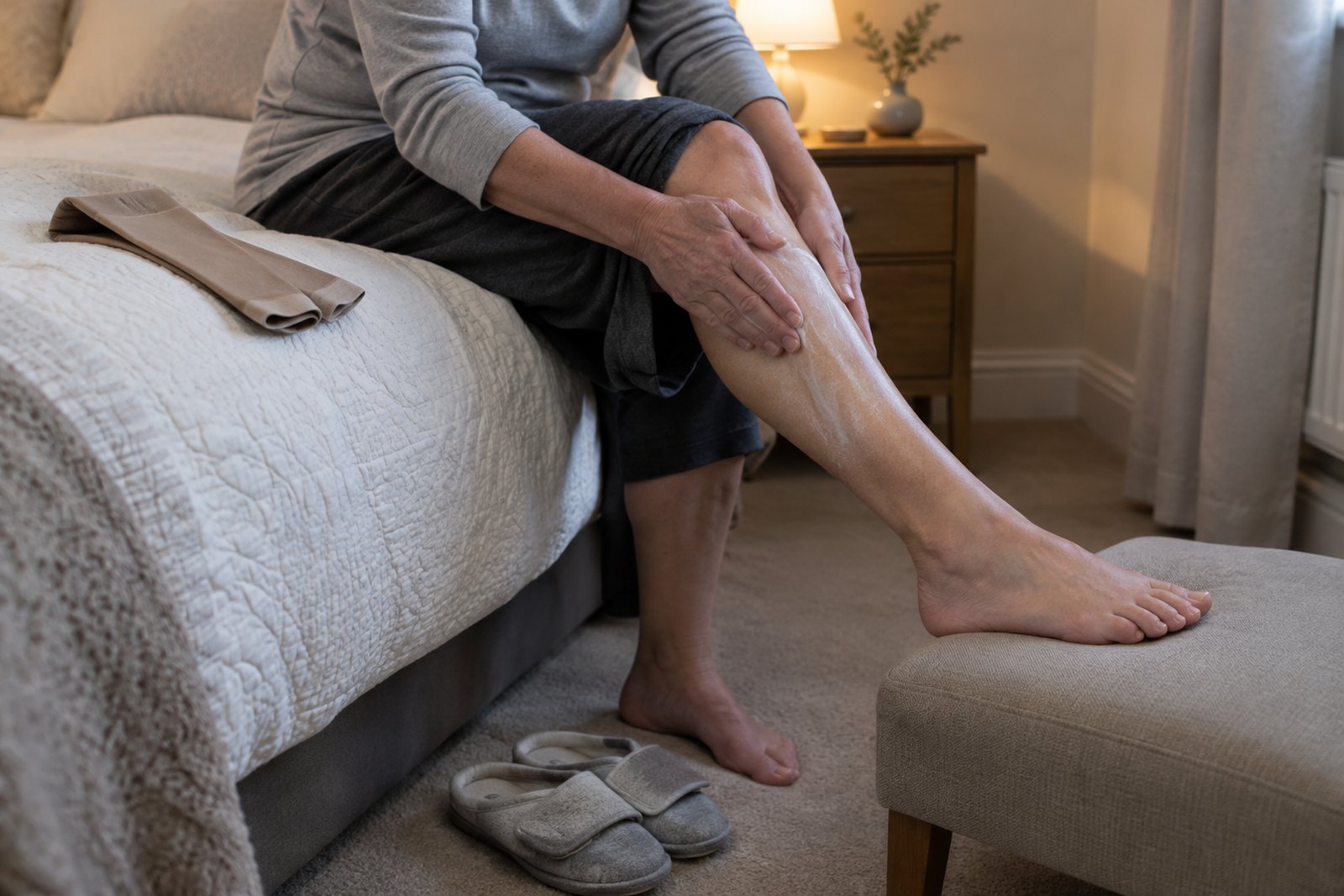
Lymphoedema is long-term swelling caused by the lymphatic system not draining fluid from the body's tissues properly. It most often affects an arm or a leg, but it can also affect the hands, feet, chest, breast, trunk, head and neck or genitals. Some people are born with a lymphatic system that does not work as it should (primary lymphoedema). More often it develops after something has damaged the lymphatic system, such as cancer surgery, radiotherapy, an infection, an injury or long periods of not moving much (secondary lymphoedema). It cannot usually be cured, but it can usually be controlled.
This page is not a treatment guide. Diagnosis comes from your GP, and treatment is planned and taught by a specialist lymphoedema service. What follows is about the part nobody can do for you: the daily business of living with it. Looking after your skin, spotting infection early, getting compression garments on when your hands do not want to cooperate, finding shoes that fit, travelling, working, and coping with the fact that you did not ask for any of this.
What lymphoedema actually is
Your lymphatic system is a network of small vessels and nodes that collects fluid from your tissues and returns it to your bloodstream. It also plays a part in fighting infection. When part of it is damaged or missing, fluid builds up in the tissues and the area swells.
Early on, the swelling may come and go, often worse by evening and better after a night with your legs up. Over time, without management, the skin and tissues can thicken and harden, the limb can feel heavy and tight, and movement can become harder. That is why steady daily care matters more than any single dramatic intervention.
New, unexplained swelling should always be checked by your GP. Swelling has many causes, and some of them, such as a blood clot or heart, kidney or liver problems, need a different kind of attention. If a leg suddenly becomes swollen, painful, warm and red, get an urgent GP appointment or call NHS 111 the same day, as it could be a blood clot or an infection. Call 999 if you also have chest pain or breathlessness.
Diagnosis and treatment: who does what
Your GP is the starting point. They will examine you, look for other causes and, if lymphoedema seems likely, refer you to a lymphoedema service. If you have had cancer treatment, your cancer team may refer you directly. Services are usually run by specialist nurses or physiotherapists, and some lymphoedema practitioners are occupational therapists with extra training.
Treatment usually combines four things, sometimes called decongestive lymphatic therapy:
- Compression - either multi-layer bandaging for a period to reduce swelling, or made-to-measure or standard compression garments to keep it down.
- Skin care - to keep the skin healthy and reduce the risk of infection.
- Exercise and movement - to help the muscles pump lymph fluid along.
- Lymphatic drainage massage - manual lymphatic drainage done by a trained therapist, and simple lymphatic drainage that you or a family member can be taught to do at home.
The massage techniques are gentle and specific. They are not the same as an ordinary massage, and a general massage can make things worse. Learn them from your lymphoedema service, not from a video. The Lymphoedema Support Network, the national charity for people with lymphoedema, also has reliable information and can help if you are struggling to get referred.
Skin care: the daily habit that matters most
Skin over a swollen limb is more vulnerable. It can become dry and cracked, and fluid sitting in the tissues gives bacteria a comfortable place to settle if they get in. Cellulitis, a skin and tissue infection, is one of the most common complications of lymphoedema, and each episode can damage the lymphatic system further. So the dull business of skin care is genuinely protective.
A simple routine
- Wash daily with a mild, unperfumed soap substitute and lukewarm water. Dry carefully, especially between toes, fingers and in skin folds.
- Moisturise once a day with an unperfumed emollient. Many people do this at night after taking their garment off, because cream applied just before can make a garment harder to pull on and may affect the fabric. Ask your service what they prefer.
- Check your skin every day for cuts, cracks, redness, blisters, rashes or fungal infection between the toes. A hand mirror on a long handle, or someone else's eyes, helps with the back of the leg and the soles of the feet.
- Treat small cuts promptly. Clean them, use an antiseptic and cover them. Keep a small kit in the kitchen and one in your bag.
- Protect the limb. Gloves for gardening, washing up and handling pets. Insect repellent outdoors. High-factor sun cream. An electric razor rather than a blade. Shoes rather than bare feet, even indoors.
- Nails: cut straight across and do not cut cuticles. If you cannot reach your feet or see well enough, ask your GP about NHS podiatry or use a registered podiatrist.
Many lymphoedema services also advise avoiding injections, blood tests and blood pressure readings on an affected arm where there is a choice. Advice on this varies, so ask your own service and tell staff at appointments.
Cellulitis: the signs that need help today
Know these signs and do not wait to see if they settle:
- skin that becomes red or darker than usual (redness can be harder to see on brown and black skin), hot, painful or tender
- swelling that gets worse quickly
- blisters, or red streaks spreading from the area
- feeling unwell, shivery, feverish or flu-like, which can come before the skin changes
If you notice these, ask for an urgent GP appointment the same day or call NHS 111. Some people with lymphoedema who have had cellulitis before are given an emergency supply of antibiotics to start straight away; if you think that might apply to you, ask your GP or lymphoedema service rather than deciding yourself. Call 999 or go to A&E if you or the person you look after becomes confused, very drowsy, breathless, has very cold or blotchy skin, or seems seriously unwell. These can be signs of sepsis.
Getting compression garments on and off
Compression garments are firm by design. That is the point of them and also the problem. Getting a tight stocking over a heel or a sleeve up an arm takes strength, grip and the ability to bend, and plenty of people with lymphoedema also have arthritis, a stiff back, a painful shoulder after surgery or simply reduced energy.
Things that usually help:
- Put garments on first thing, when swelling is usually at its lowest, and before you get busy.
- Sit down on a firm chair or the edge of the bed, with your back supported, rather than balancing on one leg.
- Rubber household gloves or textured donning gloves give much better grip and let you smooth fabric up the limb without digging in with fingernails.
- Turn the garment inside out down to the heel, get the foot in, then roll or ease the rest up gradually. Your service will show you the method that suits your garment.
Donning and doffing aids exist and are widely used:
- Frame-type stocking aids - a rigid frame you stretch the stocking over, step into, then pull up using long handles. Useful if you cannot bend to your feet.
- Slippery fabric sleeves or slip-on liners - a smooth fabric layer that the garment slides over, then pulls out through the toe or fingers.
- Doffing aids - for example, a long-handled device that pushes the garment down over the heel, so you can take it off without bending.
Not every aid works with every type of garment, and open-toe and closed-toe stockings behave differently. Ask your lymphoedema service before buying anything. If you cannot manage your garments at all, say so. There may be a different style, a zip, a wrap garment with fastenings, or a garment in two pieces. Do not cut or alter a garment yourself.
Take a garment off and contact your service if it causes pain, numbness, tingling, or fingers or toes changing colour or going cold. Also tell them if a garment has gone baggy, is wearing thin or no longer fits, because worn garments stop doing their job. Garments are usually available on NHS prescription once your service has measured you; check with your service how often they should be replaced.
Clothing, shoes and jewellery
Swelling changes shape, and clothes that dig in can make it worse by acting like a tourniquet.
- Choose waistbands, cuffs, socks and bra straps that do not leave deep marks. Wide, soft straps spread pressure better.
- Avoid tight watches, rings and bracelets on an affected arm. Wear them on the other side.
- Look for shoes with adjustable fastenings, such as touch-close straps or laces, a deep and wide toe box and a firm sole. Shoes in extra-wide fittings exist. Try shoes on later in the day if swelling builds up by then.
- Seam-free socks reduce rubbing. Check for marks after taking shoes off.
- For dressing more generally, our guide to dressing aids and easier ways to get dressed covers sock aids, long-handled shoe horns and easier fastenings.
Staying active
Movement helps lymphoedema because working muscles squeeze the lymph vessels and move fluid along. Walking, swimming, cycling, gentle yoga and the specific exercises your service gives you all count. Start gently and build up, and ask your service whether to wear your compression garment while you exercise (usually yes on land; swimming is different).
Practical points:
- Avoid sitting for long periods with your legs hanging down. Get up and move every so often, or put your feet up on a stool.
- When resting, raise the swollen limb a little if it helps, but you do not need to lie with it in the air for hours.
- Heavy, repetitive tasks with an affected arm, such as carrying full shopping bags on one side, can increase swelling for some people. Split loads, use a trolley and pace jobs across the day.
- If you live with fatigue as well, especially after cancer treatment, our practical guide to fatigue management and pacing may help.
Heat, travel and holidays
Heat tends to make swelling worse. Hot baths, saunas, hot tubs and long spells in strong sun are best kept short or avoided. Keep cool, drink plenty and keep wearing compression in hot weather, uncomfortable as that is.
For travel:
- Talk to your lymphoedema service before a long journey or flight. They may suggest wearing your garment for the journey or extra measures.
- On long flights, train or car journeys, move your feet and ankles regularly, walk when you can and avoid crossing your legs for long periods.
- Pack spare garments, your skin care kit, insect repellent, sun cream and any standby antibiotics you have been prescribed, in your hand luggage.
- Declare lymphoedema when buying travel insurance. Not declaring a condition can affect a claim.
- Know how you would get medical help at your destination if cellulitis started.
Work
Many people with lymphoedema work without much difficulty. Others find standing all day, sitting at a desk with legs down, heavy lifting, heat or a uniform with tight cuffs makes things harder. Lymphoedema may count as a disability under the Equality Act 2010 if it has a substantial and long-term effect on everyday activities, and anyone who has had cancer is automatically covered. If you are covered, your employer has a duty to make reasonable adjustments. GOV.UK and Acas explain the rules.
Useful adjustments might include a footrest, permission to take short movement breaks, a chair that lets you change position, help with lifting, a cooler workspace or a changed uniform. See our guide to reasonable adjustments at work and how to ask for them. You do not have to tell your employer, but it is hard to ask for adjustments if they do not know.
The emotional side
Lymphoedema is rarely talked about, and the emotional weight of it is often underestimated. A limb that looks different. Clothes and shoes that no longer fit. A garment you have to wrestle with every morning, in summer as well. For many people it arrives after cancer treatment, just when they hoped to put that behind them. Feeling angry, self-conscious, low or simply fed up is common and understandable.
Things that help some people: meeting others with lymphoedema through the Lymphoedema Support Network or local groups, being honest with your lymphoedema service about what you are finding hard, and getting support for your mood if it is dragging you down. In England you can refer yourself to NHS Talking Therapies. Our guide to getting mental health support in the UK explains the routes. If you ever feel unable to keep yourself safe, call 999 or go to A&E.
Where an occupational therapist fits
Be clear on one thing first. A general occupational therapist does not diagnose lymphoedema, prescribe or measure compression garments, bandage limbs or provide manual lymphatic drainage. That is the job of your GP and the specialist lymphoedema service. Some lymphoedema practitioners are occupational therapists by background, but they are working as lymphoedema specialists when they do that.
Where an occupational therapist can genuinely help is with the everyday tasks that lymphoedema, often alongside other conditions, makes harder. A private occupational therapist visiting at home can:
- look at how you put on and take off compression garments, and suggest positions, methods and aids that fit your strength, reach and grip, working alongside what your lymphoedema service has prescribed
- help with washing, bathing and foot care if a heavy limb or limited bending makes these awkward, including bath and shower equipment
- suggest ways to manage dressing, shoes and getting in and out of bed or a chair
- help you pace household tasks, shopping and cooking so that swelling and fatigue are easier to manage
- advise on equipment and daily living aids and simple changes at home
- look at your workstation and working day and suggest adjustments to raise with your employer
If your problem is the swelling itself getting worse, garments not fitting or signs of infection, go back to your lymphoedema service or GP. If your problem is that everyday life has become a struggle around the swelling, that is where an occupational therapist is useful.
Frequently asked questions
Can lymphoedema be cured?
Usually not, but it can usually be controlled. With compression, skin care, movement and the drainage techniques your service teaches, many people keep swelling stable and reduce the risk of complications. Surgery is an option for a small number of people, and your specialist can tell you whether that applies to you.
Can I get compression garments on the NHS?
Yes, compression garments are usually available on NHS prescription once a lymphoedema service has assessed and measured you. Normal prescription charges apply in England unless you are exempt. Ask your service how often garments should be replaced and how to reorder.
Is it safe to exercise with lymphoedema?
Generally yes, and it helps. Build up gradually, wear compression as your service advises and watch how the limb responds. If swelling increases noticeably after a particular activity, ease back and mention it at your next appointment.
What should I do if my arm or leg suddenly gets red and hot?
Treat it as possible cellulitis. Ask for an urgent GP appointment the same day or call NHS 111. If you have been given standby antibiotics, follow the instructions you were given. Call 999 if you feel very unwell, confused or breathless.
Does lymphoedema count as a disability?
It can. Under the Equality Act 2010, a condition counts if it has a substantial and long-term effect on your ability to do normal daily activities. Whether that applies depends on your circumstances. GOV.UK and Acas explain how it works at work.
Can an occupational therapist treat lymphoedema?
Not the swelling itself, unless they also work as a trained lymphoedema practitioner within a lymphoedema service. An occupational therapist can help with the daily tasks lymphoedema affects, such as dressing, washing, managing garments and pacing activity, alongside your specialist treatment.
Next steps
If daily tasks have become harder because of lymphoedema, see our home assessment page, or current guide prices, and choose your area below.
Talk to an occupational therapist near you
This guide is general information. For advice about your own situation - or someone you look after - a local occupational therapist can visit you at home and see it for themselves.
Choose your area: