

Non-Slip Mats: Stop Plates, Boards and Rugs Sliding at Home
By Mobile Occupational Therapist • 30 October 2026 • 12 min read
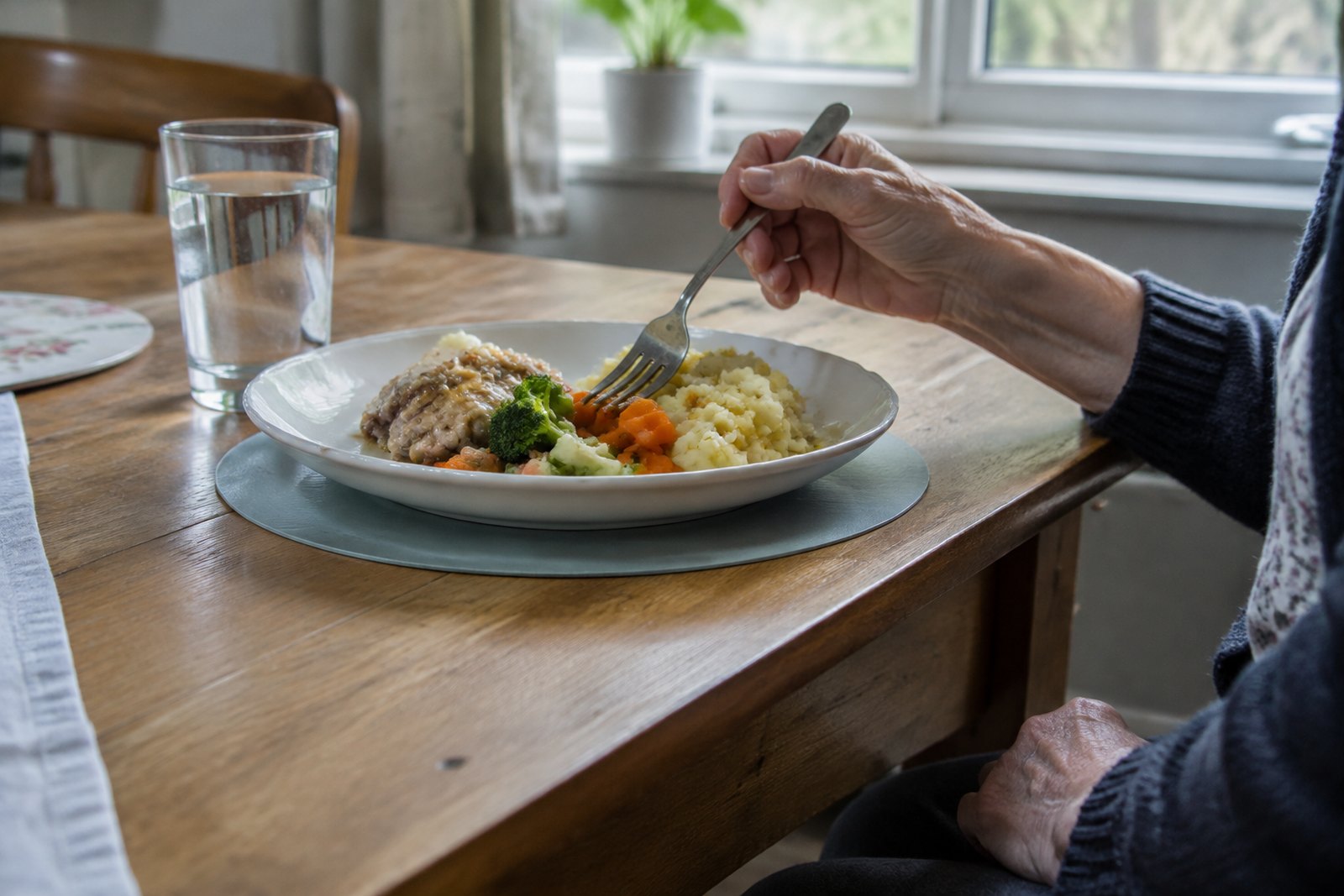
A non-slip mat is a thin, slightly tacky sheet that grips both the table and whatever you put on it. Put a plate, bowl, chopping board or sheet of paper on one and it stays where it is while you cut, stir or write. People often call it by a brand name, but the type is sold widely as non-slip or anti-slip matting, either on a roll you cut yourself or as ready-made round and rectangular mats.
It is one of the cheapest and most useful small aids there is. It helps if you are doing things one-handed after a stroke, if you have a tremor or a weak grip, or if your child's paper keeps skidding away as they write. It is not the same thing as a bath mat with suckers, and it is not the same as rug gripper underlay. Those do different jobs and come with their own safety rules, which are further down this page.
What non-slip matting actually does
Most everyday tasks are really two jobs at once: holding something still and doing something to it. Spreading butter, cutting meat, stirring a cake mix, writing a shopping list. One hand steadies, the other works. If one hand is weak, shaky, painful or not working at all, the steadying job gets dropped and the plate goes on a little tour of the table.
Non-slip matting takes over the steadying job. The surface is tacky rather than sticky, so it holds by friction and leaves nothing behind. It is thin and flexible, so it lies flat under almost anything. It does not need fixing to the table, and it can be cut, rolled up and carried in a bag or coat pocket.
It will not hold something that is being actively pulled hard or lifted, and it will not make up for a plate that is too shallow or a knife that is too blunt. It removes one problem. Often that is enough.
Where to use it around the home
Plates and bowls
This is the classic use. A small round mat under a plate stops it sliding or spinning while you cut and scoop. Paired with a plate guard or a lipped plate to push food against, it lets many people eat a whole meal with one hand. Our guide to adapted cutlery, plate guards and drinking aids covers what works well alongside it.
Chopping boards
A board that shifts while you cut is how fingers get hurt. A piece of matting under the board holds it firmly. If you have nothing else to hand, a damp dishcloth folded flat under the board does a decent job for one session, but matting is more reliable and does not go soggy.
Mixing bowls
Stirring, mashing and whisking need a bowl that does not walk across the worktop. A mat under the bowl helps a lot, especially if you are stirring with your stronger hand and cannot hold the bowl with the other. This is for cold or warm food. Do not put matting under a hot pan on the hob or straight from the oven unless the product says it is heat resistant.
Jars, bottles and lids
A square of matting held over a stiff lid gives you far more grip than bare fingers. Standing the jar on another piece stops it turning as you twist. If lids are a daily battle, our guide to kitchen aids and mealtime independence covers jar openers and other ways round it.
Writing and drawing
A sheet of matting under paper or an exercise book stops it sliding, which matters if you write one-handed or your child cannot yet use their "helper hand" to hold the page still. It also works on top of a writing slope to stop paper creeping down.
Phones, tablets and remote controls
A phone that skates away every time you tap it is maddening. A small piece of matting on the table, chair arm or wheelchair tray keeps it put. The same goes for a remote control or a tablet propped on a stand.
Trays
Lining a tray with matting stops cups and plates sliding when you carry it or when it sits on your lap. One honest point: if you are unsteady on your feet or use a walking aid, carrying a tray is a falls risk whatever is on it. A kitchen trolley with a lipped top is usually safer.
Other handy jobs
- Under a book stand or reading rest.
- On a bedside table so a glass does not get knocked off as easily.
- Lining a drawer or shelf so things do not roll about.
- Under a keyboard or mouse mat that keeps shifting.
Who it helps most
- People using one hand after a stroke, or with one arm in a sling or cast. Matting replaces the hand that would normally hold things still.
- People with a tremor, from Parkinson's, essential tremor or another cause. It does not reduce the shake, but it means the plate is not moving as well as the fork.
- People with a weak or painful grip, for example from arthritis, carpal tunnel syndrome or after a hand or wrist injury. Less gripping means less strain on sore joints.
- People who tire easily, such as those living with MS, long COVID or heart or lung conditions. Small savings in effort add up over a day.
- Children working on handwriting, especially those with coordination difficulties or low muscle tone who struggle to hold paper still while they write.
- People with low vision or dementia, if you choose a mat in a colour that contrasts with the plate and table. It helps the plate stand out, which can make eating easier.
How to cut, clean and look after it
Cutting it to size
Matting on a roll cuts easily with ordinary sharp scissors. Measure what you need, mark it with a pen and cut cleanly. Round off the corners slightly, as square corners are the first bits to lift and curl. One roll will usually make several pieces, so you can keep one at the table, one in the kitchen, one by your chair and a small one in your bag for cafes and visits.
Cleaning it
The grip fades when the surface gets dusty or greasy, and comes back when it is clean. For most matting, washing in warm soapy water, rinsing well and letting it air dry is all it needs. Check the instructions for your product before putting it in a dishwasher or very hot water, and avoid bleach and strong cleaners unless the instructions say they are fine. Do not dry it on a radiator or near the cooker.
When to replace it
Replace it if it no longer grips after a proper wash, if it has torn or cracked, or if the edges have started to curl and will not lie flat. It is inexpensive, so there is no point persevering with a tired piece.
Cheaper alternatives
Rubbery open-weave mesh, sold as shelf or drawer liner, does a similar job for many tasks and can be cut and washed the same way. It is less grippy than proper non-slip matting for small, light items, but it is fine under a tray or a chopping board.
Bath and shower mats are a different thing
A bath or shower mat is usually a thicker rubber or plastic mat with suction cups on the underside and a textured top. It is designed to stand on in water. It works on different principles from table matting and goes wrong in different ways. Never use tacky table matting in a bath, shower or on the floor to stand on. It is not made for wet feet or body weight.
Safety rules for bath and shower mats
- Suction needs a smooth surface. Many baths and shower trays already have a textured anti-slip finish in the base. Suckers often cannot hold on that texture and the mat can slide. Look closely at your bath before buying one.
- Check it before every use. Press it down firmly across the whole mat and run your hand round the edge to make sure it is stuck before you step on it. Do this before you get in, not once you are standing up.
- Put it on a clean surface. Soap scum and bath oil stop suction working. Rinse the bath first if needed.
- Lift it out after use. Rinse it, hang it up to dry and clean underneath regularly. Mould grows under mats left in place, and a slimy underside grips less.
- Replace it when it wears. Split, hardened or missing suckers, or a mat that curls up, means it is time for a new one.
- Mind the floor outside the bath. A bathroom floor mat should have a non-slip backing and lie completely flat. A towel dropped on wet tiles is a very common slip hazard.
Most importantly, a mat must never be your only fall protection. The risky moment is usually stepping over the side of the bath or turning round in the shower, and a mat does nothing to steady you then. Grab rails, a bath board, a bath lift or a shower seat do that job. Our guide to bath and shower aids for older adults explains the options.
Rug grippers: better than nothing, not as good as no rug
Rug grippers come as underlay cut to the size of the rug, corner pieces or double-sided tape. They do reduce sliding, especially on wooden, laminate or tiled floors, and if a rug is staying, it should have one.
But a gripped rug is still a trip risk, for a few reasons:
- Edges and corners still lift and curl over time, and grippers lose their hold as dust builds up.
- A rug raises the floor by a few millimetres, which is enough to catch a toe, especially for someone who shuffles or does not lift their feet well.
- Walking frames and wheeled walkers catch on rug edges, and rollator wheels can stop dead.
- Rugs laid on carpet tend to creep and ruck up, and most grippers are not designed for that.
The safest option, if someone has fallen, is unsteady or uses a walking aid, is to take rugs up altogether, especially on the route to the toilet at night, at the top and bottom of the stairs and in doorways. If a rug really must stay, choose a flat, heavy, low-pile one, use a gripper suited to your floor, and check it every few weeks. Our guide to falls at home and practical prevention covers the other common hazards.
Where an occupational therapist fits
To be frank, you do not need an occupational therapist to buy a non-slip mat. If one piece of matting sorts out a sliding plate, that is the job done.
Where an occupational therapist helps is when matting is one of many workarounds and daily tasks are still a struggle. They look at the whole task rather than one bit of it: how you prepare a meal, eat, wash, dress and move around the house. They can teach one-handed techniques, suggest which equipment is genuinely worth having, set up the kitchen so you are not reaching and carrying, and look at bathroom and falls risks properly. NHS and council occupational therapy is free, though waits vary by area. A private occupational therapist visiting at home is another option if you want help sooner.
Other professionals lead on some things:
- See your GP about a new or worsening tremor, numbness, or weakness in your hands or arms. Matting manages the effect but not the cause.
- Call 999 if weakness comes on suddenly, especially with a drooping face, a weak arm or slurred speech. These can be signs of a stroke.
- A physiotherapist leads on strength, balance and walking.
- A speech and language therapist is the right person if someone coughs, chokes or splutters when eating or drinking. Matting holds the plate still. It does nothing for swallowing.
- For children's handwriting, start with the class teacher or school SENCO, who can say whether school or NHS occupational therapy is available.
Frequently asked questions
Can I put a hot plate or pan on non-slip matting?
A warm dinner plate is generally fine. Do not put matting under a hot saucepan, a dish straight from the oven or anywhere near the hob unless the product clearly says it is heat resistant. Heat can damage it and it is not designed for that job.
Can non-slip matting go in the dishwasher?
Some can and some cannot. Check the instructions that came with it. If in doubt, warm soapy water and air drying is safe for most matting and brings the grip back.
Why does my bath mat keep sliding?
The usual reasons are a textured bath base the suckers cannot grip, soap residue, mould underneath or worn suckers. Clean the bath and the mat, press it down firmly before each use and replace it if the suckers have perished. If your bath already has a textured base, a suction mat may not be suitable at all.
Are rug grippers safe for someone using a walking frame?
They reduce sliding but do not stop the frame catching on the rug edge. For anyone using a frame or wheeled walker, removing rugs from the main walking routes is much safer than gripping them.
Can I get non-slip matting on the NHS?
Small aids are sometimes provided by NHS or council occupational therapy as part of an assessment, but this varies by area. Many people simply buy matting themselves, as it is inexpensive and widely available.
Will non-slip matting help my child's handwriting?
It can help if the main problem is paper sliding about, which is common in children who do not yet use their other hand to steady the page. It will not fix pencil grip, letter formation or coordination difficulties on its own. If handwriting is a persistent worry, talk to the school.
Next steps
If small aids are not quite enough and daily tasks are still hard work, an occupational therapist can look at the bigger picture. See our equipment and daily living aids page, or current guide prices, and choose your area below.
Talk to an occupational therapist near you
This guide is general information. For advice about your own situation - or someone you look after - a local occupational therapist can visit you at home and see it for themselves.
Choose your area: