

Music for Dementia: How to Use It at Home
By Mobile Occupational Therapist • 9 October 2026 • 13 min read
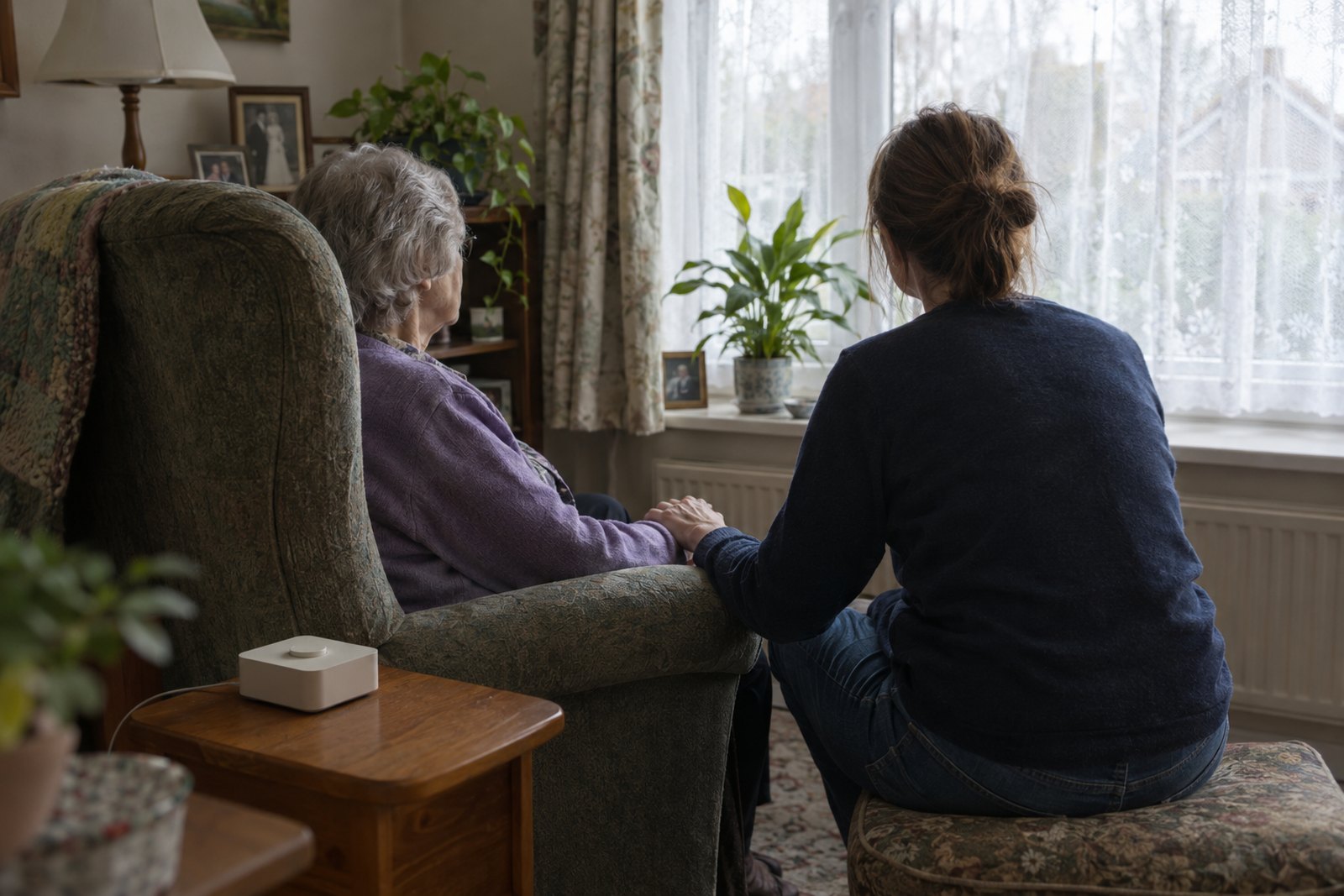
Music for dementia is not a gimmick. For many people living with dementia, music they knew well stays with them long after names, dates and recent events have gone. A familiar song can lift mood, settle agitation, spark a conversation or get someone singing who barely speaks any more. It does not work every time, or for everyone. But it is cheap, safe when used sensibly, and something you can start tonight.
The catch is that it has to be their music, played at the right moment, at the right volume, in a way that suits them. A random radio station or a list of 'songs for older people' often does very little. This guide covers how to build a personal playlist, when to use it during the day, simple ways to play it, the cautions around headphones and overstimulation, and where an occupational therapist can help.
Why music often still gets through
Dementia affects different parts of the brain at different rates. Memory for music, especially music learned and loved when young, often seems to hold on longer than memory for recent events or conversation. That is why families describe someone who no longer recognises their own kitchen singing every word of a hymn from childhood. Alzheimer's Society and Music for Dementia both describe this, and many families see it for themselves.
Music helps in a few ways:
- Mood. A song tied to happy times can bring back the feeling even when the memory itself has gone.
- Connection. Singing along, tapping a foot or holding hands to a tune is a way of being together that does not depend on words or getting the facts right.
- Rhythm and movement. A steady beat can help some people move, walk or get going with a task.
- Structure. The same song at the same time each day can become a cue: this is breakfast, this is bath time, this is winding down.
None of this cures dementia. What it can do is make ordinary days easier and give you more moments where the person you know feels present.
Building a personal playlist
A personal playlist for dementia is the single most useful thing you can make. It takes an evening or two, and it gets better the longer you use it.
Start with their teens and twenties
The music people heard from their early teens to their late twenties tends to stick hardest. Work out the years. Someone born in 1945 was a teenager in the late 1950s and early 1960s. Think about what was in the charts, what was played at dances, what they sang at school, in church, in the forces or on the terraces. Then add the songs that mattered later: the first dance at their wedding, what they played while doing the housework, the musical they saw five times.
Do not forget music from where they grew up. Songs in a first language, folk tunes, hymns, film songs, calypso or Irish ballads may reach someone far better than anything from the British charts.
Ask the family, and ask them
Brothers, sisters, old friends and grandchildren often remember things you never knew. Send a message round: 'What music do you remember Mum loving?' Ask the person too, even if you think they cannot answer. Play a few seconds of something and ask 'Do you like this one?' A yes, a smile or a frown is all you need.
Watch what happens
The person's reactions are the real test. Play each song and notice:
- Do they hum, sing, tap, sway or smile?
- Do they start talking, maybe about something from the past?
- Do they go quiet in a settled way, or in a withdrawn, upset way?
- Do they get restless, cross or tearful?
Keep the songs that bring a good response. Drop the ones that leave them flat or distressed. Write a simple list, because other family members and paid carers will need to know what works.
Make two or three short lists
One long list on shuffle is hard to use well. It works better to have a few short ones of around ten to fifteen songs each:
- Lively - for mornings, getting moving, or lifting a low mood.
- Calm - slower songs for evenings, care tasks and settling.
- Singalong - the ones they know every word of.
Choose versions they would have known. A modern cover of a song they loved can sound wrong, and that can unsettle rather than comfort.
When to use music during the day
Music works best when it has a job to do. Background noise all day long tends to lose its effect, and can wear people out.
Starting and ending the day
A lively song while opening the curtains can help someone get up. The same calm song each night while getting ready for bed can become a signal that it is time to sleep. Routine matters here: same song, same time, same order.
Before and during care tasks
Washing, dressing and toileting are often the hardest parts of the day. Starting a favourite song a few minutes before you begin can lower the tension, and singing together while you help can take the focus off what is being done to them. If showers are a battle, our guide to helping someone with dementia wash and shower covers this in more detail.
Mealtimes
Quiet, familiar music at a low volume can make a meal feel calmer. Keep it soft. Loud or busy music can distract and make it harder to concentrate on eating. If the person is struggling to eat at all, try turning it off and see if that helps.
Late afternoon and evening
Many people with dementia become more restless, anxious or confused as the light fades, often called sundowning. Calm music from their personal list, started before the difficult time usually begins rather than in the middle of it, can help some people settle. See our guide to sundowning and what helps for the wider picture, including light, routine and drinks.
Singing together and singing groups
You do not need to be able to sing. Singing with someone, badly, is still singing with someone. It often brings out words and joy that conversation does not, and it is one of the few activities where neither of you has to get anything right.
Some ideas:
- Sing along to the playlist rather than just listening.
- Start a line and let them finish it.
- Use songs during everyday jobs: folding washing, a slow walk round the garden, waiting for the kettle.
- Look at old photographs while music from that era plays. Our guide to reminiscence at home has more on this.
Singing groups for people with dementia and their carers run in many areas, often through local charities, churches, libraries or community centres. Alzheimer's Society and Music for Dementia can help you find something near you, and a social prescribing link worker at your GP surgery may know of local groups too. Groups have a bonus: they get you both out of the house, among people who understand.
Simple ways to play music at home
The best device is the one the person can still use, or one you can work without fuss. Think about who will press play: them, you, or a paid carer who visits.
- The old familiar machine. If they have always used a radio, record player or CD player, that may still be the easiest. A bright sticker on the play button can help.
- Simple one-button music players. These are designed for people with dementia. Typically they have one large button, or a lid you lift to start the music, and you load the songs on for them. No menus, no screens, no adverts.
- Smart speakers. A voice-controlled speaker can play a named playlist on request, and you can set it up from your own phone, even from a distance. Some people manage the spoken commands well; others find them baffling. Our guide to smart speakers for older people and dementia covers the pros and cons.
- Phones and tablets. Handy for building playlists, but often too fiddly for the person to use alone.
Watch out for free streaming services that play adverts between songs. A loud advert breaking into a calm song can undo all the good. Live radio has a similar problem with news, phone-ins and chatter, which can confuse or worry someone.
If the person has hearing loss, make sure hearing aids are in, working and clean. If you think their hearing has got worse, ask the GP about a hearing check. Music they cannot hear properly is just noise.
Headphones: useful, but use with care
Headphones can help in a busy house or a care home, or when someone wants to listen while others watch television. But they come with real cautions.
- Isolation. Headphones cut someone off from the people around them. Music is often most valuable as something shared.
- Volume. Set it yourself, keep it low, and check it. The person may not be able to tell you it is too loud or turn it down.
- Being startled. With headphones on, they will not hear you coming. Approach from the front where they can see you, and touch gently.
- Not being able to take them off. If someone cannot remove headphones themselves, do not leave them on unsupervised. Being stuck with sound you cannot stop can be distressing.
- Comfort. Check headphones do not press on hearing aids, glasses or sore skin, and take them off for sleep.
Short sessions with someone nearby are the safest approach.
When music backfires
Music is powerful, which means it can upset as well as soothe. A few things to watch for.
Too much, too loud, too busy
Overstimulation is common. Music playing while the television is on and people are talking is a lot of sound for a brain that is struggling to sort it out. Turn other things off first. Keep the volume moderate. Leave quiet gaps between sessions. Signs that it is too much include fidgeting, pulling at clothes, calling out, trying to leave the room or shutting down.
Songs with painful associations
Some songs carry grief or fear. A hymn from a funeral, a song linked to a husband or wife who has died, or music from wartime or a hard period in their life can bring all of that back, sometimes without the person being able to explain why they feel so bad. If a song brings tears, notice whether they seem moved and comforted or genuinely distressed. If it is distress, turn it off calmly, offer reassurance and take it off the list.
When it is not the music
If someone suddenly becomes much more confused, agitated, sleepy or unlike themselves over hours or a few days, do not put it down to a bad day. This can be delirium, often caused by an infection or another illness. Contact their GP or call NHS 111 the same day. Call 999 if they are seriously unwell, for example struggling to breathe or not waking properly.
Where an occupational therapist fits
Occupational therapists help people keep doing the things that matter to them, and for many people with dementia, music is one of those things. An occupational therapist does not provide music therapy, but music often comes into their work.
A private occupational therapist visiting at home can:
- Look at what the person can still do and enjoys, and build meaningful activity, including music, into a daily routine that suits them.
- Help work out what is behind the difficult times of day, and plan around them.
- Suggest ways to use music as a cue during washing, dressing or mealtimes.
- Advise on a device the person can work themselves, and where to put it so it is easy to reach and cables do not become a trip hazard.
- Look at the wider home: lighting, noise, seating and safety, so the setting supports calm rather than fighting it.
Other people lead in some areas. Music therapists, who must be registered with the HCPC, provide structured music therapy and can help with distress, communication and emotional support. Ask the memory service or GP whether there is any local access. Speech and language therapists lead on communication and swallowing problems; singing is lovely, but it does not replace their assessment. The GP and memory service are the place for changes in symptoms, medication questions and new worries about behaviour. And for practical support and carer advice, Alzheimer's Society and other dementia charities are a good first call.
Frequently asked questions
What is the best music for dementia?
The music the person loved, especially from their teens and twenties, plus songs tied to important moments in their life. There is no universal list. A generic playlist can be a starting point, but the real value comes from personal choices tested against how they actually react.
Can music help someone with late-stage dementia?
Often, yes. Even when someone speaks very little, they may respond to familiar music by relaxing, moving a hand, humming or making eye contact. Keep it gentle, short and quiet, and watch closely for signs that it is comforting rather than overwhelming.
Should I leave music on all day?
Usually not. Constant background music tends to lose its effect and can become tiring or irritating. Use it for particular times and tasks, and allow quiet in between.
They cried when a song played. Should I stop?
Not necessarily. Tears can be a sign of being moved by a memory, and some people find that a release. If they seem calm afterwards, that is fine. If they are frightened, agitated or cannot settle, turn it off gently, comfort them and remove that song from the list.
Is music therapy available on the NHS?
It varies by area and is not available everywhere. Ask the memory service, GP or community mental health team whether there is any local provision. Some care homes and charities also run music sessions. Music therapists should be registered with the HCPC, which you can check on its website.
Does music slow down dementia?
Music is not a treatment that stops or slows dementia. Its value is in mood, connection and making daily life easier, which matters a great deal in its own right.
Next steps
If daily routines are getting harder, an occupational therapist can help you build music and other meaningful activity into a day that works for both of you. See our independence for older people page, or current guide prices, and choose your area below.
Talk to an occupational therapist near you
This guide is general information. For advice about your own situation - or someone you look after - a local occupational therapist can visit you at home and see it for themselves.
Choose your area: