

Sundowning and Dementia: Why Late Afternoons and Evenings Get Harder, and What Helps
By Mobile Occupational Therapist • 17 September 2026 • 9 min read
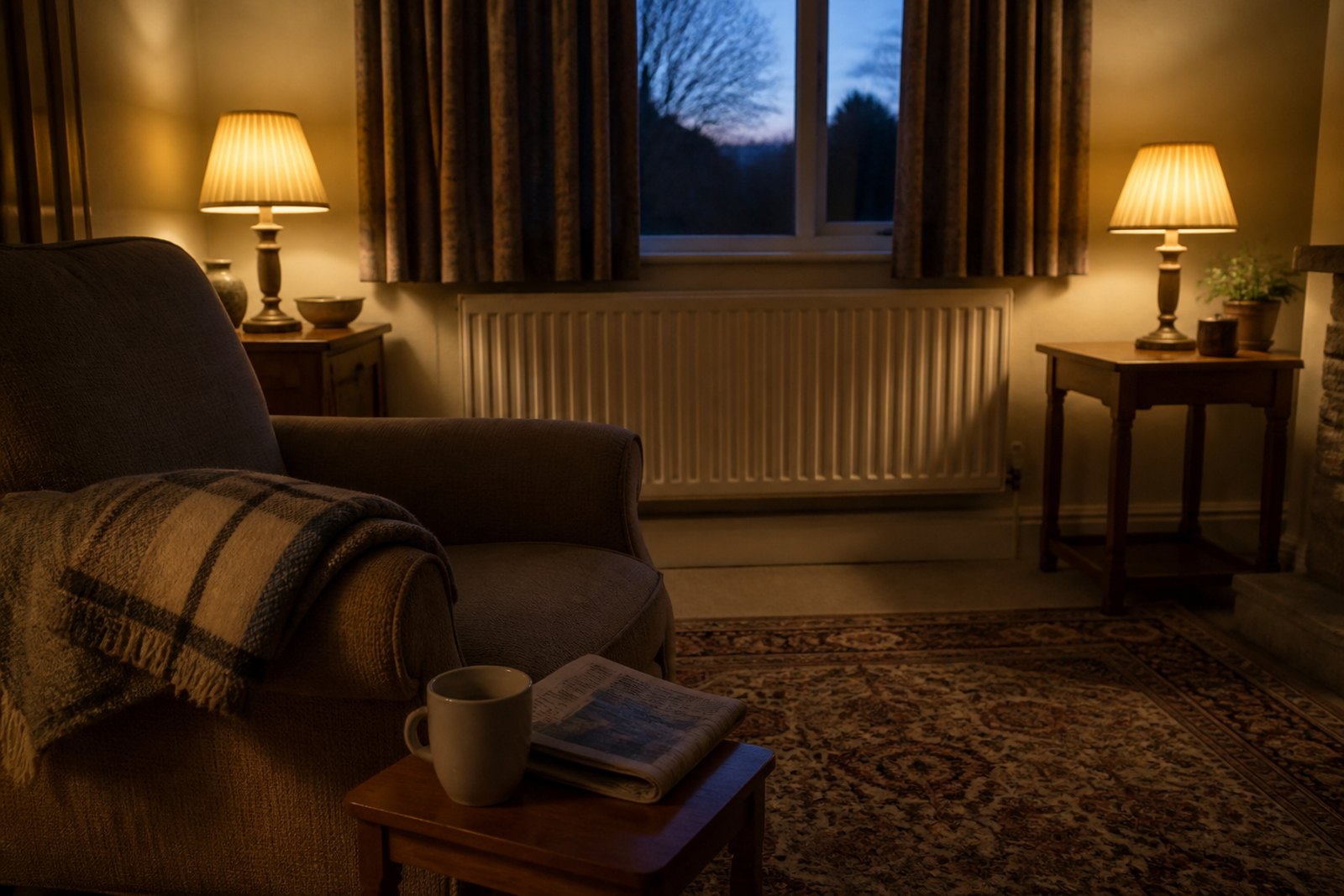
Sundowning is the name given to a pattern most families recognise long before they have a word for it. Someone who has managed the day reasonably well becomes confused, restless, anxious or angry as the afternoon turns into evening. They pace. They ask to go home while sitting in the house they have lived in for forty years. They insist they are late for work, or that the children need collecting. It can begin at four o'clock or at seven, and it is one of the most draining parts of caring for somebody with dementia at home.
It is not deliberate, it is not attention-seeking, and it is not evidence that you are doing this badly. Sundowning is what happens when a tired brain meets the hardest time of day, and although it rarely disappears altogether, much of it responds to changes in the shape of the afternoon, the light and how much is going on. This guide covers what sundowning looks like, why it happens, what helps, what to say when somebody wants to go home, and how to get through it yourself.
What sundowning looks like
- Restlessness and pacing. Walking the hall, checking windows and doors, unable to settle in a chair that was comfortable an hour ago.
- Wanting to go somewhere. Home, work, mother's house, the school gates: usually somewhere from a much earlier part of life, and the urge can be very strong.
- Irritation, suspicion or anger. Accusations about money or missing things, sharp words from somebody who is not usually sharp, resistance to help that was accepted in the morning.
- Distress that seems to come from nowhere. Tearfulness, fear, calling out. Something is wrong and there are no words left to say what.
Why sundowning happens
There is no single cause, which is why no single fix works. Several things stack up at the same hour.
- Tiredness. Following a conversation, finding a word, working out where you are: all of it takes effort that was once free. By late afternoon the reserves are gone.
- Failing light and shadows. As daylight drops, edges blur and shadows appear. A coat on a door becomes a person, a dark rug becomes a hole, and the brain has to guess more.
- A disrupted body clock. Dementia affects the part of the brain that keeps the sleep and wake rhythm steady, and a day indoors with little daylight gives it nothing to set itself by.
- Hunger and thirst. Lunch was a long time ago and tea has not happened yet. Few of us are at our best in that gap, and somebody who can no longer say so shows it another way.
- Too much, or too little. A busy house at teatime, a loud television and three conversations at once is more than anybody could sort out. An empty afternoon in a quiet chair is too little, and restlessness fills it.
- Unmet needs. Needing the toilet, being too hot or too cold, pain from a hip or a tooth, constipation. Distress in the evening is very often a body problem wearing a behaviour costume.
- The household changes gear. Carers hand over, family come in from work, the kitchen gets busy. The person feels the change without being able to place it.
When it is not sundowning
Before redesigning the afternoon, rule out the thing that matters more. If confusion, agitation, sleepiness or restlessness gets suddenly and markedly worse over hours or a day or two, rather than creeping in over months, that is not the dementia progressing. It is very often delirium, and delirium usually has a treatable cause: a urine or chest infection, pain, constipation, dehydration, or a new or changed medicine. It needs a GP the same day, or NHS 111 when the surgery is closed. Say the word sudden on the phone, and say what she was like last week. Families are almost always the first to spot this.
Shaping the afternoon: what actually helps
Occupational therapy works on the day rather than the moment: most of what helps is done hours before the difficult hour arrives.
- Daylight and movement in the morning. Real daylight, outdoors if possible, is the strongest signal a body clock gets. A short walk, or twenty minutes by an open door, does more for the evening than anything you can do at five o'clock.
- A predictable shape to the day. The same meals at the same times, in the same order. Predictability removes the work of guessing what happens next, and guessing is expensive.
- Lights on before dusk, curtains closed early. Do not wait for the room to dim. Put the lamps on while it is still light and draw the curtains before the window turns into a black mirror. The cheapest thing here, and often the most effective.
- A job with a purpose in the difficult hour. Folding the washing, laying the table, pairing socks, drying up, winding wool. It works because it is real, familiar and has no right answer to get wrong.
- Less noise, not more entertainment. Turn the television off rather than up. Background noise that a younger brain filters out is, for somebody with dementia, a room full of voices.
- A snack and a drink at four. A biscuit, a sandwich, a cup of tea. It works often enough to be worth doing every day.
- Check the body first. Offer the toilet, look for signs of pain, check the room is not too warm. Do this before anything clever.
- Rest, but not a long afternoon sleep. A short doze is fine. Two hours in the chair after lunch buys a difficult evening and a worse night; our guide to night-time safety for older adults covers what happens then.
What to say when somebody wants to go home
Do not argue, and do not explain. "You are home, Mum, you have lived here since 1974" is perfectly true, and it lands as a contradiction from somebody who ought to be on her side. The feeling underneath "I need to go home" is rarely about a building: it is unease, or a wish to be somewhere safe, or a job left undone forty years ago that still feels urgent.
Go with the feeling instead. Ask about the home she means: what the kitchen was like, who else was there. Agree that you will go, after a cup of tea, and let the tea and the talking do the work. A change of room often breaks the loop when words cannot, and a walk to the end of the road can too. This is not deceiving somebody; it is answering the part of the message that is true.
Getting through the hardest hour yourself
This deserves saying plainly. Late afternoon and evening is the shift where family carers break: you are most tired, least supported, and help is hardest to find. Anger you did not know you had, and guilt straight afterwards, is an ordinary response and not a character flaw.
Practical help exists and is under-used. A paid carer or sitting service for two hours at the worst time of day changes a week more than almost anything else, and night sitting is available in many areas through home care agencies, hospices and local charities. You are also entitled to a carer's assessment from adult social care in your own right, whatever the person you care for receives, and for longer breaks our guide to respite care and short breaks sets out what exists and how it is paid for.
What an occupational therapist adds
A home visit does something no list can: it looks at this person's day in this house and finds where the pressure builds. That might be a bathroom that becomes unusable at dusk, an afternoon with nothing in it, or a care call arriving at the worst possible time. Our page on occupational therapy for dementia sets out the wider picture, and an OT will say plainly when the answer is medical rather than practical.
Frequently asked questions
How do you calm someone with dementia at night?
Start with the body: the toilet, pain, hunger, temperature. Then reduce what the room is asking of them, with lamps on, the television off and one calm voice rather than three. Do not argue with what they believe; agree with the feeling and offer something ordinary to do. Keep your voice slow and low, and be ready to abandon the task you were trying to finish. Washing can wait until morning.
Why does someone with dementia get angry at night?
Usually because something is wrong and there is no longer a way to say so: exhaustion, pain, needing the toilet, fear of a room that makes no sense in the dark, or being asked to do something they do not understand. Anger in the evening is nearly always communication rather than character: work through the physical causes first, then the environment, then what was being asked.
How long does sundowning last?
The difficult spell usually runs from mid or late afternoon into the evening and settles once the person is comfortable or asleep. As a phase it is often worst in the middle stages of dementia and eases later on, although that varies. A pattern steady for months can change when something else does: a new medicine, an infection, or the clocks going back.
Does sundowning mean the dementia is getting worse?
Not on its own. Sundowning comes and goes, heavily influenced by tiredness, light, routine and health. A sudden and marked change is different, and should be treated as possible delirium and discussed with the GP the same day. If it has worsened steadily over months, ask the GP or memory service for a review, including the medicines list.
Next steps
If late afternoons are the part of the day that is not working, the answer usually lies earlier in the day, and is far easier to see from the outside. An occupational therapist can look at how the day is built and suggest changes to routine, light and activity you can keep using. Find your local occupational therapist via our areas we cover page, or see our prices page for current guide pricing.
Talk to an occupational therapist near you
This guide is general information. For advice about your own situation - or someone you look after - a local occupational therapist can visit you at home and see it for themselves.
Choose your area: