

Messy Play Ideas and Sensory Bins: Helping a Reluctant Child
By Mobile Occupational Therapist • 31 October 2026 • 14 min read
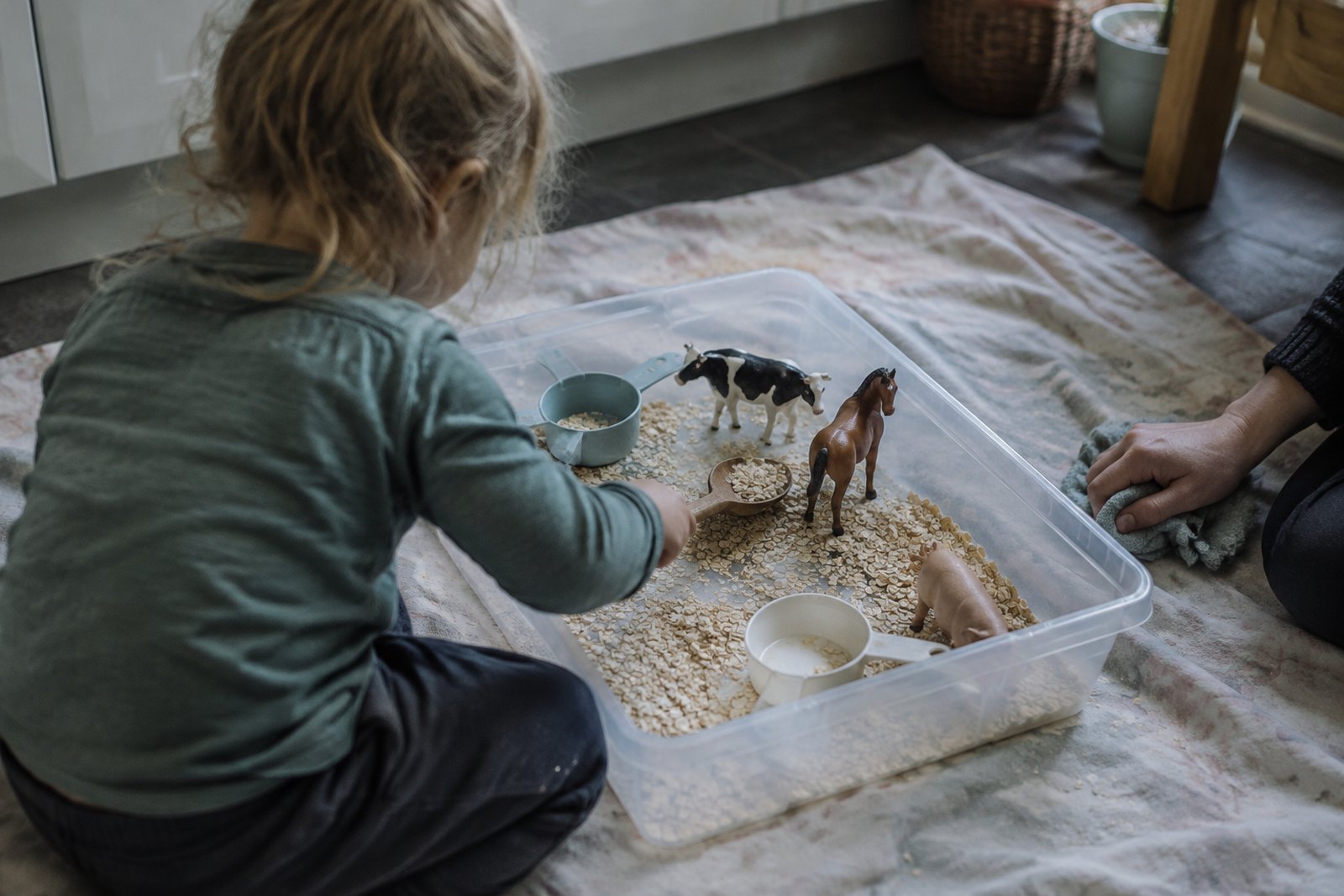
The best messy play ideas use things already in your kitchen: cooked and cooled pasta, porridge oats, water, foam, homemade playdough and rice, tipped into a tray or washing-up bowl with a few spoons and cups. A sensory bin is the tidier version of the same idea. It is a shallow plastic box filled with one base material, some scooping tools and a few things to find. None of it needs to cost more than a few pounds.
If your child hates mess, you are not doing it wrong and neither are they. Start with dry materials, give them tools so their hands do not have to touch anything, keep a cloth within reach, and never push their hands in. Plenty of children who recoil from wet, sticky textures at three are happily elbow-deep in mud a year later, because someone let them get there at their own speed.
Why messy play helps
It is easy to see messy play as something nice but optional, a bit like glitter. It does more than it looks.
- Getting used to touch. Hands are packed with nerve endings. Feeling cold, warm, gritty, slimy and smooth in a relaxed setting helps the brain learn that unfamiliar textures are not a threat. That matters for hair washing, new clothes, sand at the beach and trying new foods.
- Fine motor skills. Pinching a piece of pasta, squeezing dough, pouring from a jug and using tongs all build the hand strength and control that later go into holding a pencil, doing up buttons and using cutlery. Our guide to fine motor skills activities by age has more ideas along these lines.
- Both hands working together. Holding the cup with one hand while scooping with the other is quietly hard work for a toddler.
- Language. Squishy, sticky, bumpy, cold, full, empty, more, under, inside. Messy play is full of describing words and position words, and children pick them up best when they are feeling the thing at the same time.
- Calm and concentration. Many children settle when their hands are busy. Some use messy play to wind down after school.
Messy play ideas by age
Ages here are rough guides. What matters more is whether your child still puts things in their mouth. If they do, everything in the tray needs to be safe to eat and too big to choke on.
Babies (from when they can sit with support)
- Cooked spaghetti, cooled and tossed in a little oil so it does not stick. A few drops of food colouring makes it more interesting.
- Soaked oats, mixed with water or milk into a cold porridge texture. Dry oats are not ideal at this age as small flakes can be breathed in.
- Yoghurt "paint" on the highchair tray, coloured with a drop of food colouring.
- Mashed banana or avocado to squish, which doubles as lunch.
- A shallow tray of water with a sponge and a plastic cup, with you right beside them.
Toddlers (around 1 to 3)
- Cornflour gloop. Mix cornflour with water until it is runny when you tip it and firm when you squeeze it. Children find this endlessly odd.
- Cooked pasta shapes to pinch, sort into cups and thread onto a thick straw.
- Homemade playdough to squash, roll and poke with blunt tools (recipe below).
- Water play with jugs, funnels, sieves and a washing-up bowl, in the garden or bath.
- Taste-safe foam. Whisk the liquid from a tin of chickpeas with an electric whisk until it froths up like shaving foam. It will not hurt if it goes in a mouth, though it is not for a child with a chickpea allergy.
- Jelly set in a tub with plastic animals inside for rescuing.
Preschool (around 3 to 5)
- Dry rice or lentils with scoops, funnels and small cars, once they have stopped mouthing.
- Cloud dough. Mix plain flour with a little vegetable oil until it holds a shape when pressed. Not for eating, as raw flour can carry bacteria.
- Shaving foam squirted on a tray or a wipeable table, for drawing shapes and letters with a finger. Keep it away from eyes and stop if skin goes red.
- Ice excavation. Freeze small toys in a large tub of water and give them warm water, salt and a spoon to free them. Use spoons rather than bare hands on salted ice, which gets very cold, and keep salt away from eyes. Use a big block rather than small cubes.
- Mud kitchen in the garden with old pans, a wooden spoon and water.
- Painting with hands, feet, sponges or toy car wheels on a long roll of paper.
School age
Older children still like mess, but they want a point to it. Try making slime-like gloop to stretch, baking bread and kneading the dough, papier mache, potting up seeds, building a volcano with bicarbonate of soda and vinegar, or a themed sensory bin they design themselves. Squeezing dough or gloop after school can also be a useful way to come down from a long day.
How to make a sensory bin
- Pick a container. A shallow, wide plastic storage box with a lid is ideal. Low sides let your child reach in; the lid means you can keep the contents for next time. A washing-up bowl or deep baking tray works too.
- Choose one base. Dry rice, dry pasta, porridge oats, lentils, shredded paper, torn tissue paper, water, cooked spaghetti, or soil from the garden. One base is easier to tidy than a mix.
- Add tools. Spoons, scoops, measuring cups, tongs, a small sieve, a funnel, empty yoghurt pots, toy diggers.
- Add a few things to find. Plastic animals, large pasta shells, wooden blocks, pine cones, cars. For young children, nothing small enough to choke on.
- Set the space. Floor or table, with an old sheet or shower curtain underneath and a damp cloth nearby.
- Keep it short and change it often. Swapping the tools or hidden objects every few days keeps an old bin new.
To colour dry rice or pasta, shake it in a sealed bag with a few drops of food colouring and a splash of vinegar, then spread it on a tray to dry fully before use.
For playdough, a common cooked recipe is one cup of plain flour, half a cup of salt, one cup of water, a tablespoon of vegetable oil and two teaspoons of cream of tartar, stirred over a low heat until it forms a ball. Let it cool before handing it over. It is very salty, so it is not for eating. Supervise young children so they do not eat lumps of it, as large amounts of salt are dangerous for small children, and keep it away from dogs for the same reason.
Helping a child who hates mess
Some children simply prefer clean hands. Others find certain textures genuinely unpleasant, in the way some adults cannot bear the sound of a fork on a plate. Either way, forcing it tends to make things worse. The aim is to make touch feel safe, not to win.
- Start dry. Dry pasta, rice, oats or shredded paper are much easier for most children than anything wet or sticky.
- Tools first. Let them scoop, pour and dig with spoons and diggers so their hands stay clean. Touching comes later, if they choose it.
- Try a squish bag. Put gloop, paint or hair gel in a sealed freezer bag, tape it shut and lay it flat on the table. They can squash and draw on it with no mess at all.
- Let them watch. Play with it yourself and chat about it. Do not ask them to join in. Watching is a step.
- Keep wipes or a cloth right beside them. Knowing they can clean their hands the moment they want to makes many children braver.
- One finger before a whole hand. Then the back of the hand, which is often less sensitive than the palm.
- Firm touch tends to be easier than light touch. Pressing hands into playdough is often more bearable than feathery foam.
- Warm it up. Cold, wet textures are usually the hardest. Warm water or slightly warm playdough can help.
- Get moving first. Pushing, pulling, carrying or bouncing before messy play helps some children feel more settled in their bodies.
- Stop while it is going well. Two good minutes beats ten miserable ones.
Notice what exactly they dislike. Is it wet, sticky, gritty, cold or the smell? That tells you where to start and what to leave until later. If the dislike of touch runs through lots of daily life, our guide to tactile defensiveness explains what may be going on.
At the other end, some children cannot get enough mess and seek it out constantly. Messy play gives them a planned outlet, and it can fit into a wider sensory diet of activities through the day.
Keeping messy play safe
Choking and small items
Children under three, and any older child who still mouths things, should not play with dried beans, dried pasta small enough to swallow, beads, buttons, marbles or small toy parts. Dry rice and lentils can also end up in noses and ears. A common rule of thumb is that anything that fits through a toilet roll tube is too small for a young child. Stay with them throughout. The NHS has clear guidance on what to do if a child is choking, and it is worth reading before you need it.
Raw kidney beans
Raw dried red kidney beans contain a natural toxin that can make people very ill if eaten raw or undercooked. Leave them out of sensory bins entirely, whatever the age. Other dried beans are a choking risk, so keep them for older children who no longer mouth.
Water beads
Water beads, the small gel balls that swell in water, have been the subject of UK safety warnings because they can expand inside the body and cause serious injury or death if swallowed, or harm if pushed into ears or noses. Do not use them, especially in a home with babies or young children.
Allergies
Check every ingredient against your child's allergies and those of any visiting children. Pasta, flour, playdough and cloud dough contain wheat and gluten. Yoghurt and milk contain dairy. Oats may be an issue for some children with coeliac disease. Chickpea foam is no good for a chickpea allergy. Some children react to shaving foam, food colouring or soap on their skin. If your child has a known food allergy, ask your GP or allergy team which play materials are safe.
Water
Young children can drown in a few centimetres of water, quickly and silently. Stay within arm's reach during any water play, including a washing-up bowl, and empty containers straight after.
Eyes, skin and hygiene
Keep shaving foam and anything soapy away from faces. Wash hands before and after. Throw out cooked pasta, jelly and soaked oats at the end of the session, and check stored playdough and dry bases for damp or mould before reusing.
Tidying up without losing the will
- Lay something down first. An old shower curtain, a cheap plastic tablecloth or a sheet you can shake out in the garden.
- Go outside or use the bath. Foam in an empty bath right before bath time means the clean-up is already happening. Scrape any gloop into the bin before running the water, and watch for slipping, as both make the bath slippery.
- Use less. A shallow layer is just as much fun as a full box and spills far less.
- Dress for it. Old clothes, sleeves rolled up, or just a nappy and vest in the summer.
- Bin, do not rinse. Cornflour gloop, playdough, oats and rice can block drains. Scrape them into the bin or let gloop dry, then sweep or hoover it up.
- Sieve and save dry bases. Tip rice or pasta through a colander back into the lidded box.
- Make tidying part of the game. Scooping everything back in, washing the toys in soapy water and wiping the tray are all more messy play.
- Give a warning. "Five more scoops, then we wash hands" stops the end feeling sudden.
Where an occupational therapist fits
Most children who dislike mess do not need a therapist. They need time, choice and an adult who does not make a fuss. It is worth asking for help if touch or texture problems are getting in the way of everyday life: extreme distress at hair washing, teeth brushing or nail cutting; only tolerating a few items of clothing; avoiding playgrounds, sand or grass; very limited play; or clear difficulty with hand skills compared with other children their age.
An occupational therapist who works with children can look at how your child takes in and responds to sensory information, watch how they play and manage daily tasks, and build a practical plan with you for home and nursery or school. That might include graded messy play, changes to routines, and ways to make care tasks easier. A private occupational therapist visiting at home sees your child in their own space, which is often where these difficulties show most. Our sensory needs page explains more.
Other professionals lead in some areas. If your child gags, chokes or struggles with chewing and swallowing food, see your GP and ask about a speech and language therapist, who also helps with speech and language delay. If your child eats a very small range of foods, is losing weight or seems unwell, see your GP. For general worries about development in under-fives, your health visitor or GP is the place to start, and at school the SENCO can help.
Frequently asked questions
At what age can a baby start messy play?
Once your baby can sit with support, usually around the time they start solid food, they can explore taste-safe messy play such as cooked spaghetti, yoghurt or mashed banana in a highchair. Assume everything will go in their mouth and choose accordingly.
Is dry rice safe for toddlers?
It is not ideal for children under three or for any child who still mouths things, as grains can be inhaled or pushed into noses and ears. Soaked oats or cooked pasta are safer alternatives at that stage. Older children can use dry rice with supervision.
What can I use instead of shaving foam?
Whisked chickpea water makes a taste-safe foam. Whipped cream, yoghurt or a thin cornflour and water mix also work. For a child who dislikes the feel altogether, put any of these in a sealed bag first.
How long should messy play last?
As long as your child is enjoying it. For a reluctant child that might be a minute or two. For a keen one it can be most of an afternoon. Ending on a good note matters more than the clock.
My child gags when touching certain textures. Is that normal?
Some children do gag at smells or textures, especially wet or slimy ones, and it often eases with gentle, unforced exposure. If it is frequent, getting worse, or happening with food and affecting eating, talk to your GP or health visitor.
Can messy play help a fussy eater?
It can help some children feel more comfortable around food, because touching and smelling a food comes before tasting it. Keep it pressure-free and never use play to sneak food into a mouth. Very restricted eating needs a GP appointment, not just more play.
Next steps
If touch, texture or hand skills are making daily life hard for your child, a home visit can help you work out what is going on and what to try. See our children's occupational therapy page, or current guide prices, and choose your area below.

Talk to an occupational therapist near you
This guide is general information. For advice about your own situation - or someone you look after - a local occupational therapist can visit you at home and see it for themselves.
Choose your area: