

Rheumatoid Arthritis Flare: A Practical Plan for Home
By Mobile Occupational Therapist • 11 October 2026 • 12 min read
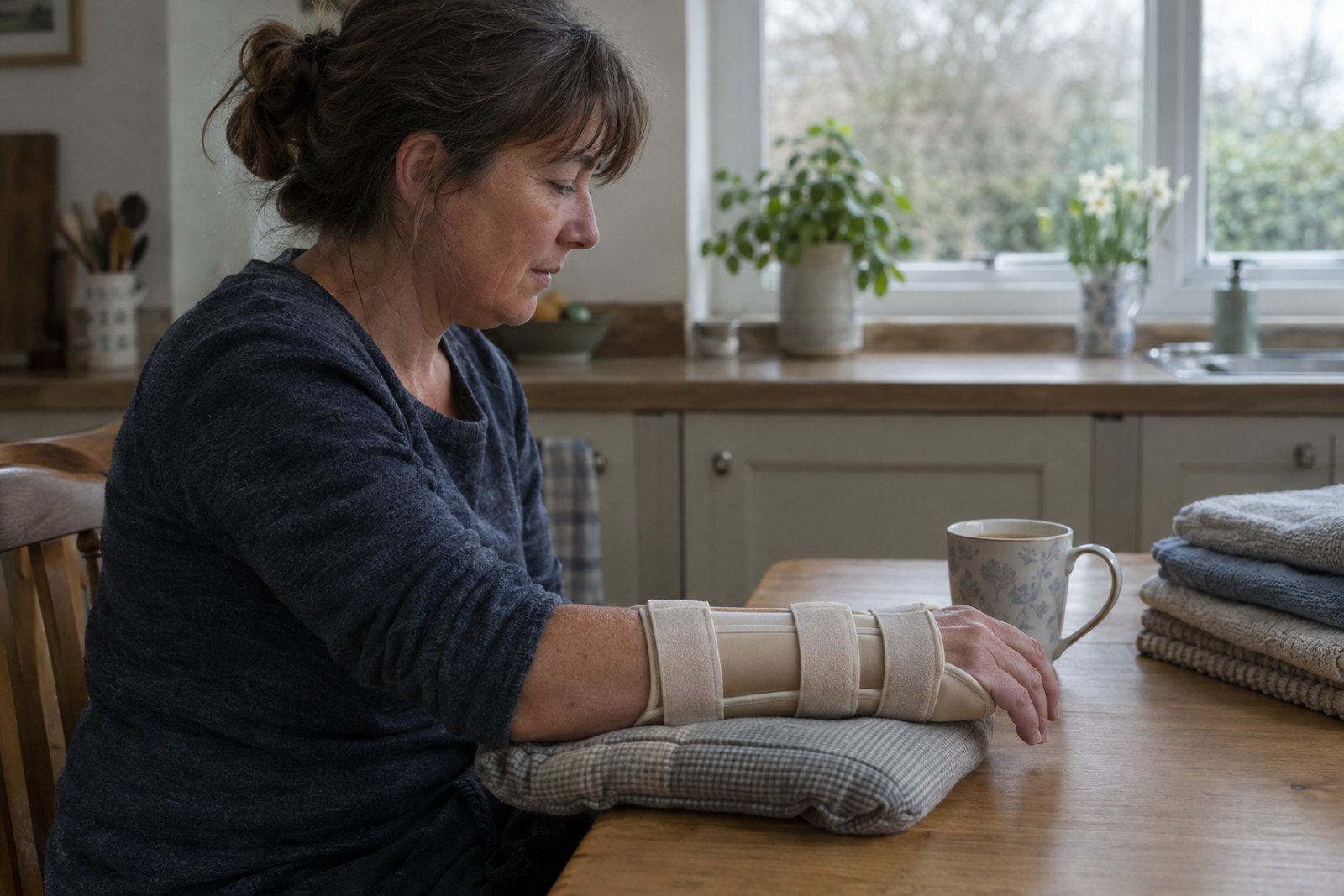
A rheumatoid arthritis flare is a spell when your joints become more painful, swollen and stiff than usual, often with heavy tiredness and sometimes a general flu-ish feeling. If you are in one now, contact your rheumatology advice line if it is bad or has lasted more than a few days, because your team may want to see you or review your treatment. In the meantime:
- Rest the worst joints, but keep them gently moving.
- Use heat or cold carefully.
- Wear any resting splints you have been given.
- Cut your day down to what really matters.
Two situations are not just a flare. A single joint that suddenly becomes hot, red and very swollen, especially if you feel unwell, can be an infection in the joint and needs same-day medical help. A fever while you take medicines that dampen your immune system also needs urgent advice. Both are covered below. The rest of this page is the practical part: how to get through the next week or two at home without making things harder for yourself.
Is this a flare?
Flares look different for different people, and even from one flare to the next. Common signs are:
- Joints more swollen, warm or tender than your usual.
- Morning stiffness that lasts longer than normal.
- Tiredness that sleep does not fix.
- Feeling generally unwell.
- Ordinary tasks you managed last week, like opening a carton or doing up buttons, suddenly beyond you.
Sometimes there is an obvious trigger, such as an infection, a stressful few weeks, a missed dose or a weekend of overdoing it. Often there is no clear reason at all. It is not a sign you have done something wrong.
One useful habit is a simple flare note on your phone or on paper. Write down the date, which joints are affected, how long morning stiffness lasts and what you cannot do. Take photos of swollen joints. Swelling has a habit of settling the day before an appointment, and photos save you trying to describe it.
Who to contact
Most hospital rheumatology departments run an advice line, usually staffed by specialist nurses. The number is often on your clinic letters or on the hospital website. If you do not know yours, find it now, while you are well enough to look. You may need to leave a message and wait for a call back, so ring earlier in the day if you can.
When they call, have ready:
- Which joints are affected and for how long.
- Any other symptoms, such as fever or feeling unwell.
- Your current medicines, and whether any doses have been missed or delayed.
Do not stop or change your arthritis medicines unless your team tells you to. Questions about pain relief can go to the advice line or a community pharmacist. If you cannot reach your team, or the problem is not about your arthritis, your GP is the next stop. Out of hours, use NHS 111.
When it needs urgent help
- One joint suddenly hot, red, very swollen and much more painful than the others, especially with a temperature or feeling unwell. This can be a joint infection, which can damage a joint quickly. Get seen the same day: contact your GP or NHS 111, or go to A&E if you cannot get help in time.
- A fever, shivering or feeling very unwell while on medicines that suppress the immune system, such as many disease-modifying drugs, biologics or steroids. Infections can be more serious and the usual signs can be muted. Ring your advice line urgently, or NHS 111 out of hours.
- Signs of serious illness, such as confusion or slurred speech, severe breathlessness, skin that is mottled, blue or very pale, or not passing urine all day. Call 999.
- Chest pain, call 999. A painful red eye or change in vision, get same-day advice through your GP, NHS 111 or an eye casualty service.
Rest and gentle movement: getting the balance
Inflamed joints need rest, but joints that never move get stiffer. The aim is short rests often, with gentle movement in between.
- Several times a day, move each affected joint slowly through whatever range is comfortable. A few repetitions is enough. Do not push into sharp pain.
- A flare is not the time to start new exercise or chase strength. If you have a physiotherapy programme, ask your physio for a flare version.
- Rest joints in comfortable, supported positions. Hands are best resting flat or supported on a cushion rather than curled into a fist.
- Avoid propping your knees on a pillow for long spells. It feels good but can let the knees stiffen in a bent position.
Mornings are usually worst. Give yourself extra time, plan nothing early, and if it is safe for you, a warm shower or moving your fingers in a bowl of warm water can help loosen things up before you try anything fiddly.
Heat and cold, without damaging your skin
Many people find warmth eases stiffness and cold calms a hot, swollen joint. Some prefer one or the other. Use whichever helps, but protect your skin:
- Always wrap a heat pack, hot water bottle or ice pack in a towel or cover. Never put it straight on skin.
- Use it for short sessions and check your skin afterwards. Stop if it is blotchy, very red or white.
- Do not use heat or cold on numb areas or broken skin, as you may not feel damage happening.
- Never fall asleep on a heat pad or with a hot water bottle against you, and do not fill a hot water bottle with boiling water.
- If you have circulation problems or reduced feeling in your hands or feet, ask your team before using either.
Splints for a flare
Resting splints hold the wrist and fingers in a supported, comfortable position. They are often worn at night during flares to ease pain and let inflamed joints settle. Working splints support the wrist while you use your hands. Both are usually supplied or made by a hand therapist, who may be an occupational therapist or physiotherapist in the rheumatology team.
Wear them as you were advised, not more. Wearing a wrist support all day for weeks can leave muscles weaker. Check for red marks after taking a splint off. If swelling makes it tight, or it rubs, take it off and ask your team. If you have never been offered splints and your hands flare, ask the advice line whether a hand therapy referral would help.
Protect your joints and spend your energy wisely
Joint protection is about doing the same jobs with less strain on small, inflamed joints. The basics:
- Use bigger, stronger joints: carry a bag over your forearm or shoulder, push doors with your palm or hip.
- Avoid tight, sustained gripping and twisting.
- Use two hands to lift, and slide things along a worktop instead of lifting.
- Choose thicker, lighter handles and change position often.
There is more detail in our guide to arthritis and your hands.
Flare fatigue is real and does not respond to pushing through. The pacing approach helps: plan the day, prioritise what must happen, pace tasks in short chunks with rests, and sit down for anything you can. Our practical guide to fatigue management and pacing was written with other conditions in mind, but many of the same planning and pacing ideas can help with RA fatigue too. In a flare, keep it simple: write down the two or three things that genuinely must happen today. Everything else can wait, be shortened, or be done by someone else.
Easier meals and household shortcuts
Food
- When you are well, batch cook and freeze single portions labelled as flare meals. Future you will be grateful.
- Keep easy standbys in: frozen vegetables, ready-chopped veg, tins with ring pulls, microwave rice, soup.
- Use lightweight pans and plastic or light cups. Fill the kettle with a small jug rather than carrying it to the tap.
- A kettle tipper, jar opener or electric can opener can make a surprising difference. See our guide to kettle tippers and jar openers.
- Sit to prepare food. A higher stool at the worktop saves standing.
- Book an online food delivery as soon as a flare starts, rather than when the cupboards are empty.
Around the house
- Decide what can simply not be done this week. Hoovering and ironing usually qualify.
- Wash smaller, lighter loads and move baskets on a trolley rather than carrying them.
- Ask for help with specific tasks. "Could you bring the bins in on Thursday" gets a yes far more often than a vague request.
Getting washed and dressed
- Choose loose clothes with elastic waists, front openings and slip-on shoes. A button hook or zip puller helps fiddly fastenings.
- Pump dispensers instead of bottles you have to squeeze, and an electric toothbrush with a chunky handle.
- A shower seat lets you wash sitting down, and a long-handled sponge reaches feet and back.
Sleep during a flare
Pain wakes you, poor sleep makes pain feel worse, and the cycle is exhausting. Things that help:
- Support sore joints with pillows, and wear night splints if you have them.
- A lighter duvet is easier to move under and to turn over with.
- An earlier night is better than a long afternoon nap. Short daytime rests are fine.
- Keep what you need at night within reach so you are not getting up stiff in the dark.
If pain is keeping you awake night after night, tell your rheumatology team. That is useful information about how active your arthritis is, not just a sleep problem.
Work during a flare
Rheumatoid arthritis will often meet the definition of disability under the Equality Act 2010, which means employers must consider reasonable adjustments. These might include a later start to allow for morning stiffness, working from home during flares, flexible hours, extra breaks or equipment such as a different keyboard or mouse. Our guide to reasonable adjustments at work explains how to ask. It helps to agree a flare plan with your manager while you are well, so a bad week is a phone call rather than a negotiation.
If you need time off, a fit note can come from your GP or hospital team, and it can suggest changes to your work rather than saying you cannot work at all. The Access to Work scheme may help pay for support or equipment. Check current rules on GOV.UK and Acas.
The emotional side
Flares are frustrating, unpredictable and often invisible to other people. Cancelling plans again, needing help with a jar, feeling guilty about work: it wears you down. Low mood and anxiety are common with long-term conditions, and they are worth taking as seriously as swollen joints.
Talk to someone. Both the National Rheumatoid Arthritis Society and Versus Arthritis run helplines staffed by people who understand RA. If low mood lasts more than a couple of weeks or you have lost interest in things, see your GP. If you are struggling to cope, Samaritans are available on 116 123, and if you are in immediate danger, call 999.
Make your flare plan while you are well
The best time to plan for a flare is when you are not in one. Keep a single sheet or phone note with:
- Your advice line number and hospital number.
- A current medicines list.
- Where your splints are and how to wear them.
- Who can help with shopping, school runs, pets or lifts.
- What you have agreed with work.
- A few freezer meals and easy standbys stocked up.
Where an occupational therapist fits
Your rheumatology team leads on diagnosing a flare and managing your medicines. An occupational therapist cannot change treatment or tell you whether you are flaring. Physiotherapists lead on exercise programmes, podiatrists help with painful feet, and your GP covers wider health.
Where occupational therapy helps is the day-to-day living with RA. NHS rheumatology occupational therapists and hand therapists teach joint protection, provide splints and help with fatigue. A private occupational therapist visiting at home can look at how you actually manage in your kitchen, bathroom, bedroom and workspace, suggest equipment and daily living aids that suit your hands, build a realistic energy plan for bad weeks, and write reports to support work adjustments or benefit claims. That can be useful if NHS waiting lists are long or you want help in your own home rather than in clinic.
Frequently asked questions
How long does a rheumatoid arthritis flare last?
It varies from a few days to several weeks. If a flare lasts more than a few days, keeps getting worse or stops you managing, ring your rheumatology advice line rather than waiting for your next appointment.
Should I rest completely during a flare?
No. Rest inflamed joints more than usual, but move them gently through a comfortable range several times a day. Complete stillness tends to make stiffness worse.
Is heat or ice better for an RA flare?
Many people find warmth helps stiffness and cold helps a hot, swollen joint, but it is personal. Whichever you use, wrap it, keep sessions short, check your skin and never use it on numb areas.
Is one swollen joint just a flare?
Not always. A single joint that becomes suddenly hot, red, very swollen and much more painful than the others, especially with fever, can be an infection. Get medical help the same day.
Can I keep working during a flare?
Often, with adjustments such as a later start, working from home or extra breaks. It depends on your job and how bad the flare is. Agree a plan with your employer in advance and get a fit note if you need time off.
Can an occupational therapist help if I already see rheumatology?
Yes. Occupational therapy works alongside your rheumatology team, focusing on daily tasks, equipment, joint protection and energy, not on medicines or diagnosis.
Next steps
If flares are making everyday life at home or work harder, see our equipment and aids or home assessment pages, or current guide prices, and choose your area below.

Talk to an occupational therapist near you
This guide is general information. For advice about your own situation - or someone you look after - a local occupational therapist can visit you at home and see it for themselves.
Choose your area: