

Arthritis in Hands: Protecting Your Joints in Everyday Life
By Mobile Occupational Therapist • 17 September 2026 • 8 min read
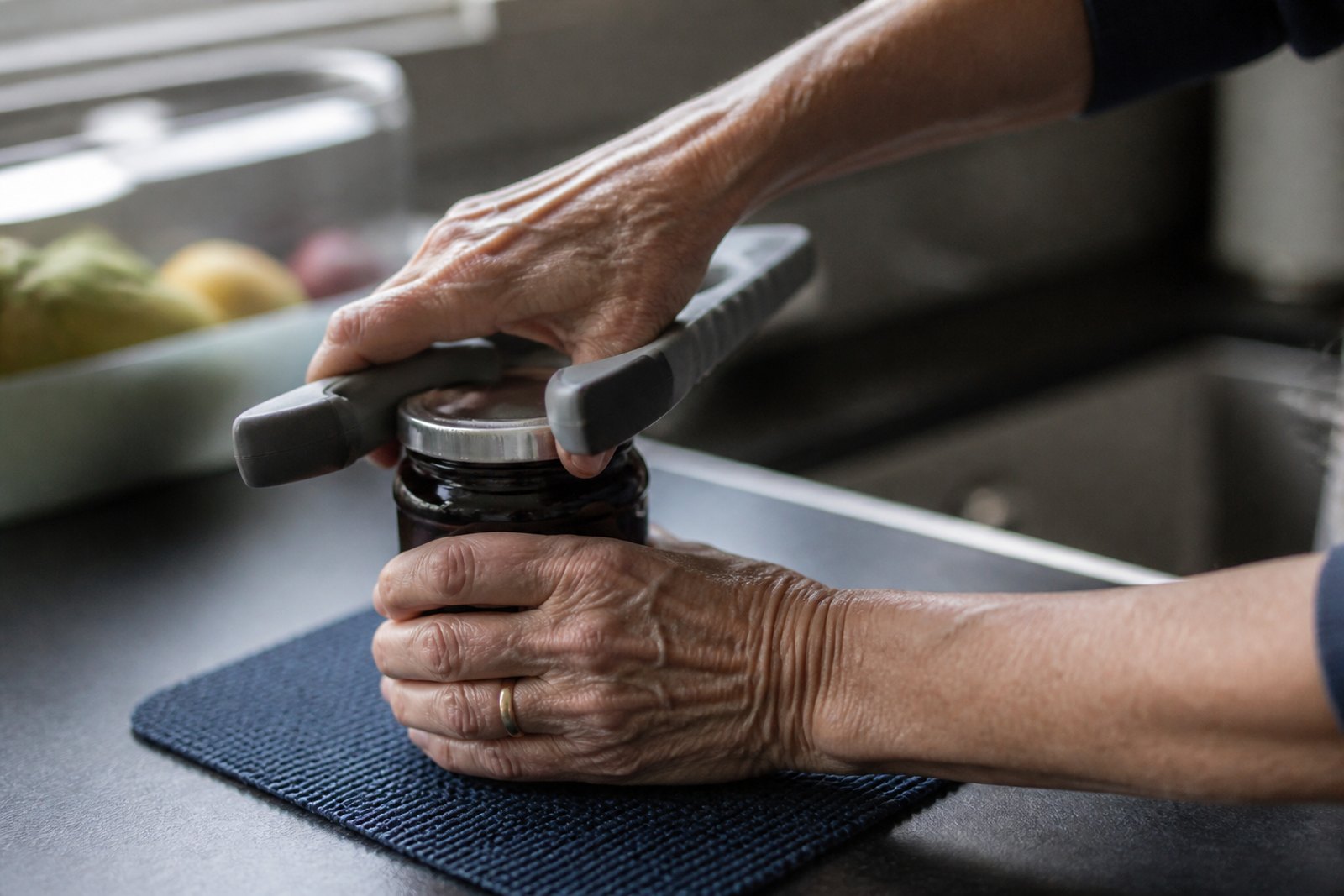
Hands do everything, which is why arthritis in the hands taxes everything: the jar, the tap, the key in the stiff lock, the kettle, the buttons, the bra strap, the car door. Each one is small; together they are the texture of a day. The good news is that this is one of the best-mapped territories in occupational therapy. Joint protection - a set of principles for using arthritic hands in ways that hurt less and do less cumulative harm - has been taught and refined for decades, and it works best exactly where the problem lives: in the ordinary tasks, repeated daily.
A note on scope before the practical part. These techniques help with both osteoarthritis and inflammatory types such as rheumatoid arthritis, but they sit alongside medical care, not instead of it. Painful, swollen or newly stiff hands deserve a diagnosis - and a flare of a known inflammatory arthritis deserves a conversation with your rheumatology team - because the right medical treatment changes what your hands can do more than any gadget. For the wider picture, see our page on occupational therapy for arthritis.
The principles behind every technique
Joint protection sounds like doing less. It is actually about doing the same things differently, so that the doing costs less. Five principles do most of the work:
- Spread the load across bigger joints. Small finger joints are the most vulnerable and the most tempting to use. Carry bags over the forearm or shoulder rather than hooked on fingers; push up from a chair with flat palms, not fisted knuckles; hug the saucepan to carry it with two hands rather than pinch-gripping the handle.
- Avoid tight, sustained grips. A prolonged white-knuckle grip is the most expensive thing hands do. Choose fat handles over thin ones, hold things loosely where possible, and put the pen or tool down between bursts rather than gripping through.
- Respect pain that lingers. Discomfort during a task is information; pain that is still there an hour or two later is a verdict - that task, done that way, was too much. Change the technique, the tool or the timing rather than repeating the experiment daily.
- Take breaks before you need them. Little and often beats marathon sessions, for ironing, knitting, typing and gardening alike. Alternate heavy-handed and light-handed tasks through the day.
- Use each joint in its strongest, straightest position. Twisting and sideways forces are the ones arthritic fingers pay most for - which is why so many of the techniques below convert a twist into a press, a lever or a whole-hand movement.
The daily flashpoints, solved
The same handful of tasks come up in nearly every hand assessment, and each has an answer that has been refined by thousands of hands before yours.
- Jars and bottles: the classic. A cone-shaped or Y-shaped jar opener turns a pinch-and-twist into a whole-arm lever; a piece of non-slip matting doubles the grip for free; running the lid under hot water loosens it before you start. Once open, decant into containers with easy lids rather than refighting the same jar all week.
- Taps: tap turners lever crosshead taps open without wringing your fingers, and if you are ever changing a bathroom or kitchen anyway, lever taps are the arthritis-friendly choice - wrist or forearm does the work.
- Keys: a key turner - a chunky lever the key snaps into - transforms the daily wince at the front door. Oiling the lock is the other half of the fix and takes two minutes.
- Kettles and pans: never wrestle a full kettle one-handed. Fill it with a jug or fill it half-way, use two hands, or side-step the lift entirely with a kettle tipper or one-cup dispenser. In the pan cupboard, lightweight pans with two handles beat the cast-iron heirloom every day of the week - and sliding pans along the worktop beats carrying them. More in our guide to kitchen aids and meal-time independence.
- Buttons, zips and laces: a button hook, zip pulls and elastic laces retire the three worst fine-motor fights in the wardrobe, and clothing choices - front fastenings, stretch fabrics, magnetic closures - retire the rest. Our guide to dressing aids covers them all.
- Pens and phones: fat-barrelled pens or a rubber pen grip spare the pinch; for phones and tablets, a pop-out grip or stand spares the sustained claw hold, and voice input spares the typing when fingers are having a bad day.
Warmth, movement and the morning
Stiff mornings are part of hand arthritis, and the first hour sets the day's tone. Warmth genuinely helps loosen stiff hands - warm water, a heat pack, or simply wrapping them around the morning mug - and many people do their fiddliest tasks later in the morning once hands have woken up, which is joint protection by scheduling. Keeping hands moving matters just as much as protecting them: gentle range-of-movement and strengthening exercises, of the kind Versus Arthritis publishes and hand therapists prescribe, maintain the strength that protection alone cannot. Protection and exercise are partners, not rivals - the aim is hands that are both spared and kept strong. If your hands are recovering from surgery or injury rather than arthritis alone, the rehabilitation side is covered in our guide to hand therapy at home.
Splints, rings and supports
Working splints - soft supports worn during heavy tasks - reduce pain for many people by holding the wrist or thumb base in a good position while it works; the thumb base is the most common single site of hand osteoarthritis and the most splint-responsive. Resting splints and small ring splints for individual finger joints help in specific situations. The catch is that splinting is genuinely individual: the wrong splint, or a right splint worn all day every day, can weaken the muscles you are relying on. This is exactly the territory of an occupational therapist or hand therapist - assessment first, then the splint, fitted to your hand and your tasks, with clear guidance on when to wear it and when not to.
When to get your hands assessed
Get an assessment when pain or stiffness is redesigning your day - tasks given up, hobbies shelved, the same jar defeating you weekly - or when you are accumulating gadgets by guesswork and half of them live in a drawer. A hand-focused OT assessment watches you do the actual tasks, teaches the joint protection techniques against your real kitchen and real hobbies, prescribes the few aids that will earn their place, and addresses splinting properly. If hand problems are part of a wider picture - knees, hips, fatigue, a home that is getting harder to run - a broader home assessment can take in the whole of it, from chair heights to bathroom rails; our page on hand and upper limb conditions covers when the hand itself needs specialist attention.
Who benefits most from joint protection
- Anyone with osteoarthritis whose hands ache after ordinary tasks, or whose thumb base has become the family jar-opening excuse
- People with rheumatoid or other inflammatory arthritis, alongside their medical treatment
- Keen cooks, gardeners, knitters and DIYers who want to keep doing the thing, not give it up
- Anyone whose grip is quietly dictating what they buy, wear and attempt
Frequently asked questions
What is joint protection for arthritis?
A set of principles, taught mainly by occupational therapists, for using arthritic joints in ways that reduce pain and strain: spreading load onto larger joints, avoiding tight sustained grips, using joints in their strongest positions, pacing tasks, and respecting pain that lingers afterwards. It is applied through everyday techniques and small aids rather than through rest alone - the aim is to keep doing things, more comfortably.
What helps arthritic hands open jars?
A jar opener that converts the pinch-and-twist into a whole-arm lever - cone-shaped and Y-shaped ones both work well - plus non-slip matting for grip and hot water run over a stubborn lid. The deeper fix is avoiding the daily rematch: decant into easy-lidded containers, and let joint protection principles guide the rest of the kitchen too.
Do compression gloves and splints help hand arthritis?
They help many people, but which one, and when to wear it, is individual. Working splints supporting the wrist or thumb base during heavy tasks have the best track record, particularly for thumb-base osteoarthritis; worn indiscriminately, splints can weaken the muscles you need. An occupational therapist or hand therapist can assess your hands and tasks and fit the right support with guidance on using it - which beats buying blind.
Next steps
If your hands are rewriting your daily routine, an occupational therapy assessment can teach joint protection against your real tasks, sort the aids that will earn their place from the ones that will not, and address splinting properly. Find your local occupational therapist via our areas we cover page, or see our prices page for current guide pricing.
Talk to an occupational therapist near you
This guide is general information. For advice about your own situation - or someone you look after - a local occupational therapist can visit you at home and see it for themselves.
Choose your area: