

How to Give a Bed Bath: Washing Someone in Bed With Dignity
By Mobile Occupational Therapist • 24 October 2026 • 14 min read
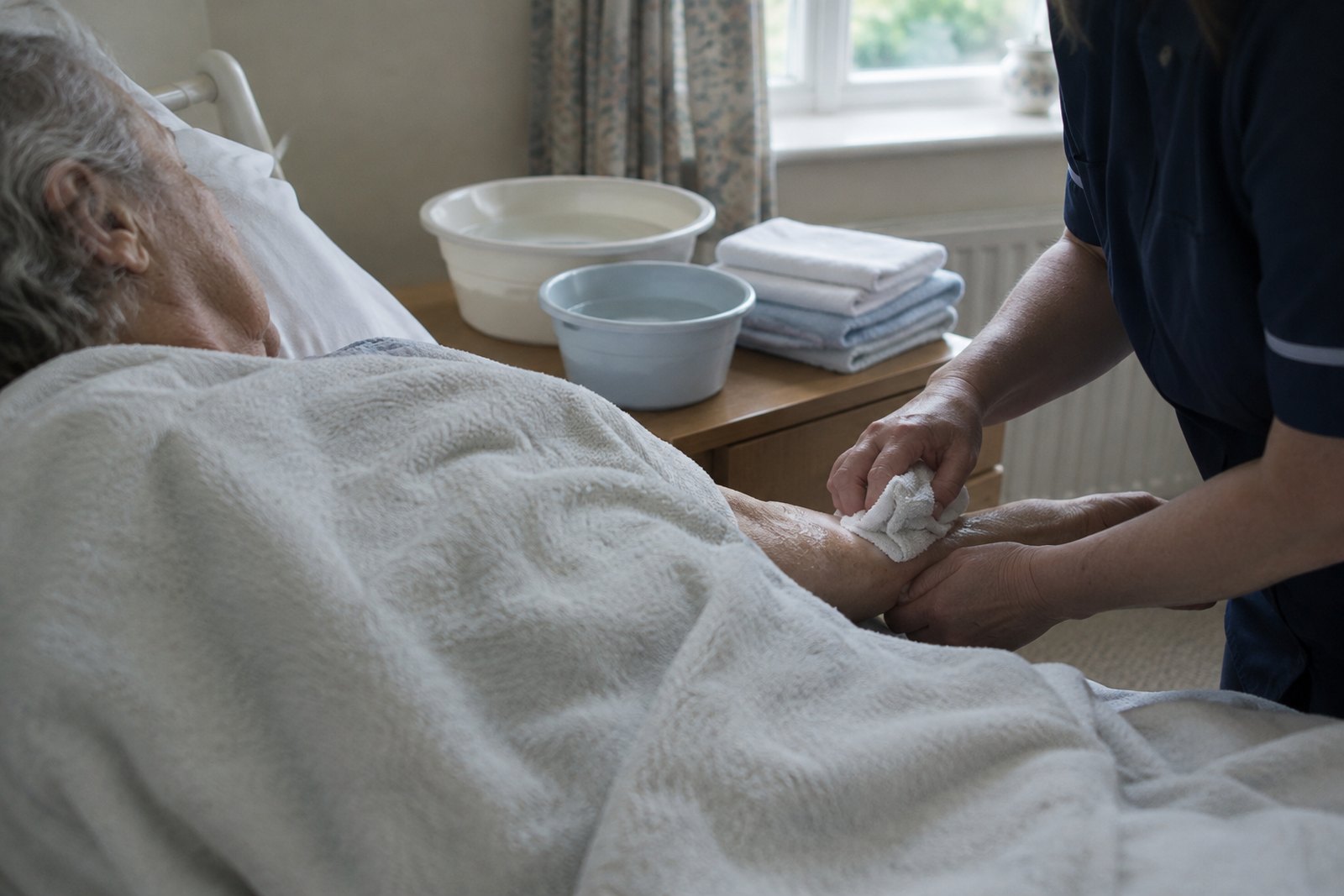
A bed bath means washing someone from head to toe while they stay in bed. You wash one part of the body at a time and keep everything else covered so they stay warm and private. The usual order is face first, then arms, chest and tummy, then legs and feet, then you help them onto their side to wash their back, and you finish with the genital area and bottom using fresh water and a fresh cloth.
That is the whole method. What makes it go well is the preparation, how you turn the person, and how you treat them while you do it. Most people who need a bed bath did not choose to be washed by their daughter, son or partner. Done with care it can be one of the more comfortable parts of their day. Done in a rush in a cold room it is miserable for both of you. This guide covers the practical detail.
Before you start: get everything ready
The single biggest mistake is starting and then having to leave the person half-washed and cold while you fetch a towel. Gather everything first.
The room
- Warm it up. Close windows, shut out draughts and put the heating on a while before. Wet skin cools quickly, especially in older or very thin people.
- Privacy. Close the door and curtains. Tell anyone else in the house not to walk in.
- The bed. If it is height-adjustable, raise it so you are working at roughly hip height and are not bending. Put the brakes on. If the bed has rails, lower only the side you are working on.
- Light. Good light helps you check skin properly.
The kit
- Two bowls: one for the face and body, one kept only for intimate areas. If you only have one, change the water and rinse the bowl between.
- Several cloths or disposable wipes. Using different colours for face, body and intimate areas makes it easy not to mix them up.
- Two or three towels: one large one to cover the person, others for drying.
- Whatever the person normally washes with. Gentle, unperfumed products are usually kinder to older skin. If their skin is dry, a soap substitute or emollient may suit them better, and a pharmacist can advise.
- Disposable gloves and an apron if you use them, plus a bag for rubbish and a bag or basket for laundry.
- Clean clothes, and clean sheets if you plan to change the bed at the same time.
- Moisturiser, a comb or brush, toothbrush and toothpaste, and a razor if they shave.
- A slide sheet if they need help turning (more on this below).
The water
Test it with your elbow or the inside of your wrist. It should feel comfortably warm, not hot. People with reduced feeling, for example after a stroke or with diabetes, may not be able to tell you it is too hot, so never rely on them to judge it. Change the water whenever it cools or gets soapy.
Consent, dignity and involving the person
Ask before you start, every time. "Would now be a good time for a wash?" gives the person some control at a point when they may feel they have very little. Then explain each step just before you do it: "I'm going to do your arm now."
- Let them do what they can. If they can wash their own face and hands, hand them the cloth. It is slower, but it keeps strength, skill and self-respect.
- Keep them covered. Uncover only the part you are washing, then cover it again before moving on.
- Talk to them, not over them. If someone else is helping, do not hold a conversation across the bed as if the person is not there.
- Ask about preferences. Some people strongly prefer a carer of the same sex for intimate care. Some have religious or cultural needs around washing, such as using running water or washing in a particular order. Ask rather than guess.
- If they refuse, stop. Try again later, try a different time of day, or see if someone else has more success. For someone with dementia, short simple steps, a calm voice and starting with something pleasant like warm hands in a bowl often help more than explaining the whole process.
Step by step: the usual order
The general principle is clean to less clean, top to bottom, so germs from the bottom area are not carried to the face.
- Face. Plain water is usually best on the face. Wipe each eye from the inner corner outwards, using a different part of the cloth for each eye. Then the rest of the face, behind the ears and the neck. Pat dry.
- Arms, hands and armpits. Lay a towel under the arm to keep the bed dry. Wash from the hand up to the armpit. Many people enjoy having their hands rested in the bowl for a moment. Dry well between the fingers.
- Chest and tummy. Fold the covering towel down only as far as you need. Pay attention to skin folds, under the breasts and the tummy crease, and dry these thoroughly. Damp skin folds are where soreness and infection start.
- Legs and feet. One leg at a time, keeping the other covered. Wash between the toes and dry carefully. Look at the heels while you are there.
- Change the water and cloth. Then help the person onto their side (see the next section).
- Back and backs of the legs. Wash, dry and check the skin over the shoulder blades, spine, tailbone and hips. This is a good moment to change the bottom sheet if you are doing it.
- Intimate areas last, with the separate bowl, fresh water and a fresh cloth. Wear gloves if you prefer. For women, wipe from front to back. For men who are not circumcised, gently ease the foreskin back only as far as it goes easily, never forcing it, clean underneath, dry, and always return it to its normal position. If it will not go back, or the tip becomes swollen, get medical help straight away. If there is a urinary catheter, clean around where it enters the body, wiping away from it, and follow any advice from the district nurse. Wash the bottom last of all.
- Finish. Moisturise dry skin, help them dress, comb their hair, and make sure they are comfortable and in a good position. Before you clear up, lower the bed back to its lowest safe height, check the brakes are on and put any bed rails back as they were, then leave their call bell, phone, drink and glasses within reach.
Turning safely: slide sheets, never lifting
Turning someone to wash their back is where carers hurt themselves and where the person can get hurt. The rule is simple: do not lift, and do not pull someone by their arms or under their armpits. Pulling on arms can injure shoulders, and lifting an adult by hand puts your back at real risk.
If the person can help, ask them to bend their knees, turn their head the way they are rolling and reach across to the far side. Often that is all it takes, with a light guiding hand on their shoulder and hip.
If they cannot help much, a slide sheet makes turning far easier. It is a low-friction fabric sheet that lets the person glide rather than be dragged. Our guide to using a slide sheet to move someone in bed explains the technique. Remove it once they are positioned, because leaving a slide sheet under someone can let them slip.
Two people make turning safer and calmer: one turns and supports, the other washes. If you are on your own and the person is heavy or cannot help at all, get advice before carrying on. The general principles are in our guide to safe moving and handling for family carers, and it is worth being shown in person by a nurse or occupational therapist.
Checking skin and pressure areas
A bed bath is the best chance you get to look at all of someone's skin. People who spend a lot of time in bed are at risk of pressure sores, and these can develop surprisingly fast.
Look closely at the bony areas that take weight: heels, ankles, tailbone and buttocks, hips, shoulder blades, elbows, the back of the head and the ears. Watch for:
- Red patches that do not fade a short while after you take pressure off. On darker skin, damage may look purple, bluish or darker than the surrounding skin rather than red.
- Skin that feels warmer, cooler, harder or spongier than nearby skin.
- Blisters, broken skin or any open area.
- The person saying an area is painful, itchy or burning.
Pat skin dry rather than rubbing, and do not massage red or marked areas, as this can make damage worse. Keep the skin clean and dry, especially if there is any incontinence.
If you see any of these signs, contact the GP surgery and ask for the district nurse. They assess and treat pressure damage and wounds, and they can arrange pressure-relieving equipment. Our guide to pressure relief cushions and mattresses explains the equipment side.
Washing hair in bed
Hair does not need washing every time, but clean hair makes a big difference to how people feel. A few options:
- No-rinse shampoo or shampoo caps. These are massaged in and towelled off without water. Useful on bad days or for people who cannot lie flat.
- An inflatable hair-washing basin. It sits under the head and shoulders on the bed, with a drain tube into a bucket. You pour warm water from a jug.
- A home-made trough. A plastic sheet rolled at the edges, with towels under it, draining into a bowl on a chair. It works but is messier.
Put towels under the shoulders, protect the eyes with a folded flannel, and keep it short so they do not get cold. Check the person is comfortable with their neck in that position, and stop if it hurts. Dry hair promptly. Some hairdressers visit people at home, which can be a treat in itself.
Mouth care
Mouth care is easily forgotten and matters a lot for comfort and eating. Aim for twice a day.
- Sit the person as upright as they can manage before cleaning their teeth.
- Use a small, soft toothbrush and a small amount of toothpaste.
- Take dentures out, clean them, and give the gums a gentle clean too.
- Keep lips moist with a plain lip balm.
If the person coughs or splutters when drinking, or has been told they have swallowing difficulties, ask the district nurse or a speech and language therapist how to do mouth care safely before using water in their mouth. For a sore mouth, ulcers, loose teeth or a very dry mouth, speak to a dentist, pharmacist or GP.
No-rinse products: when they make sense
No-rinse washes, foams and pre-moistened washing cloths (some designed to be warmed) are made for washing without a bowl of water. They are genuinely useful when someone is very tired, unwell, in pain or at the end of life, when a full wash would be too much. They are also handy for quick freshening between bed baths.
Choose unperfumed products where you can, follow the instructions, do not use them on broken skin unless a nurse advises it, and never flush cloths or wipes down the toilet. You still need to dry skin folds and check pressure areas.
Looking after your own back
If you are giving bed baths regularly, your back has to last.
- Work at a height where you are not stooping. If the bed is low, a height-adjustable or profiling bed changes everything. See our guide to profiling beds.
- Stand close, feet apart, and move your feet rather than twisting.
- Walk round to the other side of the bed instead of reaching across.
- Never lift. If a task needs lifting, it needs different equipment or a different plan.
- If you are struggling, ask the council's adult social care team for a needs assessment for the person you care for and a carer's assessment for yourself. Paid care workers may be able to do some or all of the washing.
When to get help
- District nurse (via the GP surgery): any signs of pressure damage, wounds, catheter problems, or sore skin from incontinence.
- GP or NHS 111: new or worsening pain, signs of infection, a sudden change in confusion, or one leg that becomes swollen, red, warm or painful.
- 999: difficulty breathing, chest pain, collapse, or signs of a stroke such as a drooping face, weak arm or slurred speech.
- Council adult social care: if washing is becoming too much for you to manage.
Where an occupational therapist fits
An occupational therapist looks at how washing and moving can be done safely and with as much independence as possible. Visiting at home, they can:
- Check whether a bed bath is really the only option. Some people can wash sitting on the edge of the bed, at a basin, or on a commode with support, which keeps them more active.
- Recommend equipment such as a profiling bed, slide sheets, a hoist, bed levers or pressure-relieving cushions, and advise on positioning.
- Show you safe ways to turn and move the person, suited to your home and your own body.
- Write a report to support a request for equipment, care or adaptations.
NHS and council occupational therapy is free, usually through adult social care, though you may wait. Private occupational therapists can often visit sooner. See our equipment and daily living aids page for more.
An occupational therapist does not treat pressure sores or wounds (that is the district nurse), does not assess swallowing (a speech and language therapist does), and does not advise on medication (your GP or pharmacist does).
Frequently asked questions
How often should someone have a bed bath?
There is no fixed rule. Most people benefit from a daily wash of the face, hands, armpits, genitals and bottom, and a full bed bath as often as they want and can manage. Anyone who is incontinent needs washing after each episode to protect their skin.
Do I need to wear gloves?
It is sensible for intimate care, if there is broken skin or body fluids, or if either of you is unwell. For washing face and arms, many family carers do not. Explain to the person why you are wearing them so it does not feel impersonal.
Can I use ordinary baby wipes?
Some people use them for quick cleaning, but they can be drying or irritating on older skin, especially perfumed ones. Products designed for washing adults without water are generally a better choice, and never flush any wipe.
What if the person cannot turn onto their side at all?
Do not force it, and do not try to lift them. Wash what you can reach safely, and ask the district nurse or an occupational therapist for advice on equipment and technique. Some people need two carers or a hoist to turn safely.
Is a bed bath the same as a strip wash?
Not quite. A strip wash is usually done standing or sitting at a basin, washing a section at a time. A bed bath is for someone who needs to stay in bed. If the person can sit up safely, a strip wash may suit them better.
How do I keep it from feeling embarrassing for both of us?
Keep them covered, explain what you are doing, let them do what they can, and keep conversation normal. A matter-of-fact, unhurried approach helps more than any special technique. If it stays very difficult, paid carers may be easier for some people to accept for intimate care.
Next steps
If washing and turning someone in bed is getting harder, see our home assessment and equipment and aids pages, or current guide prices, and choose your area below.

Talk to an occupational therapist near you
This guide is general information. For advice about your own situation - or someone you look after - a local occupational therapist can visit you at home and see it for themselves.
Choose your area: