

Hospital Passports: What They Are and How to Write One
By Mobile Occupational Therapist • 20 September 2026 • 12 min read
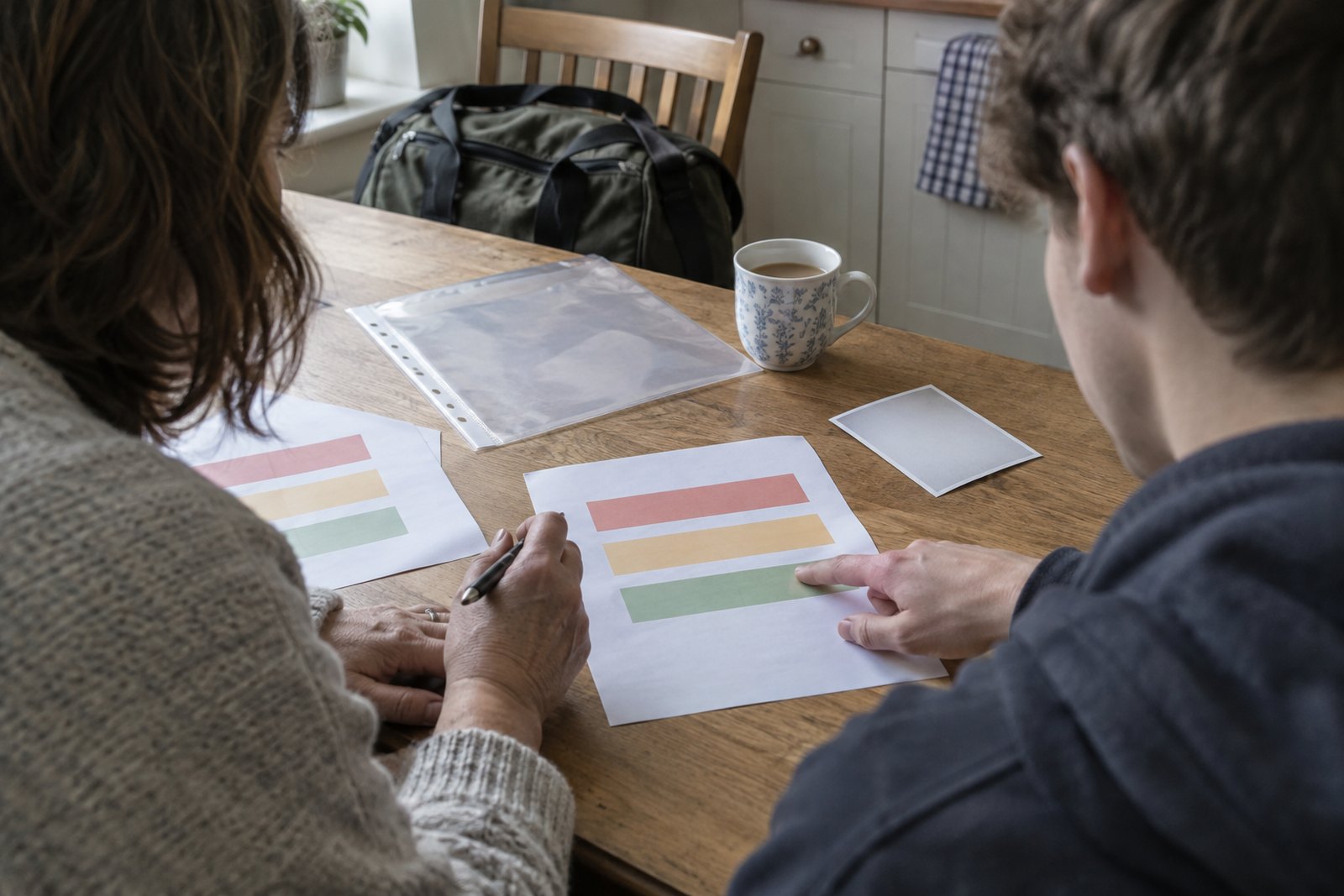
A hospital passport is a short document, usually a few pages, that tells hospital staff what they need to know to look after a particular person well. It is for people who cannot easily explain themselves on a busy ward: people with a learning disability, autistic people, people living with dementia, and anyone with communication needs. It covers how the person communicates, how they show pain, what they eat and drink and how, their medicines, their sensory needs, and what frightens or calms them.
You do not need anyone's permission to make one, and there is no single official form. Many NHS trusts and charities, including Mencap, publish free templates, and many use a simple traffic-light layout. You fill it in with the person, keep it short and specific, and make sure it goes with them every time they go to A&E, an outpatient appointment or a ward. The rest of this page is about doing that well, because a passport nobody reads is just paper.
Why it matters
Hospitals are loud, bright, rushed and full of strangers asking questions. A nurse on a night shift may have minutes to get to know someone. Without help, they will not know that your brother says yes to everything whether he agrees or not, that your mum calls her late husband by name and asks where he is, or that your autistic daughter goes very still and quiet when she is in pain rather than crying out. Those details change how someone is assessed, fed and treated.
A passport does not replace the medical notes and it is not a legal document. It is a practical briefing from the people who know the person best. Think of it as the handover you would give a new carer on their first morning.
What to put in it
Many templates split information into three levels. Red is the safety-critical page: things staff must know. Amber is what they need to know to care for the person day to day. Green is likes, dislikes and the things that make a stay bearable. Whatever template you use, these are the areas that matter.
Things you must know about me
- Name, and what they like to be called.
- Allergies, and what happens if they are exposed.
- Key health conditions, such as epilepsy, diabetes, or heart or breathing problems.
- Who to contact, and who holds a lasting power of attorney for health and welfare, if anyone.
- Whether there is an advance decision or other care plan, and where it is kept.
- Any risk staff must know straight away, such as choking risk, pulling out drips, or walking off when anxious.
Communication
This is often the most useful section and the one most often written too vaguely. Has limited speech tells staff nothing. Try instead: Uses about 20 words. Says drink for any food or drink. Points to what she wants. Will say yes to every question, so offer two choices and let her point. Say whether the person uses signing, pictures, a communication device or gestures, and how long they need to process a question before answering. Note whether they can read, and whether they understand more than they can say, which is common.
How I show pain or illness
Many people with a learning disability, autism or dementia do not show pain in the expected way. Some go quiet and withdraw. Some become agitated, rock, bite their hand, rub one part of their body, refuse food or stop sleeping. Some laugh. Write down exactly what you see, and what the person is like on a normal day, so staff have something to compare against. If the person does not notice hunger, thirst or a full bladder until late, say so. Our guide to interoception explains why some people find these body signals hard to read.
Eating, drinking and swallowing
Include how the person eats (on their own, with prompting, with food cut up, with adapted cutlery or a lidded cup), how fast, what they will and will not eat, and whether they need reminding to drink. If a speech and language therapist has given swallowing advice, such as a particular food texture or thickened drinks, copy it out in their exact words with the date. Do not paraphrase this one. Getting it wrong can cause choking.
Medicines
List current medicines or attach an up-to-date list from the GP practice, and bring the medicines in their original packaging. Add how the person takes tablets best: one at a time, with a particular drink, sitting in a certain place. Only mention crushing tablets or giving medicine in food if a doctor or pharmacist has formally agreed it. The passport is not the place to suggest changes to medicines; that is a conversation for the doctor or pharmacist.
Sensory needs
Beeping monitors, bright lights, other patients shouting, unfamiliar smells and being touched by strangers can be overwhelming. Note what the person finds hard and what helps: ear defenders, a side room if one is free, lights dimmed, a warning before being touched, a favourite object from home. If you are not sure how to describe their sensory needs, our guides to sensory processing differences in adults and noise sensitivity in children are a good start.
Personal care, moving and sleep
How much help with washing, dressing and the toilet? Do they use pads? Do they walk on their own, with a frame, with one person helping, or with a hoist? What equipment do they use at home? What is their bedtime routine? Someone who always sleeps with the landing light on is not going to settle in a dark bay.
Likes, dislikes and what helps
Favourite foods, music, programmes and topics of conversation, the things that cause distress and the things that calm. For someone with dementia, a short life story helps enormously: where they grew up, their work, family names, what they are proud of. Our page on reminiscence and life story work has ideas for gathering this. Alzheimer's Society publishes a form called This is me for exactly this purpose, and many hospitals recognise it.
Where to get a template
Start with the hospital the person is most likely to use. Many NHS trusts have their own hospital passport, available from the learning disability liaison team or the trust website, and staff will recognise it straight away. Mencap and other learning disability organisations publish free templates, including easy read versions the person can help complete. For dementia, This is me is widely used. For autistic people, the National Autistic Society has guidance on preparing for healthcare.
Which template you use matters far less than actually filling one in. If you only have time for one thing today, write the red page.
How to write one that gets read
- Write it with the person, not about them. Use I where you can: I do not like being touched on my head. Ask them, show them pictures, watch what they react to. Their view counts even if they cannot write it themselves.
- Be specific. Gets anxious is useless. If he starts flicking his fingers and humming loudly he is overwhelmed. Turn the TV off and give him five minutes is gold.
- Keep it short. Staff skim. The essential page should take under a minute to read. Put detail further back.
- Use plain language. No family shorthand or nicknames without explanation.
- Add a recent photo. It helps staff match the passport to the person.
- Date and sign it. Say who wrote it and how to reach them.
- Ask other people. Paid carers, day centre staff, school or college staff and siblings often notice things you do not.
Keeping it updated and with the person
A passport written three years ago may now be wrong in ways that matter: new medicines, changed swallowing advice, a new diagnosis, someone who used to walk now using a wheelchair. Review it at least once a year, after every hospital stay, and whenever something important changes. If the person has a learning disability and gets an annual health check from their GP, that is a handy reminder.
Then make sure it goes where the person goes.
- Keep the original in a clear plastic wallet in a ready-packed hospital bag or by the front door.
- Give copies to paid carers, day services and anyone who might go with them in an ambulance.
- Keep a photo or scan on your phone.
- Ask the GP practice and the hospital to add a copy to their records.
- On the ward, ask for it to be kept by the bed, not in a folder at the nurses' station, and ask that it is mentioned at handover.
When the person comes home, add anything the passport was missing while it is fresh in your mind. Our guide to coming home from hospital covers what to sort out before discharge.
Reasonable adjustments in hospital
Under the Equality Act 2010 (the Disability Discrimination Act 1995 in Northern Ireland), NHS services must make reasonable adjustments so that disabled people are not put at a substantial disadvantage. A hospital passport is one of the clearest ways of showing what those adjustments should be. Things families often ask for include:
- the first or last appointment of the day, so there is less waiting
- a quiet place to wait instead of a crowded waiting room
- longer appointments
- information in easy read
- a family member or carer being able to stay, including outside usual visiting hours
- combining tests into one visit where it is clinically appropriate
- a visit beforehand to see the department
Ask early, ideally before a planned admission, and write down what was agreed. In England, GP practices can add a reasonable adjustment flag to a person's NHS record so other services can see their needs; ask the practice whether this has been done.
Many hospitals also have a learning disability liaison nurse, who supports patients with a learning disability and their families and helps ward staff make adjustments, so ask for them on day one.
Where an occupational therapist fits
To be honest, you do not need an occupational therapist to write a hospital passport. Families who know the person well are the experts, and learning disability nurses, community learning disability teams and dementia services often help for free.
Where an occupational therapist can add something is in the practical daily living parts that families find hard to put into words. An occupational therapist can assess how someone moves and transfers, what equipment they need, how much help they need with washing, dressing, eating and the toilet, and how they respond to noise, light, touch and movement. That can be turned into clear wording for the passport, and the same assessment is useful when planning for coming home. A private occupational therapist visiting at home sees the person in familiar surroundings, which is usually where they are most themselves.
Other professionals lead on other parts. A speech and language therapist assesses communication and swallowing and may write a communication passport or swallowing guidelines. The GP, pharmacist or hospital doctor is the right person for anything about medicines. A learning disability nurse or psychologist may help with plans for distress. Our sensory needs page explains what a sensory assessment involves.
Frequently asked questions
Is a hospital passport only for people with a learning disability?
No. They started in learning disability services but are just as useful for autistic people, people living with dementia, people with a brain injury or communication difficulties after a stroke, and anyone who would struggle to explain their needs in hospital.
Do hospital staff have to read it?
There is no rule that every member of staff will read it, and busy wards do not always manage it. Hospitals do have a duty to make reasonable adjustments, and the passport tells them what those are. Hand it over in person, point out the red page and ask for it to be shared at handover. If it is ignored, speak to the nurse in charge or the liaison nurse, and if needed the hospital's patient advice or concerns team (the Patient Advice and Liaison Service, or PALS, in England).
Is a hospital passport the same as a communication passport?
Not quite. A communication passport focuses on how someone communicates and is often made with a speech and language therapist. A hospital passport covers communication too, plus health, medicines, eating, care and safety. Many people have both, and one can refer to the other.
Does a hospital passport let me make decisions for the person?
No. It records information and preferences but gives nobody legal authority. In England and Wales, decisions for an adult who lacks capacity are made under the Mental Capacity Act. A family member only has legal decision-making power if they hold a registered lasting power of attorney for health and welfare or have been appointed as a personal welfare deputy by the Court of Protection, although staff should still consult family when deciding what is in the person's best interests. If you hold one, say so in the passport and bring a copy. GOV.UK explains how these work.
What if we end up in A&E and there is no passport?
Tell staff the most important things out loud: allergies, how the person communicates, how they show pain, any swallowing advice and who you are. Jot them on a sheet of paper if you can. Then write a proper passport once things have settled.
Can a child have a hospital passport?
Yes. Many children's hospitals have their own version, and parents of children with additional needs often find one invaluable, particularly for sensory needs and how the child shows pain or distress.
Next steps
If you would like help describing someone's daily living, mobility or sensory needs, or are planning a hospital stay and the return home, see our hospital discharge and sensory needs pages, or current guide prices, and choose your area below.
Talk to an occupational therapist near you
This guide is general information. For advice about your own situation - or someone you look after - a local occupational therapist can visit you at home and see it for themselves.
Choose your area: