

Home Oxygen Safety And Everyday Life: A Practical Guide
By Mobile Occupational Therapist • 24 September 2026 • 15 min read
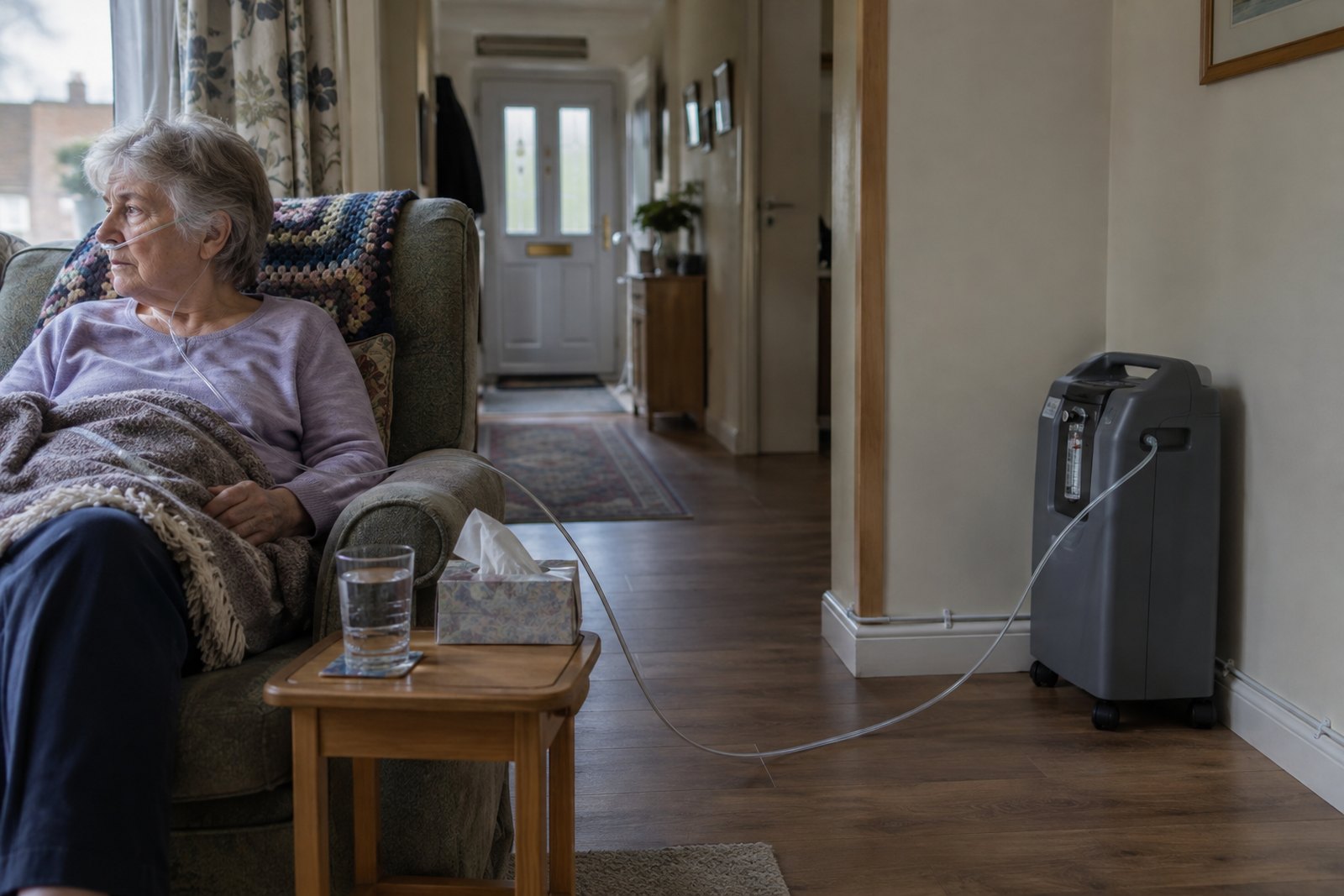
Living with home oxygen is usually very doable, but you do need to take safety seriously. The two big risks at home are fire (oxygen makes fires start more easily and burn faster) and trips (long tubing and portable kit can get underfoot). If you tackle those, day to day life gets simpler.
In the UK, home oxygen is usually prescribed after assessment by a specialist respiratory service (or another authorised prescriber involved in your care). A specialist oxygen supplier then delivers, installs and services the equipment, and should give you clear safety advice for your specific set-up. This page is a practical, plain English guide to what helps most in real homes, for people using oxygen and the family members living alongside it.
What home oxygen is and who does what
Home oxygen is medical oxygen used to help you maintain safe oxygen levels. It is not a treatment that "cures" a lung condition, but it can reduce strain on your body and help you function better when oxygen levels are low.
You will usually come across oxygen in three broad forms:
- Oxygen concentrator - a powered machine that makes oxygen from the air. It is commonly used for regular oxygen at home (including overnight). It needs electricity, has tubing attached, and sits in a fixed place.
- Oxygen cylinders - metal cylinders containing oxygen under pressure. They may be used as a main supply for some people, as a back-up for power cuts, or for short periods.
- Portable oxygen - either smaller cylinders or a portable concentrator (if prescribed) to help you go out.
Your respiratory team decides whether you need oxygen, when you should use it, and at what flow rate. Your oxygen supplier sets up the equipment, provides consumables such as tubing, and maintains the kit. If anything does not feel right, you contact the team that is responsible for that part. When in doubt, phone the oxygen supplier number you were given, or your respiratory nurse team.
Home oxygen safety essentials (the non-negotiables)
Oxygen itself is not flammable, but it feeds fire. Materials can ignite more easily and burn fiercely in oxygen-enriched air. That is why the rules can feel strict.
No smoking or vaping anywhere near oxygen
No one should smoke or vape anywhere indoors in a home where oxygen is being used or stored. That includes visitors and carers. It also includes "just by the window" or "in the doorway". Oxygen can enrich clothing, upholstery and bedding, so the risk can remain for a while after oxygen is turned off, and you should follow your supplier advice about waiting (often at least 10 to 15 minutes) and moving well away from oxygen equipment before any smoking outside.
If someone in the household smokes, treat this as a safety problem to solve, not a moral debate. Decide where smoking will happen (outside, well away from doors and windows), how you will handle cravings at night, and how you will enforce it with visitors.
Keep away from flames and heat
Avoid naked flames and keep oxygen equipment and tubing at least 2 metres away from any open flame or strong heat source. That includes candles, matches, lighters, and open fires. Be cautious with anything that gets hot, such as gas hobs, portable heaters, and some hair styling tools. Your supplier may give a specific safe distance to follow. If you are unsure, ask them and follow their written guidance.
Practical home tweaks that help:
- Move the concentrator and tubing route away from the kitchen if possible.
- If you cook on gas or near any open flame, keep oxygen equipment and tubing well away from the cooker and ask your respiratory team or oxygen supplier for a safe plan if you need oxygen continuously.
- Keep oxygen tubing away from radiators, fan heaters and hot pipes.
- Do not dry clothes over heaters and do not use heat sources to warm the tubing.
Avoid oil-based products near the face
Many suppliers advise not to use oil-based or petroleum-based creams and ointments on your face or around the nose when you use oxygen, because they can increase fire risk. If you get dry skin or sore nostrils, ask your oxygen supplier or respiratory team what they recommend. If you use lip balm or moisturiser, keep it away from the nasal cannula and tubing unless you have been told it is safe.
Tell the fire service and your insurer
Many UK Fire and Rescue Services offer a free home fire safety visit. If you use home oxygen, it is worth telling them, because it can affect escape planning and the advice they give.
You should also tell your home insurer that oxygen is used in the property. Policies differ and it is better to have it noted than to find out later it should have been declared.
If you want a wider home fire safety checklist that covers escape routes, smoke alarms, heaters and charging devices, see fire safety at home for older and disabled people.
Do not change settings unless you have been told to
Only use oxygen as prescribed. Do not adjust flow rates because you feel more breathless, unless your respiratory team has given you a plan that says you can. Breathlessness can worsen for different reasons, including infection, anxiety, fluid build-up or a flare-up of your condition, and the right response is not always "more oxygen".
Store and handle cylinders safely
Cylinders need to be stored securely so they cannot fall or be knocked. Keep them away from heat sources and out of direct sunlight. Do not store cylinders in a cramped hallway where they block the exit. Follow the supplier instructions about where and how to store spares.
Making oxygen practical at home (without turning the house upside down)
Most households end up with the same day to day frustrations: tubing that catches, a chair that is in the wrong place, or a routine that involves too many steps. Small layout changes usually help more than buying things.
Tubing and trip hazards
Long tubing helps you reach the bathroom or kitchen, but it also creates loops that can catch under feet, walking aids and pets. Trips are more likely when you are tired, rushing to the toilet, or carrying something.
Try these steps:
- Plan a main route from the concentrator to the chair you use most, to the toilet, and to the bedroom. The safer you make this route, the safer most of your day becomes.
- Keep tubing to the edges of rooms where possible. People naturally cut corners.
- Avoid running tubing across doorways where it can snag as the door opens, or where you will step over it.
- Do not trail tubing under loose rugs. It can bunch and lift the rug edge.
- Use lighting. If you are up at night, a dim light on the route to the toilet can reduce trips.
- Have a "tubing check" habit before you stand up. Pause, look down, gather slack, then move.
If you have already had a fall, or you are starting to avoid moving around because you are frightened of tripping, see falls at home: practical prevention beyond exercise for home set-up ideas.
Managing stairs
Stairs and oxygen are a common worry. People get stuck between wanting independence and fearing a fall or a tangled tube.
What tends to work in practice:
- Decide where oxygen use actually needs to happen. Some people only need oxygen downstairs, or only at night. If you need it upstairs and downstairs, speak to your respiratory team and supplier about the safest set-up for your prescription and your home layout.
- Do not drag tubing up the stairs behind you if it creates a loop or snag risk. If you are prescribed portable oxygen for transfers, that may be safer.
- Keep the stairs clear. Remove clutter, loose mats and anything you might try to carry. If you can, make sure there is a secure handrail.
- Break the task into stages. Sit at the top or bottom for a moment, get your breath back, then continue.
If stairs have become a daily problem, it is worth raising it with the respiratory team, because it can affect whether you are managing safely at home.
Set up a "base" chair and charging point
Many people find it helps to have one main chair that is the centre of the day, with the concentrator positioned so the tubing route is straightforward.
Make the base chair work for you:
- Choose a chair that is easy to stand up from and has arms for pushing up.
- Keep a small table within reach for phone, drinks, inhalers if prescribed, and the supplier contact number.
- Keep the floor space around the chair clear, so you can turn safely.
If you use portable equipment, agree one "home" place for it to live so it is not left on the floor where someone will trip over it.
Night-time routines
Night-time is when small risks turn into big ones. You are tired, it is dark, and you may be rushing to the toilet.
- Plan the toilet route: clear floor, no loose mats, and a light you can switch on easily.
- Think about tubing length: long enough to turn in bed and sit up, not so long that it drapes onto the floor in big loops.
- Keep water and tissues within reach so you are not constantly getting up and down.
If you are repeatedly waking due to breathlessness, poor sleep or anxiety, tell your respiratory team. Sleep problems have many causes and you should not just put up with it.
Breathlessness, fatigue and pacing when you are on oxygen
Oxygen can help, but it does not automatically give you back your old energy. Many people still have breathlessness, fatigue, muscle weakness, or anxiety about getting short of breath.
The most useful approach is often pacing: doing a bit, resting before you are wiped out, and spreading heavy tasks across the day or week. It can feel frustrating because it is slower. It is also how you avoid the boom and bust cycle of overdoing it on a good day and then crashing.
Practical pacing ideas you can use today
- Sit for tasks that do not need standing, such as food prep, washing at the sink, and dressing.
- Break tasks into chunks: wash, rest, dress, rest. Not all at once.
- Gather what you need first so you are not doing extra trips back and forth while breathless.
- Use breathing space: pause at the top of the stairs, or before you answer the door, rather than pushing until you panic.
- Make heavy tasks lighter: smaller laundry loads, lighter pans, and keeping frequently used items between waist and shoulder height.
If you are living with COPD, there are specific ways to manage breathlessness during everyday tasks, including how you position your body for washing and dressing. See COPD at home: managing breathlessness during everyday tasks.
If fatigue is a major problem (common in long-term conditions), the principles are similar even if your diagnosis is different. See fatigue management and pacing: a practical guide.
Going out, appointments and travel
It is normal to feel anxious the first few times you leave the house with oxygen. The aim is to make it predictable: know what you are taking, how long it lasts, where it goes, and what you will do if you feel breathless.
Getting out of the front door
- Do a rehearsal when you are not rushed: put on shoes, pick up portable oxygen (if you use it), check keys, and walk to the gate and back.
- Reduce carrying. A bag on one shoulder can pull you off balance. If you use a walking aid, ask about ways of transporting essentials safely.
- Plan a rest point just inside the door and just outside, so you can stop and breathe without feeling you are "in the way".
Transport and storage
Follow your supplier advice about transporting and storing oxygen, especially in cars. In general, the principles are: keep equipment secure so it cannot roll or fall, keep it away from heat, and do not leave it in a way that could block exits or become a projectile in an accident.
Holidays and flights
Travel with oxygen usually needs planning and coordination with your respiratory team, oxygen supplier and (for flights) the airline. Each airline has its own rules, and oxygen arrangements can take time to organise, so raise it early. If you are unsure what is possible, ask your respiratory team before you book anything non-refundable.
What to do if you feel worse
If you feel worse than usual, or you are needing to stop more often, treat it as information. It could be a flare-up, an infection, fluid retention, anaemia, anxiety, or something else that needs medical input. Contact your respiratory team (or your GP if you cannot reach them) and explain what has changed and how quickly.
Call 999 now if severe breathlessness comes on suddenly, if someone has blue lips or face, chest pain that does not settle, new confusion, collapse, or you cannot speak in full sentences. Those are emergency signs and you should not wait for a call back.
Equipment problems
Your oxygen supplier should have given you a number for faults and urgent issues. Use it if the concentrator alarms, stops unexpectedly, you think there is a leak, or you cannot get your prescribed flow. If you rely on a concentrator, ask the supplier what to do in a power cut, and keep the instructions somewhere easy to find.
Where an occupational therapist fits
An occupational therapist (OT) does not prescribe oxygen and should not advise you to change oxygen settings. That is led by your respiratory team.
Where an OT can help is everything around the oxygen: how you move around your home safely, how you wash, dress, cook and manage stairs with less breathlessness, and how you reduce falls risk when there is tubing underfoot. A private occupational therapist visiting at home can look at the exact layout of your rooms, the routes you take most, and the things that trip you up in real life, then suggest practical changes that match your priorities.
That might include:
- Reducing trip hazards from oxygen tubing, clutter and lighting.
- Making toileting and washing easier, especially at night.
- Finding ways to pace tasks so you can do more without the crash afterwards.
- Recommending the right type of everyday equipment (for example, seating, bathing aids, perching options, or simple carrying solutions), and showing you how to use it safely.
- Helping family carers figure out what is realistic, and what needs extra support.
If breathlessness is mainly a fitness and exercise tolerance issue, a physiotherapist or pulmonary rehabilitation service may be the best lead. If swallowing is a concern, speech and language therapy is the right profession. If mood, panic or trauma are prominent, your GP and local mental health services are a better starting point (an OT can still support day to day routines alongside this).
Frequently asked questions
Is home oxygen flammable?
Oxygen is not flammable, but it makes fires burn more easily and more fiercely. That is why smoking, vaping, candles, open flames and heat sources near oxygen are taken so seriously.
Can someone smoke in another room if I use oxygen?
The safest answer is no, not indoors. Smoke and oxygen safety risks do not respect doorways, and oxygen can cling to clothing and soft furnishings. If someone smokes, agree that it happens outside, well away from doors and windows.
Can I cook with oxygen on?
Cooking near any open flame (especially a gas hob) is high risk with oxygen, so follow your supplier instructions and get individual advice from your respiratory team or oxygen supplier if you need oxygen while preparing meals. Follow your supplier guidance and keep oxygen equipment and tubing well away from the cooker area, and if you cannot safely be without oxygen while cooking, ask your respiratory team or oxygen supplier to agree a safer cooking set-up for your home.
What moisturiser or cream is safe with oxygen?
Many services advise avoiding oil-based or petroleum-based creams and ointments on the face and around the nose when using oxygen. If you have sore or dry skin from the cannula, ask your respiratory team or oxygen supplier what they recommend for your situation.
How do I stop oxygen tubing becoming a trip hazard?
Start by mapping your main routes (chair to toilet, chair to kitchen, bed to toilet), then keep tubing to the edges of rooms and avoid crossing doorways. Improve lighting, remove loose mats, and build a habit of looking down and gathering slack before you stand and turn.
Who do I call if the oxygen equipment stops working?
For equipment faults and alarms, call the oxygen supplier number you were given, because they maintain the kit. If you feel medically unwell as well as having equipment issues, contact your respiratory team or GP, and call 999 for emergency symptoms like severe breathlessness, blue lips or confusion.
Next steps
If you want practical help making oxygen work safely at home, see our home assessment page, or current guide prices, and choose your area below.
Talk to an occupational therapist near you
This guide is general information. For advice about your own situation - or someone you look after - a local occupational therapist can visit you at home and see it for themselves.
Choose your area: