

Hip Protectors: Who They Help and How to Get Them Worn
By Mobile Occupational Therapist • 30 September 2026 • 13 min read
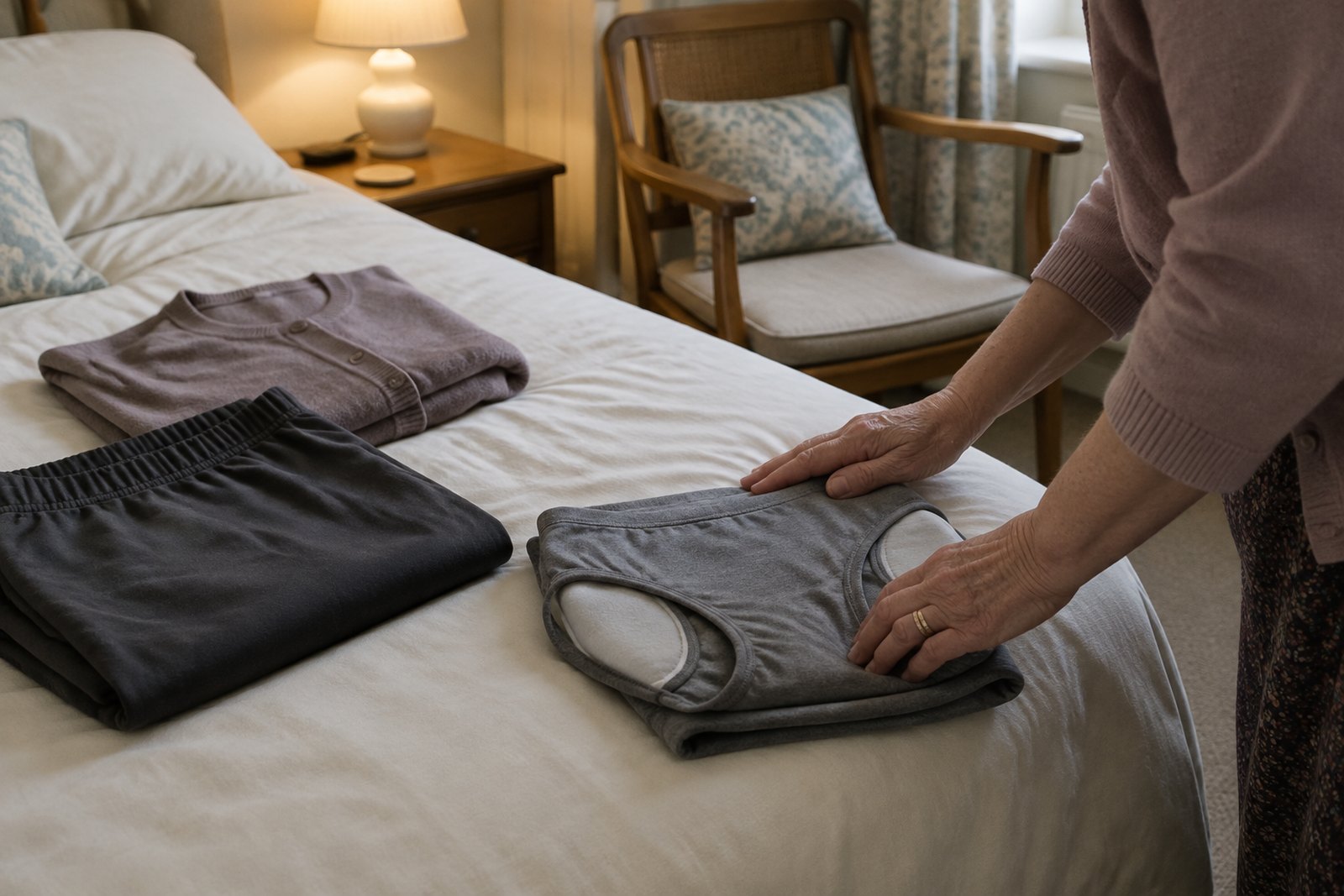
Hip protectors are padded underwear, pants or a belt that hold a shield or cushion over the bony point on the outside of each hip. If someone falls sideways and lands on their hip, the pad is meant to spread or soak up some of the force, so less of it goes into the top of the thigh bone. That is where many hip fractures in older people happen.
They do not stop anyone falling. The evidence on whether they prevent fractures is mixed. They seem most likely to help people at high risk who live in care homes, and the picture is much less clear for people living in their own homes. The biggest factor is the obvious one: a hip protector only works if it is being worn at the moment of the fall. Many people stop wearing them within weeks. So most of this page is about choosing a pair that is comfortable enough to keep on, and about making them a normal part of getting dressed.
What hip protectors actually are
Feel the outside of the top of your thigh, a hand's width or so below the waist and roughly level with the crease at the top of the leg, and you will find a hard, bony knob that moves slightly if the leg is turned in and out. That is the part of the thigh bone that usually hits the floor first in a sideways fall, and in a thin or frail person there is very little natural padding over it. Hip protectors put a pad over that spot on both sides.
Hard shell protectors
These use a curved, rigid plastic shield, usually lined with foam, that slides into a pocket in the pants. The shape is designed to direct the force of a fall away from the bone and into the softer tissue around it. They are firm and noticeable. Some people find them awkward when sitting in a narrow chair or lying on their side in bed.
Soft protectors
These use thick foam or gel-type pads that absorb the impact rather than redirect it. They bend with the body, are quieter, show less under clothes and are generally easier to sit and sleep in. Some people find them warm.
Styles of garment
- Briefs or boxer-style pants with pockets for removable pads, worn instead of ordinary underwear.
- Pants with pads sewn in, so there is nothing to take out, but the whole garment goes in the wash.
- Open-sided or wraparound styles that fasten at the side with hook-and-loop tape, for people who cannot step into pants easily or who need continence products changed often.
- Belt or girdle styles worn over normal underwear.
- Styles made to fit over a continence pad, or with an absorbent panel built in.
No type is best for everyone. The best hip protector is the one the person will put on every day without a fight.
Who hip protectors may help
Hip protectors are usually considered for people who are both likely to fall and likely to break a bone if they do. That might include someone who:
- has fallen more than once, or falls sideways rather than tripping forwards
- has osteoporosis or has already broken a bone in a minor fall
- is very frail or has a low body weight
- lives in a care home and is assessed as at high risk of falling
- has dementia and walks about a lot, especially at night
- is unsteady getting up from a chair, bed or toilet
Be realistic about what they cover. They only protect the hips. They do nothing for wrists, heads, shoulders or spines, all of which can also be hurt in a fall.
And be honest about the evidence. Research has found it hard to show a clear benefit for people living at home, partly because so many people in the studies did not keep wearing them. In care homes, where staff help with dressing and routine, results have been more encouraging. If you are buying them for someone at home, think of them as one sensible layer of protection, not a guarantee.
They may be harder work for people with fragile skin, severe incontinence, or nobody to help them get the pants on and off. That does not rule them out, but it means more planning.
Getting the fit right
A badly fitted hip protector is little better than none, because the pad ends up somewhere the person will not land on.
- Find the bony point. With the person standing, feel for the knob on the outside of each hip. The middle of the pad should sit over it.
- Check standing and sitting. Pads can ride up or slide round when someone sits. Ask them to sit, stand and walk across the room, then check again.
- Snug, not tight. Loose pants let the pads drift towards the front or back. Very tight ones dig in, leave deep marks and get abandoned.
- Measure first. Measure around the widest part of the hips and follow the supplier's size guide. If someone is between sizes, it is worth trying both.
- Watch the skin. For the first few days, check the skin over the hips and around the leg and waist elastic. Redness that does not fade once the garment is off, broken skin or blisters need a conversation with the GP or district nurse, especially if the person already has fragile skin or sits for long periods.
Clothes may need to change too. Trousers with an elasticated waist, or one size up, will go over the pads more easily and look less bulky.
Hip protectors and continence
This is one of the most common reasons hip protectors end up in a drawer. Wet or soiled pants mean changing the whole garment, and an extra layer can slow someone down when they need the toilet quickly.
Things that help:
- Choose a style made to go over a continence pad, or one with removable protector pads so the pants can be washed hot and the pads kept dry.
- Wraparound, side-fastening styles can make pad changes easier, particularly when someone else is helping.
- Have plenty of pairs. With continence problems you may need several a day.
- Practise getting them down quickly. If buttons, belts and protector pants together are too much, simplify the clothes rather than giving up on the protectors.
If continence is the real problem, it is worth sorting that first. The NHS continence service can assess and may supply products; our guide to free incontinence pads and NHS continence services explains how to get a referral.
Getting someone to actually wear them
People take hip protectors off for good reasons. They are hot. They feel bulky. They make your bottom look bigger. They feel like a sign of being old or fragile. They are uncomfortable in bed. They get in the way at the toilet. Or the person simply forgets. Pushing harder rarely works. Taking each reason seriously usually does.
- Explain why in their terms. Not "you might break your hip" but "this is about staying in your own home and out of hospital".
- Let them choose. Show them more than one type. Many people who hate hard shells will tolerate soft pads.
- Start small. A couple of hours a day, or just at the riskiest times, is better than an all-or-nothing approach that ends in refusal.
- Make them the underwear. With the person's agreement, put the protector pants in the underwear drawer in place of ordinary pants, so they are simply what gets put on.
- Lay them out. Put them on top of the pile of clothes each morning as part of the routine.
- Avoid wash-day gaps. If the only pair is in the machine, they will not be worn. Buy enough to cover several days.
- Make dressing easier. If pulling them up is the struggle, sitting to dress, a helper, or simple equipment can make the difference. Our guide to dressing aids and easier ways to get dressed has ideas.
- Think about nights. If someone gets up to the toilet at night, soft protectors are often easier to sleep in than hard shells.
When someone has dementia
Keep it simple and low key. Present them as clean underwear rather than medical equipment, and do not get into an argument about it. If the person cannot understand or weigh up the decision, the people caring for them may need to make a best interests decision under the Mental Capacity Act, involving the person as much as possible. Forcing them on someone who is distressed is not the answer. If they keep being removed, talk to the GP, the care team or an occupational therapist about why, and about other ways to reduce risk.
In a care home
Ask for hip protectors to be written into the care plan, so every member of staff knows they are meant to be worn and when. Label each pair clearly with the person's name before they go into the home laundry.
If, after a fair try, someone really cannot bear them, that is their choice to make if they have capacity. Put your energy into the other ways of reducing falls and fractures below.
Washing and looking after them
- Follow the care label. Some pads can go through the machine, others must come out first.
- Take hard shells out before washing. They can crack or damage the machine.
- Check the label before tumble drying. High heat can damage foam and elastic.
- Replace pants when the elastic goes slack, because loose pants mean pads that slide out of place.
- Replace soft pads that have gone thin or lumpy, and hard shells that are cracked or split.
They do not prevent falls
Hip protectors are about reducing injury if a fall happens. They do nothing about why someone is falling, and that is where most of the difference can be made. Worth checking:
- a medicines review with the GP or pharmacist, especially if someone feels dizzy or drowsy
- eyesight, hearing and feet
- strength and balance exercise, through a physiotherapist or NHS falls service
- lighting, especially the route from bed to toilet at night
- footwear, trailing flexes, rugs and clutter
- getting up from chairs, beds and the toilet
Our guide to preventing falls at home goes through these in detail.
Bone health: a conversation with the GP
If someone is at enough risk to be thinking about hip protectors, it is worth asking the GP about their bones. The GP can assess fracture risk, may arrange a bone density scan and can discuss whether any treatment is appropriate. Do not start or stop any medicines without talking to the GP or pharmacist. Our guide to living with osteoporosis at home covers what else helps.
A hip protector does not make a fall harmless. If someone falls and has pain in the hip or groin, cannot stand or put weight on the leg, or the leg looks shorter or turned outwards, do not try to lift them. Keep them warm and call 999. If they are not obviously hurt but you are unsure, call NHS 111. If they have hit their head and take blood-thinning medicine, become drowsy, confused or are sick, or have been on the floor for a long time, call 999 or go to A&E.
Where to get hip protectors
Most people buy hip protectors privately, from disability and mobility equipment suppliers, some pharmacies and online. They are not routinely supplied by NHS or council equipment services, although some NHS falls services, community teams and care homes do provide or trial them, so it is always worth asking.
Before you buy:
- Buy one pair first to test size and comfort before ordering several.
- Check the returns policy. Underwear often cannot be returned once worn.
- Check the washing temperature, especially if continence is an issue.
- If the person is in a care home, ask whether the home supplies them or expects families to.
Where an occupational therapist fits
An occupational therapist looks at the whole picture: how and where someone falls, what they are doing at the time, and how their home and routine could make that less likely. On hip protectors specifically, an occupational therapist can help you decide whether they are sensible for this person, which type suits them, whether they fit properly, and whether the person can get them on and off, including at the toilet and at night. They can also suggest equipment such as rails, raised seats or better bed heights, and changes to the night-time routine. A private occupational therapist visiting at home can do this as part of a wider home assessment. You can also ask your GP or council adult social care about an NHS or council occupational therapist; this is free, though waits vary by area.
Other people lead on other parts. The GP looks at bone health, medicines and any medical cause of falls. A physiotherapist or NHS falls service leads on strength and balance exercise. The continence service deals with bladder and bowel problems, and the district nurse or GP with skin damage.
Frequently asked questions
Do hip protectors actually work?
They can reduce the force reaching the hip in a sideways fall, but the research is mixed. The clearest benefit has been seen in care homes. For people at home the evidence is weaker, largely because people often stop wearing them. They only help if they are on.
Hard or soft hip protectors: which is better?
Neither is better for everyone. Hard shells are designed to redirect the impact; soft pads absorb it and are usually more comfortable. If someone will not wear hard shells, soft ones they do wear are the better choice.
Should hip protectors be worn in bed?
It depends on the person. If they get up at night to the toilet or have fallen at night before, wearing soft protectors overnight may make sense. Hard shells can be uncomfortable lying on the side, so check the skin if they are worn in bed.
Can you wear hip protectors with incontinence pads?
Yes. Some styles are made to go over a continence pad, and some have removable protector pads so the pants can be washed hot. You will need more pairs than usual.
Are hip protectors available on the NHS?
Not routinely. Some NHS falls services, community teams and care homes provide or trial them, so ask the GP, falls service or care home. Most people buy them privately.
What if someone with dementia keeps taking them off?
Try a softer, cooler style, present them as ordinary underwear and keep them in the usual drawer. If they are still removed, look at why: discomfort, heat, toilet difficulty or the feel of the pad. Do not force them on, and ask the care team, GP or an occupational therapist about other ways to reduce risk.
Next steps
If falls are worrying you, an occupational therapist can look at hip protectors alongside everything else that keeps someone safe at home. See our older people's independence page, or current guide prices, and choose your area below.

Talk to an occupational therapist near you
This guide is general information. For advice about your own situation - or someone you look after - a local occupational therapist can visit you at home and see it for themselves.
Choose your area: