

GPS Tracker for Dementia: Door Alarms and Safer Walking
By Mobile Occupational Therapist • 22 September 2026 • 15 min read
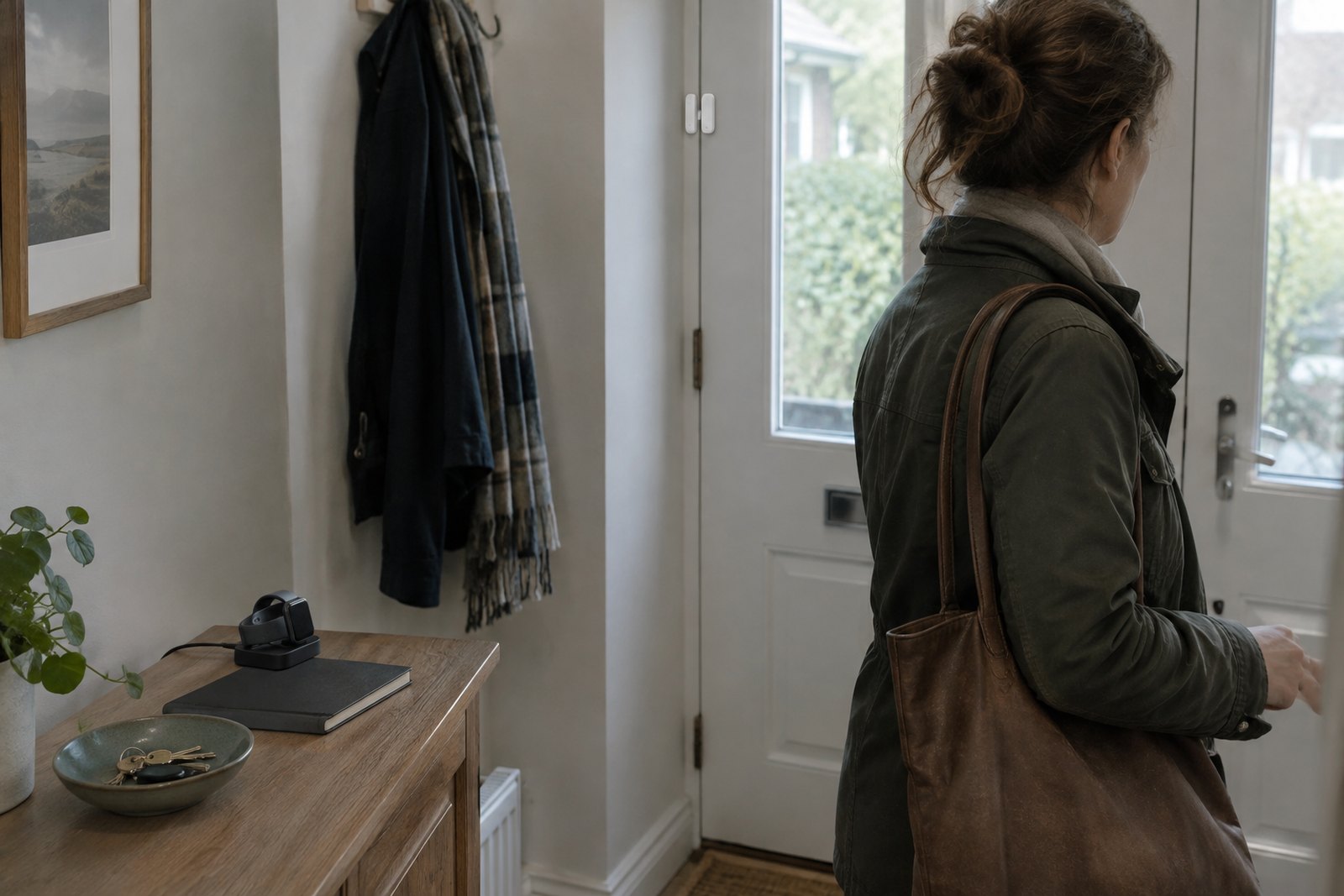
A GPS tracker for dementia or a door alarm can reduce the risk of someone leaving home and getting lost. It cannot guarantee safety, but it can give you earlier warning and a better chance of finding someone quickly. The best set-up is usually a combination of simple prevention (routine, safer routes, safer exits) and a way to respond fast if the person goes out.
People with dementia do not usually leave home "for no reason". They may be following an old routine, trying to get to a place that feels familiar, looking for someone, or trying to settle a feeling in their body like discomfort, restlessness or anxiety. If you treat it as purposeful, you can often reduce how often it happens. Then technology becomes a back-up, not the whole plan.
Why someone with dementia may keep walking and leave the house
You will see this described online as "dementia wandering". Many families dislike that word because it can sound dismissive, like the person is being difficult. In reality, it is often a form of problem-solving, habit, or distress. Understanding the pattern helps you choose the least restrictive support.
Common reasons that are easy to miss
- Old roles and routines. Going to work, doing the school run, collecting children, walking the dog, catching a bus. These routines can remain strong even when time and place awareness is shaky.
- Looking for something familiar. "I need to go home" may mean they want comfort, not a different address.
- Restlessness and pacing. Some people feel better when they move. Sitting still can increase agitation.
- Noise, crowds, or too much happening. Leaving the room or the house may be an attempt to escape overload.
- Physical discomfort. Pain, needing the toilet, hunger, thirst, feeling too hot or cold, or uncomfortable footwear can all drive someone to get up and go.
- Sleep pattern changes. Day and night can become muddled, especially later in the day and overnight.
- Anxiety or fear. If someone thinks they are late, lost, or unsafe, leaving can feel like the logical next step.
When to involve the GP
If leaving the house or restlessness is new, rapidly worsening, or happening alongside new confusion, changes in walking, new pain, fever, or not eating and drinking, contact the GP or call NHS 111 for advice. Sudden changes can have treatable causes and it is worth checking.
Your options, by type
Most families end up using two or three layers. For example: a daytime routine that includes a planned walk, a safer door set-up, and a way to locate quickly if the person does leave.
- Door sensors and door alarms that alert you when an external door opens, either with a local chime or via telecare monitoring.
- Bed and chair sensors that alert you when someone gets up, often used at night.
- GPS location devices that help you find someone if they are out, including watches, pendants, keyrings, or devices carried in a pocket.
- Practical prevention like daily walks, a safe garden, clearer cues at home, and keeping key information ready.
None of these is "best" in isolation. The right choice depends on the person, the home, who is around to respond, and how quickly risk escalates if they are outside alone.
Door sensors and door alarms (including telecare)
A door alarm for dementia is usually a sensor that detects an external door opening and then triggers an alert. Some are very simple and beep or chime in the house. Others notify a phone or a monitoring centre, which is often 24 hours but varies by provider.
Two main approaches
- Local alert. A chime, beep, or alarm sounds in the home when the door opens. This can be enough if someone is always within earshot.
- Telecare monitored alert. The door sensor triggers a call to a monitoring centre or a nominated responder list, so someone can check quickly. This can help when you are asleep, in the garden, or if the person lives alone.
If you are considering telecare, it helps to read a plain-English overview of how it works and what to ask before you sign up. See personal alarms, telecare and falls detectors.
What to think about before you fit anything
- Which door is the real risk? It is often not the front door. It might be the back door, a side gate, or a patio door that is quieter and easier to slip through.
- What happens after the alert? An alarm is only useful if someone can respond. Be realistic about night-time, showering, and days when you are exhausted.
- Will the sound distress the person? A loud siren can escalate fear. Some people do better with a gentle chime or a silent alert to a carer.
- Will it wake other people? If you are trying to protect sleep for the whole household, a phone alert in the carer's room can be better than a house-wide alarm.
- Fire safety and emergency exit. Avoid changes that make it harder to get out quickly in a fire. If you are considering extra locks or key-operated bolts, get advice first and think through every exit route.
How to make door alerts work in real life
- Pair the alert with a simple script. For example, you hear the chime and you calmly say, "It is not time to go out. Let's have a tea first." Repeating the same words can reduce friction.
- Reduce the reasons to leave. If the person is often trying to "go home", try a comfort routine at that time of day, or a short accompanied walk earlier so they are not desperate to move.
- Keep "going out" easy when it is safe. If every attempt to leave becomes a battle, the person may become more determined. Planned, supported outings can reduce the urge to bolt.
Bed and chair sensors for night-time and naps
Bed and chair sensors alert you when someone gets up. Families often use them when night-time leaving is the main risk, or when someone is unsteady and likely to fall if they stand without help.
Common types
- Pressure sensors that detect when weight lifts off a bed or chair.
- Movement sensors that detect motion in a doorway or hallway and alert you.
- Sensor mats placed beside the bed to alert when feet touch the floor. Position them carefully, as they can be a trip hazard.
Pros and cons
What they can help with: earlier warning, fewer falls if you can assist quickly, less need to "keep watch" all night, and better timing for toileting help.
What to watch for: frequent alerts can exhaust you, and some people become anxious if they feel monitored. Sensors can also miss events if the person does not move in the expected way, or if the set-up shifts. If alerts are constant, it is a sign to look again at pain, toileting, daytime activity, and sleep routine, not just the technology.
GPS trackers and location devices for dementia
A GPS tracker for dementia can help you locate someone when they are out. Devices vary, but most fall into a few categories. The best device is the one the person will actually keep with them, and that you can keep charged and maintained.
Common forms (no single option suits everyone)
- Watch-style devices. Often the easiest to keep on a person, if they tolerate wearing it. Some people remove anything unfamiliar.
- Pendants. Can be worn under clothing and may feel familiar if the person already wears a personal alarm, but use a breakaway safety lanyard to reduce strangulation risk.
- Keyrings or small trackers. Can attach to keys or a bag, but keys and bags get left behind.
- Insoles or discreet carry options. Useful if the person refuses to wear a device, but they still rely on the person wearing those shoes or carrying that item.
Limits you should assume from day one
- Charging is a care task. If you forget, the tracker is not working when you most need it. Build charging into a routine you can keep.
- The person may remove it or leave it behind. This is the biggest reason trackers fail. Consider how you will notice it is not on them.
- GPS is not perfect. Location may be delayed or inaccurate in built-up areas, inside buildings, or where signal is poor.
- You still need a response plan. A map dot is not the same as someone being safe. Think through who will go out, who stays at home, and how you communicate.
- Privacy and data. Many devices involve apps, accounts, and sometimes ongoing fees. Make sure you understand what data is stored, who can see it, and what happens if you change phones.
For some families, a GPS device is the difference between finding someone quickly and hours of panic. For others, it gives a false sense of security because the device is always on the kitchen table. Be honest about which camp you are likely to be in.
Practical steps that can reduce leaving home in the first place
Technology helps most when the basics are already in place. These steps are not glamorous, but they often reduce risk more than any gadget.
1) Make walking safer, not forbidden
- Build in a planned daily walk at the time the person is most likely to feel restless. Going together can meet the need for movement and reduce sudden solo trips.
- Use the same route so it becomes familiar and calming.
- Choose quieter times of day and avoid complicated road crossings if possible.
2) Create a safe way to be outside at home
If the person wants to go out, a safe garden or courtyard can take the pressure off the front door. See dementia-friendly garden ideas for practical, realistic options.
3) Reduce triggers near the door
- Keep coats, shoes and bags away from sight if they cue "time to go".
- Keep the entryway calm and uncluttered so you can respond quickly and safely when the door opens.
- Consider lighting and contrast so the person can see where they are going without feeling rushed or confused.
4) Use simple identification
Without naming any specific product, families often use:
- An ID card in a pocket or wallet with the person's name, an emergency contact number, and key medical information.
- Discrete labels on clothing or a coat, if the person tolerates it.
- A recent photo saved on your phone, showing what they look like now and what they were wearing that day.
ID is not a substitute for supervision, but it can help a member of the public or services contact you faster.
The Herbert Protocol and information to keep ready
The Herbert Protocol is a UK police scheme designed to help if a vulnerable adult goes missing. The idea is simple: you fill in key details in advance and keep the form ready, so you are not trying to remember everything in a crisis.
In general, the information includes a recent photo, physical description, usual walking routes, places the person might head for, triggers, communication needs, and important numbers. Ask your local police force whether they use the Herbert Protocol and how they want the information kept and shared. Even if your area uses a different form, the principle is the same: prepare now, when you are calm.
Consent, capacity and the ethics of tracking
It is normal to feel torn. You want the person safe, and you also want to respect their freedom and dignity. A tracker or door alarm can feel intrusive, especially if the person would not have agreed to it earlier in life.
Start with a conversation, not a device
Where possible, talk about it in a straightforward way: "I worry when I cannot find you. Would you be willing to wear this so we can still go out and be independent?" Some people agree more easily if it is framed as support for freedom, not control.
Think "least restrictive"
In UK practice, a good rule of thumb is to use the least restrictive option that manages the risk. For example, a planned accompanied walk and a door chime may be enough, without moving straight to locking doors or constant monitoring.
If the person cannot decide (capacity)
Capacity can vary by decision and by day. If the person cannot understand, retain, weigh up, or communicate the decision about tracking, families usually move into a best interests approach. That means thinking carefully about benefits and downsides, involving the person as much as possible, and considering what they would have wanted. If restrictions are increasing or there is conflict in the family, it is sensible to ask for professional input through the GP, social care, or an occupational therapist. If the person strongly refuses help, you may also find it useful to read when a parent refuses help at home.
If you are considering any measure that significantly restricts liberty, get advice. This is not just about what works, but what is lawful and ethical.
What to do if someone with dementia is missing
This is the part nobody wants to read, but it helps to decide your plan in advance.
If you notice they have gone
- Check quickly indoors, garden, and any outbuildings, and look for clues like missing shoes, coat, or bag.
- Check the obvious nearby places if safe to do so, such as the end of the road, the local shop, or the route they usually take.
- Call 999 if you cannot find them quickly or you believe there is immediate risk (for example, night-time, poor weather, near traffic, the person is very vulnerable, or they need medication or supervision). Tell the call handler clearly that the person has dementia and is missing, and share their description, last known location, and likely destinations.
- Have your key information ready - recent photo, clothing description, and anything from your Herbert Protocol notes.
Families sometimes worry they are "overreacting". If there is risk, it is better to call and be guided than to wait until the situation escalates.
Where an occupational therapist fits
An occupational therapist (OT) looks at how a person functions day to day, in the real environment where problems happen. With dementia and getting lost, an OT can help you balance safety with as much independence as possible.
A private occupational therapist visiting at home can:
- Map out when leaving happens and what seems to trigger it, then help you test practical changes.
- Assess the home layout and suggest environmental adjustments to reduce confusion and improve safe supervision, without turning the home into a fortress.
- Advise on assistive technology options in plain English, including whether door sensors, telecare, or location devices fit your situation.
- Support safer routines for dressing, going out, and returning home, so leaving is less likely to become a crisis.
- Help with wider safety issues that often sit alongside this, like falls risk, fatigue, or difficulty using the toilet in time.
What an OT does not do is replace medical review. If the person's behaviour has changed suddenly, or you suspect pain, infection, medication side effects, or mental health crisis, start with the GP, NHS 111, or 999 in an emergency. An OT also cannot provide round-the-clock supervision. If the risks are high, you may need social care input and a broader care plan.
If you want background reading on how home recommendations are usually made, see home adaptations: how an OT assessment works.
Frequently asked questions
Is a GPS tracker for dementia reliable?
It can be very helpful, but it is not foolproof. Assume there will be times when the device is not worn, not charged, or has poor signal. Use it as one layer alongside routines and door alerts, not the only safety measure.
Will a door alarm stop someone leaving the house?
No. It is an alert, not a barrier. Its value is that it tells you immediately when a door opens so you can respond quickly, redirect, or accompany the person.
Should I choose a tracker watch, pendant, or something hidden?
Choose what the person will tolerate and keep with them. Watches can be easier to keep on, pendants can feel familiar, and hidden options can work when someone removes devices. Each has trade-offs, so think about comfort, charging, and how you will check it is actually being worn.
Can the council provide door sensors or telecare?
Sometimes, yes, but it varies by area. Telecare and community equipment may be arranged through adult social care or local telecare services, and there may be eligibility criteria or charges. If you are not sure where to start, contact your council's adult social care team and ask about telecare, home safety equipment, and a needs assessment.
Is it legal to track my mum or dad without telling them?
This depends on whether they have capacity to decide about being tracked and, if not, what is in their best interests under the Mental Capacity Act, and in some situations it may also need deprivation of liberty safeguards authorisation. If the person has capacity, you should not track them without their knowledge and informed consent, so be open and agree a plan together. If they lack capacity, you should still aim for the least restrictive option and document your reasoning. If you are unsure, ask for professional advice.
How quickly should I call 999 if someone with dementia is missing?
If you cannot find them quickly, or you believe there is immediate risk, call 999 and explain they have dementia. You do not need to wait for a set period. If you are unsure, call and follow the call handler's guidance.
Next steps
See our home assessment page or older people and independence, check current guide prices, and choose your area below.
Talk to an occupational therapist near you
This guide is general information. For advice about your own situation - or someone you look after - a local occupational therapist can visit you at home and see it for themselves.
Choose your area: