

Dyspraxia in Children: Signs, Diagnosis and How OT Helps
By Mobile Occupational Therapist • 18 September 2026 • 12 min read
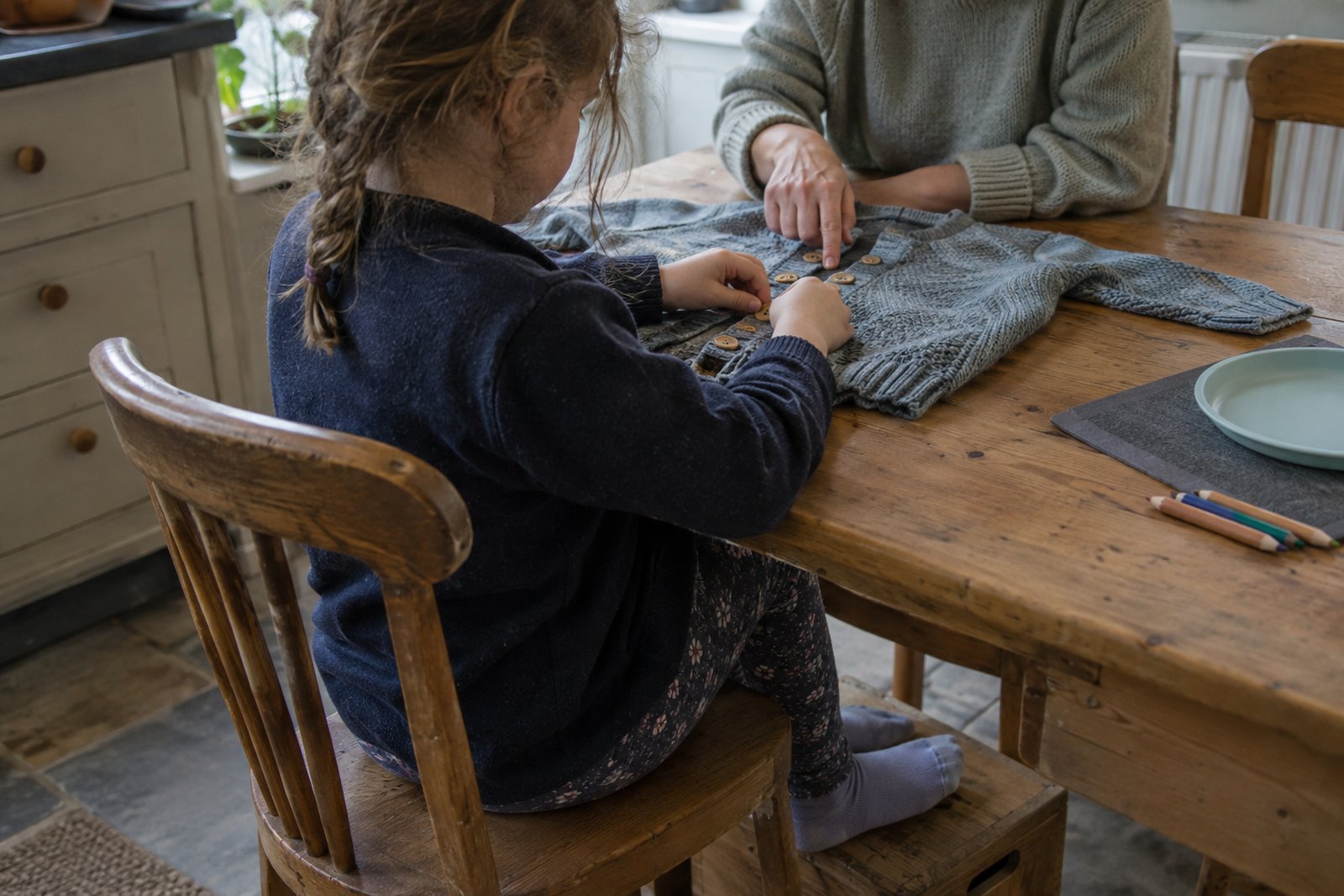
If your child seems clumsier than their friends, still cannot manage buttons, hates PE, writes slowly and messily and comes home from school completely wiped out, you may have come across the word dyspraxia. Dyspraxia is the everyday name for developmental coordination disorder, or DCD. It is a lifelong condition that affects how the brain plans and coordinates movement. It is not caused by anything you did, it says nothing about intelligence, and with the right understanding and support children with DCD do well.
In the UK, DCD is usually diagnosed by a paediatrician, often a community paediatrician, with assessments from an occupational therapist and sometimes a physiotherapist feeding in. An occupational therapist does not diagnose it alone. Diagnosis is not usually made before about the age of five, because young children vary so much. You do not need to wait for a diagnosis to start helping, though. Most of what works is practical, and you can start some of it this week.
What dyspraxia actually is
Children with DCD know what they want their body to do. The difficulty is in planning the movement, sequencing it, carrying it out smoothly, and then doing it again without having to think hard about every step. Skills other children pick up by watching and having a go, such as catching a ball, using a knife and fork or getting a jumper on the right way round, take longer to learn and need far more practice. Once learned, they may stay effortful.
The two terms get used interchangeably. Many doctors and therapists now say developmental coordination disorder because it has agreed diagnostic criteria. Dyspraxia is the word most families, schools and charities still use. In broad terms, a diagnosis of DCD means:
- the child's coordination is clearly below what you would expect for their age and their opportunities to learn
- this gets in the way of everyday life, such as self-care, play, schoolwork or sport
- the difficulties started in early childhood
- they are not better explained by another condition, such as a learning disability, a sight problem or a neurological condition like cerebral palsy
DCD often turns up alongside other things, including ADHD, dyslexia, autism and speech and language difficulties. That is worth knowing because it can change what help is needed. Verbal dyspraxia, which affects the movements needed for speech, is a different thing and is assessed by a speech and language therapist.
Signs of dyspraxia by age
No child has every sign, and plenty of children who are not dyspraxic do some of these things. What matters is a pattern that persists and makes daily life harder.
Toddlers and pre-school
- Reaching milestones such as sitting, crawling or walking later than expected, though many children with DCD reach them on time
- Bumping into things and falling over more than other children
- Finding it hard to use a spoon, cup or crayon
- Avoiding puzzles, building toys, playdough or drawing
- Struggling with stairs, jumping, climbing or pedalling a tricycle
Primary school
- Slow, untidy or tiring handwriting, with uneven letter size and spacing, or a very tight pencil grip
- Difficulty with buttons, zips and shoelaces, and getting changed for PE in time
- Messy eating and trouble using a knife and fork together
- Trouble catching, kicking, hopping, skipping or learning to ride a bike
- Problems with scissors, rulers and copying from the board
- Losing things, forgetting what to bring, and finding it hard to organise a bag or desk
Secondary school
- Handwriting that cannot keep up with note-taking or written tests
- Difficulty with practical subjects such as food technology, science experiments and design work
- Getting lost in a large school and struggling with timetables and homework deadlines
- Avoiding sport and changing rooms, sometimes leading to being left out
- New self-care tasks such as shaving, hair, make-up and cooking taking a long time to learn
The signs people miss
Tiredness is a big one. If every movement takes concentration, a school day is exhausting in a way that is hard to see from the outside. Many children hold it together at school and fall apart at home. Frustration, low confidence, avoiding anything physical, and saying they are 'rubbish' at things can all be part of the picture. Posture can look floppy, with leaning on the desk or wrapping legs around chair legs to stay steady.
When to see a GP sooner
DCD is something a child has had from early on. Some signs point to something different and should be checked promptly rather than waiting for a coordination assessment:
- your child is losing skills they used to have
- clumsiness or weakness comes on suddenly or is steadily getting worse
- weakness or unsteadiness affects one side of the body more than the other
- it comes with headaches, vomiting, changes in vision, seizures or unusual drowsiness
Book an urgent GP appointment or call NHS 111 if you are worried. Call 999 for a sudden collapse, a seizure that does not stop, or signs of serious illness.
How diagnosis actually happens in the UK
Pathways vary between areas, and waiting lists can be long, but the route usually looks something like this.
- Raise it. Talk to your GP, health visitor, school nurse or the school's special educational needs coordinator (SENCO). Bring examples: a photo of their handwriting, how long getting dressed takes, what happens in PE.
- Referral. The GP or school nurse may refer to a community paediatrician, or in some areas to a children's occupational therapy or physiotherapy service first. Some areas accept referrals from schools or parents directly. Ask what the local route is.
- Medical assessment. The paediatrician takes a history, checks development and examines your child to rule out other causes, such as a neurological condition, a sight or hearing problem, or very flexible joints that might explain the picture.
- Motor and functional assessment. An occupational therapist and or a physiotherapist uses standardised tests of coordination and looks at how your child manages real tasks: writing, dressing, eating, ball skills and balance. They also gather information from you and from school, often through questionnaires.
- Diagnosis and plan. The paediatrician brings it all together and confirms whether it meets the criteria for DCD. You should then get a report and, ideally, recommendations for home and school.
Some families choose a private assessment to get information sooner. A private occupational therapist can carry out a full assessment of motor skills and everyday function and write a detailed report with recommendations, which is useful for school and can support a referral. It is not, on its own, a medical diagnosis. Before you pay, check with your local paediatric service how they treat private reports. Our guide to NHS or private occupational therapy goes through the trade-offs.
Practical things you can start at home now
The approach with the best support behind it is practising the real task, in a way that sets your child up to succeed, rather than doing general exercises in the hope that skills transfer. Pick one or two goals that matter to your child, not a list of twenty.
Getting dressed
- Break tasks into small steps and teach the last step first (called backward chaining), so your child always finishes the job and gets the win.
- Practise at weekends when nobody is late, not at 8am on a school day.
- Lay clothes out in the order they go on, front side down.
- Choose easier fastenings for now: elastic waists, larger buttons, hook-and-loop shoes, polo shirts that pull on. Many schools are flexible about uniform if you ask.
- Sit down to dress. Balancing on one leg to get trousers on is a coordination task in itself.
- For laces, stick to one method, and try laces with two different coloured halves so each side is easy to tell apart.
Mealtimes
- Make sure feet are supported, on the floor or on a sturdy box, and the table is roughly elbow height. A stable body helps the hands.
- A non-slip mat under the plate stops it sliding.
- Cutlery with thicker handles and a plate with a raised edge take some of the pressure off.
- Practise cutting with soft foods first.
Handwriting and homework
- Same seating rules: feet flat, hips and knees roughly at right angles, table at a comfortable height.
- Try a sloped writing surface. A large ring binder turned sideways works.
- Pencil grips and chunkier pencils help some children. Let them try a few types.
- Short, frequent practice beats long sessions. Focus on forming letters correctly, not neatness.
- Start touch typing early. For many children with DCD a keyboard eventually takes over for longer work, and it is worth learning properly.
- Break homework into chunks with movement breaks in between.
Play, sport and bikes
- Swimming, climbing frames, trampolining, scooters, dancing and martial arts are often more enjoyable than team ball games, where mistakes are public.
- For catching, start with a larger, softer ball or a balloon, close up, and build from there.
- A balance bike, or a bike with the pedals taken off, can make learning to ride less daunting.
- Find something they enjoy and can get better at. Confidence matters as much as coordination.
Tiredness, organisation and confidence
- Build in downtime after school before homework.
- Use visual checklists for packing a school bag or the morning routine, with pictures for younger children.
- Pack the bag the night before and have one set place for shoes and coats.
- Praise effort and clever strategies, not just results. Explain DCD in simple terms so your child knows it is not their fault.
Getting help at school
You do not need a diagnosis for a school to support your child. In England, start with the class teacher and the SENCO. Many children with DCD are supported through SEN support, with adjustments such as extra time, writing aids, use of a laptop, help with changing for PE, adapted PE activities, and printed notes rather than copying from the board. Older children may qualify for access arrangements in exams. Schools apply for these and need evidence, so ask early.
If your child needs more help than the school can provide from its own resources, you or the school can ask the local council for an education, health and care (EHC) needs assessment. The rules are set out on GOV.UK, and IPSEA offers free independent advice. Wales, Scotland and Northern Ireland have different systems, so check your own nation's guidance.
Where an occupational therapist fits (and where they do not)
Occupational therapists focus on the everyday things your child needs and wants to do: dressing, eating, handwriting, using tools at school, playing, organising themselves, and later things like cooking and getting about independently. An occupational therapist can:
- carry out standardised assessments of coordination and fine motor skills, and watch your child doing real tasks at home and at school
- contribute to the diagnostic process alongside a paediatrician
- set specific goals with your child and family and teach strategies to reach them
- advise on seating, writing tools, equipment and easier clothing
- visit school, talk to staff, and make recommendations for the classroom, PE and exams
- write reports that can support SEN support plans or an EHC needs assessment
Seeing a child at home matters. It shows how they manage the real morning routine at the real table, and lets advice fit your house and family rather than a clinic. More on how this works is in our guide to paediatric occupational therapy.
Other professionals lead in some areas. A paediatrician makes the diagnosis and rules out other causes. A physiotherapist often leads on gross motor skills, balance, strength and posture. A speech and language therapist assesses speech difficulties, including verbal dyspraxia. An optometrist checks vision. If attention is a concern, ADHD is assessed separately, and our article on occupational therapy and ADHD explains how the two can overlap. If your child is younger or has delays across several areas, see our page on developmental delay.
If you go private, check the therapist is registered with the HCPC and has experience of working with children.
Frequently asked questions
Is dyspraxia the same as developmental coordination disorder?
Broadly, yes. DCD is the formal diagnostic term with agreed criteria, and dyspraxia is the everyday term used in the UK. Some people use dyspraxia more widely to include difficulties with planning and organisation as well as movement. Verbal dyspraxia is a separate speech condition.
At what age can dyspraxia be diagnosed?
Usually not before about five. Younger children vary so much that it is hard to be sure, though children with clear difficulties can still be referred and supported earlier. Many children are diagnosed later in primary school, or even at secondary, when the demands of handwriting and organisation grow.
Will my child grow out of it?
DCD is lifelong, but it does not stand still. Children learn skills with practice, find their own workarounds and choose activities that suit them. Many difficulties become less noticeable over time, although organisation, handwriting speed and tiredness can carry on into adulthood. We are also preparing a separate article on dyspraxia in adults.
Does my child need a diagnosis to get help?
No. Schools should support needs whether or not there is a diagnosis, and the strategies above help either way. A diagnosis can still be useful. It explains things for your child, helps school understand, and can support exam arrangements and longer-term planning.
Can an occupational therapist diagnose dyspraxia?
Not on their own in the UK. An occupational therapist assesses motor skills and daily function, and their findings are a key part of diagnosis, but a paediatrician usually confirms DCD, partly because other medical causes need to be ruled out first.
Is dyspraxia linked to ADHD or autism?
They often occur together, and it is common for a child to have more than one. If you notice difficulties with attention, social communication or reading as well as coordination, mention all of them so the right assessments can be arranged.
Next steps
If coordination is getting in the way of everyday life, see our children's occupational therapy page or assessments and reports, check current guide prices, and choose your area below.
Talk to an occupational therapist near you
This guide is general information. For advice about your own situation - or someone you look after - a local occupational therapist can visit you at home and see it for themselves.
Choose your area: