

Occupational Therapy and ADHD: Practical Help With Daily Life
By Mobile Occupational Therapist • 17 September 2026 • 7 min read
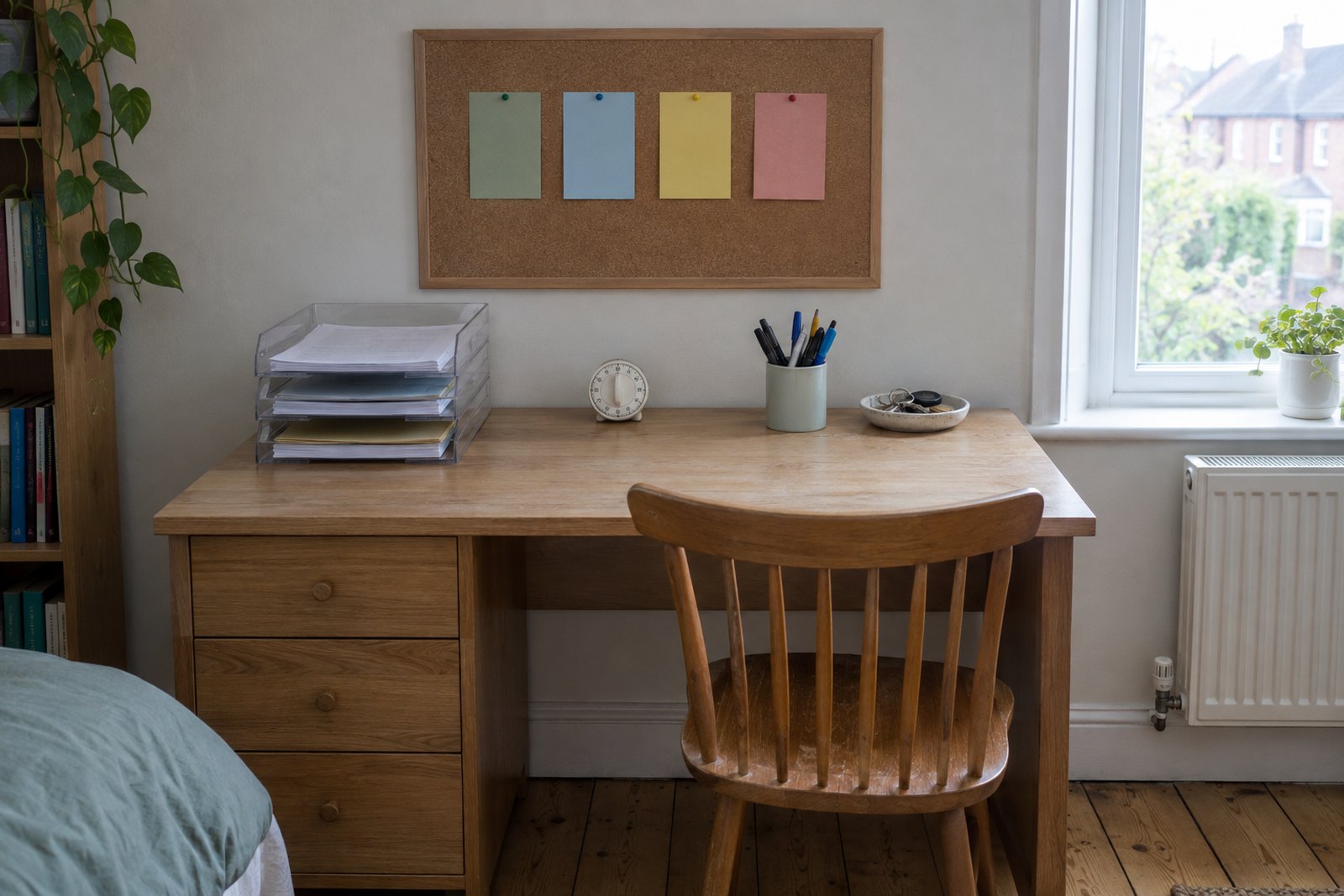
ADHD support in the UK is heavily weighted towards two things: getting a diagnosis, and getting medication. Both matter. Neither tells you how to get out of the house in the morning, why the washing never quite gets put away, or what to do about a child who cannot start their homework despite genuinely wanting to.
That gap is where occupational therapy works. It is the practical half - the systems, routines and environments that make a day possible - and it is useful for children and adults alike, with or without a diagnosis.
The reframe that does most of the work
ADHD is not, at bottom, a deficit of attention. It is better understood as a difficulty with executive function: the set of mental processes that get a task from intention to completion.
That includes starting things, estimating how long something will take, holding a sequence in mind, switching between tasks, keeping track of objects, and regulating effort and emotion. Which explains the thing that frustrates people most about ADHD - that someone can concentrate for six hours on something interesting and be unable to spend four minutes on something dull. Interest and urgency drive the system far more than importance does.
Once you see the difficulty as executive rather than attentional, the useful interventions change completely. You stop trying to make someone try harder and start building external structure that does the work the executive system is not doing reliably.
What an OT works on
Getting started
Task initiation is often the single biggest obstacle, and it responds well to structure: breaking a task into a genuinely small first step, reducing the decisions involved, pairing the task with a time or a trigger rather than an intention, and removing the friction between deciding and doing.
Time
Time blindness - difficulty feeling how much time has passed or how long something will take - is common and underrated. Practical work here includes making time visible rather than abstract (analogue timers, visual schedules), timing tasks to find out how long they really take rather than how long they feel, and building in buffers for transitions, which are where most lateness actually happens.
Organisation and losing things
Systems that rely on remembering do not work. Systems that rely on seeing do. Everything visible, a single fixed home for keys, wallet and phone, and fewer steps between where a thing is used and where it lives. The principle is to reduce the load on working memory rather than to improve it.
Sensory needs
Sensory differences are common in ADHD and often overlooked because attention gets all the airtime. Many people need considerable movement input to think clearly - fidgeting, pacing, standing to work - and struggle badly with understimulation. Others are highly sensitive to noise or touch. Understanding which pattern applies changes what a workspace should look like. Our guide to the 8 sensory systems covers this.
Sleep
Delayed sleep phase is very common with ADHD - a body clock that genuinely runs late, compounded by the difficulty of stopping an engaging activity. The work here is on the transition to bed rather than on bedtime itself, plus the sensory conditions of the bedroom.
Emotional regulation
Rejection sensitivity and difficulty modulating emotional intensity are part of many people's ADHD and are rarely mentioned in the diagnostic conversation. Occupational therapy contributes the practical layer: noticing the build-up earlier, reliable ways to discharge it, and reducing the daily friction that stacks up before it.
For children
With children, most of the work goes into the routines that reliably fail - mornings, homework, bedtime - and into coaching parents, because a strategy only helps if the adults around the child can run it consistently.
Typical ground: visual sequences for getting ready, so the routine lives on the wall rather than in the child's head and nobody has to nag. Movement built in before sitting tasks, rather than treated as a reward for having sat still. Homework broken into short, timed blocks with movement between them. A workspace set up for the child's actual sensory needs, which for many children means standing, moving or fidgeting rather than sitting still. And practical strategies to pass on to school.
One thing worth saying to parents: a child with ADHD is usually not choosing not to start. The gap between wanting to do something and being able to begin is real, and it is the part external structure is best at closing.
For adults
Adults - particularly those diagnosed later in life - usually arrive with decades of workarounds, a lot of accumulated shame, and a sense that everyone else got an instruction manual. The useful work is rarely about trying harder. It is about building systems that do not depend on willpower, and dropping the ones that were never going to work.
Common ground: work environment and routines, household systems that survive a bad week, managing admin, paperwork and money tasks that get avoided until they become urgent, and reasonable adjustments at work.
On that last point - in the UK, ADHD may be covered by the Equality Act 2010 where it has a substantial and long-term effect on daily activities, which means employers should consider reasonable adjustments. Access to Work may also be able to help with support and equipment, though eligibility and what is offered vary, so treat it as worth investigating rather than as a guaranteed route. Our workplace and ergonomics page covers the assessment side.
What occupational therapy does not do
- It does not diagnose ADHD. Diagnosis is a separate process, normally starting with your GP and going to a psychiatrist or specialist ADHD service.
- It does not prescribe or manage medication. That is your prescriber's territory, and OT works alongside it rather than instead of it.
- It is not talking therapy. If the main difficulty is anxiety, low mood or trauma, that is a different referral - though the two often run in parallel.
Do you need a diagnosis first?
No. Occupational therapy works from the difficulties, not the label, and waits for ADHD assessment in the UK are long enough that waiting to make daily life easier would be a poor trade. Nothing in the practical work above depends on a diagnostic outcome.
Frequently asked questions
Is occupational therapy available for ADHD on the NHS?
It varies widely. OT is more commonly attached to paediatric or mental health services than offered for ADHD specifically, and adult provision is patchy. Ask your GP or ADHD service what exists locally.
Does this work alongside medication?
Yes, and the combination is usually stronger than either alone. Medication can improve the capacity to act; the systems and routines determine what that capacity gets spent on. Plenty of people find strategies suddenly become easier to implement once medication is settled.
My child is already on medication but mornings are still chaos. Is that normal?
Very. Medication timing often means it has not taken effect during the morning routine at all. That routine usually needs structural help regardless - which is exactly the sort of thing a visual sequence and a reduced number of decisions can fix.
How long does it take to see a difference?
Some changes - a visual routine, a fixed place for keys, a timer - work within days. Others take longer and need adjusting. Be cautious of anyone promising a specific timescale before they have met you.
I have ADHD and autism. Does that change things?
It is a common combination and it does shape the work, because the two can pull in different directions - a need for novelty alongside a need for predictability, for instance. It is worth saying so at the outset so the strategies account for both. Our guide to occupational therapy for autistic children may also be useful.
Next steps
If the difficulty is daily life rather than diagnosis, a home visit is a practical place to start - and doing it where the routines actually happen is the point. See our home assessments page for adults or children's occupational therapy for under-18s, or find your local therapist through the areas we cover.
Talk to an occupational therapist near you
This guide is general information. For advice about your own situation - or someone you look after - a local occupational therapist can visit you at home and see it for themselves.
Choose your area: