Dyspraxia Assessment in the Staffordshire Moorlands: Parents' Guide
By Mobile Occupational Therapist • 2 November 2026 • 10 min read
Local Occupational Therapist -
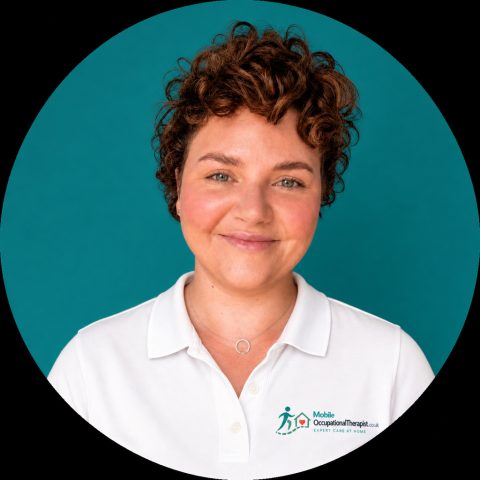
Georgie Leeson, Staffordshire Moorlands

If you are looking for a dyspraxia assessment in the Staffordshire Moorlands, here is the plain version. A private occupational therapist can visit you at home in Leek, Cheadle, Biddulph or the villages around them. They will look closely at how your child moves, plays, dresses, eats and writes, then give you a written report with practical recommendations for home and school. What an occupational therapist does not usually do on their own is give the diagnosis. In the UK, developmental coordination disorder (DCD, the name most clinicians now use for dyspraxia) is usually diagnosed by a paediatrician, often drawing on an occupational therapy assessment, and usually not before a child is about five.
So there are two routes, and plenty of families use both. The NHS route goes through your GP to a paediatrician. The private route gets you a detailed picture of your child's difficulties, and ideas you can use, without waiting for a diagnosis first. Neither is wrong. This guide explains what each involves, what a report can and cannot do, and what you can try at home in the meantime.
Who actually diagnoses dyspraxia
This is the bit many websites skate over, so it is worth being clear. A diagnosis of DCD means a doctor is satisfied of four things: your child's coordination is well below what you would expect for their age, it gets in the way of everyday life or school, it started early in their development, and it is not better explained by something else, such as a neurological condition, a problem with vision or a wider learning disability. That last part is a medical job. It usually needs a paediatrician to examine your child and rule other things out.
An occupational therapy assessment often feeds into that. Standardised movement tests, observations of handwriting and self-care, and the school's view all help the doctor. But an occupational therapist working privately should not tell you your child "has dyspraxia" as if that settles it. If anyone offers a stand-alone diagnosis from a single visit, ask how it will be recognised by school and the NHS.
Age matters too. Young children vary enormously in how quickly they pick up running, catching, using a spoon or holding a pencil. That is why a formal diagnosis is not usually made before about five unless difficulties are very marked. It does not mean you have to wait for help. A younger child can still be assessed and supported. The label just tends to come later.
One important exception. If your child is losing skills they used to have, has new weakness, unusual headaches, or a sudden change in walking, balance or speech, do not wait for a coordination assessment. See your GP promptly, call NHS 111 if you are unsure how urgent it is, and call 999 in an emergency. That is not what dyspraxia looks like and it needs a doctor.
What a private occupational therapy assessment involves
Every therapist works a little differently, but a good assessment for coordination difficulties usually has three parts.
Before the visit
You will usually be asked for background: when your child sat, crawled, walked and talked, any health conditions, and what worries you most. Many therapists also ask for the school's view, because a child who copes at home can struggle with a crowded classroom and a pencil. Jot down examples beforehand. "Can't do buttons" is useful. "Takes twenty minutes to get dressed and cries most mornings" is more useful.
On the day
Seeing your child at home means seeing real life: the stairs, the dinner table, the coat that will not zip. Expect a mix of:
- Play and movement - balancing, hopping, catching, jumping, managing stairs.
- Fine motor tasks - drawing, writing, cutting with scissors, threading, building.
- Everyday tasks - fastenings, shoes, cutlery, packing a bag.
- Standardised tests - structured activities scored against what is typical for children of the same age, which give the findings weight with school and doctors.
- Talking - with you, and with your child if they are old enough, about what they want to be able to do.
Most children find it quite fun. If yours gets tired or upset, a sensible therapist takes a break rather than pushing on.
The report
The report is what you are really paying for. It should describe what your child finds hard and why, in language you and a teacher can follow, with scores where tests were used. Most usefully, it should set out specific recommendations: what to change at home, what school could try, and whether a referral to a paediatrician, physiotherapist or speech and language therapist might help. If you want the report to support a GP referral, say so at the start so it is written with that in mind.
Our guide to dyspraxia in children covers the signs in more detail, and our dyspraxia condition page pulls together everything we have on the subject.
What school can do with the report
Good news first: your child does not need a diagnosis to get help at school. Schools in England are expected to respond to a child's needs, not their label. A clear report simply makes it much easier for them to know what to do.
Share it with the class teacher and the SENCO (the special educational needs coordinator). Things a report often leads to include:
- A writing slope, pencil grips, or a chair and table at the right height so feet are flat and arms supported.
- Extra time for written work, or less copying from the board.
- Typing or other ways of recording answers once handwriting is getting in the way of learning.
- A quieter spot to change for PE, or coming to school already dressed for it on PE days.
- Short, regular practice of one particular skill rather than piles of general worksheets.
- Thinking ahead to exam access arrangements in later years.
This usually sits under SEN support, which our guide to SEN support in school explains. If your child's needs are more complex and SEN support is not enough, you can ask the local authority for an education, health and care needs assessment. An occupational therapy report can be part of the evidence, and our guide to EHCPs and what an OT report adds walks through it. GOV.UK sets out the current rules and timescales, so check there before you apply.
The NHS route
If you want a formal diagnosis, start with your GP. Take your notes and anything you have from school or nursery. The GP can refer your child to a paediatrician, and sometimes to NHS children's occupational therapy or physiotherapy. The school may also be able to raise concerns through the school nurse. The NHS route costs nothing and is the usual way to a diagnosis.
What NHS services can offer, and how quickly, varies, so ask your GP what to expect. Some families in Leek, Cheadle, Biddulph and the villages around them choose a private assessment while they wait, or alongside. A private report can be shared with your GP and paediatrician, and you can stay on any NHS waiting list. You do not have to pick one or the other.
Practical help at home while you wait
None of this replaces an assessment, but it is the sort of thing occupational therapists often suggest first, and most of it costs very little.
- Break tasks into steps. Getting dressed is ten small jobs, not one. Teach one step at a time, often starting with the last so your child gets the satisfaction of finishing.
- Sit them well. Feet flat on the floor or on a box, table around elbow height. Wobbly sitting makes everything harder, from eating to writing.
- Make clothes easier on busy days. Elastic waists and pull-on or hook-and-loop shoes for school mornings. Practise buttons and laces at weekends when nobody is in a hurry.
- Stop things sliding. A non-slip mat under a plate or a sheet of paper helps. Chunkier pencils and cutlery are easier to hold.
- Build in big movement. Climbing, swimming, scooting, pushing a loaded trolley. Not as a cure, but because practice matters, and fun practice actually happens.
- Talk it through. Ask "what is your plan?" before a tricky task and "how did that go?" afterwards. Thinking about how often helps more than trying harder.
- Protect their confidence. Many of these children know they are the last one picked at PE. Praise effort, find things they are good at, and tell teachers about the tiredness.
Georgie Leeson, occupational therapist for the Staffordshire Moorlands
The occupational therapist who covers this area on our directory is Georgie Leeson, an HCPC-registered Clinical Specialist Occupational Therapist. Georgie works with children and young people with complex needs and visits families at home across the Staffordshire Moorlands, so the work happens where your child actually lives. Paediatrics is one of the services Georgie offers, alongside support with sensory needs, and our children's occupational therapy page explains what that service covers.
Georgie's profile describes thorough assessments leading to an individual plan, with a focus on everyday skills, independence and emotional regulation. It also describes working together with families, schools and other health professionals, so therapy joins up rather than sitting in a separate box.
One approach the profile names is Cognitive Orientation to daily Occupational Performance, usually shortened to CO-OP. In plain terms, the child chooses the goals, such as riding a bike, tying laces or writing more neatly, and learns a simple thinking routine: goal, plan, do, check. Rather than the therapist drilling a movement, the child is guided to work out a plan, try it and decide what to change. The idea is that children learn how to tackle new skills, not just one. Whether it suits your child is something to talk through with Georgie.
If you live in Leek, Cheadle, Biddulph, Endon, Blythe Bridge or a village nearby, our Staffordshire Moorlands area page has more on occupational therapy locally.
Frequently asked questions
Can an occupational therapist diagnose dyspraxia?
Not usually on their own in the UK. A paediatrician normally makes the diagnosis of DCD, often using an occupational therapy assessment as part of the evidence. What an occupational therapist gives you is a detailed picture of your child's skills and practical recommendations.
How old does my child need to be?
A formal diagnosis is not usually made before about five. A younger child can still have their skills assessed and get practical support, which is often worth doing rather than waiting.
Will school accept a private report?
Schools can use any clear professional report to plan support, though they decide what to put in place. Ask the SENCO to meet with you to go through the recommendations. You can check any occupational therapist on the HCPC register before you book.
Is DCD the same as dyspraxia?
In everyday use, broadly yes. Doctors and therapists in the UK increasingly use DCD as the formal term, while many families and schools still say dyspraxia. You may see both in the same report.
Can we get help with adaptations at home?
Most children with coordination difficulties need small changes rather than building work. If a disabled child does need adaptations, Staffordshire County Council's Children and Families Services is the starting point, and the Disabled Facilities Grant has no means test for a disabled child. Our Moorlands grant page explains who to contact.
Next steps
If you would like a private assessment for your child, read Georgie's profile, check the prices page, and send Georgie an enquiry describing what your child finds hard and what you would most like to change.