

Contractures: Preventing Stiff Joints With Positioning And Movement
By Mobile Occupational Therapist • 22 September 2026 • 16 min read
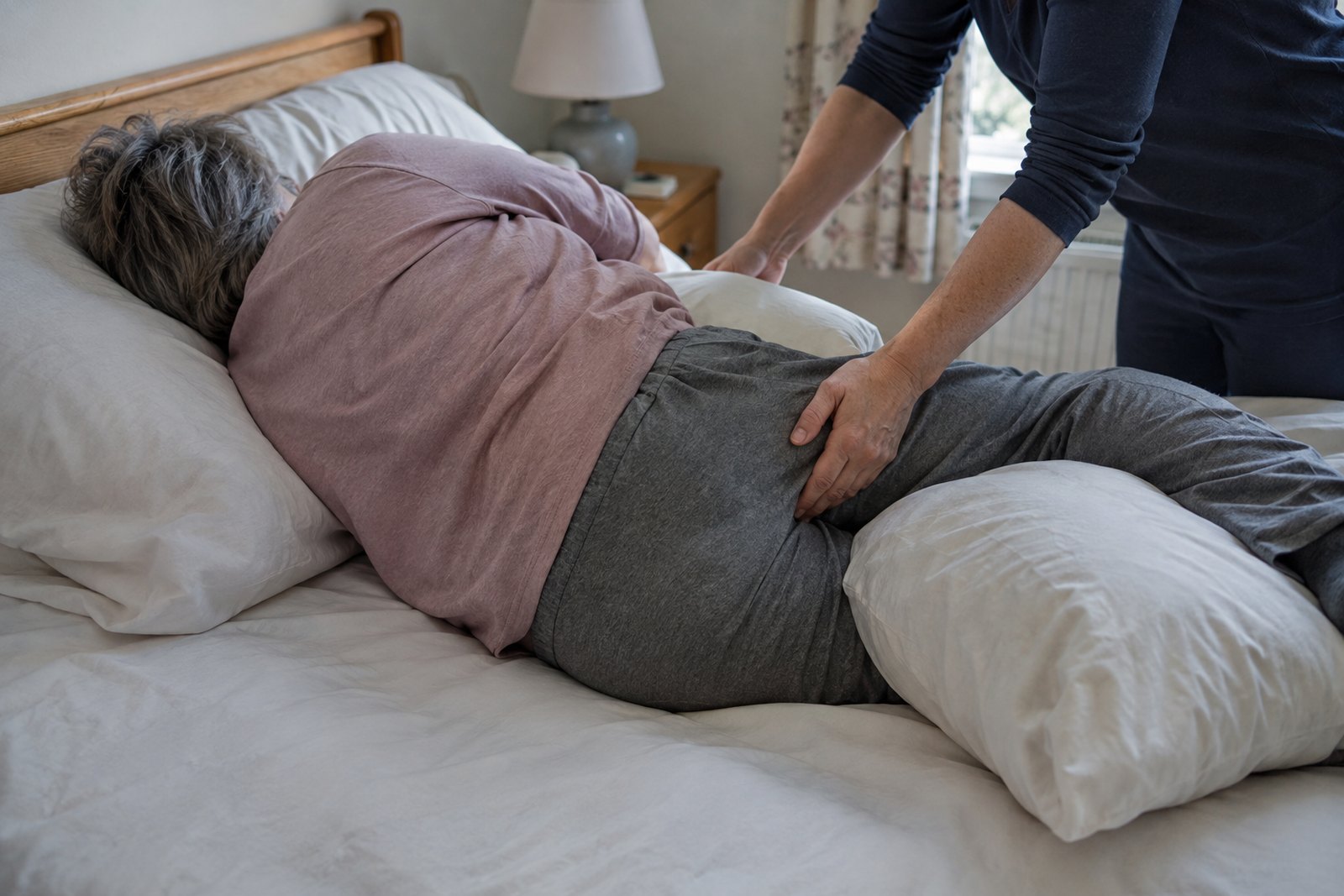
A contracture is when a joint becomes hard to straighten (or bend), often because muscles, tendons, skin and other soft tissues around the joint have gradually tightened or shortened over time. It can happen when someone cannot move a limb normally for weeks or months, or when the muscles are pulling strongly in one direction.
If you are caring for someone at home, contracture prevention is mostly about two things: positioning (how they are supported in bed and in a chair) and regular gentle movement (only within what has been advised by the therapy team). You do not need complicated equipment to make a start, but you do need a plan that is safe for that person and realistic for you.
what a contracture is and why it happens
Joints are designed to move through a range. When a joint is not moved much, the body adapts. Muscles that stay in a shortened position for long periods get tighter. The tissues around the joint can also stiffen. Over time, the joint can start to feel stuck, or it may only move part of the way.
Contractures are common in limbs that are affected by weakness, stiffness, changes in muscle tone (including spasticity), pain, swelling, or low awareness after a neurological condition. They can also develop simply because someone is spending most of the day in bed or sitting in one position.
Contractures can affect almost any joint, but at home carers often notice them in:
- Ankles (toes pointing down, heel lifting when you try to stand or walk, difficulty getting a foot flat on the floor)
- Knees (leg stays bent and cannot straighten fully)
- Hips (difficulty opening the legs for washing and dressing, or difficulty sitting comfortably)
- Elbows (arm stays bent)
- Wrists, hands and fingers (clenched fist, curled fingers, thumb tucked in)
- Shoulders (painful, limited movement, difficulty lifting the arm for dressing and washing)
who is most at risk
Anyone can develop a contracture if they are not moving normally, but the risk is higher when movement is limited for a long time or when muscle tone is pulling the limb into one position.
People at higher risk include those who:
- Have had a stroke
- Live with multiple sclerosis (MS)
- Have had a brain injury
- Have cerebral palsy or long-term physical disability
- Have advanced dementia and are moving less
- Are bedbound or spend most of the day in one chair
- Have spasticity or very high muscle tone (a strong pull into bending or pointing)
- Have pain that makes movement hard
If spasticity is part of the picture, it helps to understand it properly because the approach is often slower and more about calm handling and good positioning than forceful stretching. See spasticity after a stroke or MS: daily life and positioning for a plain-English explanation.
why prevention matters in real life
Contractures are not just a range-of-movement issue. They can make everyday care much harder.
- Pain and sleep: stiff joints can ache, spasm, or hurt during washing and dressing. Pain then reduces movement further.
- Hygiene and skin health: a clenched hand can trap moisture in the palm, nails can dig into skin, and it can be difficult to clean properly. Tight hips and knees can make toileting and intimate care more difficult.
- Pressure sore risk: if someone is stuck in one position, pressure builds on the same areas.
- Dressing and washing: putting an arm into a sleeve, pulling up trousers, washing under an armpit, or cutting toenails can become a battle.
- Seating and posture: if hips or knees cannot bend or straighten well, it becomes harder to sit safely, stay upright, and use a wheelchair well.
- Transfers: standing, stepping, or using transfer equipment can become harder if the ankles cannot come to a flat position.
Prevention matters because once a contracture is established, it can be difficult to reverse fully. The earlier you start, the more difference small routines can make.
what you can do today: the basics that actually help
Contracture prevention at home works best when it is regular, comfortable, and built into daily care. A ten minute routine you can keep up is worth more than an hour-long routine you cannot repeat.
1) aim for a supported, neutral position most of the time
Think about where the body rests when nobody is adjusting it. That is the position the tissues are being asked to adapt to for hours at a time.
Aim for positions that keep joints gently opened rather than tightly bent or pulled in. This is not about forcing the limb straight. It is about not leaving it in the tightest position all day.
2) change position regularly
If someone spends long periods in bed or a chair, small position changes matter. Even a slight adjustment can reduce pressure on the same areas and changes what the muscles are doing.
If the person is at risk of pressure sores or is largely bedbound, follow the plan you have been given by healthcare professionals. For practical guidance on safe turning and the realities of doing this at home, see repositioning in bed: how often and how to do it safely.
3) add gentle movement little and often
Movement does not have to mean a formal exercise session. You can build it into what you already do:
- Before washing or dressing, gently move the joint through the comfortable range you have been shown.
- During TV time, support the arm or leg in a better position for ten minutes.
- If the person can participate, encourage them to do the movement themselves, even if it is small.
Never force through pain or a sudden hard stop. If movement is becoming harder week by week, that is a reason to ask for review.
4) reduce triggers that increase tightness
Muscles often tighten more when the person is uncomfortable or stressed. Common triggers include pain, being rushed, awkward handling, constipation, infection, poor seating, and cold.
You cannot fix everything, but you can slow down, keep handling calm, check whether clothing is pulling, and speak to the GP or nurse if there are signs of illness or pain that is not controlled.
positioning in bed: practical ideas carers use
Positioning advice should be individual, especially if someone has a neurological condition, recent surgery, fragile skin, or pain. But the principles below are a good starting point for thinking clearly about what you are trying to achieve.
start with straightness and symmetry
When you look at the person in bed, check:
- Is the head midline, or twisted to one side?
- Are shoulders level, or is one pushed forward and rounded?
- Is the pelvis straight, or rotated?
- Are hips and knees always bent?
- Are feet always pointed down, or falling out to the side?
Small changes in the pelvis and shoulders often make the biggest difference. If the pelvis is twisted, the legs will tend to follow.
support the limb so it can relax
People often assume contracture prevention is about pushing a limb straighter. In real life, it is more often about supporting a limb so the person is not fighting gravity or discomfort.
- Arms: if an arm tends to curl up, make sure it is supported on pillows so the shoulder is not dragged forward. A shoulder that sits in a poor position can become painful quickly.
- Hands: if the hand clenches, keep the wrist and fingers as open as is comfortable. Some people are helped by having the hand resting on a pillow with the palm gently opened. If you have been given a hand splint, use it exactly as instructed and check the skin.
- Legs: if knees tend to stay bent, support under the whole leg rather than leaving the knee hanging over a pillow with the calf unsupported. Be cautious about placing large pillows directly under the knees for long periods if the person already tends to bend their knees.
- Feet and ankles: if the toes point down most of the time, ask your therapy team about safe ways to support the foot at a more neutral angle. Do not improvise with rigid items in bed that could increase pressure on the feet or toes.
side-lying is often useful
Many people spend all day on their back because it feels simplest. Side-lying (when safe and comfortable) can:
- change pressure areas
- reduce pulling on a tight shoulder
- make it easier to position the affected arm forward and supported
However, side-lying needs good pillow support so the person does not collapse forward and twist. If you are unsure, ask for a therapist to show you a set-up you can copy.
avoid leaving someone propped in bed for long periods
Being half-sat up in bed can be a comfortable short-term position, but for some people it leads to sliding down, rounded shoulders, a tucked pelvis, and hips and knees stuck in bending. If someone spends hours like this, it can contribute to stiffness and pressure problems.
If the person needs to be upright for breathing, comfort, or feeding, discuss the best set-up with the team. Sometimes it is better to use a supportive chair for part of the day, with proper seating and foot support, rather than living permanently in a propped position in bed.
positioning in a chair or wheelchair
A contracture prevention plan fails quickly if someone sits for hours in a chair that does not fit them. Poor seating makes the body tense. Tense muscles pull joints into the same patterns all day.
Basics to check (and to write down, so everyone is consistent):
- Pelvis position: is the person sitting on their bottom bones, or have they slid forward into a slumped posture?
- Hips: are hips roughly level and comfortably apart, or is one hip hiking up or the knees pulled together?
- Knees and feet: are the feet supported on the floor or on footplates, or are they dangling or tucked back under the chair?
- Trunk and head: are they upright enough for eating and drinking and, if there are any swallowing concerns, are you following speech and language therapist advice, as well as being able to see the room and use their hands?
- Arms: are arms supported so shoulders can relax, especially on the affected side?
If the person has spasticity or a strong pull into a particular posture, the aim is usually to support them in the best position they can tolerate and build time gradually. Long periods of discomfort tend to increase tone and make things worse.
If you notice the person always leans one way, always crosses their legs, always pulls one arm in tightly, or seems to get stiffer the longer they sit, that is worth a review.
gentle movement and stretches: do's and don'ts
Movement helps maintain range and can reduce discomfort, but only when it is done safely. People get into trouble when they assume more force is better.
do: follow what you have been taught
If a physiotherapist or occupational therapist has shown you specific movements, copy the technique and the pace. Ask them to watch you do it at least once, because small details matter.
If nobody has shown you, do not guess with aggressive stretching. Instead, focus on positioning and ask for referral or review.
do: go slowly and stay within comfort
A slow movement gives muscles time to relax. A fast movement can trigger a reflex tightening, especially with spasticity.
Look for signs the person is tolerating it: steady breathing, reduced grimacing, less pulling away, less resistance over time.
do: build movement into care tasks
Many carers find it easiest to link movement to tasks they already do:
- Gently open the hand during hand washing and drying (within tolerance) to clean and dry the palm properly.
- During dressing, pause and support the arm out in front for a few breaths rather than rushing through resistance.
- After changing pads or clothing, help the person straighten the knee as far as comfortable before settling them again.
don't: force through pain, swelling, or a hard block
If there is a sudden increase in pain, heat, swelling, or the joint feels blocked, stop and seek advice. Forcing can cause injury, especially if the person has fragile bones, reduced sensation, or cannot tell you clearly what it feels like.
don't: assume one routine fits everyone
Two people can both have a clenched hand for different reasons. One may respond well to gentle daily opening and good support. Another may have high tone where the priority is calm positioning, pain management, splint review, and specialist input.
splints and positioning equipment: what to know
Splints (and other positioning aids) can help maintain a joint in a better position for periods of time. They can also cause harm if they are poorly fitted, used for too long, or used when the person has changed.
At home you might come across:
- Hand or wrist splints to support the wrist and help keep the hand more open
- Ankle supports to help keep the ankle nearer to a neutral position
- Elbow splints to limit the tendency to stay tightly bent
- Specialist cushions and supports to improve positioning in bed or chair
Important points if someone is using a splint:
- Use it exactly as prescribed, including how long to wear it and when to take breaks.
- Check the skin every time it comes off. Look for red marks that do not fade, blisters, broken skin, swelling, or complaints of burning or numbness.
- Keep skin clean and dry, especially in a clenched palm or between toes.
- Expect the plan to change. Weight changes, swelling, pain, and changes in muscle tone can all affect fit.
If a splint is leaving marks, the person is resisting it more than before, or their hand or foot looks different, ask for review rather than trying to adjust it yourself.
signs you should ask for help
Ask for a therapy review (through the GP, community team, or your existing services) if you notice:
- new stiffness that is clearly increasing over days or weeks
- new pain on movement or at rest
- new difficulty with washing, dressing, toileting, transfers, or seating that seems related to joint position
- skin changes, including redness, blisters, broken skin, or moist skin in a clenched hand
- splint problems, such as pressure marks, swelling, numbness, or the splint no longer fitting
- spasms or a sudden increase in muscle tightness that makes care unsafe
Seek urgent medical advice if there is a suspected fracture, a hot swollen joint, sudden severe pain, new confusion, or signs of serious illness. If you are worried something is immediately dangerous, call 999. If you are unsure and it is not an emergency, NHS 111 can help you decide what to do next.
who can help: physio, occupational therapy and others
Contracture prevention is usually shared between professionals, with you and the person at the centre.
- Physiotherapists often lead on movement and exercise programmes, transfers and walking practice, and advice on posture, and they often contribute to plans to manage muscle tone alongside the wider team.
- Occupational therapists focus on how stiffness affects daily life, care routines, seating, equipment, and practical ways to make washing, dressing, toileting, and activity easier and safer.
- District nurses often support skin care and pressure area management, particularly if someone is bedbound or at risk of pressure sores.
- GPs help rule out medical causes of increased stiffness (such as infection or pain) and can refer into community rehabilitation services.
If you are unsure who to ask, it may help to read occupational therapist vs physiotherapist: what is the difference. In practice, many people need both.
where an occupational therapist fits
A private occupational therapist visiting at home can help when you need a clear, workable plan that fits your home, your routines and the person you care for. That might include:
- watching how the person is currently positioned in bed and in their usual chair, and making practical changes you can actually keep up
- reviewing washing, dressing and toileting routines to reduce pain and resistance, and to protect vulnerable joints
- advising on seating set-up, arm support, foot support and how long to sit before changing position
- recommending appropriate equipment (for example supports, aids for washing and dressing, or seating solutions), and explaining what is realistic
- co-ordinating with physiotherapy goals so positioning and movement are working together rather than fighting each other
On a home visit, an occupational therapist will usually look at the whole pattern of the day: where time is spent, where stiffness is building, and what you can change without turning your life into a rota. If you want to know what that looks like in practice, see what does an occupational therapist do on a home visit.
Frequently asked questions
can a contracture be reversed?
Some stiffness can improve, especially if it is caught early and the joint still has some movement. Established contractures can be much harder to fully reverse. The realistic goal is often to prevent it getting worse, keep the person comfortable, and protect hygiene, seating and skin.
how quickly do contractures develop in bedbound patients?
It varies. Some people become noticeably tighter within weeks, especially with high muscle tone, pain, or very little movement. Others change more slowly. If you are seeing a clear week-by-week reduction in movement or a new fixed posture, ask for help sooner rather than later.
should I stretch a stiff arm or leg every day?
Gentle movement is often helpful, but it needs to be the right movement, at the right pace, and within comfort. If a therapist has shown you a routine, doing it little and often is usually more effective than occasional long sessions. If you have not been taught what to do, focus on positioning and ask for assessment rather than experimenting with strong stretches.
my relative's hand is clenched. is that automatically a contracture?
Not always. A clenched hand can be caused by spasticity, pain, sensory discomfort, anxiety, or a habit that has developed. It can lead to a contracture over time if the hand is always held tightly closed. The practical priority is usually palm hygiene, comfortable positioning, and getting advice on whether a splint or specific routine is needed.
are splints always needed to prevent contractures?
No. Many people do well with consistent positioning, good seating, and gentle movement. Splints are more likely to be considered when a joint is persistently pulled into one position, when the person cannot move it themselves, or when hygiene and skin care are being affected. They should be fitted and reviewed by a professional, with skin checks built in.
when should I stop and seek medical advice?
Stop and ask for help if there is sudden severe pain, a hot swollen joint, suspected fracture, new numbness, broken skin, or a splint is leaving pressure marks. If you are worried it could be an emergency, call 999. If it is urgent but not life-threatening, contact NHS 111 or your GP for advice.
Next steps
See our home assessment and neurological occupational therapy pages, or current guide prices, and choose your area below.

Talk to an occupational therapist near you
This guide is general information. For advice about your own situation - or someone you look after - a local occupational therapist can visit you at home and see it for themselves.
Choose your area: