

Spasticity After a Stroke or MS: Daily Life and Positioning
By Mobile Occupational Therapist • 15 October 2026 • 13 min read
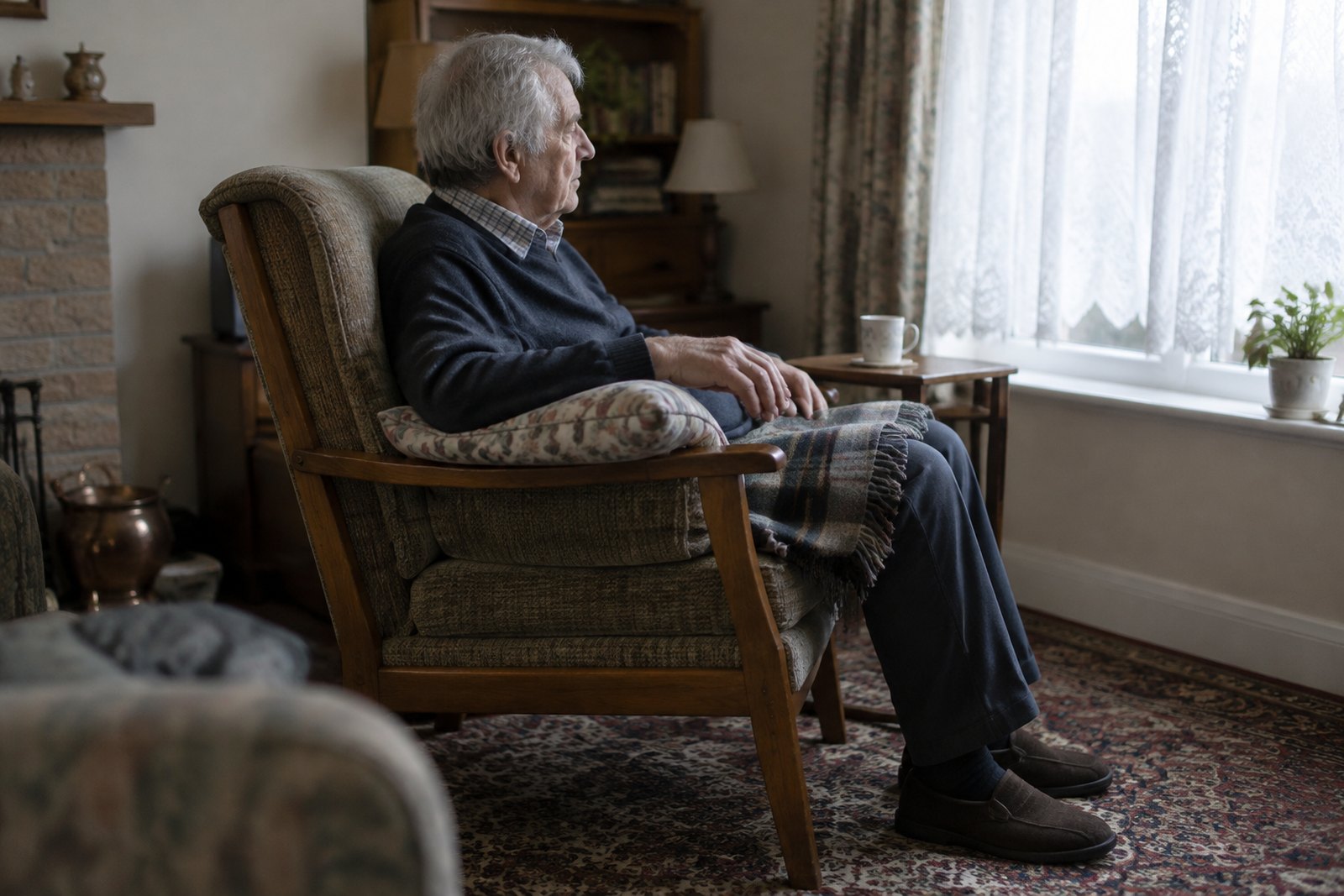
Spasticity is muscle stiffness and tightness, often with spasms, that happens when the brain or spinal cord has been damaged and can no longer properly control how muscles relax. It is common after a stroke, with multiple sclerosis (MS), after a brain or spinal cord injury, and in cerebral palsy. It can pull an arm in towards the chest, clench a hand, make a leg go rigid or kick out, and turn getting dressed or rolling over in bed into a battle.
It cannot always be cured, but it can usually be made more manageable. Most of what helps day to day is not dramatic: dealing with the things that set it off, good positioning in bed and in a chair, regular stretching that a physiotherapist shows you, splints where they are needed, and easier ways to do everyday tasks. Medicines and injections can help too, and a doctor decides on those. And one thing everyone living with spasticity should know: a sudden increase in stiffness or spasms is often a sign that something else is wrong, very often an infection.
What spasticity actually is (and why it is not all bad)
Normally your brain sends a constant stream of messages that keep muscles at the right tension: firm enough to hold you up, relaxed enough to let you move. When those pathways are damaged, some muscles become overactive. They resist being stretched, especially if the stretch is quick, and they may tighten or jerk on their own. Those jerks are spasms. In the legs they may be flexor spasms, where the hips and knees pull up, or extensor spasms, where the leg shoots out straight and stiff.
It varies enormously. Some people notice a bit of tightness in a calf. Others have an arm held bent across the chest most of the time. It also changes through the day and from week to week, which is why it can feel so unpredictable.
Two honest points. First, some stiffness can be useful. A stiff leg helps some people stand and move from bed to chair, and taking all of it away would leave them weaker. So the aim is usually better comfort and function, not zero stiffness. Second, spasticity that is left alone can lead to contractures, where muscles and the tissues around a joint shorten so the joint can no longer be straightened fully, even with help. Contractures are far easier to prevent than to undo. That is why the dull, daily things in this article matter.
If a stroke has left one side of the body weaker as well as stiffer, our guide to living with one-sided weakness after a stroke covers the wider picture.
What makes spasticity worse
Think of spasticity as an amplifier. Anything that irritates the nervous system tends to turn it up. Common culprits include:
- Infection, especially urine infections and chest infections. Sometimes increased stiffness is the first sign, before any fever.
- Constipation and a full bladder. These are among the most common and most overlooked triggers.
- Pain anywhere: a sore shoulder, an ingrown toenail, toothache, period pain, a tight splint.
- Pressure sores or skin damage, often in places the person cannot feel well, such as heels, buttocks or the base of the spine.
- Tight clothes and straps: waistbands, socks, shoes, bra straps, catheter leg bag straps.
- Cold: a cold bedroom, cold hands, stepping out of a warm bath into a chilly bathroom.
- Tiredness, stress and anxiety.
- Rushing, or being moved quickly by someone else.
- Poor posture: slumping, sliding down a chair, or lying in one position for hours.
For people with MS, heat can make other symptoms such as fatigue and weakness worse, so the goal is comfortably warm, not hot.
A useful habit: keep a simple diary for a week or two. Note when stiffness or spasms are worse and what was going on at the time. Patterns often appear. Worse the day before the bowels open. Worse on cold mornings. Worse when the carer is in a hurry. Those are things you can change, and the diary gives your GP, nurse or physiotherapist something concrete to work with.
Positioning in bed
Bed is where many people spend a third of their life, and it is often where spasms wake them up. Your physiotherapist or occupational therapist should give you positions that suit you, because the right answer depends on which muscles are affected. But some principles apply to most people.
- Change position regularly. Lying still for hours encourages stiffness and puts skin at risk. If you cannot turn yourself, ask your care team how often you should be repositioned.
- Side-lying is often more comfortable for people with leg spasms. A pillow between the knees keeps the legs slightly apart and stops bony knees pressing together.
- On your back, support your head without propping it forward on a stack of pillows. A small pillow under the affected shoulder and arm can stop the arm being pulled in tight to the chest.
- Be wary of a big pillow under the knees for long periods. It feels comfortable but can encourage hips and knees to stay bent. Check with your physiotherapist.
- Feet. For some people, pressure on the soles of the feet sets off spasms, so heavy bedding or pushing against the foot of the bed makes things worse. A bed cradle, a frame that holds the covers up off the feet, can help.
- Roll rather than haul. If you can, bend your knees, turn your head to look the way you are going, and let your body follow slowly.
- After a stroke, never pull on the weak arm to help someone sit up or move. The shoulder on that side is easily injured.
Turning regularly and the right mattress protect skin too. Our guide to pressure relief cushions and mattresses explains the options.
Positioning in a chair
A good sitting position does a lot of quiet work. A poor one can trigger spasms all day.
- Hips right to the back of the seat. Sliding forward tips the pelvis into a slump, and that slump often sets off extensor spasms that throw the legs straight.
- Feet flat on the floor or footplates, with knees roughly level with hips. If the seat is too high, the feet dangle; too low, and the knees ride up.
- Support the affected arm on a pillow, a wide armrest or a lap tray, rather than letting it hang down or sit clenched in the lap.
- An upright, supported trunk. If someone leans to one side, small cushions or side supports may help, but this is worth getting assessed.
- Move regularly. Stand, shift your weight or have someone help you reposition.
If someone keeps sliding out of a chair or being thrown forward by spasms, do not just add a strap. That is a seating problem, and a strap can be unsafe and restrictive. It needs a proper assessment. Wheelchair users should go back to their NHS wheelchair service, which is responsible for the seating it provides.
Stretching: little and often, and taught properly
Stretching keeps muscles at length and joints moving. It works best little and often. The specific stretches should come from a physiotherapist who has examined you, because the wrong stretch done hard can damage joints, particularly a weak shoulder after a stroke.
Once you have your programme, these general rules help:
- Move slowly into the stretch and hold it steadily. Never bounce or force.
- It should feel like a stretch, not pain.
- A warm room, or straight after a warm shower, often makes stretching easier.
- If a spasm kicks in, hold gently and wait for it to ease rather than pushing against it.
- Build it into the day so it actually happens: before getting out of bed, during the news, after lunch.
- Standing, where it is safe and advised, is one of the best stretches for the legs. Some people use a standing frame under physiotherapy guidance.
- If a carer helps, ask the physiotherapist to watch them do it and correct their technique.
You can usually get physiotherapy through your GP, stroke team, MS team or community neurological rehabilitation service. Some areas also accept self-referral to NHS physiotherapy, so it is worth checking locally.
Splints
Splints, also called orthoses, hold a joint in a better position for a set time. Examples include a resting hand splint that stops the fingers and wrist curling, or an ankle-foot orthosis that supports the ankle when walking or holds the foot at a right angle overnight. They may be made or supplied by an occupational therapist, a physiotherapist or an orthotist.
- Follow the wearing schedule you were given. More hours is not automatically better.
- Check the skin every time the splint comes off. Red marks that do not fade soon after removal, blisters or broken skin mean stop wearing it and contact the person who made it.
- Put it on when the muscle is relaxed, for example after stretching.
- Ask for a review if the fit changes because of swelling, weight change or a change in stiffness.
- Do not buy an off-the-shelf splint for spasticity without advice. A poorly fitting one can cause pressure damage and make spasms worse.
Getting dressed when your muscles fight back
Dressing is often when spasticity is at its most obvious: clothes need limbs to bend and straighten on demand, and rushing makes everything tighter.
- Sit down and get stable first, ideally in a chair with arms, with your feet flat on the floor.
- Stiffer or weaker limb in first, out last. It is the single most useful dressing rule.
- Warm up and slow down. Gently move the limb before you start and let any spasm pass before carrying on.
- For a clenched hand, gently ease the wrist straighter first, then gather the sleeve into a ring and slide it over the hand rather than threading the hand through.
- Leg spasms when putting on socks or trousers? Try crossing the leg over the other knee, or dressing the lower half lying on the bed.
- Choose easier clothes: looser fits, stretchy fabrics, front openings, wide necks and sleeves, elastic waists, and shoes that open wide with a strap fastening.
- Avoid tight waistbands, sock tops and straps, which can trigger spasms all day.
- Allow time. If mornings are always a rush, it may be worth changing when care visits happen or doing some dressing the night before.
Our plain-English guide to dressing aids and easier ways to get dressed covers equipment such as sock aids and long-handled helpers.
Treatments a doctor may offer
Medical treatment is decided by your GP, neurologist, stroke or rehabilitation consultant, or MS team. In brief, options can include:
- Tablets that reduce muscle tone, such as baclofen. They can cause drowsiness or weakness, and doses are usually adjusted gradually. Any change should be made with the prescriber, not on your own.
- Botulinum toxin injections into specific overactive muscles, usually through a specialist spasticity service. The effect wears off over a few months, and injections work best alongside stretching, splinting and therapy.
- Specialist options for severe spasticity, such as a pump that delivers medicine near the spinal cord, or surgery, assessed in specialist centres.
If you feel your spasticity is not being well managed, ask your GP or specialist team about a referral to a spasticity service.
When to get help quickly
- A sudden increase in stiffness or spasms over hours or days: contact your GP or call NHS 111 the same day, especially with a fever, pain or burning when passing urine, cloudy or smelly urine, new confusion, a cough or breathlessness.
- A limb that is suddenly swollen, hot or painful needs same-day medical advice. Someone with reduced feeling may have a fracture, clot or skin injury they cannot feel.
- Call 999 for new stroke symptoms (face drooping, arm weakness, slurred speech), severe difficulty breathing, or someone who is very unwell and drowsy.
- Spinal cord injury: a sudden pounding headache with flushing or sweating can be autonomic dysreflexia, which is an emergency. Follow your emergency plan, check the bladder, catheter and bowels, and call 999 if it does not settle quickly.
- MS: new or worsening symptoms lasting more than 24 hours may be a relapse. Contact your MS nurse or team.
Where an occupational therapist fits
Spasticity is a team job, and it helps to know who leads on what. The doctor or specialist decides on medicines and injections. The physiotherapist leads on stretching, exercise, standing and walking. A speech and language therapist helps if swallowing or speech is affected. Nurses help with continence, skin and bowel care.
An occupational therapist focuses on the things you need and want to do: washing, dressing, getting in and out of bed, sitting comfortably, using your hands, cooking, working and caring for others. An occupational therapist can:
- look at positioning in bed and chair and recommend seating, cushions and bed set-up
- make or advise on hand and arm splints, or refer you to orthotics
- teach washing and dressing techniques that work with spasticity rather than against it
- recommend equipment and home adaptations
- show family carers how to move a stiff limb without triggering spasms or hurting a shoulder
- help plan routines and pacing so stiffness and fatigue are easier to manage
On the NHS, this usually comes through your stroke team, MS team or community neurological rehabilitation. A private occupational therapist visiting at home can add to that, for example with a detailed seating and home review or a written report, but not replace your medical team. See our pages on neurological occupational therapy and MS for more.
Frequently asked questions
Is spasticity permanent?
It depends on the cause. After a stroke it often develops over weeks or months and can change over time. With MS it tends to fluctuate. It is usually managed rather than cured, but contractures can become permanent, which is why daily positioning and stretching are worth the effort.
Why are my spasms worse at night or first thing in the morning?
Lying still for hours, cold, a full bladder and changing position can all set spasms off. Many people find a short stretch routine before getting out of bed, a warm bedroom and good positioning help. If spasms are ruining your sleep, tell your GP or specialist team.
Is spasticity the same as cramp?
No. Cramp is a sudden, painful tightening that anyone can get and that passes. Spasticity is caused by damage to the brain or spinal cord and is ongoing. If you are not sure which you have, ask your GP.
Does heat help?
Many people find warmth relaxes stiff muscles and cold makes them worse. Take great care with hot water bottles and heat pads on areas with reduced feeling, because burns can happen without you noticing. With MS, avoid getting overheated.
Can a family carer help with stretches?
Yes, once a physiotherapist has shown them how and watched them do it. Never force a limb, and be especially gentle with the shoulder after a stroke.
Does this apply to children with cerebral palsy?
The principles are similar, but children should be guided by their paediatric team. Because children grow, their splints, seating and stretching programme need regular review.
Next steps
If daily tasks, seating or dressing have become a struggle, an occupational therapist can help you find what works at home. See our neurological occupational therapy page, or current guide prices, and choose your area below.
Talk to an occupational therapist near you
This guide is general information. For advice about your own situation - or someone you look after - a local occupational therapist can visit you at home and see it for themselves.
Choose your area: