

Chew Toys for Autism: Why Children Chew and When to Get It Checked
By Mobile Occupational Therapist • 13 October 2026 • 13 min read
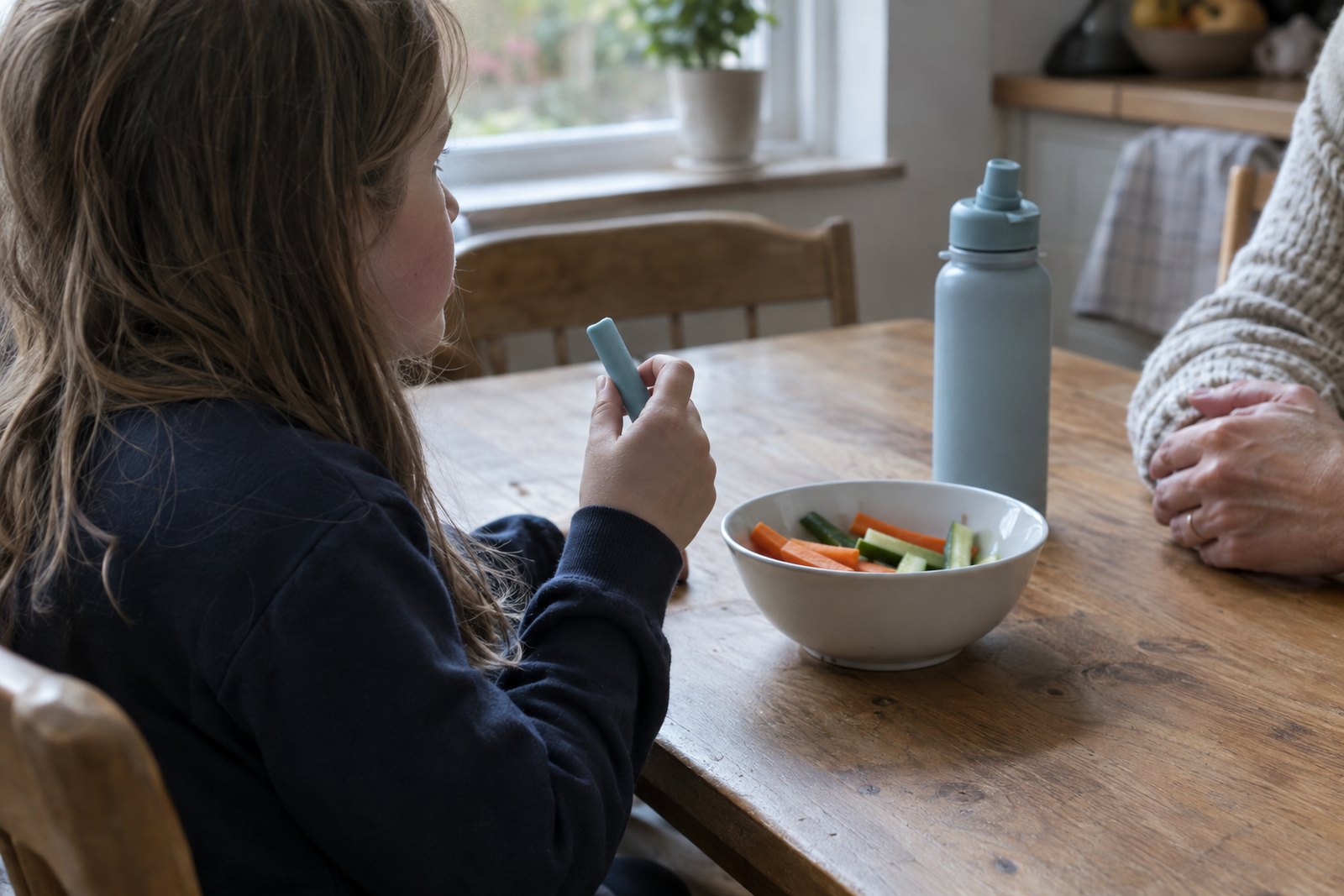
Lots of children chew things that are not food. Sleeves, collars, pencils, hair, the corner of a book. In babies and toddlers this is mostly normal, part of teething and exploring the world with their mouths. In older children, including many autistic children and children with ADHD or sensory processing differences, chewing usually has a purpose. It calms them, helps them concentrate, or gives them the strong feedback through the jaw that their body is looking for.
The short answer is that chewing is rarely something to stamp out. It is something to move onto safer things: a chew tool made for the purpose, crunchy food, a sports bottle. Get it checked if it is damaging teeth, gums or skin, if it started suddenly, or if your child is swallowing things that are not food. That last one, called pica, is a job for your GP, not a chew toy.
Why children chew
It helps to work out why your child chews before you buy anything, because the reason shapes what helps. Most children have more than one reason, and it can change through the day.
Teething and mouthing in younger children
Babies and toddlers put almost everything in their mouths. It is how they learn about shape and texture, and when teeth are coming through, chewing eases the discomfort. Older children go through it again when adult teeth arrive, which for most starts around the age of six. A seven-year-old who has suddenly started gnawing on things may simply have a sore mouth.
Sensory seeking
Some children need more input than others to feel settled. Chewing is a powerful way to get it, because the jaw is full of the receptors that tell the brain where the body is and how hard it is working. That is the body-awareness sense, proprioception, and our guide to proprioception and body awareness explains it in plain English. A child who chews hard, crunches ice, bites their arm or chomps through pencil after pencil is often seeking this kind of input. Our article on sensory seeking behaviour in children covers the wider picture.
Anxiety and self-calming
Plenty of adults chew pen lids or bite their nails when they are worried. Children do the same, just more obviously. If the chewing gets worse before school, in noisy places, at transitions or when plans change, it is probably helping your child cope. Taking it away without offering something else tends to make the worry come out another way.
Concentration
Some children chew most when they are trying to listen or think: in class, doing homework, watching something closely. The steady rhythm seems to help them stay alert and still enough to focus. Teachers often notice this before parents do.
Habit, boredom and something else going on
Sometimes chewing is just a habit that has stuck. But if it starts suddenly, or comes with grumpiness, poor sleep or not wanting to eat, think about pain first: a wobbly tooth, a decayed tooth, a mouth ulcer or an ear problem. That is worth a check with the dentist or GP before you treat it as a sensory need.
Watch before you buy
For a week, jot down when your child chews, what they chew and how hard. It takes a minute a day and tells you a lot.
- When: in the morning, at school, in the car, in front of a screen, at bedtime, when upset?
- What: soft things like cuffs and collars, or hard things like pencils, plastic and toys?
- How: gentle nibbling or sucking, steady chomping with the back teeth, or hard biting with the front teeth?
- What happens if you stop it: do they shrug and move on, or get distressed?
A child who sucks their sleeve when anxious needs something different from a child who bites through a plastic ruler in maths. The notes also help a great deal if you later speak to school, a dentist or an occupational therapist.
Choosing a safer chew tool
Chew tools, sometimes called chewy tubes or sensory chews, are made specifically to be chewed. They come as tubes, bars, rings, pendants and pencil toppers. Whatever shape you choose, the safety basics are the same.
- Made for chewing. Choose something sold for chewing by children, not a toy, a teething necklace or a piece of jewellery. Jewellery-style teething necklaces and bracelets, including bead necklaces, carry a real choking and strangulation risk and are best avoided completely.
- One solid piece. No beads, small parts, stuck-on decorations or anything that could come off in the mouth.
- The right size. Big enough that it cannot fit wholly in your child's mouth, and the right shape to reach where they like to chew. Many children chew with their back teeth, so a long thin tube or bar may suit better than a ring.
- The right toughness. See below. This matters more than colour or shape.
Getting the toughness right
Chew tools are usually sold in different levels of firmness. A child who nibbles or sucks may be happy with a softer one. A child who bites hard needs a firmer one. If your child bites chunks off, leaves deep tooth holes or wrecks it in days, it is too soft for them. That is not just a waste of money: a chew that is breaking up is a choking risk. Move up a level rather than buying the same one again.
Check it every day and replace it
Look at the chew tool every day, and pull and stretch it gently. Throw it away straight away if you see:
- tears, splits or cracks
- deep bite marks or holes
- loose or missing pieces
- a sticky or crumbly surface
Follow the manufacturer's guidance on how often to replace it even if it looks fine. Children who chew hard may get through them quickly, so it is worth having a spare.
Cords, clips and necklaces
Many chew tools are worn as a pendant so they are always to hand. This is where the most important safety rule comes in: never let your child wear a chew tool on a cord or lanyard around the neck while asleep or when no one is supervising. Take it off at bedtime, nap time, in the car seat and during unsupervised play. If your child does wear one, it should have a clasp designed to break apart if pulled. A short tether clipped to clothing, or a chew kept in a pocket or attached to a pencil, avoids the neck altogether and is often the better choice.
Keeping it clean
Wash it in warm soapy water at least daily, or as the instructions say, and let it dry. Some can go in a dishwasher and some cannot, so check. Keep one for each child and do not share. A small lidded box stops it rolling around the bottom of a school bag.
Other things to chew on, and other ways to get the same feeling
A chew tool is one option, not the only one. Mixing in other kinds of mouth and body input often means your child needs to chew on random things less.
- Crunchy and chewy food: carrot and cucumber sticks, apple slices, breadsticks, rice cakes, crackers, bagels, crusty bread. Offering these at snack times and during homework works well for many children. Go easy on sticky dried fruit and sweets between meals for the sake of their teeth.
- A sports bottle: one with a valve or a firm spout gives something to bite and suck on, and is easy to send to school. Water is best.
- Thick drinks through a straw: sucking a smoothie or yoghurt through a straw takes real effort from the mouth and can be very settling.
- Sugar-free chewing gum: for older children who can be trusted not to swallow it, and only where school allows it.
- Blowing activities: bubbles, blowing a cotton wool ball across the table with a straw, party blowers, harmonicas.
- Heavy work for the whole body: carrying shopping, pushing a laden laundry basket, wheelbarrow walks, climbing, tug of war. Strong body input can reduce the drive to get it all through the jaw.
- Something for the hands: some children chew because their hands are idle. A fidget, putty or a stress ball can help.
Building these into the day before the need gets urgent works better than offering them once your child is already chomping a sleeve. That is the idea behind a sensory diet, and our guide on how to build a sensory diet at home shows you how.
Child chewing clothes: what to do
Chewed cuffs, collars and hoodie strings are one of the most common worries parents have. Telling a child to stop rarely works for long, because the need has not gone away. Instead:
- Offer a chew tool or snack at the times your notes show chewing is worst.
- Take toggles and drawstrings out of hoods, as these can be pulled out and chewed or swallowed.
- Accept that a few school jumpers may be sacrificed while you find what works.
- Notice and praise when your child uses the chew instead of their clothes, without making a big thing of the clothes chewing.
Chewing at school
Most chewing happens where children concentrate or feel anxious, which often means school. Speak to the class teacher and the SENCO (special educational needs coordinator). You do not need a diagnosis to ask.
- Explain why your child chews and what helps at home.
- Ask whether they can keep a chew tool, crunchy snack or sports bottle in class.
- Agree where it is kept, who cleans it and what happens if it is lost or damaged.
- Ask staff to tell you if they spot damage, and send a spare.
- For older children who feel self-conscious, discreet options such as pencil toppers, plain bars or a sports bottle may be easier to use.
If your child has an SEN support plan or an education, health and care plan, ask for the strategy to be written in so it does not depend on one member of staff remembering.
Get the teeth checked
Hard chewing, grinding and biting non-food items can wear, chip or crack teeth and make gums sore. Biting hard plastic or metal is the biggest risk. NHS dental treatment is free for children under 18, so book a check and tell the dentist about the chewing. They can look for damage, check for anything causing pain that might be driving the chewing, and advise on what is safe for your child's teeth. Some dentists offer longer or quieter appointments for children with sensory needs if you ask.
When chewing becomes eating: pica
Chewing is different from eating. If your child keeps swallowing things that are not food, such as soil, paper, paint flakes, chalk, hair, soap or stuffing, speak to your GP. This is called pica. It can be more common in autistic children and children with a learning disability, and it can sometimes be linked to low iron or other health issues that a GP can look into. It can also cause poisoning, gut blockages or infections, so it should not be managed with a chew toy alone. Some mouthing and the odd swallowed mouthful is normal in very young children, but if you are unsure, ask your GP or health visitor.
Get urgent help if:
- your child is choking and cannot breathe, cough or speak: start back blows and abdominal thrusts (chest thrusts for babies under one) and shout for someone to call 999
- you think they have swallowed a button battery or a magnet: go to A&E straight away, even if they seem fine
- they have swallowed something sharp, or are drooling, unable to swallow, being sick or have tummy pain after swallowing something: go to A&E straight away, or call 999 if they are very unwell. If you think they have swallowed something poisonous and they seem well, call NHS 111 for advice, but call 999 if they are drowsy, having a fit or struggling to breathe
Where an occupational therapist fits
An occupational therapist looks at chewing as part of the bigger picture: how your child processes sensory information, how settled and alert they are through the day, and what they need to manage at home and school. A paediatric occupational therapist can:
- help work out the reasons behind the chewing, using your notes, questionnaires and watching your child
- suggest the type, shape and toughness of chew tool that fits how your child bites
- build a sensory diet so your child gets the input they need before chewing takes over
- give school clear, practical strategies
- write a report that can support SEN support or an EHCP request
An occupational therapist does not treat teeth, investigate pica or assess swallowing. Your dentist leads on teeth. Your GP or paediatrician leads on pica, sudden changes and anything that might be a medical problem. If your child struggles to chew food, coughs or chokes when eating, or eats a very narrow range of foods, a speech and language therapist or the GP is usually the right first step. NHS occupational therapy for children is usually reached through your GP, health visitor, school or local children's services, and waiting lists vary. A private occupational therapist can visit at home, and our paediatric occupational therapy page explains what that involves.
Frequently asked questions
Is chewing a sign of autism?
Not on its own. Lots of children chew, especially when teething or anxious. Chewing is common in autistic children and children with ADHD or sensory processing differences, but it is not used to diagnose anything by itself. If you have other concerns about your child's development, talk to your GP or health visitor.
Are chewy tubes safe?
Chew tools made for chewing are generally a safer choice than clothes, pencils or toys, as long as they are the right toughness, checked daily, replaced when damaged, and never worn around the neck while asleep or unsupervised. Always supervise younger children.
Should I try to stop my child chewing?
Usually it is better to redirect rather than stop. If chewing meets a need, removing it without an alternative often leads to more distress or a different habit. Offer safer options and look at what is driving it.
Is it normal for a seven or eight-year-old to chew everything?
It can be, particularly while adult teeth are coming through or during a worrying time. If it is constant, damaging, getting in the way of school or friendships, or your child is swallowing non-food items, get advice.
Can my child take a chew tool to school?
Most schools are happy to agree this once they understand why. Speak to the teacher or SENCO, agree hygiene and storage, and ask for it to be written into any support plan.
How often should a chew tool be replaced?
As soon as you see tears, holes, deep bite marks or loose pieces, and otherwise as often as the manufacturer recommends. Children who bite hard may need a firmer one and will get through them faster.
Next steps
If chewing is worrying you, or you want help understanding what is behind it, see our sensory needs page or children's occupational therapy page, check current guide prices, and choose your area below.

Talk to an occupational therapist near you
This guide is general information. For advice about your own situation - or someone you look after - a local occupational therapist can visit you at home and see it for themselves.
Choose your area: