

Broken Shoulder Recovery: Sleeping, Dressing and One-Handed Tips
By Mobile Occupational Therapist • 27 September 2026 • 15 min read
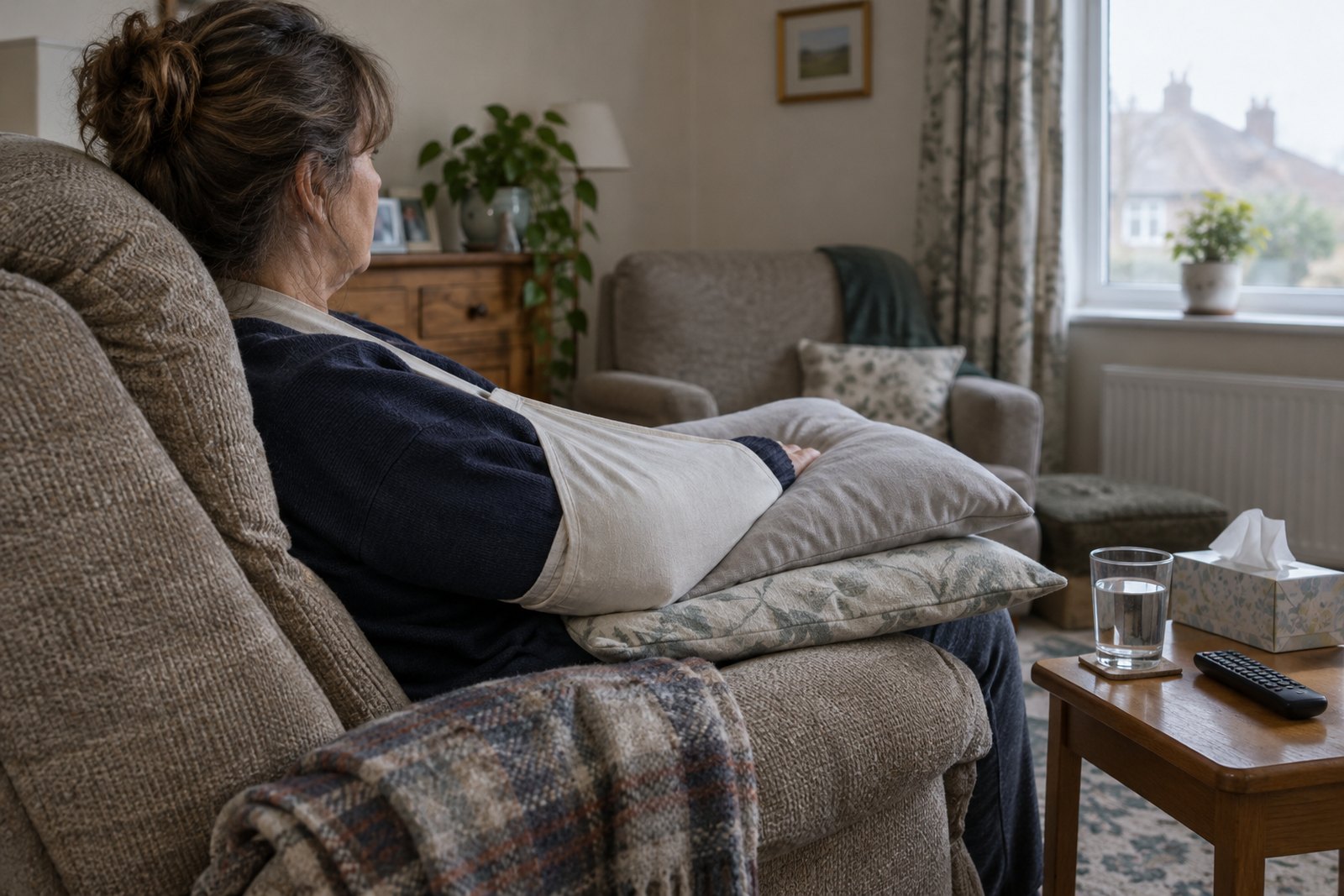
Broken shoulder recovery (often a proximal humerus fracture, which is the top of the upper arm bone) is usually a slow, practical job rather than a dramatic one. Many people are treated without surgery: a sling, pain that gradually settles, and a plan from the fracture clinic and physiotherapy team to get movement back safely.
If you are at home with a fractured upper arm, the biggest challenges are often the everyday ones: sleeping, dressing, washing, eating, and not knocking the arm when you are tired. This page gives clear, one-handed ways to manage at home. It also tells you what symptoms are not normal and need urgent medical advice.
What a 'broken shoulder' usually means (and who is in charge)
When people say they have a broken shoulder, they often mean a fracture near the shoulder joint rather than the collarbone. A common diagnosis is a proximal humerus fracture. It can happen after a fall, a trip on the stairs, or sometimes from lower impact in older people with fragile bones.
Your fracture clinic (or orthopaedic team) is the lead for decisions about healing, sling use, and whether surgery is needed. Your physiotherapist is usually the lead for exercises and rebuilding movement and strength. If you are not sure what you are allowed to do, do not guess. Ring the fracture clinic or ask at your next appointment.
This article is for people managed at home, often in a sling. If you have had an operation, have a cast, have a wound to care for, or have been told specific precautions, follow those instructions even if they conflict with general tips online.
The first weeks in a sling: what matters most
Make the sling do its job (without making everything worse)
A sling should support the weight of your arm so the shoulder area can settle. It should not cut into your neck, twist your wrist, or leave your hand hanging low and swollen.
- Check the hand position. A common problem is the hand hanging below elbow level all day. If you can comfortably support the forearm on pillows when sitting, it can reduce swelling.
- Watch your skin. Look for rubbing at the neck, elbow, and wrist. A thin layer of soft clothing under straps can help. If the skin is broken, sore, or you get pins and needles, get advice.
- Keep rings and watches off the injured side. Hands can swell after a fracture, and jewellery can become tight quickly.
Keep the joints below the fracture moving (if you have been told it is safe)
Even when the shoulder area must stay protected, your hand, wrist and elbow can stiffen surprisingly fast. Many people are encouraged to do gentle movements of the fingers, wrist and elbow. Only do what your team has said is appropriate for your specific fracture.
As a general principle, aim to avoid letting the whole arm become a still, swollen weight. Little and often is usually more realistic than one big burst of effort.
Make your home 'one-handed friendly'
The first fortnight at home is often when you realise how many tasks quietly rely on two hands. A few simple set-ups can reduce pain and frustration:
- Create a base. Choose one chair where you can sit with good support, pillows to prop the forearm, and a small table for water, phone, tissues and anything you use often.
- Move daily items to waist height. Cups, plates, toiletries and clothes you are using now. Avoid overhead reaching and low bending if you can.
- Plan for carrying. With one arm in a sling, you cannot safely carry a drink across the room in the usual way. Use a lidded cup, a jug with a secure lid, or make fewer trips.
Sleeping with a broken shoulder
Sleeping is often the hardest part of broken shoulder recovery. Nights can be uncomfortable, and tiredness makes everything feel more difficult the next day. Many people find they sleep better propped up for a while, rather than flat.
Positions that are often more comfortable
- On your back, propped up. Use pillows behind your upper back so you are semi-upright, plus a pillow under the forearm so the arm feels supported rather than hanging.
- On the uninjured side (if allowed). Some people manage this by hugging a pillow in front so the injured arm can rest on it, keeping the shoulder from rolling forward. Stop if it increases pain or feels unstable.
- In a reclining chair for a short period. A recliner can feel like relief when you cannot get comfortable in bed. If you do this, make sure you cannot slide forward as you sleep, and keep your arm supported with pillows so the hand does not dangle. There are also downsides to sleeping in a chair for long stretches, especially if you are less mobile, so read our honest guide: sleeping in a chair at night: why older people do it and the risks.
Do you keep the sling on in bed?
Some people are told to keep the sling on at night, at least initially. Others are told they can remove it for sleep or for short periods. The right answer depends on the fracture pattern, your stability, and what your team prefers.
If you have not been told clearly, follow any written discharge instructions and contact your fracture clinic to check rather than guessing. Taking it off too early can lead to painful sudden movements when you are half asleep.
Dressing without upsetting the fracture
Dressing one-handed is fiddly at first. It gets easier, but it is worth using a method that protects the shoulder every time, especially when you are rushing.
The two basic rules
- Injured arm in first. Thread the injured arm into sleeves first, with minimal movement at the shoulder.
- Injured arm out last. When undressing, take the uninjured arm out first, then slide clothing off the injured side.
Clothing choices that make life easier
- Front-opening tops are usually much easier than pullovers.
- Loose sleeves reduce the twisting and tugging that hurts.
- Light layers are easier than heavy jumpers that need force to pull into place.
- Easy fastenings matter. Buttons can be hard one-handed, especially if your uninjured hand is not your usual dominant hand.
If you are struggling, dressing aids can take the strain off your shoulder while you are in the sling. See dressing aids and easier ways to get dressed for options and how they are used (and which ones are often bought in hope and then abandoned).
A simple step-by-step for a front-opening top
- Sit down. Have the top laid out on your lap or the bed.
- Thread the injured arm into the sleeve first, keeping the elbow close to your body. Use your uninjured hand to pull fabric up the forearm rather than lifting the shoulder.
- Bring the top around your back, then thread the uninjured arm through.
- Fasten from the bottom up if that is easier, or leave partly fastened if you are at home and comfortable.
If any step causes a sharp spike of pain, stop and reset. Often it is a sign the shoulder has rotated, or the elbow has drifted away from your side.
Washing, toileting and personal care one-handed
Most people end up doing a version of a strip wash for a while. It is not glamorous. It is, however, safe and realistic when you cannot use one arm normally.
Keeping clean without risking a slip
- Sit to wash. A chair by the sink is often safer than standing, especially if you are sore or lightheaded from pain.
- Work top to bottom. Face, underarms, chest, then the rest. Use a towel on your lap so things do not drop onto the floor where you will feel obliged to bend for them.
- Think through hair washing. If you cannot manage hair one-handed, this is a good time to accept help from someone you trust, or switch to a simpler routine for a couple of weeks.
Long-handled sponges, toe washers and tap turners can help when reaching is difficult, but they need choosing and using safely. Our guide to washing aids explains what helps and what to watch out for.
Showering
Whether you can shower, and when, depends on your situation and whether you have had surgery. If you are in a sling and unsteady, stepping into a slippery shower can be a genuine fall risk. A shower chair or stool can help some people, but only if it fits your space and you can sit and stand safely without pushing through the injured arm.
If you feel unsafe, it is reasonable to delay full showers and do a thorough wash at the sink until you have support. Clean is the goal. Perfect is not.
Toileting with one hand
This is one of the most common hidden problems. If wiping is difficult, you do not need to suffer in silence. There are toileting aids designed for limited reach and one-handed use. If you are getting sore skin, constipated because you are avoiding the toilet, or having accidents, speak to your GP or pharmacist, and consider asking for an occupational therapy assessment.
Meals and kitchen tasks when you cannot use that arm
Eating and making drinks can be exhausting when your routine has been knocked sideways. The aim is to keep it safe, keep it simple, and keep you fed.
Low-effort food that still counts
- Fewer steps. Choose meals that need less chopping, less lifting of pans, and less draining of boiling water.
- Eat at a stable surface. Carrying plates one-handed is where spills and scalds happen. Set things up so you can sit to eat and drink.
- Use the freezer. If you have help, ask someone to portion meals into containers you can open one-handed.
One-handed techniques that reduce pain
- Stabilise, do not grip harder. Non-slip matting under a plate or chopping board can stop it skating around.
- Keep things close. Reaching out with your uninjured arm for a heavy kettle or pan can pull your body, which pulls the injured side too.
- Change the task. A kettle tipper, a lightweight jug, or a jar opening aid can reduce strain when you have only one effective hand. If opening containers is becoming a daily battle, consider equipment rather than forcing it.
If you have reduced sensation in the injured hand, or you are on strong pain medication that makes you sleepy, be extra cautious with hot drinks and cooking. It is fine to prioritise cold meals for a while.
If you live alone (or you are supporting someone who does)
A proximal humerus fracture can turn small problems into big ones, especially for older people living alone. The risk is not just the fracture. It is dehydration because making a drink is too hard, missed meals, falls when trying to carry things, and not having a plan for night-time toileting.
Practical things that can help quickly:
- Put a phone within reach day and night, and make sure it can be used one-handed.
- Set up drinks and snacks at sitting height in the places you actually spend time.
- Consider a personal alarm if you are worried about another fall, especially for the first weeks.
- Reduce trips up and down stairs. If you can, keep what you need on one floor for a while.
For a wider checklist of what to set up, see living alone after a fall: what to set up at home. Even if your fracture did not happen because of a fall, the practical solutions are similar.
Exercises and rehab: important, but only the right ones
Most people want to start doing something, partly from boredom and partly from fear of stiffness. That makes sense. The tricky bit is that the shoulder area needs the right movement at the right time.
- Do the exercises you were taught. If you were given a sheet or app, stick to it. If you were not given exercises yet, ask when they start.
- Avoid improvising stretches. Pain is not a reliable guide early on. You can sometimes do harm without a dramatic warning sign.
- Keep your posture as comfortable as you can. Many people spend weeks slightly hunched to protect the fracture, then find their neck and upper back are aching too. Gentle upright sitting, short walks, and changing position can help.
If you are worried you are doing too little, or too much, that is a physiotherapy question first. An occupational therapist can help you build exercises into daily routines, but they should not replace the fracture clinic plan.
Warning signs: when to get urgent help
Some pain, bruising and swelling are common after a broken shoulder. These symptoms are not the ones to ignore.
- Numbness, pins and needles, or new weakness in the hand or fingers that is not settling.
- A cold hand, a hand that is blue or very pale, or swelling that is getting worse quickly.
- Increasing pain that is not explained by activity, especially if it is severe or comes with tightness in the sling.
- Shortness of breath, chest pain, or coughing up blood. Call 999.
- Fever, spreading redness, or leaking wound fluid if you have had surgery or have a wound.
If you are worried, contact your fracture clinic if you have a number. Otherwise use NHS 111 for urgent advice. If you think circulation to the hand is affected, or pain is rapidly escalating, do not wait. Seek urgent medical care.
Returning to driving, work and normal life
Most people cannot drive safely in a sling. Even if you feel confident, you must be able to control the car properly, including an emergency stop, without pain or hesitation. You also need to think about insurance terms. If you are unsure, ask your clinician and check with your insurer before you drive.
Work and hobbies depend on what you do and which arm is injured. For desk-based work, you might manage short periods earlier with a good set-up and voice-to-text. For manual jobs, you may need longer. If you are getting stuck, ask for a fit note and discuss a phased return and temporary task changes.
Where an occupational therapist fits
Fracture clinic and physiotherapy lead your medical and exercise plan. Occupational therapy is about getting you through the day safely while the bone heals, and helping you rebuild everyday function afterwards.
A private occupational therapist visiting at home can help with:
- Dressing, washing and toileting routines that protect your shoulder and keep your dignity intact.
- Practical equipment recommendations (what is likely to help, what is likely to get in the way, and how to use it safely).
- Home safety, especially if you are unsteady, live alone, or have already had one fall.
- Planning for the next stage, for example returning to cooking, getting out and about again, or managing stairs and carrying safely.
An occupational therapist is not the right professional for medication changes or diagnosing new symptoms. For worsening pain, possible nerve symptoms, or concerns about the fracture itself, contact the fracture clinic, your GP, or NHS 111.
Frequently asked questions
How long will I be in a sling?
It varies. Many people are in a sling for several weeks, sometimes longer, depending on the type of fracture, your age, and how stable it is. Your fracture clinic should tell you when to wear it and when you can start weaning off.
Should I sleep in the sling?
Follow your fracture clinic advice. Some people are advised to sleep in the sling initially to prevent sudden movements in bed. If you have not been told either way, keep it on until you can check.
When can I shower?
Ask your fracture clinic, especially if you have had surgery. If you are unsteady, showering too soon can increase your fall risk. A strip wash at the sink is a safe alternative while you build confidence and have the right set-up.
Is it normal for my hand to swell?
Mild swelling can happen, especially if the hand hangs down for long periods. Support the forearm on pillows when sitting if comfortable, and move the fingers and wrist as advised. If swelling is sudden, severe, or comes with colour change, coldness, numbness or increasing pain, seek urgent advice.
When can I start moving my shoulder?
Only when your fracture clinic or physiotherapist tells you to. Starting too early can set you back. Starting too late can increase stiffness. If you have not been given exercises or a timeline, contact the team and ask what you should be doing now.
When can I drive again?
In general, not while you are in a sling and not until you can control the car safely, including an emergency stop. Check what your clinician advises and confirm your insurer is happy. If you have any longer-term limitation, check official guidance on GOV.UK.
Next steps
See our home assessment page, or current guide prices, and choose your area below.
Talk to an occupational therapist near you
This guide is general information. For advice about your own situation - or someone you look after - a local occupational therapist can visit you at home and see it for themselves.
Choose your area: