

Boxer's Fracture: Splints, Swelling and Getting Your Grip Back
By Mobile Occupational Therapist • 19 September 2026 • 13 min read
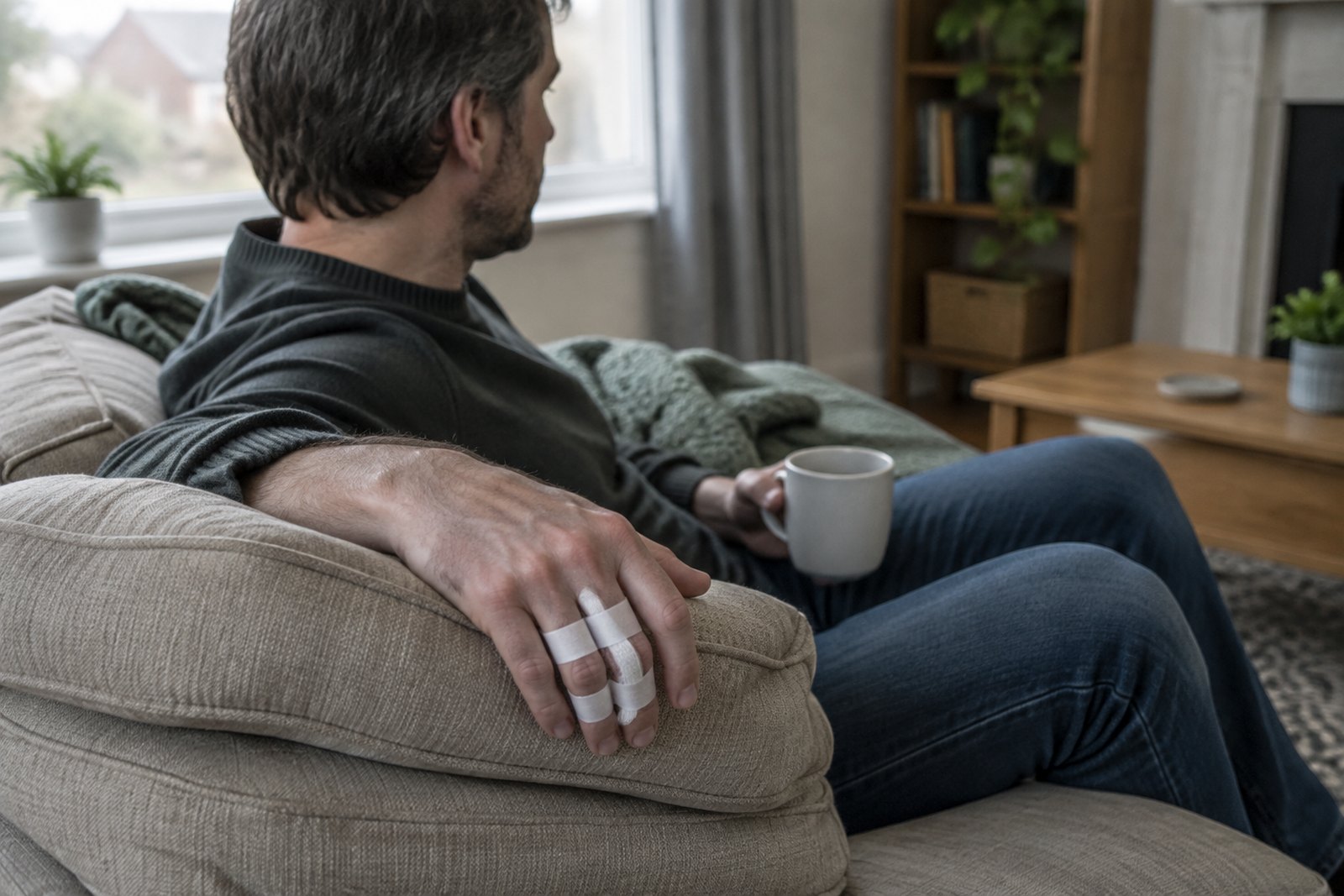
A boxer's fracture is a break in the bone just below the little-finger knuckle. Doctors call it a fifth metacarpal fracture. It usually happens when a closed fist hits something hard: a wall, a door, a fridge, occasionally another person. It is one of the most common hand injuries seen in UK emergency departments, so you are not the first person to sit in a waiting room trying to explain it with a straight face. Most heal well without surgery, using a splint, a cast or the ring and little fingers taped together for a few weeks, followed by a gradual return to normal grip.
The things that make the biggest difference are getting it checked properly in the first place, keeping the swelling down, keeping everything that is not broken moving, and not rushing back to heavy gripping. The knuckle may end up looking a little flatter than it did. On its own, that rarely affects how the hand works. This guide covers what to do now, what to watch for, and how to get back to daily life and work.
First, get it looked at
If you think you have broken your knuckle, go to a minor injuries unit, urgent treatment centre or A&E. If you are not sure where to go, NHS 111 can tell you. An X-ray shows whether the bone is broken, how far it has tilted and whether any other bones are involved. A swollen, bruised hand that "probably isn't broken" is worth checking, because the way the bone heals in the first couple of weeks matters.
Go the same day, and do not wait, if:
- There is any cut or graze over the knuckle, however small, especially if your hand hit someone's mouth. A cut from teeth can push bacteria deep into the knuckle joint, and these injuries can become seriously infected quickly. They need urgent cleaning and treatment, sometimes an operation. Do not wait to see if it settles.
- The finger looks twisted, or when you gently curl your fingers the little finger crosses over or under the ring finger. This is called rotation, and it does not correct itself.
- The finger or hand is numb, pale, blue or cold.
- Bone is visible, or the hand looks badly out of shape.
- The pain is severe and getting worse rather than better.
Call 999 if there are other serious injuries, such as a head injury, heavy bleeding or someone who is not fully alert.
Be straightforward with the clinician about how it happened. Nobody is there to judge you. They need to know whether teeth were involved, how hard the impact was and when it happened, because it changes what they look for.
What treatment usually looks like
Treatment depends on how much the bone has tilted, whether the finger is rotated, and whether the break is at the neck of the bone (the usual spot) or further down. Common options include:
- Buddy strapping: the ring and little fingers taped together so the healthy finger acts as a splint. Many straightforward boxer's fractures are managed this way.
- A splint: either a ready-made one or a custom one moulded from thermoplastic, usually supporting the outer edge of the hand and the little finger.
- A cast, less often than in the past for simple breaks.
- Surgery, with wires, pins or a plate, usually only if the bone is badly tilted, rotated, broken in several places or unstable.
Many hospitals now follow up fractures through a fracture clinic appointment, and some use a phone review where a clinician looks at your X-rays and calls you. Keep any leaflet you are given. Where it differs from general advice, including this article, follow the leaflet.
Buddy strapping, done properly
If you have been told to buddy strap, a few details stop it going wrong:
- Put a thin piece of gauze or soft padding between the two fingers so the skin does not get sweaty, soggy and sore.
- Place the tape around the bony sections of the fingers, not over the joints, so the fingers can still bend.
- It should be snug, not tight. Tingling, throbbing or a finger changing colour means it is too tight.
- Replace it if it gets wet or loose, and check the skin between the fingers every day.
Swelling: the first job
Hands swell a lot after an injury, and swelling is not just uncomfortable. A puffy hand stiffens quickly, and that stiffness is often what slows recovery, more than the break itself.
- Keep the hand raised above the level of your heart for much of the first few days. Rest it on cushions when you sit, and on a pillow at night. A hand dangling by your side will throb.
- Take off rings from every finger on that hand straight away, before swelling makes it impossible. A jeweller or A&E can cut a ring off if needed.
- Use cold in short spells: a cold pack or frozen peas wrapped in a cloth, never directly on skin, and keep a cast dry.
- Move what you are allowed to move. Muscles pumping in the arm help clear swelling.
- If you were given a sling, use it as advised, but take the arm out regularly to move your shoulder and elbow so they do not stiffen.
For pain relief, follow what the hospital, your GP or a pharmacist advises.
Get urgent help if, under a splint, strapping or cast, your fingers go numb, white, blue or cold, or pain becomes severe and does not ease when you raise the hand. Loosen strapping if you can, and if it does not settle within a few minutes, seek urgent help straight away at A&E or an urgent treatment centre. Do not try to remove a cast yourself.
Keep everything else moving
It is easy to treat the whole arm as broken. It is not. Shoulders, elbows and thumbs stiffen surprisingly fast when they are held still, and a stiff shoulder can take longer to sort out than the hand. Unless you have been told otherwise, run through this several times a day:
- Shoulder: lift the arm up overhead, using your good hand to help if needed, then out to the side.
- Elbow: bend and straighten it fully.
- Wrist: if it is not inside the splint, gently bend it up and down.
- Thumb: touch it to the tip of each finger you can reach.
- Free fingers: bend and straighten any fingers that are not splinted.
Do not force the injured knuckle or remove a splint to exercise it unless you have been told you can. If you have been given specific exercises, they take priority over this list.
Daily life with one useful hand
If it is your dominant hand, the first week or two is irritating more than anything. Most of what works for a broken wrist works here too, and our guide to managing at home after a broken wrist goes into more detail.
Dressing
Put the injured arm into sleeves first and take it out last. Loose tops with wide sleeves, elasticated waistbands and slip-on shoes save a lot of swearing. Buttons, zips and laces are the hard part, so avoid them for now or leave them half done up so you can step in and out.
Washing
Keep a cast dry. A plastic bag sealed with a loose band, or a waterproof cast cover from a pharmacy, works for showers, but keep the hand out of the spray anyway. If your splint is removable, ask whether you can take it off to wash, and if so, keep the hand still and supported while it is off. Pump-action soap and shower gel are easier than squeezing bottles one-handed.
Kitchen
Pre-chopped vegetables, ready-grated cheese and microwave meals are not a moral failing for a few weeks. A damp cloth or non-slip mat under a bowl or chopping board stops it sliding. Avoid carrying hot drinks and pans with your good hand while the other is useless for balance, and avoid lifting kettles that are too full.
Phones, typing and writing
Voice typing on a phone or computer helps. If you work at a keyboard, typing with the free fingers of the injured hand is usually fine if it does not hurt and you have not been told to keep them still. Writing with a splint on the dominant hand is often hard, so warn work or college early.
Driving
You should only drive if you can control the car fully and safely, including steering firmly with both hands and doing an emergency stop. With a splint or cast on, that is often not possible. Ask the fracture clinic, and check with your insurer, before getting back behind the wheel.
Sleep
Prop the hand on a pillow beside you so it stays raised and you do not roll onto it. If the splint rubs at night, tell the clinic rather than taking it off.
Getting your grip back
Once the clinic says the bone has healed enough to come out of the splint or strapping, expect the hand to feel stiff, weak and a bit unfamiliar. The knuckle may ache, especially in the morning or after use. This is normal, and it improves with steady use rather than rest.
A sensible order of things is usually:
- Movement first. Work on curling the fingers into a full fist and straightening them fully, little and often, before you think about strength.
- Everyday use next. Use the hand for light tasks: dressing, washing up, holding a cup. Daily life is good exercise.
- Strength gradually. Squeezing a soft sponge in warm water, or therapy putty starting with the softest grade, builds grip without strain.
- Heavy load last. Lifting weights, heavy tools, contact sport and punch bags wait until the clinic says the bone is strong enough.
Some ache after exercise is fine. Sharp pain, new swelling or pain that is worse the next day means you did too much, so ease back. Bones generally knit within weeks, but full strength and confidence can take longer, sometimes a few months. Your clinic is the right place to ask what to expect for your particular break.
Going back to work
When you can return depends mostly on your job. People at desks may be back within days, typing carefully. Builders, mechanics, chefs, carers and anyone who grips, lifts or uses vibrating tools may need longer, or lighter duties for a while.
If you need time off beyond the first seven days, you will need a fit note from the hospital or your GP. A fit note can say you "may be fit for work" with changes, such as lighter tasks, avoiding heavy gripping, or shorter hours. That is often better than being signed off completely. Talk to your employer early about temporary duties, and see our guide to a phased return to work if you need to build up. If you are self-employed, think now about which jobs you can do one-handed and which need to wait.
When to go back to the clinic or your GP
Contact the fracture clinic, your GP or NHS 111 if:
- The finger starts to twist or cross over the ring finger when you make a fist.
- Pain is getting worse rather than slowly better.
- A wound becomes red, hot, more swollen or weeps pus, or you feel feverish and unwell. Infection after a tooth cut can spread fast, so treat this as urgent.
- The splint or cast is rubbing, cracked, loose or too tight.
- Your fingers tingle or go numb. If they are also pale, blue or cold, or the pain is severe, treat this as urgent and go to A&E.
- Weeks after the splint is off, you still cannot make a fist or straighten your fingers, or the hand is not improving.
Where hand therapy and occupational therapy fit
The fracture clinic or orthopaedic team is in charge of the bone: whether it needs surgery, how long the splint stays on and when you can load the hand. That is not an occupational therapy decision.
Many boxer's fractures heal well with a leaflet and a phone review. Some need more help, for example after surgery, if the hand is very stiff, if the finger was rotated, or if your job depends on a strong grip. In the NHS, the fracture clinic can refer you to hand therapy. Hand therapists are occupational therapists or physiotherapists with extra training in hands. They make custom splints, guide exercises, manage swelling and scars, and plan the move back to full use. If you think you need this and have not been offered it, ask.
A private occupational therapist visiting at home can help with the practical side: one-handed routines while you heal, simple equipment, planning a return to work, workstation set-up, and reports for an employer or insurer. If you want specialist hand therapy privately, check the therapist has specific hand experience. Our guide to hand therapy at home explains what to look for.
Frequently asked questions
How long does a boxer's fracture take to heal?
The bone usually knits within a matter of weeks, and many people are out of their splint or strapping by then. Grip strength and comfort with heavy tasks often take longer, sometimes a few months. Your fracture clinic will give you a timescale for your particular break.
Will my knuckle look normal again?
Often the knuckle looks a little flatter or sunken afterwards, because the bone heals with a slight tilt. You may also feel a small bump in the palm. In most people this is cosmetic and does not affect how the hand works.
Do I need surgery for a broken knuckle?
Most boxer's fractures do not. Surgery is usually considered when the bone is badly tilted, the finger is rotated, the bone is broken in several places or the break is unstable. The orthopaedic team makes that decision after looking at the X-rays and your hand.
Can I take my splint off?
Only if you have been told you can. Some splints are designed to come off for washing or exercises; others should stay on. If it is rubbing or uncomfortable, contact the clinic rather than leaving it off.
When can I go back to the gym, boxing or contact sport?
Wait until the clinic confirms the bone has healed and you have good movement and some strength back. Return gradually, starting with light work. Heavy gripping, punch bags and sparring come last, and protective strapping or gloves may be advised.
I punched a wall when I was angry. Should I say so?
Yes. Clinicians see this constantly and it helps them assess the injury. If it is part of a pattern, or you are struggling with anger, stress or low mood, it is worth talking to your GP. A broken hand is an expensive way to let off steam, and there is better help available.
Next steps
If a broken hand is making work or daily life hard to manage, see our work and ergonomics page, or current guide prices, and choose your area below.

Talk to an occupational therapist near you
This guide is general information. For advice about your own situation - or someone you look after - a local occupational therapist can visit you at home and see it for themselves.
Choose your area: