

Assistance Dogs in the UK: What They Do and How to Get One
By Mobile Occupational Therapist • 30 October 2026 • 14 min read
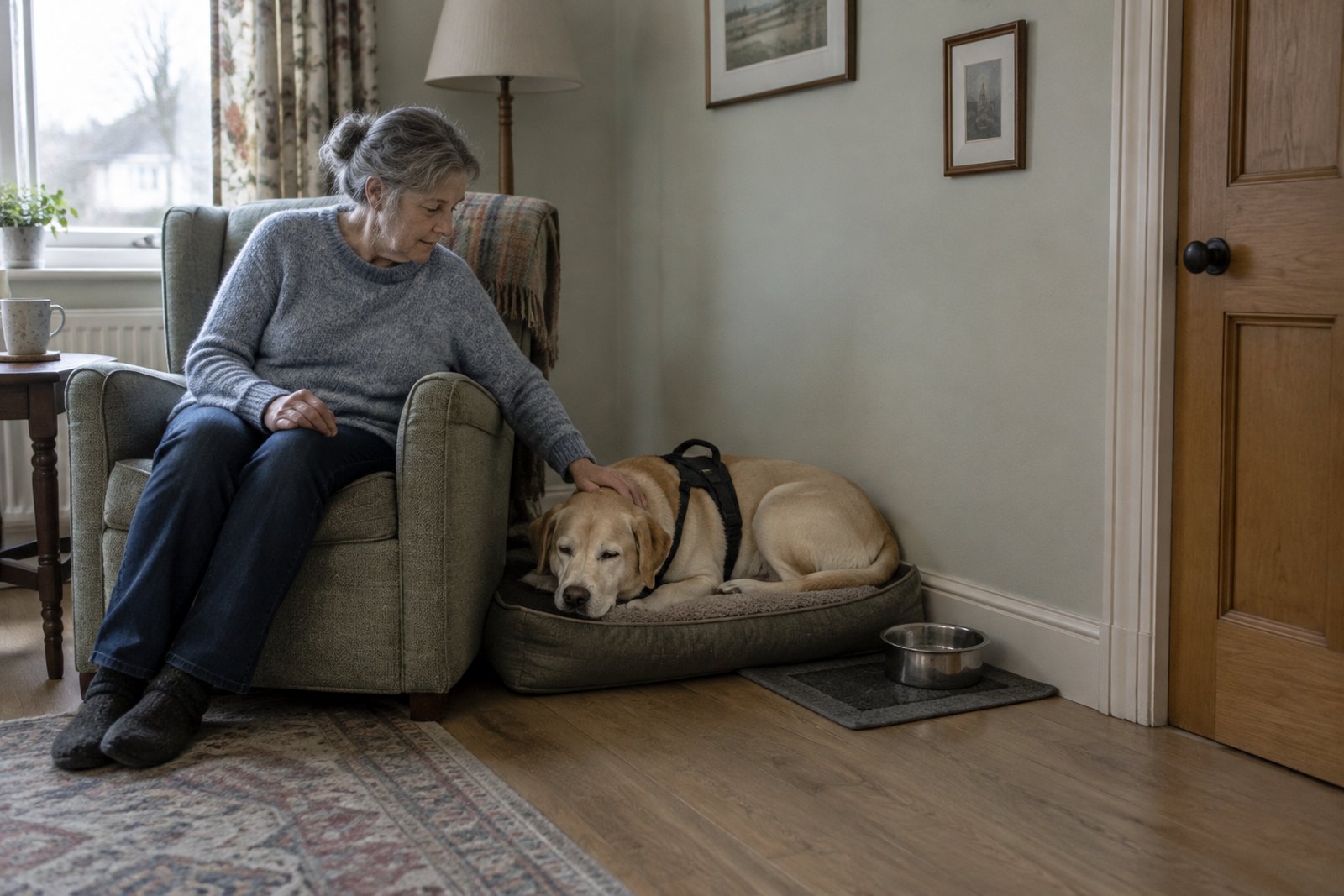
An assistance dog is a dog specially trained to help a disabled person with particular tasks, or to alert them to something they cannot detect themselves. In the UK most are trained and placed by charities, and the usual route is to apply directly to a charity that trains the type of dog you need. Many of these charities belong to Assistance Dogs UK, an umbrella group whose members meet recognised international training and welfare standards. The dog itself is usually provided without charge, because the training is funded by donations.
The honest catch is that demand is high and fully trained dogs are limited. Waiting lists can be long, some charities close to new applications for a while, and the criteria are strict. A dog is also a daily commitment, every day, in all weathers. This guide covers the main types of assistance dog, how applying works, your rights in shops and taxis, and how to work out whether a dog would genuinely make your days easier or just add another job to them.
What an assistance dog actually does
An assistance dog is not a pet that happens to be well behaved. It is trained, often for well over a year, to do specific things for one person, and to stay calm and quiet in busy public places. The main types in the UK are below.
Guide dogs
Guide dogs help blind and partially sighted people get about safely. The dog walks in a harness, steers its handler around obstacles, stops at kerbs and steps, and finds doors and crossings. The person still decides the route and when to cross. The dog follows instructions, and can refuse one that would walk its handler into danger. Many people with sight loss use a long cane instead or as well, and some prefer it.
Hearing dogs
Hearing dogs help deaf people and people with significant hearing loss. They are trained to notice everyday sounds such as the doorbell, an alarm clock, a cooker timer or someone calling your name, then touch you and lead you to the sound. For danger sounds like a smoke alarm, they are trained to alert you clearly and may then lead you towards the sound or towards an exit or safe place, depending on the charity's programme. Many people also say the dog makes going out feel less isolating.
Dogs for physical disabilities
These dogs help people with conditions that affect movement, such as multiple sclerosis, spinal injury, cerebral palsy or the effects of a stroke. Tasks can include picking up dropped items, opening and closing doors, pressing lift buttons, helping take off a coat or socks, pulling washing out of the machine, fetching the phone and getting help in an emergency. For someone who drops things often and cannot bend safely, that alone can change the shape of a day.
Autism assistance dogs
Autism assistance dogs are mostly placed with families of autistic children, although some charities also work with autistic adults. With a child, the parent is usually the handler and is responsible for the dog. On walks, some specialist programmes use a purpose designed harness and tether system so the child is linked to the dog while the parent holds the lead, but this should only be done under the charity's training and risk assessment and should not be copied with an untrained pet dog. Families often describe a calmer presence in busy or unfamiliar places, and help with routines such as bedtime. It is not a cure for anything, and it does not replace other support.
Medical alert dogs
Medical alert dogs may be trained to respond to cues associated with certain medical conditions, for example changes in blood sugar in type 1 diabetes, but alerts are not guaranteed and you must still follow your usual monitoring and medical plan. Other dogs are trained to respond during or after a seizure, for instance by fetching help. A medical alert dog works alongside medical care, not instead of it. You still need your usual monitoring, your medication plan and your diabetes or epilepsy team.
Mental health and emotional support
A small number of charities train dogs to help people with conditions such as post-traumatic stress. These are different from "emotional support animals", a term used a lot online. In the UK, an emotional support animal has no specific legal status, so it does not carry the access rights described below. That does not mean a pet cannot help your mental health. It means the law treats it as a pet.
How to get an assistance dog
Start with the right charity
Each accredited charity tends to specialise in one or two types of dog, so the first job is to find the ones that train for your situation. The Assistance Dogs UK website lists its member charities and what they do. Look at each charity's own website for who it can help, which parts of the UK it covers, and whether it is currently taking applications.
What charities usually look for
Every charity sets its own criteria, so check them directly. Common things they ask about include:
- Whether your disability or condition is one they train dogs for.
- Your age, or your child's age, as many charities have lower age limits.
- Whether you can care for a dog, or have someone at home who reliably will.
- Your home, garden or nearby outdoor space for toileting and exercise.
- Other pets in the house, and whether they would get on with a working dog.
- Whether you live in an area the charity covers.
- How a dog would make a practical difference that other help cannot.
Expect an application form, then often a phone call or home visit, and if you are matched, a period of training together with the dog. Charities usually keep in touch afterwards and check the partnership is working.
Waiting lists
Nobody can honestly promise you a timescale. Waiting times depend on the charity, the type of dog, where you live and how well a particular dog matches your needs. Some lists are closed for long stretches. It is worth applying to more than one suitable charity if they allow it, and asking each one plainly what the current position is.
What it costs
The dog and its training are usually provided at no cost to you. What varies is what you pay afterwards. Food, equipment, insurance and vet bills are part of owning any dog, and charities differ on how much of this they help with. Ask before you commit, and be realistic about whether the ongoing costs fit your budget.
Owner-trained dogs
Some people train their own pet dog to do assistance tasks, either with a private trainer or through one of the few accredited charities that support owner training. Standards vary a great deal, and owner-trained dogs without recognised accreditation are more likely to be questioned when you go out.
Your rights: shops, taxis, work and housing
In England, Scotland and Wales, the Equality Act 2010 means organisations that provide goods and services, such as shops, cafes, hotels, GP surgeries and public transport, must not discriminate against disabled people and must make reasonable adjustments. In practice, an assistance dog should normally be allowed in, even where pets are not, although there can be limited exceptions for specific health and safety reasons (for example some clinical or food preparation areas) and staff should then make alternative arrangements. In England and Wales, taxi and private hire drivers have a specific duty to carry a disabled person accompanied by an assistance dog as defined in law, without charging extra, unless they hold a medical exemption from their licensing authority; Scotland and Northern Ireland have their own broadly similar provisions. Northern Ireland has its own disability discrimination law with similar principles.
Employers, landlords, schools and universities also have duties not to discriminate and to make reasonable adjustments, which can include allowing an assistance dog. Each situation is judged on its facts. If you are refused, stay calm, explain the dog is an assistance dog, show any identification from the charity, and note the date, place and who you spoke to. The Equality Advisory and Support Service or Citizens Advice can help you work out what to do next. For work, our guide to reasonable adjustments at work explains how to ask.
Is an assistance dog right for you?
A good assistance dog takes work off you. A poor fit adds work on. Before you apply, think through what owning any dog involves:
- Daily exercise. Working dogs still need off-duty time to run and play, not just walks to the shops.
- Toileting. Someone has to take the dog out several times a day and pick up after it, including first thing in the morning and last thing at night.
- Feeding and grooming. Every day, at roughly the same times.
- Vet visits. You need a way to get there, and money for treatment.
- Space. A bed, a water bowl and room to move without the dog being under your feet.
- Back-up. Who looks after the dog if you are ill or in hospital?
- The long term. A working life of many years, then retirement, when the dog may stay with you as a pet or be rehomed.
Then ask yourself the harder question: which tasks in your day are actually difficult, and would a dog solve them better than equipment, adaptations or a change in routine? Sometimes the answer is clearly yes. Sometimes a doorbell flasher, a grabber and a rearranged kitchen get you most of the way, faster.
How a dog fits into daily routines
This is where people are often caught out. The dog arrives, the charity's training goes well, and then the reality of fitting a dog into a body and a home that already take a lot of managing sets in. A few practical points help:
- Plan walks around your energy. If you have fatigue, put walks at your better time of day and keep something in reserve. Pacing still applies when the dog is staring at the lead.
- Reduce bending. A raised feeding stand, food stored at worktop height and a long-handled scoop for the garden all cut down on stooping.
- Keep walkways clear. Put the dog's bed and water bowl out of the routes you use, especially the route from bed to toilet at night. Spilt water on a hard floor is a slip waiting to happen.
- Think about light at night. A dark dog on a dark rug is easy to trip over. Plug-in night lights help.
- Handling the lead. If one hand is weak or painful, the charity can advise on harnesses and lead types that suit you. Work out which side you walk best on before you start.
- Build the dog into existing routines. Feeding the dog when you have breakfast, and a short garden trip when you take your evening medicines, makes it easier to remember on bad days.
If you already worry about falling, read our guide to falls at home before taking on any dog. A well-trained assistance dog is much less likely to pull or jump up than a pet, but any animal at floor level changes how you move around your home.
Alternatives if an assistance dog is not the answer, or not yet
If the wait is long, you do not meet the criteria, or a dog would be too much, other options can still help:
- Equipment and technology. Flashing and vibrating alerts for doorbells and smoke alarms, as in our guide to hearing loss at home. Reachers, phone holders and personal alarms for dropped items and emergencies.
- Sight loss support. Your council's sensory or visual impairment team can offer mobility training with a long cane and help around the home. Our guide to low vision aids covers the practical side.
- Therapy dog visits. Volunteer schemes bring calm, assessed pet dogs to care homes, hospitals and schools for regular visits. No ownership needed.
- A companion dog. A pet dog does not have assistance dog access rights, but it can bring routine, company and a reason to get out. Some assistance dog charities rehome dogs that did not complete training, which can be a good match for a family.
- Support for autistic children. Sensory strategies, visual routines and safety planning can make a real difference while you wait. Our guide to occupational therapy for autistic children explains what that looks like.
Where an occupational therapist fits
An occupational therapist does not train dogs, decide who gets one, or replace the charity's own assessment. The charity's trainers lead on matching and training, a vet leads on the dog's health, and your GP or specialist team leads on medical conditions such as diabetes or epilepsy.
What an occupational therapist can do is look closely at your daily life: which tasks are hard, why, and what would help most. That might be a dog, but it might also be equipment, adaptations, or changing how and when you do things. A private occupational therapist visiting at home can look at your home layout and falls risk, help you plan how a dog would fit around fatigue, pain or limited movement, and suggest practical changes before the dog arrives. If a charity or another organisation asks for evidence about how your condition affects everyday tasks, an occupational therapist can write a report describing your functional needs. It may help, but the charity will still make its own decision.
For families of autistic children, an occupational therapist can work on sensory needs, routines and safety at home, whether or not a dog is part of the plan.
Frequently asked questions
Can I get an assistance dog for anxiety or depression?
A few charities train dogs for specific mental health conditions, such as post-traumatic stress, but places are limited. A pet dog for emotional support has no special legal status in the UK. Talk to your GP about mental health support as well, rather than waiting on a dog.
Do assistance dogs have to wear a jacket?
Dogs from accredited charities usually wear a recognisable jacket or harness, and handlers often carry an identification booklet. Access rights come from the law on disability discrimination rather than the jacket itself, but clear identification makes everyday life much smoother.
Can my child get an autism assistance dog?
Possibly. Some charities place dogs with families of autistic children, usually with a parent acting as the handler. Criteria include the child's age and the family's ability to care for a dog. Check each charity's website, as applications are often limited.
Can I train my own dog as an assistance dog?
Some people do, with a trainer or a charity that supports owner training. Not every dog has the right temperament, and owner-trained dogs without recognised accreditation may face more questions in shops and on transport.
Can a landlord refuse an assistance dog?
Landlords have duties under equality law not to discriminate against disabled tenants, and a blanket no-pets rule may not be lawful where an assistance dog is involved. Each case depends on its facts, so get advice from Citizens Advice or the Equality Advisory and Support Service if you are refused.
Will the NHS or council pay for an assistance dog?
There is no standard NHS or council route to an assistance dog. The charities fund training through donations and usually provide the dog without charge, but you should expect some ongoing costs.
Next steps
If you are weighing up whether a dog, equipment or changes at home would help most, see our home assessment page, or current guide prices, and choose your area below.

Talk to an occupational therapist near you
This guide is general information. For advice about your own situation - or someone you look after - a local occupational therapist can visit you at home and see it for themselves.
Choose your area: