

Accessible Holidays in the UK: Planning and What to Check
By Mobile Occupational Therapist • 3 November 2026 • 16 min read
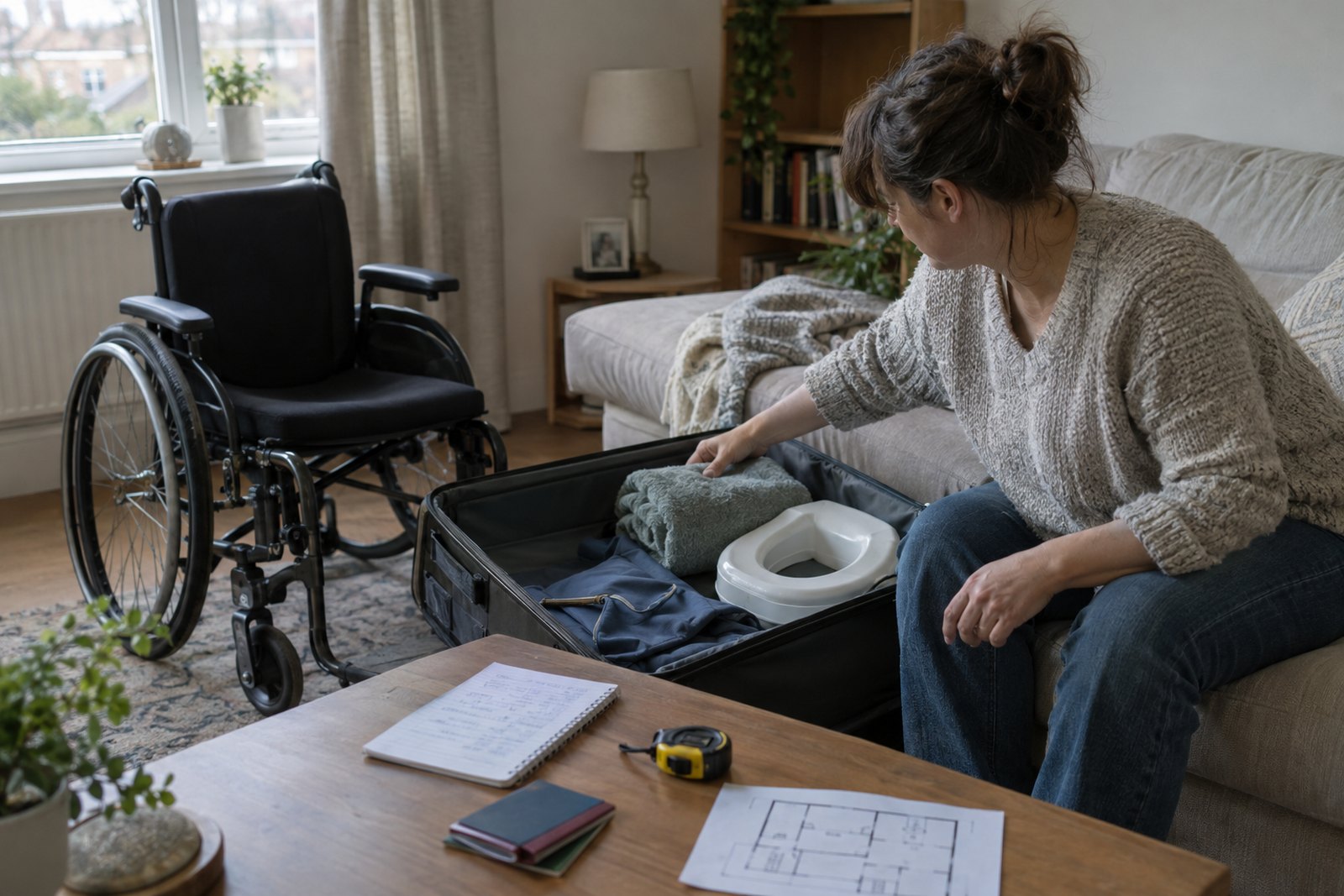
Accessible holidays in the UK are possible, including for many wheelchair users and people who need care. The difference between a good break and a miserable one is usually planning: getting clear, specific answers about access, bathrooms and beds before you pay, and having a back-up plan for the bits that tend to go wrong.
If you are searching for "accessible holidays" because you are exhausted already, keep it simple. Pick one or two "non-negotiables" (for example: step-free entrance, level-access shower, and enough space to transfer). Then ask for photos and measurements. If a place cannot or will not provide them, assume it will not work for you.
Start with the right questions for accommodation
Lots of places describe themselves as "accessible" when they mean "we have a ground floor room". You need the detail, especially if you use a wheelchair, frame, crutches, a hoist, or you fatigue quickly.
Step-free access and getting through the door
- Is the route from parking or drop-off step-free? Ask if there are any steps, kerbs, gravel, steep slopes, heavy gates, or narrow paths.
- How many steps are there anywhere on the route? "One small step" can be the whole problem if you cannot manage it independently or safely.
- What is the width of the narrowest doorway you must pass through? Ask for the measurement, not "it should be fine". If you use a wheelchair, include the bathroom door.
- Are there thresholds or lips at doors? Even a small lip can stop a wheelchair or trip someone who shuffles.
- If there is a ramp, what is it like? Ask if it is permanent or portable, whether it is steep, and whether there are handrails.
Bedroom: bed height, space, and transfers
- How high is the bed from the floor to the top of the mattress? This matters for stand-pivot transfers, slide-board transfers, and carers assisting.
- Is there space on both sides of the bed? If you transfer to one side only, say so. If you need a carer either side, say that too.
- Can you move the bed? Some rooms have fixed beds or furniture you are not allowed to shift.
- Is there space for equipment? For example, a shower chair to dry on, a commode at night, or a portable hoist.
- If you need a hoist, what exactly is available? Ask what type (mobile or ceiling track), and whether you must bring your own sling.
Bathroom: what type, what is fitted, what is the layout
"Accessible bathroom" can mean anything from a wet room to a bath with one grab rail. Be blunt and specific:
- Is it a wet room with a level-access shower, or a shower over the bath? Ask which it is. If it is a bath, ask if there is a bath board or bath seat, and whether the shower is over the bath.
- Is there a shower chair or shower stool? If yes, ask for a photo and the seat height. If no, ask if you can bring or hire one.
- Where are the grab rails and what do they support? Ask for a photo that shows the whole bathroom. Rails need to be positioned for the actual transfer you do.
- Is the toilet a comfort-height toilet? If you usually need a raised seat or toilet frame, assume you will still need it unless they can confirm the toilet height.
- Is there space to transfer? Ask if a wheelchair can fit through the bathroom door, and whether you can position a wheelchair next to the toilet and shower.
- Is the floor non-slip when wet? Many bathrooms are safe when dry and treacherous when wet.
If you are travelling with a child or adult who needs close supervision (for example due to dementia, seizures, or poor safety awareness), ask about locks, water temperature controls, and whether the bathroom can be made safer. If you are unsure what would help, make a short list of what happens at home when it goes wrong, and ask whether the bathroom setup would increase or reduce that risk.
Ask for photos and measurements (and what to ask them to show)
"Send photos" sounds simple, but you need the right photos. Many people will send a close-up of a grab rail that tells you nothing about the route in, the turning space, or the transfer.
Ask for these photos
- The entrance from outside, including any thresholds or ramps.
- The route from parking or drop-off to the entrance.
- The bedroom showing both sides of the bed and the space between bed and wall.
- The bathroom taken from the doorway, and one photo of the toilet area and one of the shower or bath area.
- The kitchen area if you need to self-cater, including whether there is space to sit while preparing food.
Ask for these measurements
- Narrowest door width you must pass through (including bathroom door). If you use a wheelchair, include the width at the tightest point, not just "standard door".
- Bed height from floor to top of mattress.
- Toilet height from floor to top of the seat, if possible.
- Step heights if any steps exist (even "just one").
- Shower entry details: level-access or a lip, and whether there is space to place a shower chair.
If measuring feels awkward, remember this: you are not being difficult. You are trying to avoid getting stuck in a room you cannot get in and out of, or a bathroom you cannot use.
Plan for unfamiliar bathrooms (this is where holidays often fall apart)
Even when you book carefully, bathrooms are the most common problem. They are small, slippery, and set up for someone else.
A quick safety check when you arrive
- Do a dry run first. Before anyone undresses or turns on water, check the transfer and where you will place feet, walking aid, wheelchair, or shower chair.
- Check what moves. Towel rails, shelves and sink pedestals are not designed to be held. Do not assume you can pull on them.
- Find the dry zone. Decide where you will stand or sit to dry and dress without slipping.
- Reduce clutter. Move bins, bath mats that bunch up, and anything that forces you to twist or step around it.
If the bathroom is not workable
This is the moment to be decisive. If a shower over the bath is unsafe, do not try to "make it work" on day one and hope for the best. Speak to reception or the owner immediately and ask to move rooms. If that is not possible, you may need to switch to strip washing at the sink, or use a commode and wash in the bedroom. It is not the holiday you pictured, but it can be safer than a fall.
If toileting is the main issue, a temporary raised seat or toilet frame can make a dramatic difference. Our plain English guide to toilet aids, raised seats, frames and rails explains the options and the common fitting and safety points.
Equipment: what to take, what to hire, and what to avoid
Taking the right small pieces of equipment can save a holiday. Taking the wrong big piece can create new problems, especially if it does not fit the space or nobody can use it safely.
What is usually worth taking
- Small daily living aids you rely on (for dressing, washing, opening containers, managing pain, or conserving energy).
- Anything that keeps you safe at night, for example if you need a stable routine for transfers.
- A lightweight transfer aid if you already use one safely and it is suitable for the accommodation.
- Spare parts for mobility equipment if applicable (for example, essential cushions or supports).
What to consider hiring at the destination
Larger items can sometimes be hired and delivered, depending on the area and the provider. This can include shower chairs, commodes, toilet frames and, in some areas, portable ramps and hoists, but only if they are suitable for the person and the space, you have been shown how to use them safely, and any hoist has a current LOLER inspection and a compatible sling. Ask the accommodation first whether they have equipment on site, and if not, whether they can accept delivery and store items safely.
It is also worth asking your local area whether there is a community equipment loan service, although these services may have eligibility rules and may not be able to lend equipment for travel. If you want to understand how these services work in general, read community equipment services: borrowing equipment instead of buying.
A simple packing checklist (adapt to your needs)
- Medication in original packaging, plus a written list of medicines and doses
- Any letters you have about your condition or equipment needs (if you have them)
- Continence supplies if needed, plus disposal bags
- A small torch or night light for unfamiliar bedrooms and trips to the toilet
- Well fitting non-slip footwear for bathroom trips (avoid socks on wet or smooth floors)
- Mobility aid spares if relevant (for example, ferrules for sticks)
- A tape measure (helpful if you need to check bed height or door width on arrival)
- If relevant and you have been shown how to use it safely: a slide sheet for repositioning in bed
- If relevant: a toilet frame or raised toilet seat that you know fits you
- Gloves and wipes if you provide personal care and need to keep things hygienic
If you are thinking about packing a slide sheet, read how to use a slide sheet to move someone in bed first. Slide sheets are brilliant for the right situation and risky for the wrong one.
Getting there: train, coach and flying
Travel days are tiring even before you add pain, spasticity, fatigue, anxiety, continence needs, or lifting and transfers. Your aim is to remove pressure points: long walks, long queues, rushed transfers, and not knowing where the toilets are.
Travelling by train (Passenger Assist)
Most train operators offer Passenger Assist for disabled passengers and people with reduced mobility. It is best to book in advance (online or by phone), but in many cases you can book with shorter notice, and you agree what you need: a ramp, help to find the right platform, assistance with luggage, and support when changing trains.
Practical tips:
- Plan for changes. Engineering works and platform changes happen. Build in extra time and keep essential items accessible.
- Ask about accessible toilets on the specific service if that is a make-or-break need.
- Consider a quieter travel time if crowds increase falls risk or sensory overload.
- Have a back-up plan if the station is unstaffed, the lift is out of order, or a rail replacement bus is used.
Travelling by coach
Coach travel can be good value and direct, but accessibility varies a lot. Some coaches can carry wheelchairs and some cannot. Toilets on coaches, where they exist, can be narrow and difficult to use if you need space, rails, or help from another person.
Before you book, ask:
- Whether your wheelchair or mobility scooter can be carried, and how it is secured
- Whether you can stay in your wheelchair or must transfer to a seat
- Whether there are steps, and whether a lift is available
- Where you can store essential equipment so you can reach it during the journey
Flying (special assistance and wheelchair handling)
If you are flying within the UK (or flying into the UK for a holiday), request airport special assistance as early as possible. Be clear about what you need: assistance through the airport, help with transfers, an aisle chair, and how your wheelchair should be handled.
Practical tips that often help:
- Label and photograph your equipment before travel, and remove anything easily lost (cushions, side guards, footplates if they detach).
- Keep essential parts with you if possible, especially seating cushions that affect posture and pressure risk.
- Know your transfer plan. If you need two people, or a hoist, say so. Do not let yourself be rushed into an unsafe transfer.
- Pack medication and continence supplies in hand luggage. Do not rely on checked baggage arriving on time.
If you have complex medical needs, discuss fitness to fly with your clinical team in good time. An occupational therapist can help with seating and transfer planning, but medical clearance is usually a GP or specialist decision.
Medicines, travel insurance and "what if something changes?"
Holidays are when routines change. That affects symptoms, sleep, continence, pain, and medication timing. A little preparation reduces stress for everyone.
Medicines
- Take more than you need for the trip length, in case of delays.
- Carry a current medication list (a printout or written list is fine) and note any allergies.
- Keep medicines in original packaging where possible.
- If you use controlled medicines or injectable medication, check the current guidance on travelling with medicines. Rules can vary by medicine and by carrier.
Travel insurance
Even for UK breaks, insurance is worth considering if you would struggle with the cost of cancellation, emergency accommodation changes, or replacing essential equipment. If you have long-term conditions, you generally need to disclose them. If you use equipment, check whether it is covered for damage or loss, and whether you are covered for needing extra support if your condition flares.
If your needs are changing quickly (for example after recent surgery, a hospital admission, or a new diagnosis), speak to your GP or specialist team about whether the timing is sensible. Sometimes the kindest thing is to postpone the trip and aim for a holiday you can actually enjoy.
Toilets, days out, and carer concessions
Accessible accommodation is only half the story. You also need a plan for the bits between the front door and "having a nice day". Toileting access, rest breaks, and knowing where you can sit can make the difference between managing a full day out and having to abandon plans.
Changing Places toilets
Standard accessible toilets are not suitable for everyone. Changing Places toilets are designed for people who need more space and equipment, such as a height-adjustable changing bench and a hoist. If this is relevant for you or your family member, plan outings around where Changing Places toilets are available. Our guide to Changing Places toilets and how to find one explains what they are and how they work.
Carer concession tickets
Many attractions, venues and visitor sites offer a free or discounted ticket for a carer, but the rules vary. Some ask for evidence (for example, a benefit award letter or a carer card), and some simply ask you to confirm you need support. It is worth checking before you go so you are not trying to argue at a busy ticket desk.
Build in rest like it is part of the plan
If fatigue is part of your life (because of long-term conditions, neurological symptoms, pain, or simply the effort of getting out), schedule rest in the same way you schedule activities. One main activity per day is not "giving in". It is often what makes the holiday possible.
Finding genuinely accessible breaks and extra support
If you are starting from scratch, it can help to use organisations that specialise in accessible tourism and respite. Tourism for All has information and guidance around accessible travel. Many condition-specific charities also offer practical travel advice, and some support breaks or grants in certain circumstances.
If you are a carer, ask your local carers centre what is available locally, including short breaks and sitting services. If you already have input from adult social care, you can ask what support exists for respite and whether any funding options apply. Availability and eligibility rules vary by area, so it is worth asking even if you have been told "no" before.
Where an occupational therapist fits
An occupational therapist focuses on day-to-day function: transfers, personal care, fatigue management, and the match between your needs and the environment. For accessible holidays, a private occupational therapist visiting at home can help you get clear on what you actually need, not what you hope you can manage on a good day.
That might include:
- Working out the safest way for you to manage toileting, showering and transfers in an unfamiliar bathroom
- Recommending practical equipment to take, and what to hire, based on your abilities and the space you will have
- Helping you plan routines that reduce falls risk and conserve energy
- Problem-solving specific barriers, for example bed height, lack of rails, or how a carer can assist without injuring themselves
An occupational therapist is not the right professional for everything. Speak to your GP or specialist team about medical stability and fitness to travel. A physiotherapist is often best for walking goals, exercise programmes, and musculoskeletal rehab. If swallowing, communication or cognition are major issues, a speech and language therapist or specialist nurse may be more appropriate depending on the problem.
Frequently asked questions
What does "step-free access" actually mean?
It should mean you can get from outside to the key parts of the accommodation without steps. In reality it can still include thresholds, steep slopes, narrow doors, or a step "somewhere else" like the patio, dining room, or bathroom. Always ask what the route is like and ask for photos.
How do I know if the bathroom will work for me?
Start with the type (wet room, level-access shower, shower over bath) and then the layout. You need enough space to position your wheelchair or walking aid, and to transfer safely. Ask for photos taken from the doorway and ask for key measurements like bed height and toilet height.
Can I hire equipment for a UK holiday?
Sometimes, yes. Availability depends on the area and the type of equipment. Contact the accommodation first, then ask about local hire and delivery options. If you need specialist moving and handling equipment (like a hoist), do not assume it will be available or appropriate without a proper assessment.
What should I do if the room is not as described?
Report it immediately and be specific about what is unsafe or unusable (for example: the "accessible shower" is a shower over a bath, or the bathroom door is too narrow for your wheelchair). Ask to move rooms. If the provider cannot offer a safe alternative, you may need to look for different accommodation.
Do I need to tell my travel insurer about my condition for a UK break?
Often yes, especially if you have long-term conditions, recent hospital admissions, or you use mobility equipment. Policies vary, so check the wording and if in doubt ask the insurer directly. You are trying to avoid a situation where you assume you are covered and find out too late that you are not.
How can I make personal care easier in a new place?
Keep routines as close to home as you can, and set up the space first: where the towel goes, where you sit to dry, what you hold when you stand. If two people normally help with transfers, do not attempt it with one person on holiday. Safety first, dignity a close second.
Next steps
See our home assessments and equipment and aids pages, or current guide prices, and choose your area below.

Talk to an occupational therapist near you
This guide is general information. For advice about your own situation - or someone you look after - a local occupational therapist can visit you at home and see it for themselves.
Choose your area: