

Young Carers Support: Help for Children Who Care for Family
By Mobile Occupational Therapist • 26 September 2026 • 14 min read
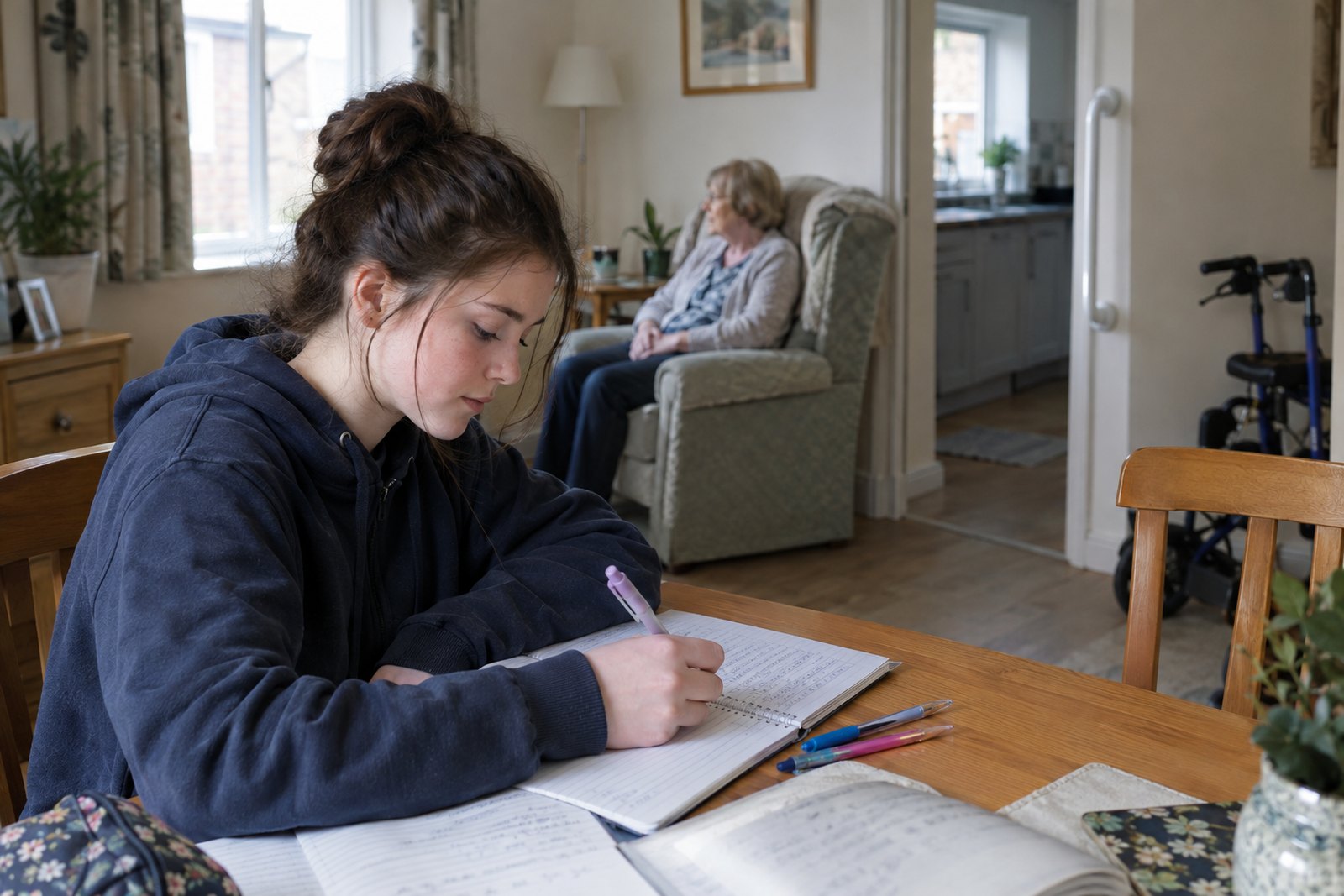
A young carer is a child or young person under 18 who helps look after someone in their family who has an illness, disability, mental health condition or addiction. Some young carers do a lot of practical caring. Others do more emotional support, supervising, translating, or keeping things going when the adult is unwell. It often stays hidden because families feel they should cope.
If this is your child (or a child you teach), help usually starts in three places: tell school and ask for a named staff member; ask your local council about a young carer assessment (England) or the equivalent where you live; and reduce the caring tasks at home so the child is not doing lifting, personal care, or anything unsafe.
Who young carers are and what they actually do
People picture a child doing "adult" care tasks. Sometimes that happens. But many young carers are doing lots of small jobs that add up, plus the constant worry.
Young carers might be helping because:
- a parent has a long-term physical condition, chronic pain, fatigue, or mobility problems
- a sibling has a disability or additional needs
- a parent has depression, anxiety, a severe mental illness, or a period of crisis
- a parent misuses alcohol or drugs
- someone has a neurological condition, dementia, or is recovering after hospital
Common caring tasks include:
- Practical jobs: making meals, cleaning, laundry, shopping, collecting prescriptions, getting younger siblings ready for school.
- Helping someone manage at home: prompting them to eat, drink, wash, take medication, or get up on time.
- Physical help: supporting someone to stand, helping them up the stairs, pushing a wheelchair, or steadying them in the bathroom.
- Emotional support and monitoring: watching for mood changes, managing arguments, keeping things calm, or staying close in case the adult becomes unwell.
- Communication and admin: translating, helping with forms, answering the door, dealing with phone calls.
Some children will say, "I'm not a young carer, I just help my mum." That does not mean they do not need support. It just means "carer" can feel like a loaded word in a family that is already stretched.
How caring can affect school, friendships and wellbeing
Young carers are often doing two jobs: being a child at school and being "the reliable one" at home. Even if they are coping on the surface, it can show up in predictable ways.
At school
You might notice:
- lateness or poor attendance (especially mornings after a bad night)
- unfinished homework, missed deadlines, or "I forgot" that is really exhaustion
- falling asleep in lessons
- difficulty concentrating, daydreaming, or being on edge
- not joining clubs or revision sessions because they need to go straight home
- avoiding phone calls during the day because they are worried about home
With friends
Young carers can miss out socially. They may not invite friends round. They may cancel last minute. They may feel different, or feel they have to keep family life private. Some become very adult around peers, which can be isolating.
In their physical and mental health
It can look like:
- tiredness, headaches, stomach aches, or frequent minor illnesses
- low mood, irritability, anxiety, or panic symptoms
- taking on too much responsibility, perfectionism, or being "fine" all the time
- anger outbursts at home where it feels safe to let go
If a child is self-harming, talking about not wanting to be here, experiencing violence at home, or is at immediate risk, treat it as urgent. Contact a GP, NHS 111, or 999 depending on the situation. If you are a professional, follow safeguarding procedures.
What you can do this week (without waiting for an assessment)
Support does not have to start with a referral. A few practical changes can take some weight off quickly.
1) Write down what the child is doing
Do a simple list for one typical weekday and one weekend day. Include the "hidden" jobs like listening, watching, checking, and worrying.
This helps you spot what is:
- essential
- nice to have
- unsafe for a child
- something an adult should be doing
2) Be blunt about what is not appropriate for a child
It is common for caring to slide into areas that feel unavoidable. But some tasks need to be taken off the child's plate, even if it means changing routines or asking for outside help.
As a general rule, children should not be:
- lifting an adult, pulling them up from the floor, or physically supporting their weight
- doing personal care that involves intimate washing or toileting (it raises dignity and safeguarding issues)
- managing medication (ordering, dispensing, or supervising complex medication routines)
- being the only person who knows what to do in a crisis
If any of these are happening, it is a sign the caring load needs urgent rebalancing. Start by talking to school and your GP, and by contacting your council for help.
3) Create a simple home plan for "bad days"
Bad days are when children get pulled in. A plan reduces the amount of decision-making.
Keep it simple:
- Who is the first adult contact if the parent is unwell?
- What is the child allowed to do, and what should they not do?
- Who can pick up siblings if needed?
- What numbers are saved in the child's phone?
If the adult's condition can worsen suddenly, make sure the child knows when to call 999, and that they will not get into trouble for doing so.
4) Tell school, even if you do not want "a fuss"
School cannot support what they do not know. Many families worry about judgement, or worry that asking for help will trigger unwanted involvement. In reality, schools support young carers all the time. They are used to handling information sensitively.
Ask for:
- a named staff member (often a pastoral lead, head of year, SENCO, or safeguarding lead)
- a quiet place the child can go if they are overwhelmed
- flexibility with homework on weeks when home life is heavier
- a plan for communication so the child is not the messenger between home and school
Reducing the caring load at home: equipment and adaptations that make a real difference
The most practical help for many families is reducing how much physical work is needed at home. If a parent can transfer, wash, toilet, prepare food, and move around more safely, the child is freed up to be a child.
This is the part people skip because it sounds like "buying equipment". It is not just that. It is about designing everyday routines so they are safer, simpler, and less exhausting for everyone.
Start with the most risky moments
In many homes, the highest-risk tasks are:
- getting on and off the toilet
- getting in and out of the bath or shower
- stairs, thresholds, and night-time trips to the bathroom
- getting up from low chairs and beds
- carrying hot drinks and pans
If a child is "spotting" a parent in any of these situations, that is a red flag. The risk is not just falls. It is also back injuries, fear, and the child feeling responsible for keeping an adult safe.
Examples of changes that can reduce the need for help
- Bathroom: grab rails in the right places, a stable shower chair or shower stool, a bath board (only when suitable and safe), a raised toilet seat or toilet frame, non-slip flooring or mats that do not slide.
- Getting up and sitting down: the right chair height and firmness, additional armrests, bed levers where appropriate, and safe space around the bed for transfers.
- Kitchen: a perching stool for standing tasks, rearranging frequently used items to waist height, strategies to avoid carrying heavy pans, and using two-handled lightweight pans if lifting is painful.
- Moving around the home: clear walkways, good lighting, a second stair rail, small threshold ramps where needed, removing trip hazards like loose rugs.
- Communication and safety: a personal alarm or call system for the adult, so the child is not constantly "on standby" listening out.
Some equipment can be provided short-term through local community equipment services, and more permanent changes may be funded or part-funded through routes such as a Disabled Facilities Grant, depending on eligibility. This varies by area and circumstances, so check your local council's website for the current process.
If you want a plain English overview of common aids, see occupational therapy equipment for daily living. If you are thinking about bigger changes, see home adaptations and how an OT assessment works.
Please do not make children do lifting
If a child is helping someone stand, moving them in bed, catching them when they slip, or pulling them up from the floor, you need a different plan. Even adults injure themselves doing this.
Proper moving and handling is a skill and it depends on the person's medical situation, strength, balance, pain, cognition, and the layout of the home. For a safety overview, read safe moving and handling for family carers and then seek individual advice for your situation.
Young carers support through school and local services
Support often works best when school and a local young carers service (or carer centre) are both involved. One supports education. The other supports the child's life outside the classroom.
What a good school support plan can include
- A named staff member who checks in and advocates for flexibility.
- Homework adjustments when caring demands spike, with a plan that does not rely on the child explaining their home life repeatedly.
- Reasonable flexibility around detentions, after-school sessions, and early-morning interventions if the child has caring responsibilities at set times.
- Support for exams where appropriate, such as rest breaks or a smaller room. This is individual and evidence-based, so start the conversation early.
- Time to attend young carers groups if the school can allow it.
If you are the parent, it can help to put one short sentence in an email that makes it real: "Mia is regularly helping with her dad's mobility and gets him settled before school." You do not need to share everything.
What young carers services and groups can offer
This varies by area, but may include:
- someone to talk to who "gets it"
- activity days and trips where the child can relax without being on alert
- help explaining the situation to school
- practical advice on benefits and support for the whole family
- peer groups so they are not the only one
Some areas also run Young Carers card schemes, which can be useful for identification and getting understanding in public services. Schemes vary a lot, so check what exists locally rather than assuming there is one national card.
Young carers assessments: how to ask, and what should come out of it
The phrase "young carers assessment" can sound intimidating. It is meant to be the opposite. It is a way to recognise that a child's life is being affected by caring, and to put support in place.
England: young carer needs assessments (in general terms)
In England, local authorities have duties to identify and assess young carers' needs. The assessment should look at what the child is doing, how it affects their wellbeing, education and development, and whether it is appropriate for them to be providing that level of care.
You can usually ask via your council's children's services, early help team, or through a local young carers service. If the person being cared for is an adult, adult social care may also need to assess the adult's needs, because reducing the adult's unmet needs often reduces the child's caring role.
Scotland, Wales and Northern Ireland
Other nations have their own routes. In Scotland, for example, young carers can have a Young Carer Statement. Wales and Northern Ireland have different systems again, usually via local authority social services or health and social care teams. The quickest way in is often through a local carers centre or young carers project, who can explain the local process.
What to ask for in any assessment
Whatever it is called where you live, you want it to result in a real plan. It helps to ask for:
- an honest description of what the child is doing (including night-time disruption and emotional support)
- a safety line stating what the child should not be responsible for
- support for the adult so the child is not filling the gaps (care at home, reablement, equipment, mental health support)
- support for the child such as groups, mentoring, transport help to attend activities, or counselling if needed
- school liaison so adjustments are consistent
If you are a parent who is disabled or unwell, ask your council about an adult needs assessment for you, and a carer's assessment for anyone providing care to you. If you are caring for a disabled child, you can also ask for a parent carer needs assessment. These are separate from a young carer assessment and focus on support that helps family life run safely and sustainably.
Where occupational therapy fits (and where it does not)
Occupational therapy is about helping people do everyday activities more safely and independently. In a young carer situation, that usually means one thing: reducing what the child has to do at home.
An occupational therapist can:
- assess the adult's daily activities at home (getting to the toilet, washing, transfers, stairs, kitchen tasks)
- recommend practical equipment and layout changes to reduce falls risk and dependence
- advise on safer ways to complete tasks so no one is lifting or "holding" another person unsafely
- identify when the home setup is pushing the family into unsafe routines, and what changes would remove that pressure
- write reports to support applications for adaptations where needed
An occupational therapist cannot replace hands-on care, provide medical diagnosis, or be the main clinician for complex mental health treatment. If the parent is in crisis, suicidal, experiencing psychosis, or there is substance dependency that is unsafe at home, the right first step is often the GP, crisis team, or emergency services. If a child is struggling emotionally, school pastoral support and CAMHS routes may be appropriate.
If the biggest problem in your home is that a child is doing physical care tasks because the adult cannot manage safely, a home-based OT assessment can be a practical turning point, because it focuses on what needs to change in the environment and routine, not on asking the child to "cope better".
Frequently asked questions
What age counts as a young carer?
In the UK, "young carer" usually means under 18. Some services also support young adult carers, often up to 25, because caring does not stop on a birthday and the transition to college, university or work can be hard.
How do I ask for a young carers assessment in England?
You can contact your local council and ask children's services for a young carer needs assessment. Some areas accept referrals via a local young carers service or through school. If you are unsure, start with your council website and search "young carer assessment" plus your area.
Will social services take my child away if I ask for help?
Most families asking for young carers support are not asking because they are unsafe parents. They are asking because illness or disability is putting too much responsibility on a child. The purpose of assessment is support. If there are safeguarding risks, agencies have to respond, but avoiding help can leave families more exposed, not less.
My child says they are not a young carer. Should I still tell school?
Yes. You can share the facts without labelling your child. For example: "Things at home are unpredictable because of health problems and it affects mornings and homework." The label is less important than having one trusted staff member who understands.
What can school do, realistically?
Often the most helpful things are simple: a named contact, flexibility when home life flares up, a quiet place to decompress, and not punishing lateness or missed homework without understanding why. For some pupils, support with exams or attendance planning may be appropriate too.
What if the caring involves addiction or severe mental health problems?
If a child is managing unsafe situations, violence, or is frightened at home, you need urgent support. Talk to your GP, contact NHS 111 for advice, and call 999 in an emergency. School safeguarding staff and local services can help you find the right route without the child carrying it alone.
Next steps
See our home assessments and home adaptations pages, check current guide prices, and choose your area below.
Talk to an occupational therapist near you
This guide is general information. For advice about your own situation - or someone you look after - a local occupational therapist can visit you at home and see it for themselves.
Choose your area: