

Wheelchair Cushions: How to Choose One and Prevent Pressure Sores
By Mobile Occupational Therapist • 20 September 2026 • 14 min read
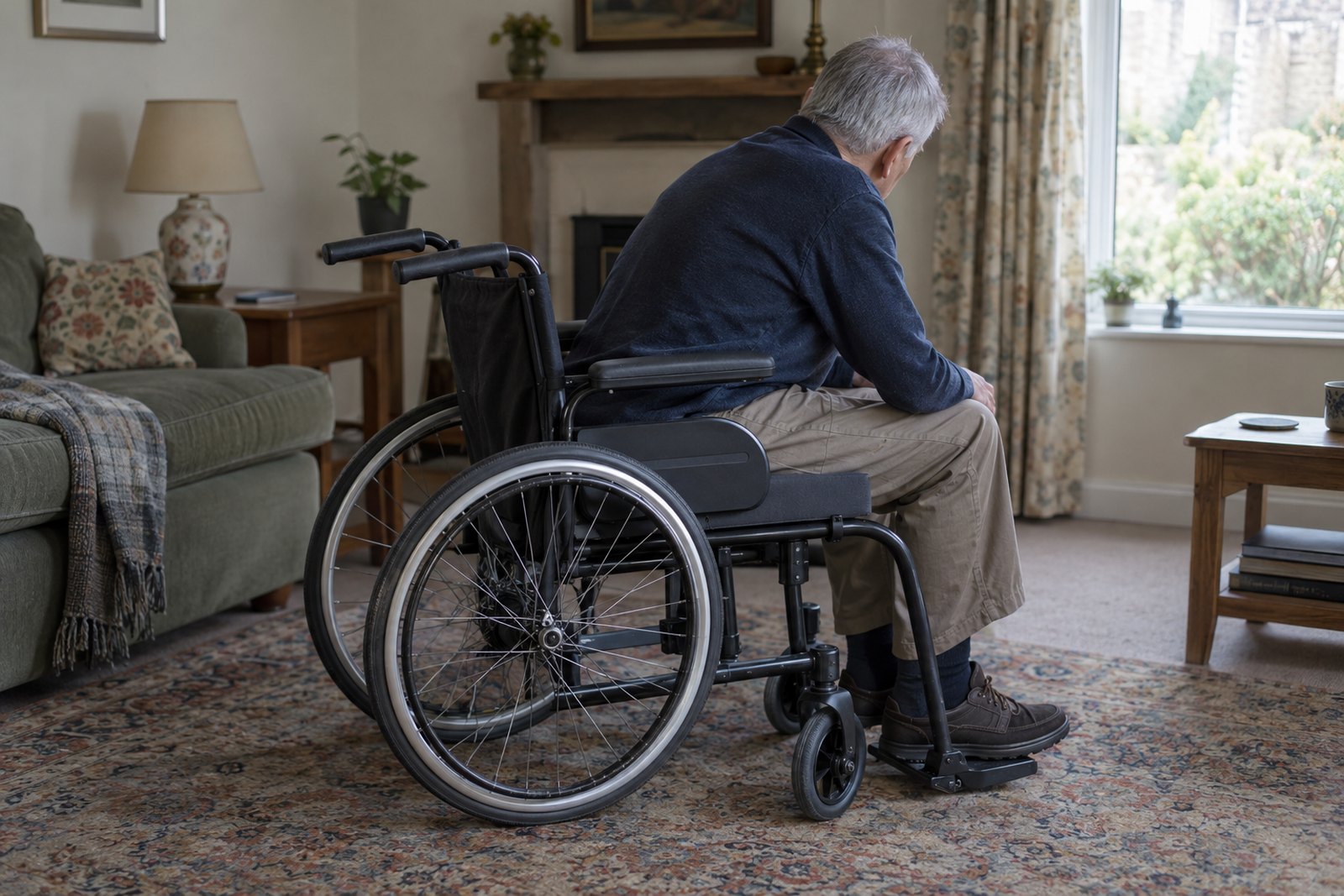
A wheelchair cushion is not an optional extra. If you, or someone you look after, sits in a wheelchair for more than short trips, the cushion is doing three jobs at once. It spreads pressure so skin does not break down. It holds the pelvis and body in a sensible position. And it gives a stable base to push, reach and transfer from. The wrong cushion, or the right one used wrongly, can undo all three.
So which one should you get? It depends on how long you sit, how well you can move and feel, the state of your skin, and the chair itself. Good foam suits many people at lower risk. Gel, air cell and shaped (contoured) cushions are generally for people at higher risk of pressure sores or with particular posture needs. If there is any sign of skin damage, or you sit for most of the day, the cushion should be chosen with the wheelchair service, a nurse or an occupational therapist rather than from a website. The rest of this guide explains how to tell which situation you are in, how to set a cushion up properly, and the daily habits that matter as much as the cushion does.
Why the cushion matters so much
Pressure
When you sit, most of your weight goes through two small bony points at the bottom of the pelvis, the seat bones, plus the tailbone if you slump. The skin and tissue underneath are squeezed between bone and seat. Squeeze for long enough and blood cannot get through properly, and the tissue starts to break down, often from the inside out. That is a pressure ulcer, also called a pressure sore or bedsore. People who cannot feel discomfort, cannot shift their weight easily, are very thin, are unwell, or have damp skin are most at risk. Our guide to pressure relief cushions and mattresses covers the wider picture, including beds and armchairs.
Posture
Many wheelchairs have a fabric sling seat, which sags in the middle. Sit on it for hours and the pelvis tips, the knees roll inwards, and the person leans to one side or slides forward. That loads the tailbone, makes eating and breathing harder, and can cause back and neck pain. A good cushion, sometimes with a firm board underneath, gives a level foundation to sit on.
Comfort and stability
Comfort is what most people notice first, and it matters. If a cushion is uncomfortable, people stop using it or perch on the front edge, which is worse than no cushion. Stability is less obvious. A very soft or wobbly cushion can make pushing the wheels, reaching and getting in and out of the chair harder and less safe.
The main types of wheelchair cushion
There are many designs, but most fall into a few families.
Foam
The most common. It ranges from a basic flat slab to layered foams of different firmness and memory foam that moulds to your shape. Foam is light, stable for transfers and needs little looking after beyond the cover. The downsides: cheaper foam flattens over time, it can get warm, and a thin or worn foam cushion lets you sink through to the seat underneath, which is called bottoming out.
Gel
Usually a gel pad or pouch set into a foam base. The gel moves to spread pressure and tends to feel cooler. Gel cushions are heavier, and the gel can drift away from where it is needed, so some need kneading or smoothing back into place.
Air cell
Rows of connected rubber or plastic cells filled with air. You sink in and the air moves around to share the load. These are often used for people at high risk or who have had a pressure ulcer before. They only work if the air level is right, they need checking every day, they can feel less stable, and they can puncture.
Contoured and positioning cushions
Shaped to cradle the pelvis and thighs. Typically there is a dip at the back for the seat bones, shallow channels for the thighs, and sometimes a raised front to stop sliding, or side supports. These are about posture as much as pressure. Some combine a shaped foam base with a gel or air insert.
What to avoid
- Ring or doughnut cushions. Pressure ulcer guidance advises against them. They load a ring of skin around the hole and can make things worse.
- Pillows, sofa cushions and folded duvets. They are unstable, they bunch, and they were not made to spread pressure.
- Stacking two cushions. It raises you too high, makes the chair less stable and usually cancels out what each cushion was designed to do.
Getting the size right
The cushion should match the seat of the wheelchair: the same width and the same depth. Measure the chair's seat, not the person.
- Too wide and the sides press against the side guards, the edges ride up and you sink unevenly.
- Too narrow and the seat bones can end up near the edge, over the sagging fabric.
- Too deep and the front edge digs into the backs of the knees, which pushes people to slide forward to bend their legs.
- Too shallow and less of the thigh takes weight, so more goes through the seat bones.
Height matters too. A cushion raises the person, which changes a lot of other things. Footplates may need adjusting so the thighs are supported and the feet rest flat. The backrest ends lower on the back. Armrests feel lower. The chair may no longer go under the table. Transfers to the bed, toilet or car change. A tall cushion also raises the centre of gravity, which can make the chair less stable on slopes and kerbs. If you change to a very different type of cushion, the chair may need adjusting as well, which is one more reason to involve whoever set the chair up.
Which way round does it go?
This catches out a lot of families, especially when several carers are involved. Flat foam cushions may be the same either way, but most shaped cushions are not. General clues:
- The deeper hollow goes at the back, under the seat bones.
- Thigh channels or a raised front edge go at the front, towards the knees.
- Covers are often marked front and back, or have a handle at one end. Check the instructions, as designs vary.
- A non-slip underside faces down onto the seat.
- On an air cell cushion, the valve goes where the instructions say, so it can be reached for checks.
Once it is set up correctly, take a photo of it in the chair and keep a note with the chair, so anyone helping can put it back the same way after washing the cover.
Covers: a small detail with a big effect
The cover is part of how the cushion works. A stretchy, breathable cover lets you sink in. A tight or stiff cover creates a drum skin over the top and reduces the benefit.
- Use the cover made for that cushion, the right way out and smoothed flat with no creases.
- Do not add layers on top: folded towels, blankets, sheepskins, plastic sheets or extra pads. Each one reduces what the cushion can do. If anything sits between you and the cushion, check it with your therapist or nurse first.
- If leaks are a worry, ask about a fluid-resistant cover designed for that cushion, and get proper help with continence. Our guide to NHS continence services explains how.
- Keep a spare cover so the cushion is never used bare or skipped on wash day.
Checking an air cell cushion
An air cushion that is underinflated lets you bottom out. One that is overinflated is like sitting on a balloon: it pushes back hard on the bony points and feels unstable. Make the check part of the daily routine.
- With the person sitting in their usual position, slide a flat hand, palm up, under the cushion beneath the seat bones. You should feel air between your hand and the person, not their bones pressing down onto your fingers. The instructions will say how much gap to aim for.
- Check the valve is closed after any adjustment.
- Look for cells that stay flat, lean over or feel different from the rest. That can mean a puncture.
- Recheck after anything that changes the load or air, such as a change in weight or travelling.
- If the cushion was supplied by the NHS, contact the wheelchair service or its repair contractor about damage rather than patching it yourself.
Pressure relief: what you do matters as much as the cushion
No cushion removes pressure completely. What lets blood back into squeezed tissue is movement. Regular weight shifts are the single most useful habit for anyone who sits for long periods. Common ways to do it, with the brakes on and only if they are safe for you:
- Lean forward, bringing your chest towards your knees, to lift weight off the seat bones. Have someone nearby if your balance is not good.
- Lean to each side, hooking an arm over the armrest or push handle, to lift one buttock and then the other.
- Push up on the armrests to lift your bottom clear. This takes strength and can wear out shoulders over the years, so it is not for everyone.
- Tilt the chair back, if it is a tilt-in-space chair, so weight moves from the seat to the back.
How often and for how long depends on your skin and risk, so ask your wheelchair therapist or nurse for your own target. For many people it is measured in minutes, not hours. A phone alarm, a watch that vibrates or the end of every television programme all make useful reminders. If someone cannot move themselves, carers will need to reposition them and plan time out of the chair, lying down, during the day.
A few other things help. Sit well back in the chair, because sliding forward drags skin and puts weight on the tailbone. Do not drag across the cushion during transfers; lift or use the equipment you have been shown. Keep skin clean and dry, and eat and drink well, as poor nutrition and dehydration make skin more fragile.
Skin checks and red flags
Check the skin every day, more often if you are at high risk or your nurse advises it. For a wheelchair user, look closely at the seat bones, tailbone, base of the spine, hips and backs of the thighs, plus heels, elbows and shoulder blades. A long-handled mirror helps if you check yourself; otherwise ask a carer.
Early warning signs include:
- A patch of discoloured skin. On lighter skin this is often red. On brown and black skin, redness may not show, so look for purple, blue or darker patches.
- A patch that does not go paler when you press it lightly with a finger.
- An area that feels warmer, cooler, spongy or hard compared with the skin around it.
- Pain, itching or burning in one spot.
If you find any of these, keep pressure off that area completely, which may mean less time in the chair until it has been seen. Do not rub or massage it. Contact your district nurse or GP the same day. If the skin is broken, blistered or open, smells, or is leaking, that needs prompt attention from a nurse or GP; if you cannot reach them, call NHS 111. Call 999 if the person has a wound and becomes very unwell, confused, very drowsy, breathless or has a high or very low temperature, as infection from a pressure ulcer can become serious.
Why assessment matters, and the NHS wheelchair service
Picking a cushion from reviews is a gamble because the important questions are about the person, not the product. A proper seating assessment looks at skin history, sensation, continence, how many hours you sit, pelvis and spine shape, how well you can shift weight, how you transfer, your weight, and the chair. Some seating clinics also use pressure mapping, a mat that shows where pressure is highest.
NHS wheelchair services are run locally and assess people with a long-term mobility need, providing a wheelchair and, where it is clinically needed, a pressure-relieving cushion. Referral routes and eligibility vary by area, so check with your GP or local service. Our guide to NHS wheelchair services explains how to get referred. If you already have an NHS chair and things change, such as weight loss, a new red mark or more hours sitting, ask for a review rather than waiting.
Where an occupational therapist fits
It helps to be clear about who does what. NHS wheelchair assessments are usually carried out by therapists, often occupational therapists or physiotherapists, sometimes with rehabilitation engineers. District nurses and tissue viability nurses lead on pressure ulcer risk and on treating any wound. Your GP deals with infection and medical causes. A physiotherapist may lead on strength, balance or stiffness that affects how someone sits.
An occupational therapist looks at how the whole day works. A private occupational therapist visiting at home can watch how the chair and cushion are actually used, check size, set-up and which way round it goes, look at transfers, and build weight shifts into a realistic routine. They can also look at the armchair, bed and toilet, because pressure damage can happen anywhere the person spends long periods. They can show carers safer techniques and write a report to support a referral or a purchase. If seating is complex, ask any therapist about their experience with wheelchair seating before booking. Our guide to NHS or private occupational therapy may help you decide which route suits you.
An occupational therapist does not treat an open wound. If there is broken skin, the nurse comes first.
Frequently asked questions
How often should a wheelchair cushion be replaced?
There is no single answer, as it depends on the type, how much it is used and the manufacturer's guidance. Replace or get it reviewed if foam stays flattened or no longer springs back, the cover is worn or torn, gel has hardened or leaked, or air cells keep losing air. If you can feel the seat through the cushion, it is not doing its job.
Is a gel or air cushion better than foam?
Not automatically. They suit different people. Someone at high risk of sores may need air or gel, while someone at lower risk who transfers independently may do better on a stable, well-made foam cushion. The right choice depends on skin, posture and ability to move.
Can I use my wheelchair cushion on an armchair or in the car?
A wheelchair cushion is sized for the wheelchair seat and may be unstable or raise you too high elsewhere. If you need pressure relief in an armchair, ask your nurse or therapist about a cushion for that chair. In a car, check with your therapist that it will not affect your position or seatbelt.
My wheelchair has a sagging fabric seat. Will a cushion fix it?
Partly. A cushion on a sagging seat still tips you inwards. Many people need a firm base board under the cushion, or a chair with a solid seat. Ask whoever supplied the chair.
Can I get a wheelchair cushion free on the NHS?
If you have a clinical need, the wheelchair service or community nursing team may supply one. If you buy one yourself because of a disability or long-term condition, you may not have to pay VAT on equipment designed for disabled people. Check the current rules on GOV.UK before you buy.
If I have a good cushion, do I still need to move?
Yes. A cushion reduces pressure but never removes it. Regular weight shifts, skin checks and time out of the chair are still needed.
Next steps
If you are not sure your cushion is right, or sitting is becoming a struggle, see our equipment and aids page, or current guide prices, and choose your area below.

Talk to an occupational therapist near you
This guide is general information. For advice about your own situation - or someone you look after - a local occupational therapist can visit you at home and see it for themselves.
Choose your area: