

Slippers for Elderly People: What Actually Reduces Falls
By Mobile Occupational Therapist • 30 September 2026 • 13 min read
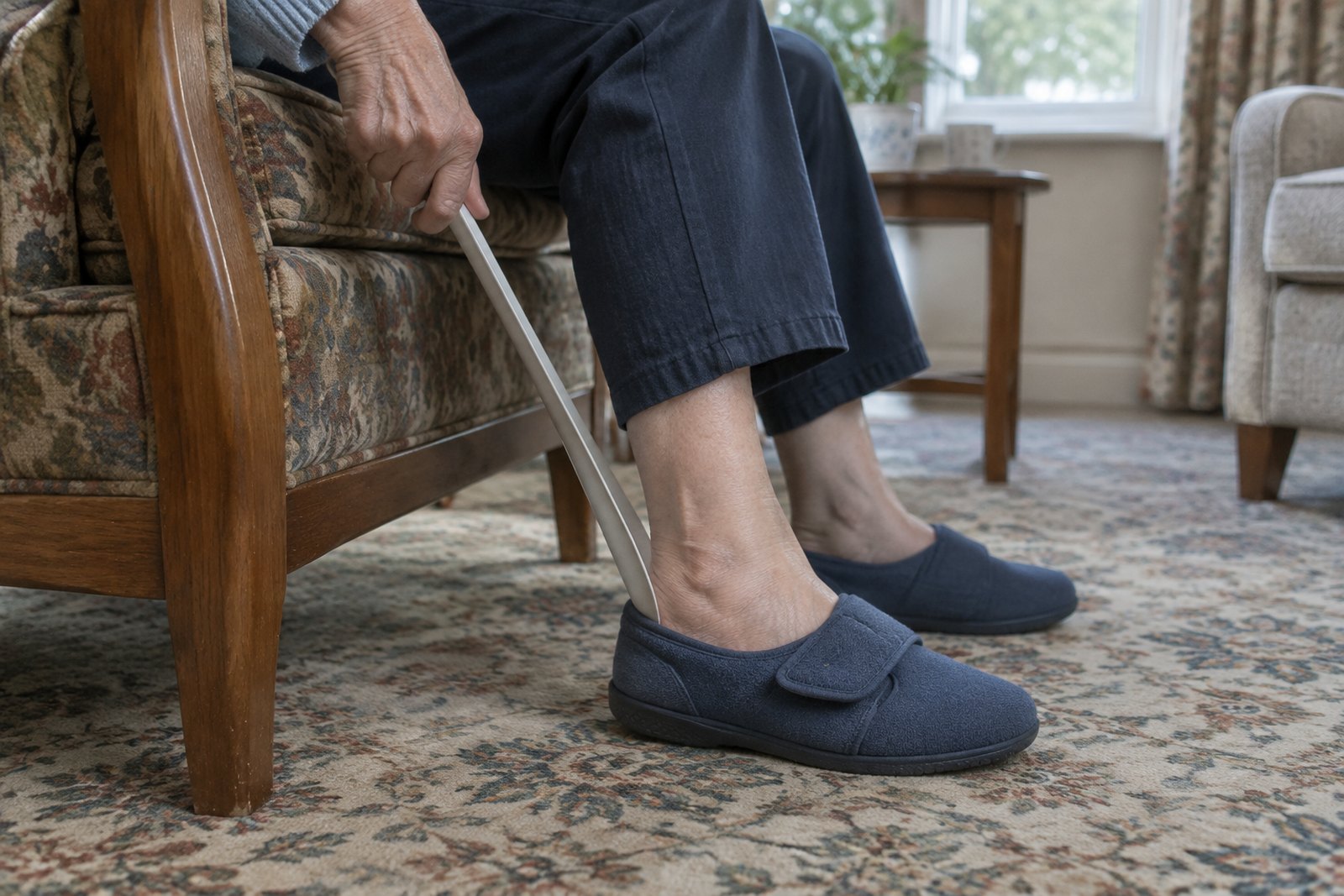
If you are looking for slippers for an elderly parent, or for yourself, the short answer is this: choose something that behaves like a shoe. A slipper that fastens across the foot, has a proper back around the heel, a thin, firm sole with grip, and a low, wide heel is far safer than a soft, backless one. Fit matters as much as style. A good slipper a size too big is still a trip waiting to happen.
What to avoid is just as clear. Backless mules, slippers that have stretched or worn smooth, walking around in socks or tights, and very thick, squashy soles all make falls more likely. Footwear is not the whole story. Eyesight, balance, medicines, lighting and clutter all play a part. But footwear is one of the easiest things to change, and you can change it this week.
Why footwear matters for falls
Your feet do more than carry you. The soles of your feet send constant information to your brain about where the floor is, whether it slopes and whether you are starting to tip. With age, that feedback often gets weaker and balance reactions get slower. Footwear can either help that system or get in its way.
Researchers who study falls in older people have looked at footwear for years, and the features they keep coming back to are fairly consistent. Shoes that hold the foot securely, keep it close to the ground and grip the floor tend to support steadier walking. Footwear that slips off, raises the heel or puts a thick cushion between the foot and the floor tends to do the opposite. None of this needs specialist knowledge to check. You can work through it with the slippers in your hand.
What to look for in safe slippers and shoes
A fastening that holds the foot
Touch-and-close straps, laces or an adjustable buckle keep the slipper attached to the foot, so it moves with you rather than half a step behind. Straps are usually easiest for stiff or painful hands, and they can be loosened when feet swell later in the day. Elasticated slip-on styles can work if they are snug, but they tend to loosen over time.
A back to the heel
A firm heel counter, the stiff part that wraps around the back of the heel, stops the foot sliding out and helps keep the ankle steady. Squeeze it between finger and thumb. If it collapses flat, it is not doing much. A slipper with no back at all relies on your toes clawing to keep it on, which changes how you walk and makes shuffling more likely.
A thin, firm, slip-resistant sole
Look for a sole that is fairly thin and firm, with a textured tread rather than a smooth surface. Thin and firm lets you feel the floor. The tread grips kitchen tiles, laminate and bathroom vinyl. Bend the slipper: it should flex at the ball of the foot, where your foot naturally bends, not fold in half in the middle. Soft fabric soles are slippery on hard floors and give no protection if you stub a toe.
A low, wide heel
A low heel with a broad base is the most stable. Higher or narrow heels tip your weight forward and give you a smaller area to balance on. A flat sole is fine for most people. Some people with stiff ankles or particular foot shapes find a very slight heel more comfortable, which is worth talking through with a podiatrist if that sounds like you.
A good fit
Length, width and depth all matter. There should be roughly a thumb's width between the longest toe and the end of the slipper, the widest part of the foot should sit at the widest part of the slipper, and the toes should have room to wiggle without the foot sliding about. Feet often get longer, wider or flatter with age, so last decade's size may be wrong now. Have both feet measured, ideally later in the day when they are at their largest, and try both slippers on with the socks normally worn.
Light, with a slightly rounded toe
Heavy footwear is tiring, and tired legs shuffle. A reasonably light slipper, with a toe that curves up slightly rather than sitting flat and square on the floor, is less likely to catch on a rug edge or a carpet join. Treat this as a useful extra rather than the first thing to look for.
What to avoid
- Backless mules and open-backed slippers. They slip off, catch on stair edges and encourage shuffling. Many people love them because they are easy to put on. That is a real point, and the answer is easier fastenings or a dressing aid, not keeping a risky slipper.
- Worn-out slippers. Check the backs for squashed-down heels, the soles for smooth, shiny patches and the uppers for stretching. If the slipper no longer stays put when you walk, replace it, however comfortable it feels.
- Socks, tights or bare feet on their own. Socks on hard floors, polished wood or stairs are one of the most common ways people slide. Bare feet give some grip but no protection, and are risky for anyone with reduced feeling in their feet.
- Very thick, soft, cushioned soles. They feel lovely but dull the feedback your feet get from the floor and can make you less steady, especially when turning or on uneven ground. Some cushioning is fine. A sole like a pillow is not.
- Slippers that are too big. Buying a size up for comfort or for swelling usually means the foot slides about. Choose adjustable fastenings instead.
- Going outside in slippers. Indoor soles are rarely made for wet pavements, gravel or kerbs. Keep a pair of proper outdoor shoes by the door, ready to change into.
Grip socks and hospital slippers
Grip socks, with rubber dots or patterns on the sole, are widely used in hospitals, where people are getting up from bed at odd hours and their own footwear may not be with them. On a slippery ward floor they are better than plain socks. But the evidence that they prevent falls on their own is not strong, and they do not do what a good slipper does. They do not hold the heel, protect the toes or give a firm base to stand on.
At home, they can be a reasonable stopgap, for example for a short spell when someone genuinely cannot manage slippers, or as a back-up for a night-time trip to the toilet. They are not a substitute for footwear on stairs, in a wet bathroom or outdoors, and the grip wears down with washing. If someone has come home from hospital still in grip socks, it is a good moment to sort out proper slippers. Our guide to coming home from hospital covers the other things worth checking in those first days.
Swollen feet, diabetes and other foot problems
Swollen feet and ankles
Many older people have feet that swell, particularly by the evening. The temptation is to buy loose slippers that fit at their biggest, which then flop about in the morning. Better options are slippers with wide openings and adjustable straps that can be tightened and loosened through the day, and styles made in extra widths or depths. Some open right out flat, so a swollen foot can be placed in rather than squeezed in.
Swelling itself is worth mentioning to a GP, especially if it is new, getting worse or only on one side. Call NHS 111 or your GP practice the same day if one leg suddenly becomes swollen, painful, warm or red. Call 999 if swelling comes with chest pain or sudden breathlessness.
Diabetes and reduced feeling in the feet
Diabetes and some other conditions can damage the nerves in the feet, known as peripheral neuropathy, which reduces feeling. That matters in two ways. Less feeling means poorer balance feedback, and it means a rub, blister or cut can go unnoticed until it is serious. If you have diabetes or numb feet:
- do not walk barefoot, even indoors
- run your hand around the inside of slippers and shoes before putting them on, feeling for stones, rough seams or worn linings
- wear new footwear for short periods at first and check your feet afterwards
- look at your feet every day, using a mirror or asking someone to help if you cannot see the soles
- go to your diabetes foot check, usually arranged through your GP practice; ask them if you are not sure when yours is due
Contact your GP practice or NHS 111 the same day if you notice a wound that is not healing, a change in colour, or a foot that is hot, red or swollen. With diabetes these problems can become serious quickly. The NHS website has clear guidance on diabetes and foot care.
Bunions, curled toes and painful feet
Feet that hurt lead to slow, uncertain steps, and people often reach for the softest, loosest slipper they can find. That is understandable, but it is better to look for footwear with a deep, roomy toe area and a soft upper that will not press on a bunion or curled toes, while keeping a firm sole and a proper back. Long, thick or curved toenails, hard skin and corns also change the way people walk, and they are a job for a podiatrist.
Putting slippers and shoes on safely
Plenty of wobbles happen not while walking but while standing on one leg trying to push a foot into a shoe. Some simple habits help:
- Always sit down to put footwear on, on a stable chair at a sensible height, ideally with arms.
- Keep slippers in the same places, by the bed and by the usual chair, so nobody is padding about in socks looking for them.
- Use a long-handled shoehorn to guide the heel in without bending far forward. This is especially useful with a stiff back or hips, or after hip surgery.
- Elastic or curly laces turn lace-up shoes into slip-ons that still hold the foot firmly.
- Touch-and-close straps are easier than buckles or laces for stiff or painful hands.
- A sock aid helps if reaching the feet is the hard part.
There is more on these in our guide to dressing aids and easier ways to get dressed.
A quick footwear check you can do today
- Gather every pair of slippers and indoor shoes in the house.
- For each pair, ask: does it fasten? Does it have a back? Is the sole thin, firm and textured? Is the heel low and wide?
- Look for wear: flattened heels, smooth soles, stretched uppers.
- Watch the person walk in them, including turning round and stepping from carpet onto a hard floor. Do they stay on? Is there shuffling or scuffing?
- Keep the best pair and retire the rest. Old favourites left in the wardrobe have a habit of coming back out.
If you are helping a parent who loves their old slippers, expect some resistance. Comfort and familiarity matter. It helps to involve them in choosing, try a couple of styles, and talk about staying independent rather than about falling. And remember footwear is one piece of the picture. Our guide to preventing falls at home beyond exercise covers lighting, rugs, night-time trips and the rest.
When to see a podiatrist, GP or someone else
- A podiatrist deals with the feet themselves: nail cutting when you can no longer do it safely, corns and hard skin, foot pain, foot shape, diabetic foot care and insoles. NHS podiatry access varies by area. Some areas allow self-referral and others need a GP referral, so ask your GP practice. If you go privately, check the podiatrist is registered with the HCPC.
- Your GP should know about new or worsening swelling, numbness or tingling, foot pain that stops you walking, wounds that will not heal, and any falls, dizziness or unsteadiness. A GP can also review medicines that might affect balance.
- A physiotherapist leads on strength and balance training, which has good evidence behind it for reducing falls. Good shoes help. Stronger legs help more.
- An orthotist provides specialist and made-to-measure footwear and orthoses, usually after a referral from a GP, podiatrist or consultant.
Where an occupational therapist fits
An occupational therapist does not treat foot conditions or prescribe insoles. Where an OT is useful is in seeing how footwear fits into the rest of daily life. A private occupational therapist visiting at home can watch someone get up from their chair, walk to the kitchen, manage the stairs and get to the toilet at night in their usual footwear, and work out what is really causing the wobble: the slipper, the rug, the chair height, the lighting or the routine.
They can also look at how footwear goes on and comes off, suggest dressing equipment, and recommend changes to the home, from rails to better lighting. If the real issue is the feet, balance or medicines, a good OT will say so and point you to the podiatrist, physio or GP. A home assessment is often the sensible starting point when there have already been falls or near misses.
Frequently asked questions
Are slippers or shoes safer for older people at home?
It depends on the features, not the name. A well-fitting indoor shoe with a firm sole and fastening is often the safest option. A slipper with the same features, meaning a back, a fastening, a thin firm grippy sole and a low wide heel, is perfectly good too.
Is it safer to walk barefoot than in slippers?
Bare feet are not a safe alternative to poor slippers. Walking barefoot or in socks has been linked with more falls in older people, bare feet give no protection, and they can be slippery on wet or smooth floors. For anyone with diabetes or reduced feeling in the feet, walking barefoot is best avoided altogether. A good slipper beats both.
Are memory foam slippers good for elderly people?
Soft, deep foam feels comfortable but can reduce how well the feet sense the floor, which may make some people less steady. If you like a cushioned feel, look for a thin cushioned insole inside a slipper that still has a firm outer sole and a proper back.
What slippers are best for swollen feet?
Look for wide openings, adjustable touch-and-close straps and extra-wide or extra-deep fittings, ideally a style that opens out flat. Avoid buying a bigger size that flops about when the swelling goes down. Mention new or worsening swelling to your GP.
How often should slippers be replaced?
There is no fixed timescale. Replace them when the heel has squashed down, the sole has worn smooth, or the slipper no longer stays firmly on the foot. For someone who wears slippers all day, that can come round faster than you might expect.
Can you get special footwear on the NHS?
Everyday slippers are not usually provided, but people with a clinical need, for example some foot deformities or diabetic foot problems, may be referred for specialist footwear through podiatry or orthotics. Ask your GP or podiatrist whether this applies.
Next steps
If falls or unsteadiness are a worry, an assessment at home can look at footwear alongside everything else. See our independence for older people page, or current guide prices, and choose your area below.
Talk to an occupational therapist near you
This guide is general information. For advice about your own situation - or someone you look after - a local occupational therapist can visit you at home and see it for themselves.
Choose your area: