

Self-Neglect in Older Adults: Signs and How to Get Help
By Mobile Occupational Therapist • 11 October 2026 • 12 min read
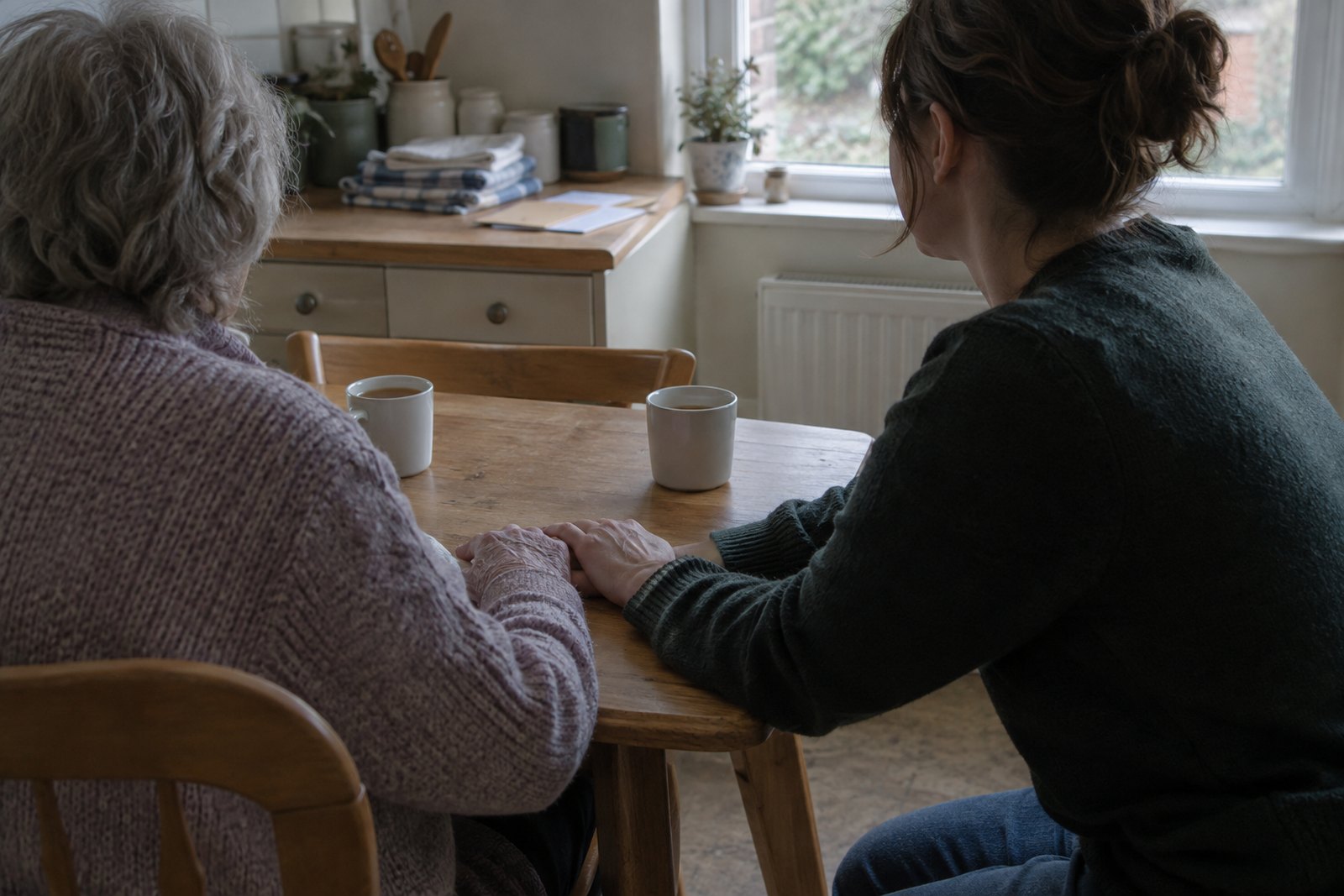
Self-neglect is when someone stops looking after themselves, their health or their home to the point where it starts to put them at risk. In older adults it often looks like the same clothes day after day, a fridge with nothing fresh in it, missed appointments, unopened post, a cold house, or rooms filling up with things that cannot be thrown away. It is rarely laziness. Usually something has changed: low mood, memory problems, a body that can no longer manage the bath or the shopping, or a loss that has knocked the stuffing out of them.
If you are worried, you can get help. Start with a gentle conversation if you can, then talk to their GP or contact the local council's adult social care team. In England, serious self-neglect can be raised as a safeguarding concern under the Care Act 2014. If there is immediate danger, such as a fire risk, or someone has collapsed, is very cold or suddenly very confused, call 999. If they seem unwell and you are unsure what to do, call NHS 111. The hard part, and this article is honest about it, is that an adult who has mental capacity is allowed to refuse help, even when everyone around them thinks they are wrong.
What self-neglect actually means
The statutory guidance that goes with the Care Act describes self-neglect as covering a wide range of behaviour: neglecting to care for one's personal hygiene, health or surroundings, including behaviour such as hoarding. It is broad on purpose. It covers the widower who has stopped eating proper meals as much as the woman whose hallway is now impassable. It helps to think in three areas.
- Personal care. Not washing, wearing the same clothes for days, long toenails, sore or untreated skin, smelling of urine, neglected teeth and hair.
- Health. Weight loss, not eating or drinking enough, medicines left unopened or doubled up, refusing to see the GP, ignoring wounds, drinking more than before.
- Surroundings. Rotting or mouldy food, no working heating or hot water, unpaid bills and final demands, pests, rubbish building up, rooms that can no longer be used, clutter blocking doors, stairs or the cooker.
Other things families and neighbours notice: curtains closed all day, post piling up behind the door, sleeping in a chair because the bed is no longer used, a bath that never looks touched, and withdrawal from friends, clubs or phone calls they used to enjoy. One sign on its own means little. Plenty of people have a messy kitchen. What matters is change over time, a pattern, and whether it is starting to cause harm. Families who visit often may not see the slide at all. The relative who visits twice a year notices on the doorstep.
Why it happens
The reason matters, because the reason decides what will help. Often there is more than one.
Depression and low mood
Depression in later life is easily missed, by the person and by those around them, because it gets put down to age. It drains energy and makes washing, cooking and opening the post feel pointless. It is treatable, which is one good reason to involve the GP early.
Dementia and memory problems
Someone with early dementia may genuinely believe they had a bath yesterday or ate lunch an hour ago. They may lose the ability to plan and sequence a task such as cooking a meal, even though they can still describe how it is done. Our page on dementia covers the wider picture.
Physical decline
This one is underrated. If you cannot step over the side of the bath, you stop bathing. If your hands hurt, you stop opening tins. If the stairs leave you breathless, the upstairs bathroom goes out of use and you start living in one room. If your eyesight has faded, you do not see the dirt. From the outside it looks like not caring. From the inside it is not being able to.
Grief, loneliness and loss
Many couples split the jobs for decades. When one dies, the other may never have cooked, managed money or kept on top of the house. Add grief and isolation and things can slide quickly.
A lifelong pattern
Some people have always lived this way. Long-standing hoarding, mental health difficulties, alcohol use or past trauma can sit behind it. Change is still possible, but expecting someone to become tidy at 85 is unrealistic. The aim is safety, not a show home.
Fear
Plenty of older people refuse help because they fear that letting anyone in is the first step to being moved into a care home. Saying out loud that nobody wants that can open doors.
The right to make unwise decisions
This is where families often get stuck, so it is worth understanding before you contact anyone.
In England and Wales, the Mental Capacity Act 2005 says every adult must be assumed to have capacity to make their own decisions unless it is shown otherwise. A person is not treated as lacking capacity just because they make a decision others think is unwise. Your dad is allowed to live in a cluttered house, eat toast for every meal and turn down a carer, if he understands what he is choosing.
Capacity is about a specific decision at a specific time. Someone might be able to decide whether to have a cleaner but not understand the risk of a faulty gas fire. To make a decision, a person needs to be able to understand the relevant information, hold on to it long enough, weigh it up and communicate their choice. They should be given help to do this, such as plain explanations or a better time of day. Scotland and Northern Ireland have their own laws, but the same basic respect for adult choice applies.
Professionals sometimes meet people who can explain exactly what they should do but cannot actually do it when the moment comes. This can happen with dementia, brain injury and other conditions affecting planning. If that sounds familiar, tell the GP or social worker, because a short conversation in a surgery may not reveal it.
A refusal is not the end of the story. Services can keep in touch, build trust and try again. Many people who say no to a carer will say yes to a grab rail or a hot meal.
How to raise it with the person
- Pick your moment. Not in front of others, not when either of you is tired, not straight after a row.
- Start with them, not the house. "You seem tired lately, how are you really doing?" lands better than "This kitchen is a health hazard."
- Look for the practical problem. "Is getting in and out of the bath tricky now?" gives them a way to say yes without admitting to anything shameful.
- One small thing at a time. Getting the boiler fixed is a better first win than clearing the spare room.
- Never clear their belongings without agreement. For someone who hoards, a surprise clear-out can be deeply distressing and usually makes things worse.
- Bring in someone they trust. A friend, grandchild or the GP may get further than you.
- Keep coming back. No today is not no for ever.
Our article on when a parent refuses help at home goes into this in more detail.
Practical help that often makes a difference
- Food. Online grocery delivery, ready meals, a local meals service if there is one, or bringing round a meal and eating it together.
- Washing. If the bath is the barrier, a strip wash sitting at the basin can restart a routine, and equipment such as a bath board or shower stool may help once an occupational therapist has checked it is the right type and fitted safely. See our guide to washing without a bathroom.
- Heat and hot water. Get the boiler checked. If money is the problem, ask Age UK or Citizens Advice about a benefits check.
- Fire safety. Many fire and rescue services offer free home safety visits for older or vulnerable people. Check your local service's website.
- Medicines. Ask the pharmacist or GP about a medicines review and whether reminders or other aids would help. If you think someone has taken too much of a medicine, call NHS 111, or 999 if they are unwell.
- Sight and hearing. An up-to-date eye test and hearing check can change more than you would think.
- Company. Befriending schemes, lunch clubs and regular phone calls.
- Clutter. Start with safety: clear routes to the front door, the stairs and the cooker. Let them decide what goes.
- Post and money. Help sorting post and setting up regular payments. If they are willing and able, a lasting power of attorney is worth talking about.
Who to contact, and when
Urgent risks: 999 or NHS 111
Call 999 if someone has collapsed, is very cold, suddenly very confused, or you believe there is immediate danger. Call NHS 111 if they seem unwell and you are unsure. Treat these as urgent: no heating in cold weather, papers or clothing piled near heaters or the cooker, candles left burning, blocked exits, missing or silent smoke alarms. If you smell gas in England, Scotland or Wales, call the national gas emergency number, 0800 111 999.
The GP
The GP can look for depression, infection, memory problems or medicine issues. They may not be able to share information with you without the person's consent, but they can always listen to your concerns, and what you tell them can shape how they approach the next appointment.
Council adult social care
Anyone who appears to need care and support can ask the council for a needs assessment, and you can contact them on someone's behalf. See our guide to the Care Act needs assessment.
Raising a safeguarding concern
If you think someone is at real risk of harm and cannot protect themselves, raise a safeguarding concern with the council's adult social care team. Most council websites have a page for reporting a concern about an adult, plus an out-of-hours number. In England, section 42 of the Care Act requires councils to make enquiries, or ask others to, where an adult with care and support needs is experiencing or at risk of abuse or neglect and, because of those needs, cannot protect themselves. The guidance says self-neglect will not always lead to a formal enquiry; it depends on the person and the level of risk. Wales, Scotland and Northern Ireland have their own adult protection systems, run through the council or, in Northern Ireland, the health and social care trust.
What usually happens next is a conversation with the person about what is going on and what they want. Safeguarding is meant to be done with people, not to them. It is not about taking over their life.
If you are a neighbour
You can raise a concern too. Write down what you have seen and when. Do not go into the property. If they rent from a council or housing association, the landlord may have a tenancy support team.
Where an occupational therapist fits
An occupational therapist looks at the gap between what someone needs to do each day and what they can actually manage. With self-neglect, that gap is often physical or practical, and it is easy to miss. An occupational therapist visiting at home can watch how someone gets in and out of the bath, makes a drink, climbs the stairs or reaches the cupboards, then suggest equipment, small adaptations, easier ways of doing things and routines that are realistic for that person. They can spot where clutter has become a trip or fire hazard, notice when memory or planning is affecting everyday tasks, and write a clear report that helps a GP, social worker or family make decisions. See our older people's independence service.
Be clear on the limits. An occupational therapist does not diagnose dementia or depression; that is the GP or memory service. Hoarding disorder is usually assessed and treated by mental health services, often working alongside other professionals. An occupational therapist cannot override someone's refusal and does not run safeguarding enquiries. If there is immediate risk, contact the council or 999 first. Council occupational therapy through adult social care is free; a private assessment may be quicker or more detailed, but it does not replace the council's legal duties.
Frequently asked questions
Is self-neglect a safeguarding issue?
It can be. The Care Act guidance lists self-neglect among the things adult safeguarding covers in England. It is not a crime, and nobody is in trouble. Whether the council opens a formal enquiry depends on the risk and whether the person can protect themselves.
Can social services force someone to accept help?
Generally, no, if the person has capacity to make that decision. If they lack capacity for a particular decision, others can act in their best interests, following the Mental Capacity Act. Anything beyond that is for professionals and rare.
Can I raise a concern without the person knowing it was me?
You can ask the council not to share your name, and they will usually try to respect that. They cannot always guarantee it, and in a small family it may be obvious anyway.
What is Diogenes syndrome?
It is a term sometimes used for severe self-neglect with hoarding and social withdrawal, often in older people. Professionals more often talk about self-neglect and look for the underlying causes.
Will they end up in a care home?
Very unlikely as a first step. The aim is almost always to help people stay safely at home. A move is usually only considered if needs cannot be met at home, and with the person's agreement or a proper best interests decision.
I live far away. What can I do?
Phone regularly, share concerns with the GP, ask the council for a needs assessment, and keep a trusted neighbour's number. Online shopping and a personal alarm can be arranged from a distance.
Next steps
If you think physical difficulties are behind the decline, see our home assessment page, or current guide prices, and choose your area below.
Talk to an occupational therapist near you
This guide is general information. For advice about your own situation - or someone you look after - a local occupational therapist can visit you at home and see it for themselves.
Choose your area: