

Peripheral Neuropathy in the Feet: Staying Safe at Home
By Mobile Occupational Therapist • 3 October 2026 • 13 min read
Peripheral neuropathy means the nerves that carry messages between your brain and the rest of your body have been damaged. It usually starts in the feet, often creeps up towards the ankles and shins, and can affect the hands too. People describe numbness, tingling, pins and needles, burning or stabbing pain, or a strange feeling of walking on cotton wool. In the UK the most common cause is diabetes, but it has plenty of others.
The tingling is the part you notice. The part that causes harm is what you no longer feel: a bath that is too hot, a stone in your shoe, a blister rubbing all day, the edge of a step. Staying safe at home with numb feet and hands comes down to one idea. Where your nerves used to warn you, you now check instead, with your eyes, a thermometer, good light and a few habits. The rest of this guide is how to do that.
What neuropathy changes in everyday life
Nerves do three jobs that matter here. They tell you about touch and pain, they tell you about temperature, and they tell your brain where your feet and hands are without you having to look. Neuropathy can affect all three.
- Loss of protective feeling. A cut, burn or pressure sore may not hurt, so it goes unnoticed and can become infected.
- Loss of temperature sense. Hot water, radiators and heaters may feel only warm, or nothing at all.
- Poorer balance. Your feet stop reporting where the floor is, so you lean more on your eyesight. That is why many people with neuropathy are fine in daylight and wobbly in the dark, or sway when they close their eyes to rinse shampoo.
- Pain. Some people have burning or shooting pain, often worse at night, alongside the numbness. Odd, but common.
- Clumsy hands. Buttons, coins, small screws and hot handles can all become harder.
None of this means you cannot live safely and independently. It means some things that used to be automatic now need a moment of thought.
Get the cause looked at first
This article is about daily safety, not treatment. If you have numbness, tingling or pain in your feet or hands and nobody has worked out why, see your GP. The NHS lists causes including diabetes, low vitamin B12, alcohol, some medicines including chemotherapy, and a range of other conditions. Some causes can be treated, and treating them early may stop things getting worse. Your GP is also the person to talk to about nerve pain, because there are options that are not ordinary painkillers. Do not change any medicine without advice.
Some symptoms are not slow neuropathy at all and need help fast:
- Call 999 if numbness or weakness comes on suddenly on one side of the body, or with a drooping face or slurred speech. That could be a stroke.
- Get urgent help (A&E or 999) if weakness or numbness spreads quickly over hours or days, especially if it is moving up your legs or you have trouble breathing or swallowing.
- Call NHS 111 or your GP the same day if your symptoms change suddenly or you are worried and not sure what to do.
Looking after numb feet every day
The daily foot check
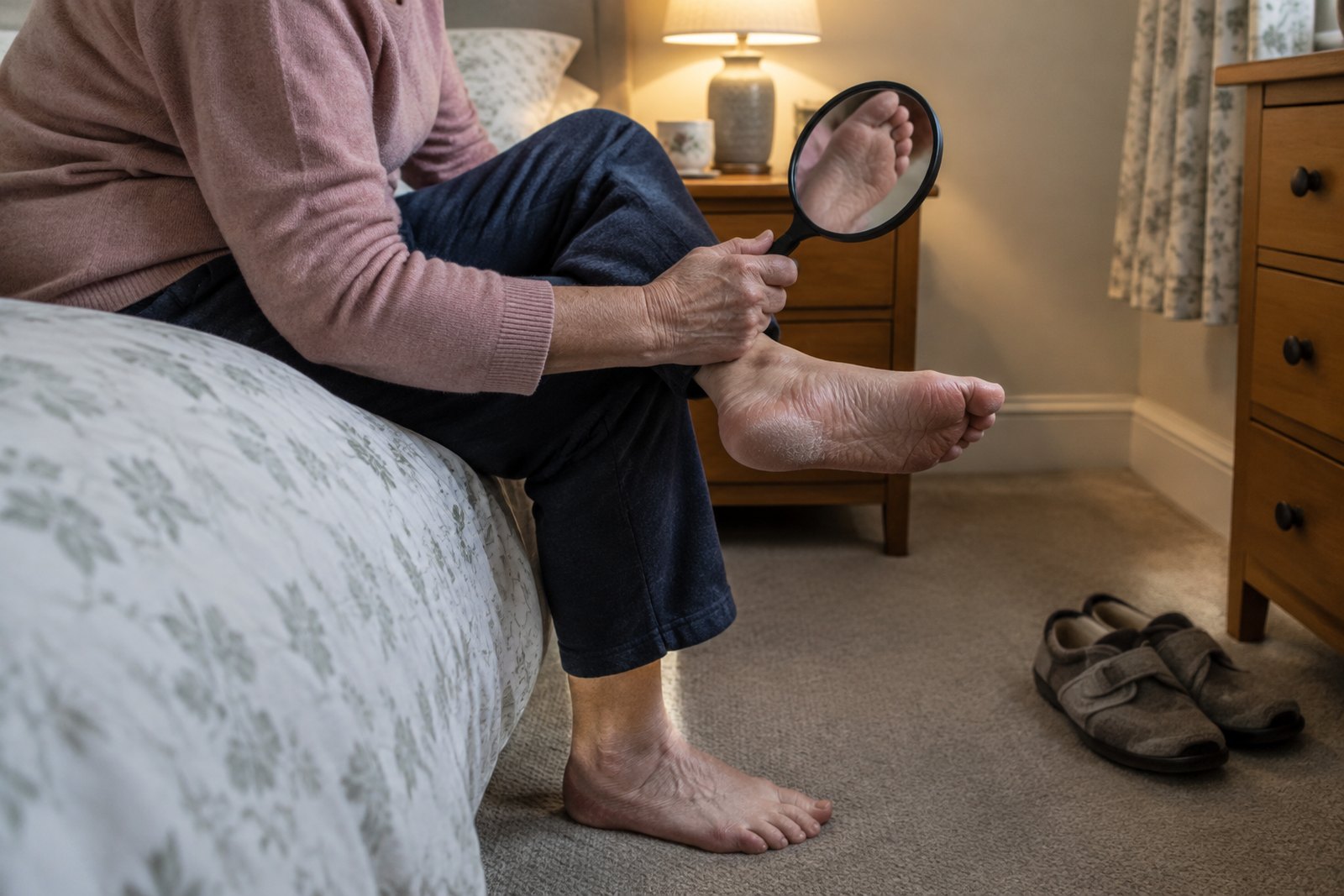
Once a day, at a time you will remember, look properly at both feet. Bedtime works for many people because shoes have just come off. Sit down in good light. Look at the tops, soles, heels and between every toe. You are looking for:
- cuts, scratches, blisters or broken skin
- redness, swelling or patches that feel warmer than the rest of the foot
- cracks in the heels, especially if they look deep or weep
- changes in colour, or areas that look darker or bruised
- discharge or marks on your socks
If you cannot bend to see your soles, use a hand mirror, or a mirror propped on the floor against a wall. If your eyesight is poor or you cannot reach, ask someone to check for you. A partner, carer or family member can learn this in a few minutes, and it is a perfectly reasonable thing to ask.
Wash your feet daily in warm, not hot, water, and dry carefully between the toes. Moisturise dry skin on the tops and soles, but not between the toes, where damp skin can break down.
Shoes, slippers and socks
Footwear does a lot of the protecting your nerves used to do. Good choices are:
- Shoes and slippers that fasten with laces, a strap or touch fastening, so your foot does not slide around.
- Enclosed toes and heels. Backless mules and slip-ons let your foot slip out, and you may not feel it happening.
- A firm, thin-ish sole with some grip. Very thick soft soles can make balance worse because they blur what little feedback you have.
- Enough room in the toe box for your toes to lie flat. Have your feet measured, as numb feet often end up in shoes that are too small.
Wear something on your feet indoors and outdoors, including on the way to the bathroom at night. Walking barefoot means stepping on a dropped pin, a toy or a crumb of glass without knowing. Socks alone on hard floors are slippery.
Before you put shoes on, run your hand inside and tip them upside down. A small stone or a folded insole can rub a hole in a numb foot in an afternoon. Break new shoes in gradually, an hour or two at a time, and check your feet after. Choose socks without thick seams and with tops that do not dig in, and change them daily.
Heat: the risk people underestimate
Burns are one of the most common and most avoidable injuries with numb feet. The usual culprits are ordinary and well meant.
- Never use a hot-water bottle against your feet or legs, and avoid electric heat pads on them. If your bed is cold, warm it before you get in and take the bottle out.
- Do not rest your feet on or near a radiator, heater, fire or hot pipe, and do not sit with your feet close to a fire to warm them.
- Test bath and foot-bowl water before your feet go in. Use your elbow, which usually still has normal feeling, or better, a bath thermometer. Your hands may be affected too, so do not rely on them. Do not soak your feet for long periods.
- Run cold water first, then add hot, so the bath is never full of scalding water. A plumber can fit a thermostatic valve that caps the hot water temperature at a tap or shower, which is worth asking about if you or someone you live with has neuropathy.
- Be careful in the sun on beaches and paving. Wear shoes, and put sun cream on the tops of your feet.
Cold matters too. Wear warm socks rather than applying heat, and keep the house reasonably warm.
Corns, nails and hard skin: leave them to podiatry
Do not cut corns or hard skin yourself, and do not use corn plasters or chemical treatments, which can burn numb skin. Cut toenails straight across and not too short, or file them. If you cannot see or reach them, or your nails are thick, ask about podiatry. If you have diabetes, you should have a foot check at least once a year, usually through your GP practice, and people at higher risk are referred to podiatry or a specialist foot protection team. If you have not had yours, ask.
Diabetes and your feet: when it is urgent
If you have diabetes and neuropathy, foot problems can become serious quickly, and you may not feel them. The NHS and Diabetes UK are both clear: do not wait for your next appointment if you notice any of these.
- a foot or part of a foot that is hot, red or swollen, even if it does not hurt
- any break in the skin, blister, cut or sore that is not healing
- a change in the shape of your foot
- discharge, a bad smell, or a colour change, such as skin turning blue, grey or black
Get help the same day. Contact your GP practice, your diabetes foot protection team or podiatrist if you have one, or call NHS 111 out of hours. If you also feel very unwell, with a high temperature, shivering, confusion or fast breathing, call 999 or go to A&E. Keep the foot rested and covered with a clean dressing until you are seen. A hot, swollen foot in someone with neuropathy can be a sign of serious infection or of a joint problem called Charcot foot, and both need prompt specialist care.
Numb hands in the kitchen and around the house
When neuropathy affects your hands, the kitchen is where it shows up first. A few changes help.
- Use proper oven gloves, not a tea towel, and long ones that cover the wrist. Check your hands afterwards for marks.
- Make pouring safer. If lifting a full kettle feels unsteady, boil only what you need, or use a kettle tipper, a frame that lets you tip the kettle without lifting it. Our guide to kettle tippers and jar openers explains who they suit.
- Carry hot drinks in a mug with a lid, or slide them along the worktop rather than walking across the room.
- Wear rubber gloves for washing up and check the water with a thermometer or your elbow first.
- Cut on a non-slip board, keep knives sharp (blunt ones slip), and look at what your fingers are doing rather than working by feel.
- Wear gloves for gardening and DIY, and store sharp tools in one known place.
- Hold handles, not hot pans, and turn pan handles inwards.
If small fastenings are a daily battle, chunkier zips, magnetic fastenings or a button hook can save a lot of frustration. These are simple, cheap and easy to try.
Balance, the dark and falls
Because neuropathy takes away feedback from your feet, your eyes do more of the work. Anything that reduces what you can see makes you less steady. Most of the practical answers follow from that.
- Light the route you use at night. Plug-in night lights or motion-sensor lights between bed and toilet help, and a lamp you can reach before you stand up. Our guide to night-time safety has more.
- Sit on the edge of the bed for a moment before standing, and stand still for a moment before walking.
- Be careful when washing your hair. Closing your eyes in the shower is a classic moment for a wobble. Hold a grab rail, or sit on a shower stool.
- Have something to hold on stairs, ideally a rail on both sides, and in the bathroom.
- Clear the floor. Loose rugs, trailing flexes and clutter are harder to manage when you cannot feel them under your feet.
- Sit to dress, particularly for socks, shoes and trousers.
- Take care on uneven ground and in poor light outside. A walking stick can add useful feedback through your hand, but get it set to the right height.
For the wider picture, including what to do if you do fall, see falls at home: practical prevention beyond exercise. If you have already had a fall, or are falling more, tell your GP. You may be referred to a local falls service, and a physiotherapist can give you balance and strength exercises suited to neuropathy.
Where an occupational therapist fits
An occupational therapist looks at how you manage everyday life and what would make it safer and easier. With neuropathy, a home visit can help with:
- walking through your home with you to spot burn, cut and fall risks you have stopped noticing
- working out how you can check your feet if you cannot reach or see them
- bathing and showering safely, including seating, rails and managing water temperature
- the kitchen, from pouring and carrying to small equipment that makes tasks safer
- lighting and the night-time route to the toilet
- pacing your day if pain or tiredness is limiting you
- advice and a written report if you need adaptations, or evidence for a council or benefits application
Just as important is what an occupational therapist does not do. Your GP leads on finding the cause and on pain treatment. Podiatrists and diabetes foot protection teams look after nails, hard skin and foot risk. Practice and community nurses manage wounds. Physiotherapists lead on balance and strength exercise. A good occupational therapist will work alongside them and tell you if something needs another professional.
You can get occupational therapy through your council's adult social care team, often free, though waits vary. A private occupational therapist visiting at home can usually see you sooner and spend longer on the details.
Frequently asked questions
Can peripheral neuropathy in the feet get better?
It depends on the cause. Some types improve once the cause is treated, for example low vitamin B12, while others can be slowed but not reversed. Good diabetes control is important if diabetes is the cause. Your GP is the right person to explain what is likely in your case.
Is it safe to use an electric blanket with numb feet?
The safest approach is to use an electric blanket only to warm the bed beforehand, then switch it off and unplug it before you get in. Never use a hot-water bottle or heat pad directly against numb feet or legs.
What should I do if I find a blister or cut on my foot?
Clean it gently, cover it with a clean dry dressing and keep pressure off it. If you have diabetes, contact your GP practice, podiatrist or foot protection team the same day, or NHS 111 out of hours. Without diabetes, get it checked if it is not clearly healing within a few days, or sooner if it looks red, hot or swollen.
Should I still walk if my feet are numb?
Usually yes. Staying active helps balance, strength and general health. Wear good shoes, check your feet afterwards, and ask your GP about a physiotherapy referral if your balance is poor. If you have an open wound or a hot, swollen foot, get it seen before carrying on.
Can I still drive with neuropathy?
Some people can and some cannot, depending on how much feeling and control you have in your feet and hands. Ask your GP or specialist, and check the GOV.UK page on driving and medical conditions to see whether you need to tell the DVLA.
Do I need a referral to see an occupational therapist?
Not for a private occupational therapist, who you can contact directly. For NHS or council occupational therapy, you can usually ask your GP or contact your council's adult social care team yourself.
Next steps
If numb feet or hands are making home feel less safe, see our home assessment and equipment and aids pages, or current guide prices, and choose your area below.
Talk to an occupational therapist near you
This guide is general information. For advice about your own situation - or someone you look after - a local occupational therapist can visit you at home and see it for themselves.
Choose your area: