

Occupational Therapy Assistant: The Role and How to Get the Job
By Mobile Occupational Therapist • 31 October 2026 • 13 min read
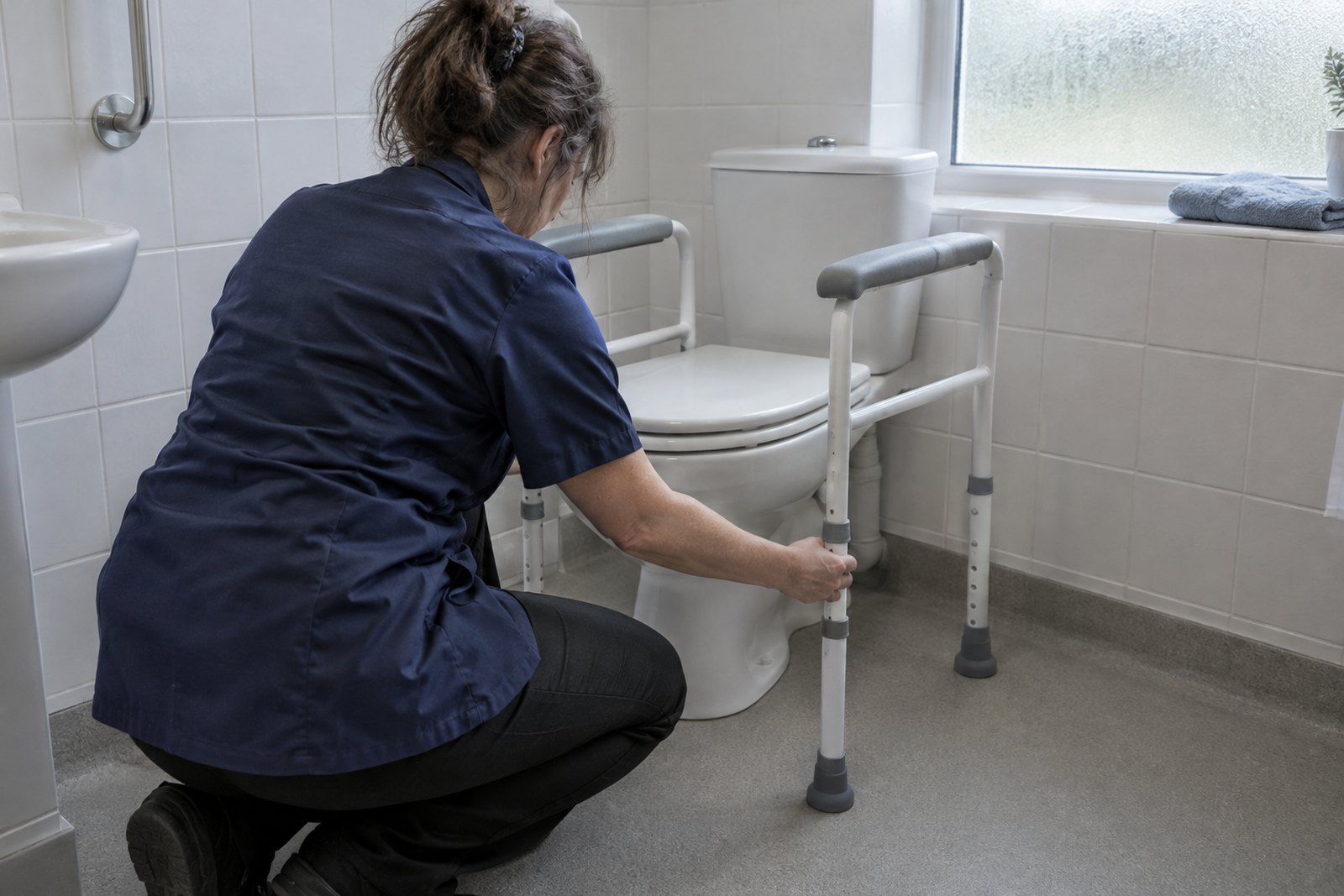
An occupational therapy assistant works alongside qualified occupational therapists to help people manage everyday life after illness, injury or disability, or as they get older. You may also see the job called an OT support worker, therapy assistant, rehabilitation assistant or, in some NHS trusts, a technical instructor. In practice the work means delivering and fitting equipment, showing people how to use it, carrying out parts of a rehab programme the occupational therapist has set, and visiting people at home. All of it is done under the supervision of a registered occupational therapist.
You do not need a degree to get one of these jobs. Most employers want some care or support experience, good communication and a willingness to learn. Many roles are in the NHS and are typically paid at Agenda for Change bands 3 or 4. You are not registered with the Health and Care Professions Council (HCPC) and you cannot call yourself an occupational therapist. But the role is a solid job in its own right, and a well-used route into the profession if you later decide to qualify.
What an occupational therapy assistant actually does
The job varies more than the title suggests. A ward-based assistant in a big hospital has a very different day from one working for a council equipment team or a children's service. The common threads are practical work, lots of contact with people, and a fair bit of paperwork.
- Equipment. Measuring for, delivering, fitting and demonstrating everyday equipment such as raised toilet seats, toilet frames, bath boards, shower stools, perching stools, chair and bed raisers and grab rails. Checking it fits the person and the room, and that they can actually use it safely, not just that it has arrived.
- Rehab programmes. Practising tasks with people following a plan set by the occupational therapist. That might be getting in and out of bed, making a hot drink, washing and dressing, managing a step at the back door or building up stamina after a stay in hospital.
- Home visits. Going into people's homes, sometimes with the occupational therapist and sometimes alone, to review how things are going, check equipment and report back.
- Groups and activities. In mental health, learning disability and some rehab settings, running activity groups, cooking sessions or community outings that the therapist has planned.
- Admin and liaison. Writing notes, ordering equipment, chasing deliveries, phoning families, carers and other teams. This is a bigger part of the day than most people expect.
Technical instructor, assistant practitioner and other titles
Titles are not standardised across the UK, so read the job description rather than relying on the name. Technical instructor is an older NHS title still used in some trusts, often for a more experienced support worker. Assistant practitioner usually means a more senior support role with extra training, sometimes at foundation degree level, and a little more independence in managing a caseload. Therapy assistant or rehabilitation assistant can cover work for both occupational therapists and physiotherapists, which is common in community and stroke teams.
What you would not do
The occupational therapist carries the clinical responsibility. They carry out the assessment, decide what someone needs, write the plan and handle the complicated cases. You carry out tasks they have delegated to you and that you have been trained and judged competent to do. If something changes, such as new pain, a recent fall, someone seeming more confused or unwell than usual, or a home that suddenly looks unsafe, you report it rather than quietly adjusting the plan yourself. Good supervisors would much rather hear about something small than find out later.
Where OT assistants work
Occupational therapy support roles exist almost everywhere occupational therapists work. The main settings are:
- Hospital wards, especially acute medicine, orthopaedics, stroke and older people's wards, often helping people practise everyday tasks and get ready for discharge.
- Community NHS teams, including community rehab, reablement and intermediate care, where much of the work is in people's homes.
- Council adult social care, where support staff often handle a large share of equipment provision and minor adaptations. Some councils train experienced assistants to assess for straightforward equipment themselves, within clear limits.
- Mental health services, both inpatient wards and community teams.
- Children's services, including community paediatrics, special schools and child development teams.
- Other specialist settings such as learning disability services, hospices, forensic services and neurological rehab units.
- The independent sector, including care homes, private hospitals, case management companies and private occupational therapy practices.
If you like variety and being out and about, community and council roles tend to suit. If you prefer a team around you all day, ward work may be a better fit.
Pay and NHS bands, in general terms
In the NHS, OT support roles are paid on the Agenda for Change pay structure. Most occupational therapy assistant posts sit at band 3, with more senior support worker, technical instructor and assistant practitioner posts usually at band 4. Some entry-level posts and apprenticeships start at band 2. Pay within each band rises with time in post.
The figures change after each annual pay award, so check the current Agenda for Change scales published for the NHS, or the salary on the advert itself, rather than trusting a number you have read elsewhere. Council jobs use local pay grades and private employers set their own rates. If you want to see how support pay compares with qualified roles, our guide to occupational therapist salaries and NHS bands sets out the structure.
Skills and qualifications employers look for
Experience counts more than certificates
Most employers care more about what you have done than what you have passed. Useful experience includes care work, healthcare assistant shifts, support work in learning disability or mental health, teaching assistant work, and volunteering with older or disabled people. Caring for a family member counts too, as long as you can explain what you learned from it.
The qualities that make a good assistant
- Patience, and the ability to let people do things themselves even when it would be quicker to do it for them. This is the heart of occupational therapy.
- Practical problem-solving. Getting a toilet frame to fit a tiny bathroom with a pipe in the way is a real part of the job.
- Noticing things and reporting them accurately, in writing and in person.
- Being comfortable in other people's homes, whatever state they are in.
- Reasonable physical fitness, because you will carry and assemble equipment.
- A full driving licence and access to a car for many community roles. Check the advert, as this is often listed as essential.
The Care Certificate
In England, new healthcare support workers and adult social care workers are expected to complete the Care Certificate, a set of standards covering basics such as communication, privacy and dignity, safeguarding, infection prevention and basic life support. It is normally done with your employer during your first weeks in the job, so you do not usually need it before applying, although having it already can help. Scotland, Wales and Northern Ireland have their own induction frameworks, and your employer will tell you which applies.
Many adverts also ask for English and maths at GCSE level or an equivalent such as Functional Skills. If you do not have these, some employers will support you to gain them, particularly through an apprenticeship.
Apprenticeships
In England there are apprenticeships that fit OT support work, including the Level 2 healthcare support worker, the Level 3 senior healthcare support worker (which has an option for allied health profession therapy support) and the Level 5 assistant practitioner. You earn a wage while you train. Availability depends on employers, so look for apprenticeship adverts from NHS trusts and councils and check the current standards on GOV.UK. Arrangements differ in the devolved nations.
Training on the job
Once in post, expect training in moving and handling, the specific equipment your service provides, safeguarding, lone working and record keeping. Ask how competency is checked before you do tasks alone. A service that signs you off properly is a service that takes your safety, and the patients' safety, seriously.
How to get a job as an OT assistant
- Search every version of the title. Try occupational therapy assistant, OT support worker, therapy assistant, rehabilitation assistant, technical instructor and assistant practitioner. Look at NHS job listings, council careers pages, care home groups and private practices.
- Build relevant experience if you are short of it. Bank healthcare assistant shifts, care work or regular volunteering all help, and they show you know what the work is really like.
- Answer the person specification point by point. NHS applications are usually shortlisted against the essential and desirable criteria. Take each one in turn in your supporting statement and give a real example.
- Show you understand occupational therapy. It is about helping people do the everyday things that matter to them, not mainly about exercise. Our guide to occupational therapists and physiotherapists explains the difference clearly, and interviewers notice when candidates get it.
- Prepare for scenario questions. For example: you arrive to deliver a bath board and the person says they fell last night. A good answer covers checking they are safe, calling 999 if they are seriously hurt or NHS 111 if you are unsure, not fitting equipment that may no longer be right, following local procedure and telling the occupational therapist straight away.
- Ask your own questions. How much supervision will you get? What training is offered? Is there a route to band 4 or to an apprenticeship?
Not registered, and why the title matters
"Occupational therapist" is a protected title in UK law. Only people on the HCPC register can use it, and the register exists so the public can check who is qualified. Support workers are not regulated by the HCPC, though you are accountable to your employer and will be expected to follow their policies and codes of conduct. The Royal College of Occupational Therapists offers a membership category for support workers, which can help with learning and keeping up to date.
In practice, be careful with wording on your badge, email signature and social media. "Occupational therapy assistant" is fine. Shortening it to "OT" can mislead people, and patients often do not know the difference. Our guide to HCPC registration for occupational therapists explains how registration works.
Progression: from assistant to occupational therapist
Plenty of qualified occupational therapists started as assistants, and the experience is valued on applications. There are three main routes to qualifying:
- An undergraduate degree, usually three years full time in England, Wales and Northern Ireland and often four in Scotland.
- A two-year pre-registration master's, for people who already have a degree in another subject.
- A degree apprenticeship, where your employer supports you to study while you keep working. This often suits existing support workers, though places are limited and depend on employers offering them. See our guide to occupational therapy degree apprenticeships.
For the full picture, including entry requirements, read how to become an occupational therapist in the UK. And you do not have to qualify to progress. Many support workers build a long career moving into senior band 4 posts, specialist equipment roles or supervising other support staff.
Where the occupational therapist fits
Some people searching for this term are not looking for a job at all. An OT assistant is coming to their house, or their mum's, and they want to know what that means. In short, the assistant is working to a plan set by a registered occupational therapist, who remains responsible for it. It is normal and sensible for routine equipment checks and practice sessions to be done by support staff. If you feel the needs have changed, or you would like to talk to the occupational therapist directly, ask. That is a reasonable request.
A private occupational therapist visiting at home usually carries out the assessment personally. Our guide to what an occupational therapist does on a home visit explains what to expect. And be clear about where other people lead: a GP for new or worsening symptoms, a physiotherapist for exercise programmes and mobility after injury, a speech and language therapist for swallowing or communication problems.
If you are weighing up support roles, the same honesty applies. If what draws you is exercise and movement, a physiotherapy assistant role may suit you better. If it is everyday independence, equipment and adapting how things are done, occupational therapy is the right place.
Frequently asked questions
Do I need a degree to be an occupational therapy assistant?
No. Most posts ask for relevant experience, good communication and often English and maths at GCSE level or equivalent. Training is given on the job, and some employers offer apprenticeships.
Is an OT assistant the same as a physiotherapy assistant?
They overlap, and some jobs combine the two as a therapy or rehabilitation assistant. The focus differs: OT support work centres on everyday tasks, equipment and adapting the home, while physiotherapy support work centres more on movement, exercise and mobility.
Can an occupational therapy assistant work privately?
You can be employed by a private practice, care home or case management company. You cannot set up on your own offering occupational therapy assessments, and you cannot describe yourself as an occupational therapist, because that title is protected for people on the HCPC register.
Do I need to drive?
For many community and council roles, yes, because the job involves carrying equipment between homes. Ward-based and some school roles may not need it. The advert will usually say whether a licence and car are essential.
How long would it take to qualify as an occupational therapist from an assistant role?
It depends on the route. A full-time degree usually takes three years in most of the UK, a pre-registration master's two years, and a degree apprenticeship is typically spread over a longer period alongside work. Check individual university and employer details, as these vary.
I am a patient. Why has an assistant visited instead of the occupational therapist?
Services use support staff for tasks that have been planned and delegated by the occupational therapist, such as fitting equipment or practising a task. If things have changed or you have concerns, tell the assistant and ask to speak to the occupational therapist.
Next steps
If you are a qualified occupational therapist offering home visits, you can list your practice with us. To see the everyday work occupational therapists and their support staff do together, visit our equipment and aids page, and choose your area below to find occupational therapists near you.
Talk to an occupational therapist near you
This guide is general information. For advice about your own situation - or someone you look after - a local occupational therapist can visit you at home and see it for themselves.
Choose your area: